
Iran Kharg Blockade Day 28 — Crude Exports Down 80%, WTI Breaks $100, Storage Nearing Limit
Day 28 of the US naval blockade: no tankers loading at Iran's Kharg Island terminal. Crude exports are down over 80%, Iran is losing $170 million per day, WTI has broken $100. As storage nears capacity, Iran faces a binary choice — negotiate or cut production.
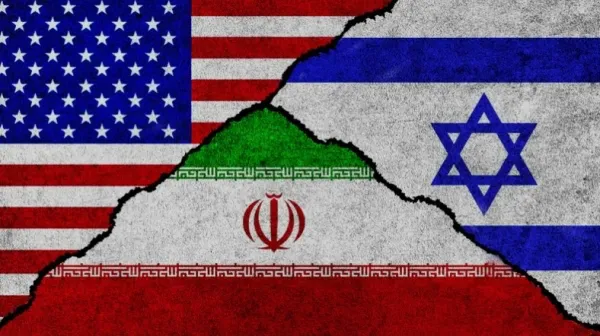
- 28 days into the US naval blockade, not a single tanker has loaded at Iran's Kharg Island
- Crude exports are down 80%, Iran is losing $170M per day, and WTI has broken $100
- As floating storage nears capacity, Iran faces a choice between negotiation and forced production cuts
Not a single oil tanker has loaded at Iran's Kharg Island terminal since the US naval blockade took effect on April 13 — 28 days and counting. The terminal that handles 90% of Iran's crude exports has effectively stopped. WTI crude has broken through $100 per barrel.
Kharg Island is a small coral island off Iran's Gulf coast near Bushehr. But it is the heart of Iran's oil economy: deep-water berths, large storage tanks, and pipeline links to major producing fields. Most of Iran's hard currency earnings load here onto tankers bound for Asia. That flow has been blocked for more than a month.
The Blockade — The US Navy Locks the Strait
The US naval blockade that took effect April 13 is qualitatively different from earlier financial sanctions. It physically prevents tankers carrying Iranian crude from crossing the blockade line. Ship-tracking firm TankerTrackers reported on May 12 that not a single tanker had successfully exported Iranian crude across the blockade line since it began.
- Crude export decline: down more than 80% from pre-war levels (Vortexa data)
- Iran's daily revenue loss: approximately $170 million (US Treasury Secretary Scott Bessent)
- Kharg Island loading: zero tankers since May 6 following a suspected oil spill
- Iranian crude production: was ~3.2 million barrels per day before the war — forced production cuts now underway
Some refined petroleum products are still leaving Iran because the US Treasury's OFAC has not sanctioned the tankers involved in those shipments. But crude oil exports — the main source of hard currency — are effectively at zero.
The Kharg Oil Spill — Iran Denies It
Satellite imagery captured a large oil slick spanning dozens of square kilometers west of Kharg Island between May 6 and May 8. Loading stopped entirely at the terminal immediately after. Iranian authorities denied the spill came from their terminal infrastructure, attributing it to ballast water discharged by a foreign tanker. Markets remain skeptical.
If the perception spreads that Kharg is not simply operating below capacity but unable to load cargoes consistently, the risk premium embedded in oil prices will climb further.
The Arabian Post
Iran's Survival Tactic — Floating Storage
With exports blocked, Iran has turned to floating storage. Vortexa estimates Iran currently has access to 65-75 million barrels of floating storage capacity — equivalent to roughly 37 very large crude carriers (VLCCs). Aging tankers have clustered near Kharg Island and in waters outside the blockade perimeter, storing crude at sea.
But floating storage has limits. When onshore tanks and floating tankers are both full, Iran has nowhere left to put the crude flowing from its oilfields. At that point the only option is to cut production. Iran has already begun doing this preemptively — reducing output to stay ahead of the storage ceiling.
Bessent's Warning and the Market's Math
Treasury Secretary Scott Bessent warned last week that Kharg Island storage was 'soon nearing capacity.' This reflects Washington's bet: sustain the blockade long enough that the cost of continuing the war exceeds the cost of negotiating. At $170 million per day in lost revenue, the math eventually tips.
Markets are running a different calculation. The Strait of Hormuz carries roughly 20% of global crude oil traffic. If the blockade expands from Iranian exports to a broader threat to Hormuz passage itself, WTI at $100 is just the start — Saudi, UAE, Kuwaiti, and Iraqi exports would all be in the blast radius.
What This Means for Korean Investors
Korea is an oil importer. Rising WTI and Brent prices directly increase energy import costs and raise input costs across Korean industry. The dollar-won exchange rate is also affected: higher oil prices worsen the current account balance, adding won-weakening pressure. The macro picture for Fed policy gets more complicated too — Iran-war inflation is already one of the key reasons the Fed cannot easily cut rates, and that dynamic tightens further if Kharg stays blocked.
 EURUSD
Frequently Asked Questions
How much has the US blockade reduced Iranian oil exports?
TankerTrackers reported that in the 28 days since the blockade took effect on April 13, not a single tanker has successfully exported Iranian crude past the blockade line. Vortexa data puts the decline at more than 80% compared to pre-war levels.
Why is Kharg Island so important?
Kharg Island handles approximately 90% of Iran's crude oil exports and is one of the world's largest crude export terminals. It connects to major Iranian oil fields via pipeline and can load very large crude carriers (VLCCs). Shutting it down effectively cuts off most of Iran's hard currency earnings.
How much revenue is Iran losing per day?
US Treasury Secretary Scott Bessent said Iran is losing approximately $170 million per day in oil revenues due to the blockade. Cumulative losses over 28 days exceed $4.7 billion.
What is the impact on oil prices?
WTI crude has already broken through $100 per barrel. If the blockade expands to threaten broader passage through the Strait of Hormuz — through which about 20% of global crude flows — further price increases are likely.
What does this mean for Korea?
Korea is an oil importer. Higher oil prices raise energy costs and industrial input costs directly. Current account deterioration adds won-weakening pressure. Iran-war inflation is also one of the main reasons the Fed cannot easily cut rates, complicating the policy outlook for global markets.



Wall Street's Defining Moments
See more
Sunday's SEC 8-K Earnings Filings Quiet, but Royal Gold Doubles Net Income and Launches Buyback
 RGLD
RGLDVeritone Earnings Shock Sends Shares Down 23%...York Space Systems Among 25 US Companies Filing SEC 8-K Earnings Reports
 YSS
YSS CODX
CODX IPWR+26
Applied Materials Posts Record Q3 Revenue of $9.1 Billion, All-Time High EPS
 AMAT
AMATSmart Money Briefing
Weekly summaries of Wall Street guru moves and crypto whale activity.