
Samsung Electronics Strike D-3: 40,000 Workers Set to Walk Out, Up to $20 Billion at Stake
Samsung Electronics' largest union has scheduled an 18-day strike starting May 21 with 40,000+ workers signed up. One day of semiconductor downtime could cost 1 trillion won. The South Korean government is weighing emergency arbitration and a court injunction.
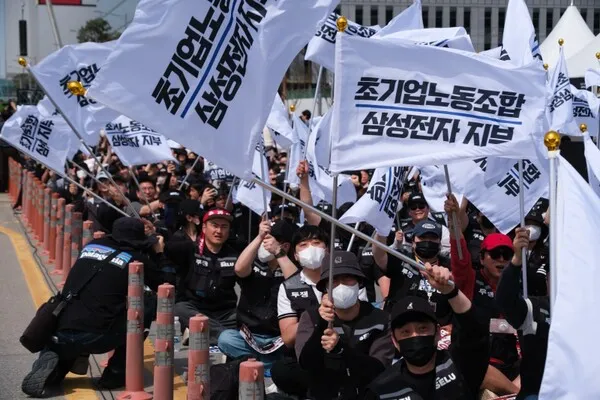
- Samsung Electronics' union has scheduled an 18-day strike from May 21 with 40,000+ workers
- One day of semiconductor downtime could cost 1T won; 18 days could reach 30T won
- Government is weighing emergency arbitration
Samsung Electronics' second-ever strike is three days away. More than 40,000 union members have pledged to walk out starting May 21 for 18 days. One day of semiconductor factory downtime could cost up to 1 trillion won ($667 million).
Samsung Electronics' largest union has set May 21, 2026 as the start date for an 18-day strike, with over 40,400 of 73,000 members signed up. When wage talks collapsed on May 13, the company's stock plunged as much as 6.09% intraday, erasing 99 trillion won (~$66 billion) in market value before recovering after government intervention.
Union Demands: 15% of Operating Profit as Bonuses, No Cap
The dispute centers on performance bonuses. The union wants Samsung to allocate 15% of operating profit to workers, abolish the current cap on bonus payouts, and formalize the bonus structure in a collective agreement. At a rally on April 23 that drew 40,000 workers, foundry production dropped 58% and memory production fell 18%, according to the union.
1 Trillion Won per Day. 30 Trillion Won for 18 Days.
"Just one day of suspension at Samsung Electronics' semiconductor factory is expected to incur direct losses of as much as 1 trillion won. What is more concerning is that a temporary pause on semiconductor manufacturing lines leads to months of inactivity."
Prime Minister Kim Min-seok
- One day semiconductor factory stop: up to 1 trillion won (~$667M) in direct losses
- Estimated 18-day strike cost: ~30 trillion won (~$20 billion)
- Samsung's share of South Korea's exports: 22.8%
- Samsung's share of KOSPI market cap: 26%
- Over 120,000 employees, 1,700 supplier companies
Government Options: Emergency Arbitration or Court Injunction
President Lee Jae Myung called for balance between labor rights and corporate management. The government is weighing two tools. The first is an emergency arbitration order under Article 76 of the Trade Union Act — a rarely-used measure that immediately suspends strike action for 30 days. It has only been invoked four times since 1969 and would be a significant step for a union-friendly administration.
The second is a court injunction. Samsung filed for a strike-restricting injunction at Suwon District Court, with a ruling expected before the May 21 walkout. If granted, it would freeze strike action until the main case is decided.
The union has said it will not yield to arbitration pressure and will strike rather than accept unfavorable terms. If the walkout proceeds as planned, the KOSPI and Korean won face immediate pressure. Samsung's stock has already seen elevated volatility as this risk has priced in.
 005930
Frequently Asked Questions
When is the Samsung Electronics strike and how long will it last?
The strike is scheduled to begin May 21, 2026 for 18 days. Over 40,400 of 73,000 union members have signed up to participate.
What are the union's key demands?
The union wants 15% of Samsung's operating profit allocated as performance bonuses, abolition of the current bonus cap, and formal codification of the bonus structure in collective agreements.
What is the estimated financial damage from a strike?
One day of semiconductor factory suspension could cost up to 1 trillion won (~$667M). An 18-day strike is estimated to cost around 30 trillion won (~$20 billion).
How is the government responding?
The government is reviewing an emergency arbitration order that would immediately suspend strike action for 30 days. Samsung also filed for a court injunction at Suwon District Court, with a ruling expected before May 21.
What's the broader economic significance?
Samsung Electronics accounts for 22.8% of South Korea's exports and 26% of the KOSPI market cap. A prolonged strike would put immediate pressure on the Korean won and stock market.

Applied Materials Posts Record Q3 Revenue of $9.1 Billion, All-Time High EPS
 AMAT
AMATCoherent, Performance Food Among 25 US Firms File SEC 8-K Earnings Disclosures as AI Chip, Biotech Earnings Season Kicks Off
 COHR
COHR CBRS
CBRS AOSL+21
25 SEC 8-K Earnings Disclosures Flood In, Including Owens Corning, Extreme Networks, Utz Brands
 HBB
HBB NC
NC EPC+27
Wall Street's Defining Moments
See more



Sunday's SEC 8-K Earnings Filings Quiet, but Royal Gold Doubles Net Income and Launches Buyback
 RGLD
RGLDVeritone Earnings Shock Sends Shares Down 23%...York Space Systems Among 25 US Companies Filing SEC 8-K Earnings Reports
 YSS
YSS CODX
CODX IPWR+26
Applied Materials Posts Record Q3 Revenue of $9.1 Billion, All-Time High EPS
AMATSmart Money Briefing
Weekly summaries of Wall Street guru moves and crypto whale activity.