The One-Slide Salesman
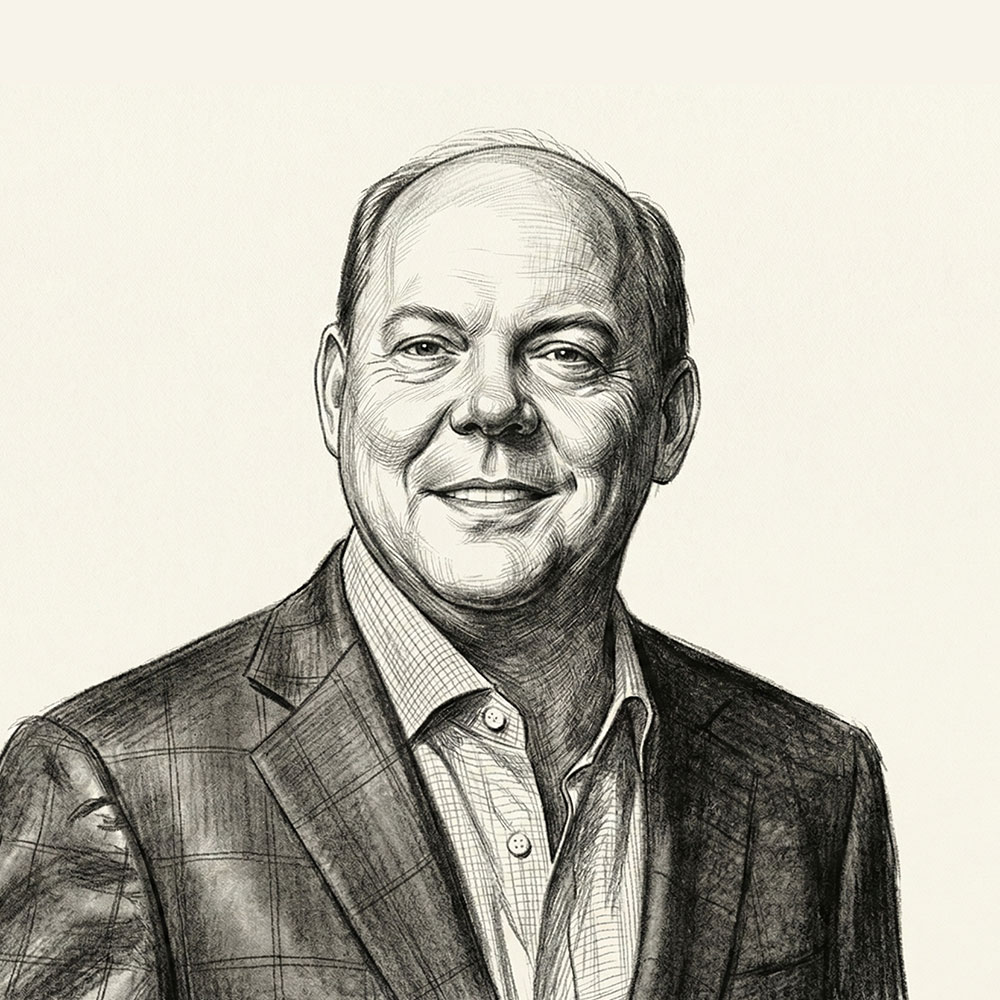
In 2006, Deutsche Bank trader Greg Lippmann knew the products his firm was selling were garbage. He made one slide and walked Wall Street selling short positions. Where Burry was the inventor and Eisman the evangelist, Lippmann was the salesman.
The One-Slide Salesman
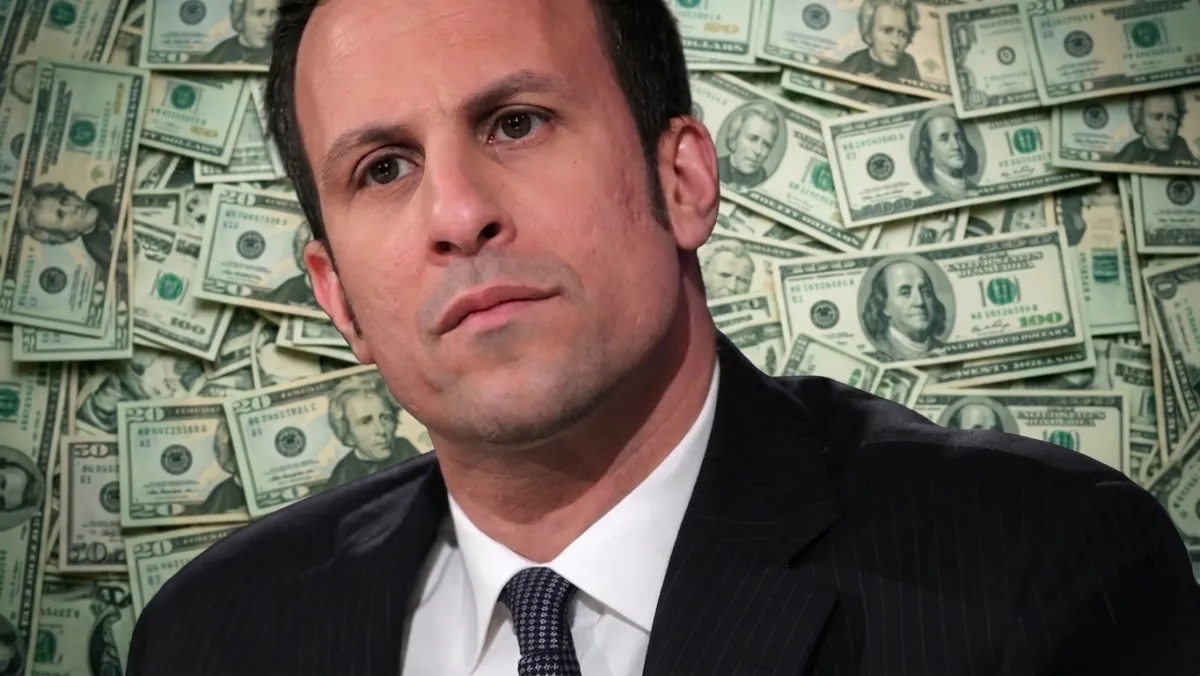
Spring 2006. A trader at Deutsche Bank made a single slide. He printed it, put it in his bag, and began visiting hedge funds across New York, London, and Connecticut. The slide's message was simple: "Subprime mortgage bonds are a bomb. Would you like to buy insurance with me?" This is the story of how Greg Lippmann shorted the very products his own firm was creating and selling.
1. The Deutsche Bank Trading Floor
Greg Lippmann was born in New York in 1969. After graduating from the University of Connecticut, he entered Wall Street. He moved through Credit Suisse before joining Deutsche Bank in 2000.
His title: head of the ABS (asset-backed securities) trading desk. Specifically, he traded bonds backed by subprime mortgages as the underlying asset. He bought and sold these bonds, recommended them to clients, and made markets in them.
Lippmann was a distinctive figure on the trading floor. While most traders focused on numbers and screens, he made loud phone calls, roamed the hallways, and talked to people. He was high-energy and didn't hide his opinions. Colleagues either liked him or didn't. There was no middle ground.
The people who disliked him had a nickname for him: "Lipp the Lip" — meaning he talked too much. He didn't care.
In 2005, Lippmann began looking deeply at the underlying assets of the products he traded. The subprime mortgage bonds he bought and sold every day. The actual quality of the loans bundled inside them.
And he saw something.
2. Doubting His Own Firm's Products
What Lippmann saw was the same as what Michael Burry had seen. The quality of subprime loans was deteriorating rapidly.
Through 2003–2004, even among subprime loans, there had been relatively "acceptable" ones. Borrowers had low incomes but some degree of verification. But from 2005, things changed. Lenders began slashing their underwriting standards to the extreme in order to grow market share.
The term NINJA loan circulated in the industry: No Income, No Job, No Assets. Loans were being made to these people.
Lippmann watched every day as these loans were bundled into bonds, those bonds repackaged into CDOs, and rating agencies stamped them AAA. He was a participant in this process. Deutsche Bank was creating and selling these bonds too.
In late 2005, Lippmann's team began an analysis. They pulled the underlying loan data from subprime MBS issued over the past two to three years — delinquency rates, FICO score distributions, loan-to-value ratios, debt-to-income ratios.
The numbers were horrifying.
The quality of loans issued in 2005–2006 had deteriorated dramatically compared to prior years. FICO scores were lower. LTVs were higher. The proportion of no-income-verification loans had surged. And early delinquency rates on these loans were already rising.
Lippmann arrived at one conclusion:
"The underlying assets of the bonds I'm trading are garbage."
3. One Slide
Spring 2006. Lippmann made a PowerPoint file.
Number of slides: one.
That single slide contained one chart and a few numbers. The content:
Delinquency rate trends on the underlying loans of subprime MBS issued in 2005–2006. A chart comparing delinquency rates at 6, 12, and 18 months post-issuance against prior-year vintages. The 2005–2006 vintage delinquency rates were 2–3 times higher than previous years.
And below the chart, one line:
"Buy CDS on these bonds. Annual premium: 1–2%. If these bonds default, you get back 100%."
Risk-to-reward ratio: pay 1–2% annually, and if you're right, receive 100% back. Asymmetry of 50:1 or better.
Lippmann printed the slide and put it in his bag. Then he started visiting hedge funds in New York, Connecticut, and London.
His pitch was simple. Walk into a hedge fund manager's office, show the single slide, and say:
"Look at this chart. Subprime loans issued in 2005–2006 are far worse than before. Delinquency rates are already rising. The bonds containing these loans will blow up within two to three years. Buy CDS now and you can earn 50x returns for a 1–2% annual premium."
Most hedge fund managers laughed at him.
"Lippmann, aren't you the guy who sells these bonds at Deutsche Bank? You're saying the products your firm sells are garbage?"
Lippmann's answer was candid:
"Yes. That's exactly why I'm here."
4. War Against His Own Firm
Lippmann's position was paradoxical.
He was a Deutsche Bank employee. Deutsche Bank was creating and selling subprime MBS. One division of the bank manufactured these bonds; another division's salespeople sold them to investors. Yet Lippmann, sitting at the trading desk of the same bank, was going around telling outside hedge funds to short these bonds.
Why was this possible?
First, Wall Street's structural Chinese walls. Inside large investment banks, bond issuance divisions and trading divisions are separated by information barriers. Theoretically, they don't interfere with each other's activities. Lippmann was in the trading division — he could trade according to his own judgment regardless of what the issuance division was doing.
Second, Deutsche Bank also made money when Lippmann sold CDS. When Lippmann persuaded hedge funds to buy CDS, Deutsche Bank collected fees in the middle as an intermediary. The bank acted as a broker for CDS transactions. Lippmann's sales activity itself generated revenue for the bank.
Third, Lippmann himself bought CDS. He wasn't only recommending this to clients. Using Deutsche Bank's proprietary account, he bought approximately $5 billion in subprime CDS — betting against products his own firm had created, using his firm's own money.
Few people inside Deutsche Bank knew this. Some of those who did were uncomfortable. "If our trader is shorting what we sell, what happens when clients find out?"
Lippmann's manager tacitly allowed the position — because Lippmann's trading desk was consistently making money. On Wall Street, people who make money don't get many questions.
5. The People He Convinced
Lippmann traveled with his single slide for about a year, from spring 2006 to early 2007. During this period he visited dozens of hedge funds.
Most declined. Their reasons were similar: "U.S. home prices have never fallen nationwide." "Subprime is a small part of the total mortgage market." "Even if there are problems, the government will step in and fix it."
But a few listened.
Steve Eisman was one of them. When Lippmann visited FrontPoint Partners, Eisman already had doubts about subprime. What Lippmann's slide gave Eisman wasn't new analysis — it was a trading tool. An answer to "so how do I bet on this?"
John Paulson also heard Lippmann's pitch. Paulson was a hedge fund manager specializing in merger arbitrage who had no interest in the subprime market. After seeing Lippmann's slide, he had his team begin independent research. That research ultimately led to $15 billion in profits in 2007–2008 — the largest single-year return in history for an individual investor.
This was how Lippmann single-handedly grew the subprime CDS market. If Michael Burry "created" the CDS market (Burry was the one who asked Goldman Sachs to create it), Lippmann was the one who "distributed" the CDS market.
If Burry was the inventor, Lippmann was the salesman.
6. Why Did He Do This?
There are two interpretations of Lippmann's motivation.
Interpretation 1: He simply wanted to make money.
Lippmann was not an idealist. He wasn't driven by rage at systemic corruption like Eisman, nor by intellectual conviction in the data like Burry. He was a trader. He saw an opportunity, bet on it, got others to bet on it too, and earned fees. Michael Lewis depicted Lippmann in "The Big Short" as the most complex character. Burry is the hero; Eisman is the righteously angry crusader — but Lippmann was neither. He acted in his own interest. But his self-interest happened to contribute to exposing the market's truth.
Interpretation 2: He wanted to tell the truth.
Lippmann himself preferred this interpretation. As he said in a later interview:
"Trading these bonds every day, I could see they were garbage. I had two choices: keep my mouth shut and keep selling. Or tell the truth and make money doing it. I chose the latter."
Which interpretation is correct? Probably both.
Lippmann was not pure. But precisely because he was not pure, the truth reached more people. While Burry was alone in his office buying CDS, Lippmann was on foot spreading the truth to dozens of hedge funds. One realistic salesman can have more market impact than one idealist.
7. The Outcome
In 2007–2008, the subprime market collapsed.
Lippmann's $5 billion CDS position generated massive profits. Within Deutsche Bank, Lippmann's trading desk earned approximately $1.5 billion in 2007 alone.
But across Deutsche Bank as a whole, the story was different. Other divisions held large amounts of subprime MBS. While Lippmann's desk earned $1.5 billion, other divisions suffered far larger losses. Deutsche Bank took a severe hit in the 2008 financial crisis, and its stock didn't recover until 2019.
Lippmann's personal bonus in 2007: approximately $47 million — one of the largest single-year personal bonuses in Wall Street history.
But this bonus became controversial. In the very year that products his firm had created caused billions of dollars in losses to investors, the employee who had shorted those products received $47 million. This was aggressively questioned at a 2010 U.S. Senate hearing.
A senator asked: "Deutsche Bank was selling subprime bonds to clients while you were shorting the same bonds. Isn't that a conflict of interest?"
Lippmann answered: "I am a market maker. Market makers stand on both sides to create transactions. My buying CDS was based on my analysis; the bank selling bonds was responding to client demand. This isn't a conflict of interest — it's the structure of the market."
Whether this answer is morally sufficient remains debated to this day.
Spring 2006. You are Greg Lippmann. You're a trader at Deutsche Bank, buying and selling subprime mortgage bonds every day. But you've figured out that the underlying assets backing these bonds are garbage — and your firm keeps manufacturing and selling them anyway. You have three options.
8. Three People, One Big Short
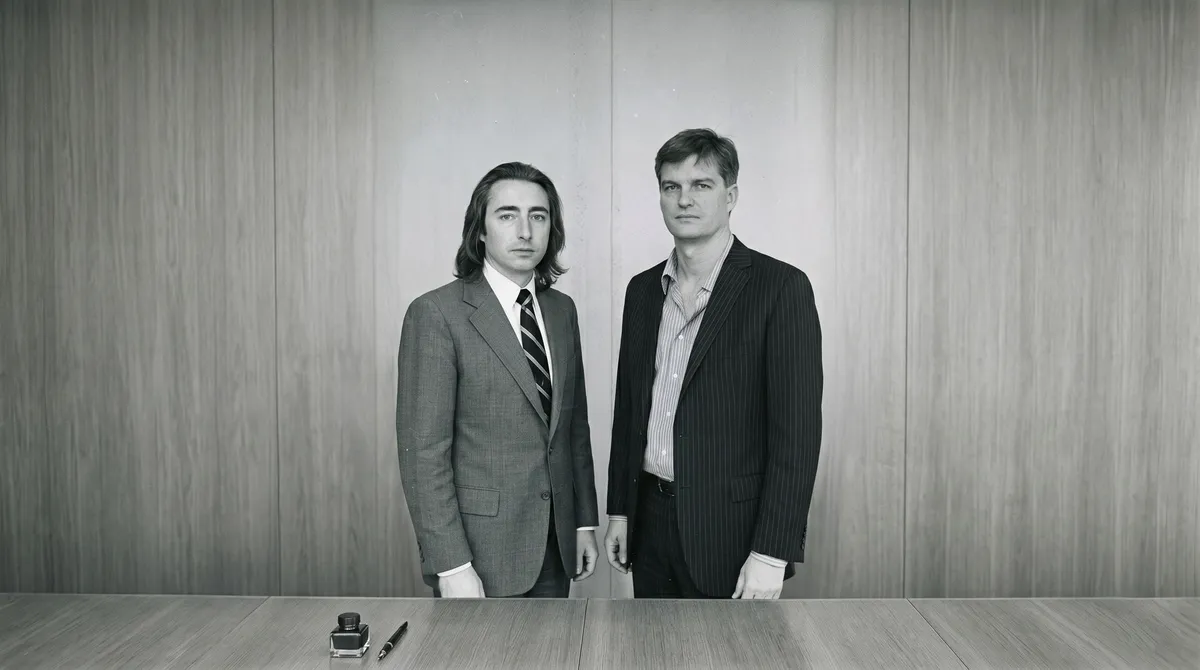
Michael Burry. Steve Eisman. Greg Lippmann.
All three reached the same conclusion: the subprime mortgage market will collapse. But their motivations, methods, and positions were completely different.
Burry saw it from outside. Alone in a small California hedge fund, digging through data, he discovered the truth. His motivation was intellectual conviction. He was an independent observer with no stake in the system.
Eisman saw it from the edge. A maverick who worked on Wall Street but didn't go along with the system. He witnessed corruption firsthand and bet out of fury. His motivation was a sense of justice.
Lippmann saw it from inside. At the center of the system — on the Deutsche Bank trading floor, trading these bonds every day — he discovered the truth. His motivation was profit. But his pursuit of profit spread the truth to the most people.
Laying the three stories side by side, one thing becomes clear: discovering the truth and acting on the truth are different things. And the way people act on the truth is completely different. The person who proves it with data. The person who fights with anger. The person who distributes it with money. All three were necessary. None one alone would have changed history.
Once you've made your choice, reveal what the legend actually did
9. Three Lessons This Story Left Behind
First, spreading truth also requires incentives.
The reason Lippmann traveled to hedge funds with his single slide wasn't a sense of justice. When hedge funds bought CDS, Deutsche Bank earned fees in the middle, and Lippmann received a portion of those earnings as a bonus. His motivation was impure. But precisely because of that impure motivation, the truth spread faster and wider. This is a lesson not just about investing but about the nature of information distribution. A good analysis that has no incentive to spread won't be heard. Burry's blog posts were read by very few. Lippmann's sales pitches reached dozens of hedge funds.
Second, those who see from inside the system are most accurate — but most at risk.
Lippmann saw the quality deterioration of subprime bonds most quickly and accurately because he traded them daily at Deutsche Bank — he had more direct data than outside observers like Burry and Eisman. But his position was the most dangerous. Publicly criticizing your own firm's products could be grounds for dismissal. An insider who wants to tell the truth must balance self-interest and truth. Lippmann found that balance through the form of a "short position." When you discover a structural problem in the company or industry you work in, how will you act?
Third, don't underestimate the power of sales.
In the investment world, "analysis" is considered the most important ability. But Lippmann's story shows the importance of "distribution." Burry invented CDS, but Lippmann grew the CDS market. Eisman was angry, but Lippmann gave Eisman a trading tool. A good idea has value only when it reaches the world. If you have a good investment idea, the question of how to execute it is matched in importance by: who to communicate it to, and how.
- 리프먼의 위치
- 도이체방크 CDO 트레이더 (시스템 내부자)
- 버리/아이스만과의 차이
- 리프먼=시장을 만든 사람, 버리/아이스만=그 시장에서 거래한 사람
- 리프먼이 만든 인프라
- ABX.HE 인덱스 CDS 시장
- 리프먼 개인 보너스
- 약 4,700만 달러 (2007년)
- 도덕적 모순
- 시스템이 잘못됐다고 알면서도, 그 시스템에서 가장 큰 돈을 벌었다
- 핵심 교훈
- "시스템을 바꿀 수 없다면, 그 시스템이 무너질 때 어디에 서 있을지를 선택하라."
10. Lippmann After
In 2010, Lippmann left Deutsche Bank. He founded his own hedge fund, LibreMax Capital, specializing in structured finance. He applied the expertise he had built during the subprime crisis to his own business.
LibreMax generated consistent returns through the 2010s. The strategy was identifying value in the structured bond market — the person who made money shorting in the crisis shifted, after the crisis, to making money buying undervalued bonds. From destruction to reconstruction.
In Michael Lewis's book, Lippmann's character was renamed Jared Vennett. In the film, he was played by Ryan Gosling. Gosling captured Lippmann's energy, confidence, and subtle moral ambiguity well. In the film, Vennett speaks directly to the camera, breaking the fourth wall — a quality that resembled Lippmann's actual personality.
After the film's 2015 release, Lippmann said in an interview:
"Pretty accurate — except Gosling is much better-looking than me."
He hadn't lost his sense of humor about himself.
Some spring day in 2006. A man was standing in front of a printer on the Deutsche Bank trading floor.
One slide printed out. One chart. A few numbers. One sentence.
He put the paper in his bag. Put on his jacket. Left the office.
And began walking around Wall Street.
Telling people that the products his firm was selling were a bomb.
Advising them to buy insurance on that bomb.
Whether he was moral or self-interested, opinions still differ.
One thing is certain.
Without his single slide, far fewer people would have made money on the Big Short.
What's your take on this story?
What do you think about Greg Lippmann's decision?
Sign in to participate
Sign In