Why Benjamin Graham Rejected Buffett's Offer to Work for Free
Spring 1951 — a young man who had just graduated top of his class at Columbia Business School asked his most admired mentor to let him work for free. The mentor said no. This is the record of the day Warren Buffett experienced the deepest rejection of his life.

Why Benjamin Graham Rejected Buffett's Offer to Work for Free
1. The Most Famous Economics Class of the 20th Century
Fall 1950. A classroom at Columbia Business School, New York.
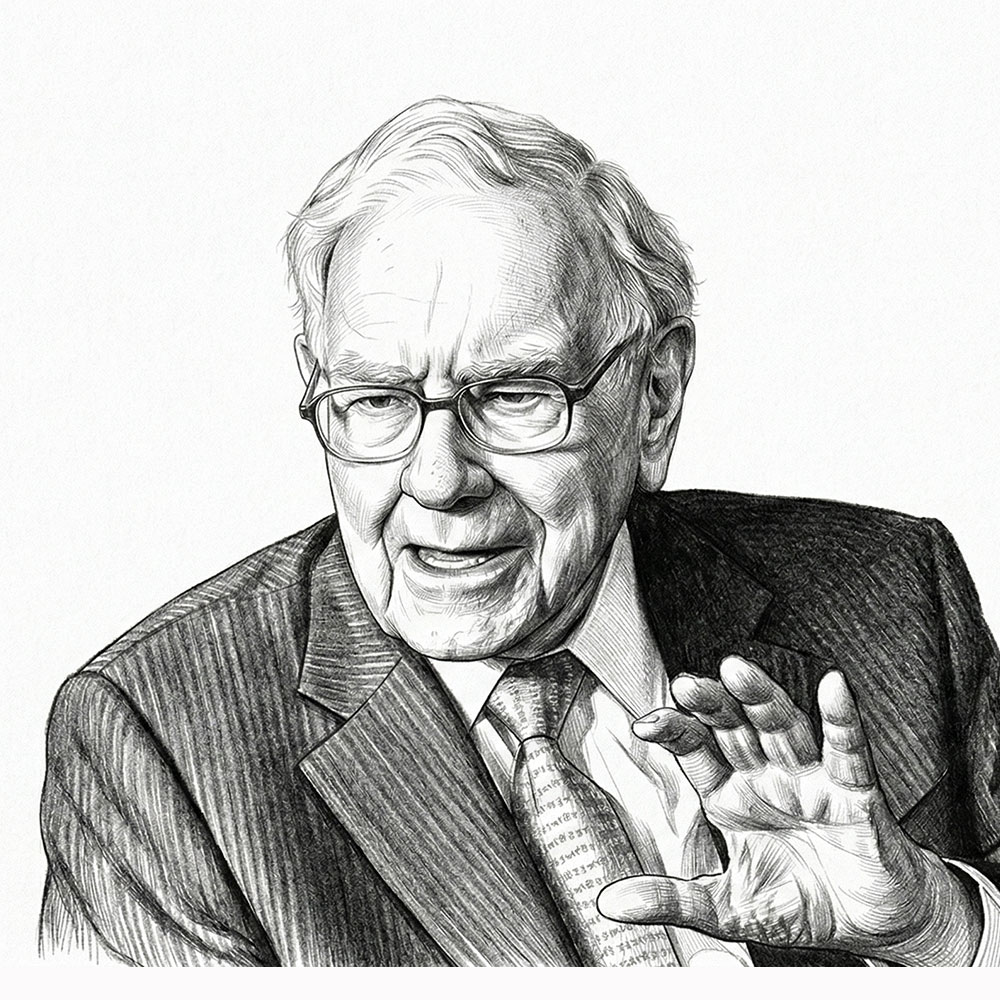
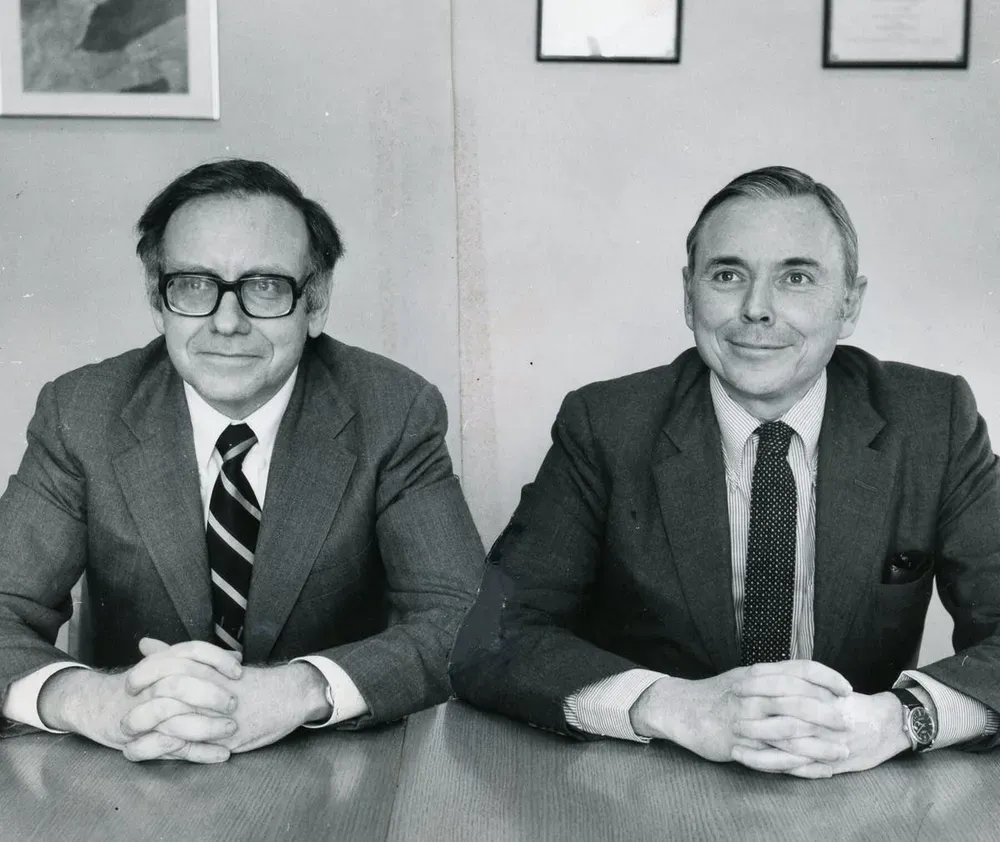
The man standing at the lectern was a 56-year-old professor. He wore glasses, dressed plainly, and spoke quietly but precisely. He gave little outward sign that he was about to change the foundations of 20th-century investment theory.
His name was Benjamin Graham.
In 1934 he had published Security Analysis. In 1949 he published The Intelligent Investor. These two books became the scripture of value investing. On Wall Street, he wasn't simply a professor — he was the intellectual source of an entire industry.
His classes were legendary. Every session, Graham brought the financial statements of an actual publicly traded company. He showed students only the numbers, hiding the company name. "Would you invest in this company?" Students analyzed and debated. At the end, he revealed the name.
One student stood out from the first day: a young man of average height, slightly thin build, age 20, from Omaha, Nebraska. His name was Warren Buffett.
The moment Graham projected a financial statement, Buffett's hand went up. He had already memorized the numbers. Despite the hidden company name, he could identify the company from the industry, size, and figures — and answered Graham's questions fastest and most accurately.
That year, Graham gave A+ to only two students. Buffett was one of them. It was the first A+ Graham had given at Columbia in years.
Buffett discovered his life's purpose in that class.
2. He Was Already Wealthy
Spring 1951 — Buffett's situation at graduation:
Age: 20
Net worth: approximately $19,738 (roughly $240,000 in 2025 dollars)
Investment experience: started at age 11, nine years in
Education: University of Nebraska undergraduate, Columbia MBA, top of class
This young man had a head start on anyone on Wall Street. Any brokerage would have wanted to hire him. He could have commanded a good salary. The going rate for a Wall Street junior analyst was about $10,000 a year — with his grades and background, he could have asked for more.
But he made an unusual decision.
He wanted to work at only one firm: Graham-Newman Corporation — a small New York investment firm where Benjamin Graham was a partner.
Buffett wrote Graham a letter:
"I want to work under you. I don't need a salary. I'll work for free."
One of the most talented investors of the 20th century asking the person he most admired to let him work without pay.
Graham's reply was short.
"I'm sorry, but no."
3. Why Graham Refused
At that time, Graham-Newman had one hiring policy:
Hire only Jews.
This was not prejudice. It was precisely the opposite.
Wall Street in the 1950s was overtly antisemitic. Major investment banks, leading law firms, exclusive clubs — most excluded Jewish people. Jewish finance professionals struggled to get jobs at top firms. Graham himself was Jewish, and he had experienced this discrimination all his life.
So he had reversed the rule at his own firm. If Jews had nowhere to go, Graham-Newman should be their place. This principle was a moral declaration — and he never bent it for any reason.
Buffett was not Jewish. He was a young man from Nebraska who had grown up in a Methodist family. So Graham could not hire him.
Even if he was a genius. Even if he offered to work for free.
Buffett would learn the reason later. But at the time, he wasn't given a specific explanation. He only knew that he had been turned down — by the person he admired most, despite offering to work without pay.
"I told him I'd work for free. He said I was too expensive."
Buffett's words in a later reflection on this moment. There is something in that one sentence.
4. Returning to Omaha
After the rejection, what did Buffett do?
He returned to Omaha. He joined the small brokerage firm his father Howard Buffett ran — Buffett-Falk & Co. He received a salary. But it wasn't the work he wanted to do.
He worked in Omaha recommending stocks to clients. He hated it. If his recommendation was wrong, clients lost money. If it was right, clients sold too early or bought too late. It was outside his control.
During this period, Buffett was doing two things simultaneously.
First, he invested his own money. Every night he read the Moody's Manual — which contained the financial statements of every publicly traded company in America. Buffett read it page by page, A to Z, looking for cheap stocks. His favorite expression: "Buying a dollar bill for forty cents."
Second, he kept sending letters to Graham. Analysis of cheap stocks he had found. Follow-up analysis on companies Graham had mentioned in class. New investment ideas. Without expecting anything in return, he simply wrote. Graham rarely replied. Occasionally he sent a brief response.
Five years passed this way.
5. The Phone Call in 1954
August 1954. Buffett was at his home in Omaha when the phone rang.
The voice on the other end: Benjamin Graham.
"Buffett, are you still interested in coming to New York?"
The mentor who had turned him down five years earlier was now calling him first. Graham had read every letter Buffett had sent over five years. An employee at Graham-Newman had left. A position was open. Graham decided to put Buffett in that seat.
Salary: $12,000 — an excellent figure for the time. The very seat where, five years earlier, Buffett had offered to work for free.
Three days after the call, Buffett left for New York. With his wife Susie. He told her: "Now the work begins."
For the next 18 months, Buffett worked at Graham-Newman. His desk was in the room next to Graham's. Every morning he discussed investment ideas with his mentor. He analyzed every transaction. He absorbed Graham's way of thinking wholesale.
And then, 18 months later, Graham announced his retirement.
6. The Mentor's Gift
Spring 1956. Graham was 62. He declared he was closing his firm and retiring — one of the most prestigious investment companies on Wall Street at the time. But he didn't pass the firm to anyone.
He decided to return his investors' money. He wrote letters to his clients:
"I am retiring. I recommend several young people who will manage your capital responsibly."
At the end of the letter, three names. One of them was Warren Buffett — Graham's hand-picked successor to his investment philosophy.
Buffett returned to Omaha. On May 1, 1956, with $105,100 raised from family and friends, he launched his first investment partnership: Buffett Associates, Ltd. — the partnership that would eventually become Berkshire Hathaway.
Several clients who received Graham's letter entrusted their capital to Buffett — to a young man in his mid-twenties in Omaha. A young man who already carried Graham's name on his back.
7. What the Rejection of Five Years Earlier Meant
Looking back, the rejection in 1951 was one of the most important events in Buffett's life.
What if Graham had hired Buffett then? Buffett would have worked as an analyst at Graham-Newman. Good salary, settled in New York, working under his mentor for years. He would have become an excellent investor.
But he would not have become the Buffett of Omaha.
In the five years after the rejection, Buffett gained three things.
First, training in generating investment ideas independently. With no mentor nearby, he had to find them himself. During this period he personally discovered countless small companies — applying the mentor's methodology in places the mentor hadn't looked.
Second, Omaha as a base. A space to think, removed from New York's noise. The principle he emphasized all his life — "keep your distance from market noise" — was also his spatial choice. If he had settled in New York in 1951, that distance would never have existed.
Third, patience as an asset. A person who waited five years can wait thirty-six years. Buffett's time horizon — holding Coca-Cola for 36 years — may have begun in these five years.
The rejection wasn't failure. The rejection was the start of a longer road.
Spring, 1951. You are Warren Buffett, age 20. You asked your most admired mentor to let you work for him — for free. He said no. Other firms on Wall Street will take you, and the pay is good. But it's not the position you wanted.
8. Three Lessons This Story Left Behind
First, a rejection may not be an evaluation of you.
Graham's rejection of Buffett wasn't because Buffett was lacking. It was because of a different principle in the firm. Buffett didn't know this for a long time — but he never lost his faith in his mentor. Half the rejections you receive in life have nothing to do with your ability. Timing, the other party's circumstances, invisible constraints. Treating rejection as self-negation means missing the next opportunity. Rejection means "not now" — not "not you."
Second, what you do while waiting is everything.
Buffett's five years were not passive waiting. He read the Moody's Manual every day, invested in practice, and sent letters to his mentor. The quality of the wait determines the outcome. Most people become discouraged and stop after missing an opportunity. A very few keep preparing even while waiting. Only someone ready when the opportunity returns five years later can receive it. Patience is a skill. And it can be trained.
Third, relationships become more important after a rejection.
If Buffett hadn't kept sending letters to Graham for five years, the 1954 phone call would never have come. Most people cut off a relationship after rejection — because of wounded pride, because it's uncomfortable. But the real opportunities come from relationships maintained after rejection. Even if it seems one-sided, even if there are no replies — maintain the connection with people you believe to be valuable. You don't know what phone call might come five or ten years later.
Once you've made your choice, reveal what the legend actually did
9. Mentor and Student
Graham died in 1976 at age 82. Before his death, Buffett named him one of the three teachers of his life: his father Howard Buffett, Benjamin Graham, and Charlie Munger.
At Graham's funeral, Buffett gave the eulogy. He said:
"Benjamin Graham was the most rational man I ever met. He didn't teach me to invest. He taught me how to think."
One of the most famous analogies Buffett has used all his life: "Mr. Market" — a neighbor who is manic-depressive, coming to you every day wanting to buy or sell your stocks, some days quoting irrationally high prices, other days irrationally low. Graham invented this analogy. It appears in Chapter 8 of The Intelligent Investor.
Buffett quoted this analogy for over 60 years — in shareholder letters, interviews, lectures. Always beginning with "Mr. Market says..." Even 50 years after his mentor's death.
In 2025, 94-year-old Buffett announced his own retirement — stepping back in favor of his successor Greg Abel. In that moment, he added one line:
"As Ben taught me, I hope I have taught someone."
The young man rejected in 1951.
Seventy-four years later, now the mentor himself, departing the stage.
Sources
Alice Schroeder, "The Snowball: Warren Buffett and the Business of Life" (2008)
Roger Lowenstein, "Buffett: The Making of an American Capitalist" (1995)
Benjamin Graham, "The Intelligent Investor" (1949)
Warren Buffett, "The Superinvestors of Graham-and-Doddsville" (1984 speech)
Berkshire Hathaway Annual Letter (2015, Graham retrospective)
- 1951년
- 무급 제안 거절 — "그는 내가 너무 비싸다고 했다"
- 1954년
- 스승이 먼저 전화 — 연봉 $12,000
- 1956년~2025년
- 거절당한 청년 → 74년 뒤 자기가 스승이 되어 떠나다
What's your take on this story?
What do you think about Warren Buffett's decision?
Sign in to participate
Sign InWarren Buffett Today
Where is Warren Buffett investing right now? See their latest 13F portfolio and current convictions.