In March 1999, Stanley Druckenmiller — Wall Street's preeminent macro trader — called the peak of the dot-com bubble with pinpoint accuracy. He placed $200M in short positions across 12 stocks. Every single one of them eventually went bankrupt. A 100% hit rate. Yet he lost $600M.
Perfect Analysis, Catastrophic Outcome
In Druckenmiller's own words:
"I shorted 12 stocks. Every single one of those companies went bankrupt. Not one survived."
The problem was timing. Bubbles inflate most violently just before they burst. In the spring of 1999, the Nasdaq had long since detached from any rational valuation — yet it kept going vertical. Druckenmiller's short positions accumulated $600M in mark-to-market losses, forcing him to cover. At the time, he was serving as CIO of George Soros's Quantum Fund.
"If you're wrong on a long position, you can lose 100% of your capital. But if you're wrong on a short, you can lose ten times your capital."
This is the structural asymmetry of short selling. On the long side, the worst-case loss is 100% of principal. On the short side, losses are theoretically unlimited. If a stock doubles, triples, or goes up tenfold, losses compound accordingly. Druckenmiller's 12 stocks surged before they collapsed — and that surge cost him $600M.
The $600M Loss Was Just the Prelude
The aftermath proved even more destructive. Having absorbed a $600M loss, Druckenmiller faced the prospect of blemishing a 30-year track record without a single down year. And he fell into a trap that ensnares even the best investors: FOMO — Fear of Missing Out.
In late 1999, with the tech bubble at peak mania, Druckenmiller plowed approximately $6 billion into long technology positions. Having been right about the bubble — and still losing money — he reversed course entirely, capitulating to market momentum.
The result: when the dot-com bubble collapsed in 2000, he lost approximately $3 billion — roughly half of the $6B deployed. He was burned twice by the same bubble. Once because he was right. Once because he gave in.
30 Years, ~30% Annualized, Zero Down Years
What makes this episode legendary is the context of Druckenmiller's broader career. From his tenure as CIO of Soros's Quantum Fund through his own Duquesne Capital, he generated annualized returns of approximately 30% over 30 years (1981–2010) — without a single losing year. Even the twin disasters of 1999 weren't enough to push his full-year return into negative territory.
And yet even he was humbled by short selling.
"Honestly, I'm not sure I've ever made money on the short side over my career. I've never had a down year, but I genuinely can't say with confidence that my short book has been net profitable. I love shorting — it's intellectually engaging. But done wrong, it can completely destroy you."
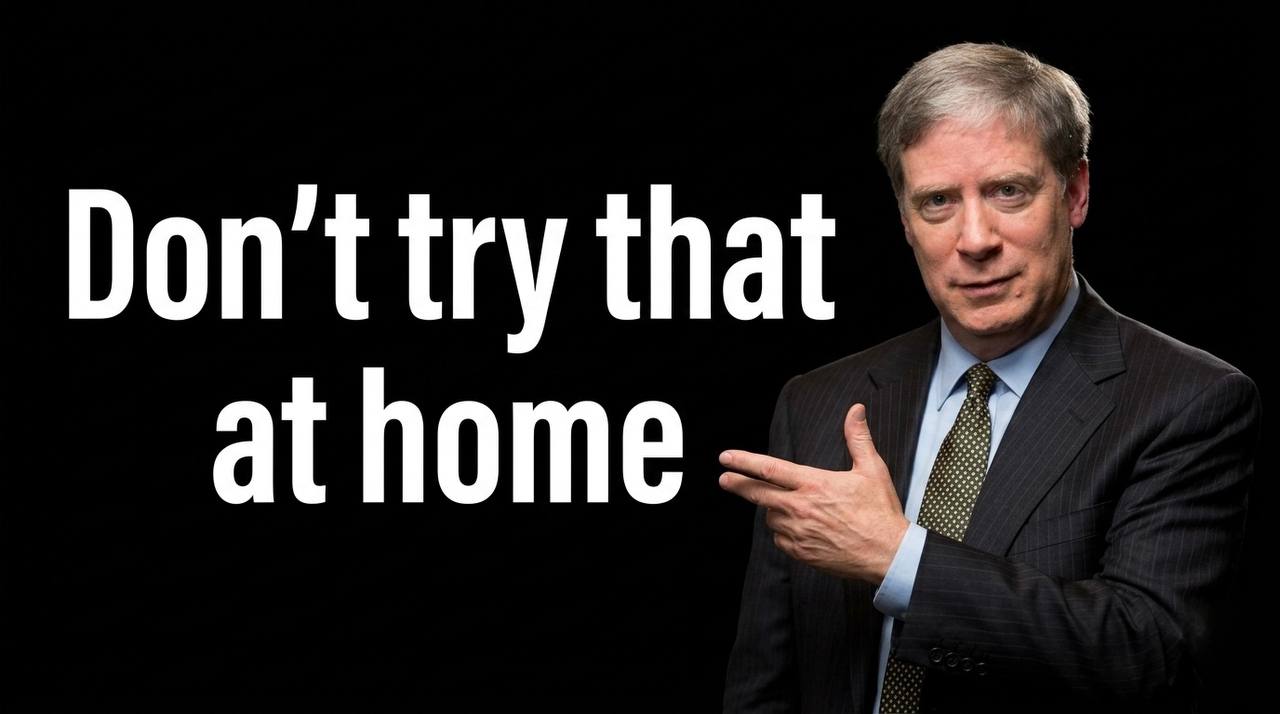
And he added one final word of warning: "Don't try that at home."
Where Is Druckenmiller Positioned in 2026?
Druckenmiller's 2026 portfolio reflects the hard lessons of 1999 — and it's notably defensive. Based on his Q4 2025 13F filing, he has fully exited Meta (META) and initiated a new position in Goldman Sachs (GS), rotating his center of gravity toward financials.
His AI equity exposure has been cut sharply to 9.4% of the portfolio — a meaningful signal from someone who previously rode the AI theme to significant gains. In its place, he is diversifying into the S&P 500 Equal Weight ETF (RSP), the Financial Select Sector ETF (XLF), and the Brazil ETF (EWZ).
One holding of particular note for international investors: Druckenmiller has been building his position in Coupang (CPNG). It represents a direct bet on the Korean e-commerce market from Wall Street's most respected macro investor.
On the macro front, he continues to sound the alarm on America's fiscal trajectory. His oft-cited figure of "$200 trillion in debt" is not the official national debt ($36 trillion) — it refers to total unfunded liabilities, including Social Security and Medicare obligations. The same analytical lens that identified the dot-com bubble in 1999 is now trained on the U.S. debt structure in 2026.
Key Takeaways
Druckenmiller's 1999 episode offers three clear lessons for investors:
First, being right on direction but wrong on timing can still wipe you out. Flawless fundamental analysis — all 12 companies did go bankrupt — was no match for the market's irrational exuberance.
Second, the emotional response to a loss is more dangerous than the loss itself. The $600M short loss was damaging. The FOMO-driven $3B long loss that followed was five times worse.
Third, short selling is a structurally disadvantaged game. The maximum loss on a long is -100%. The theoretical maximum loss on a short is unlimited. Even Druckenmiller — 30 years, zero down years — cannot say with certainty that his short book was ever net profitable.