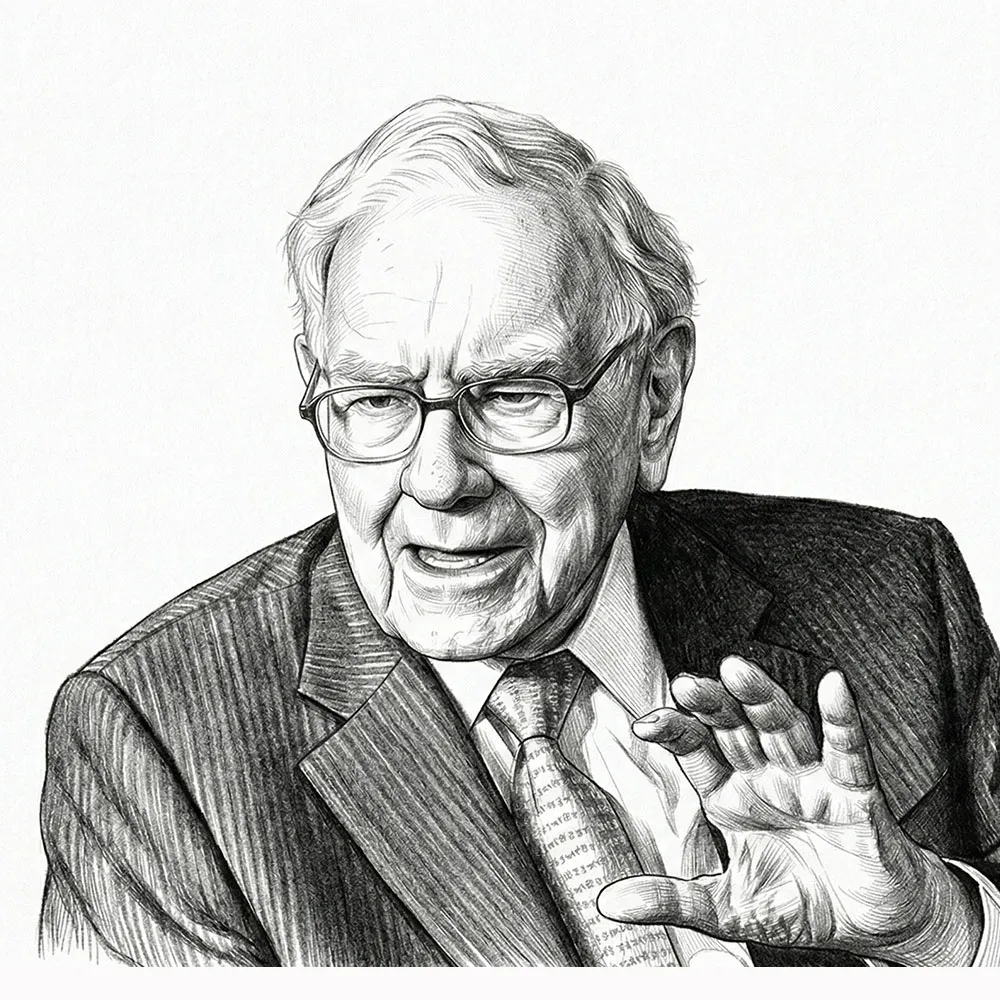
Never Buy a Bad Business Cheap
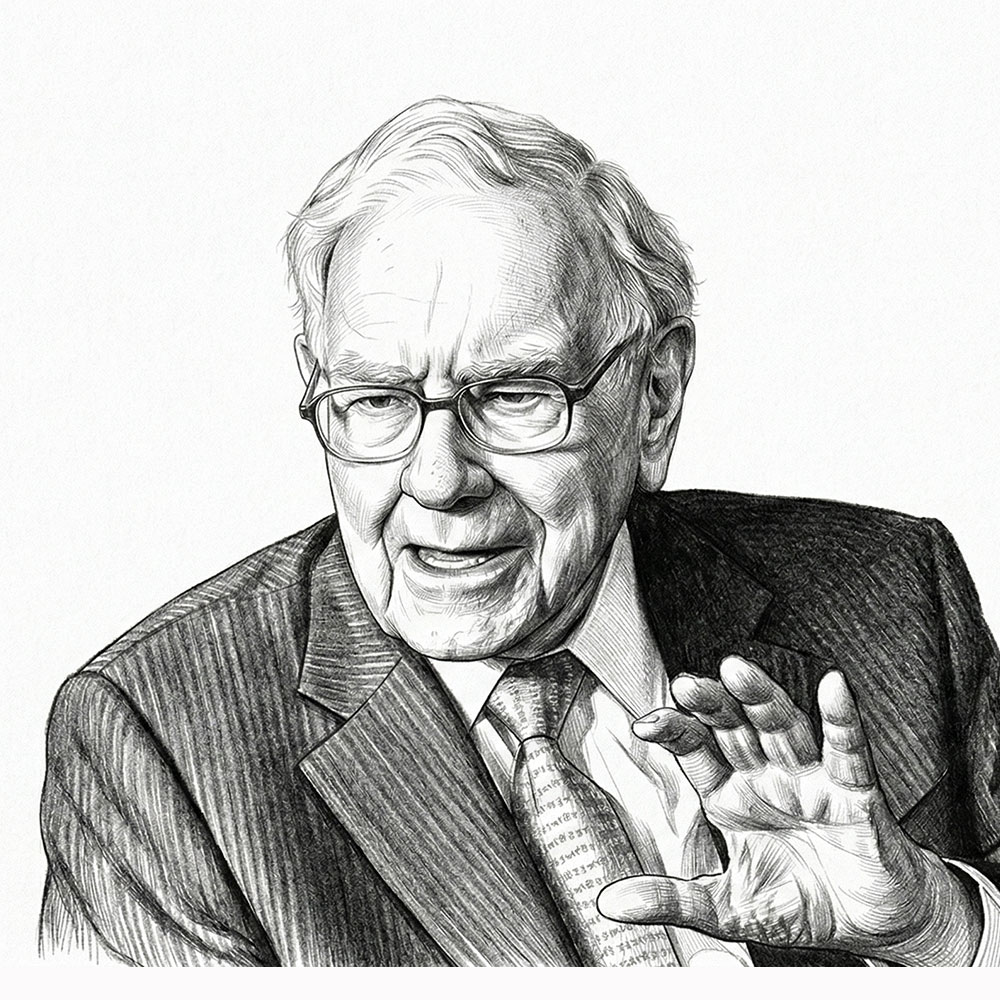
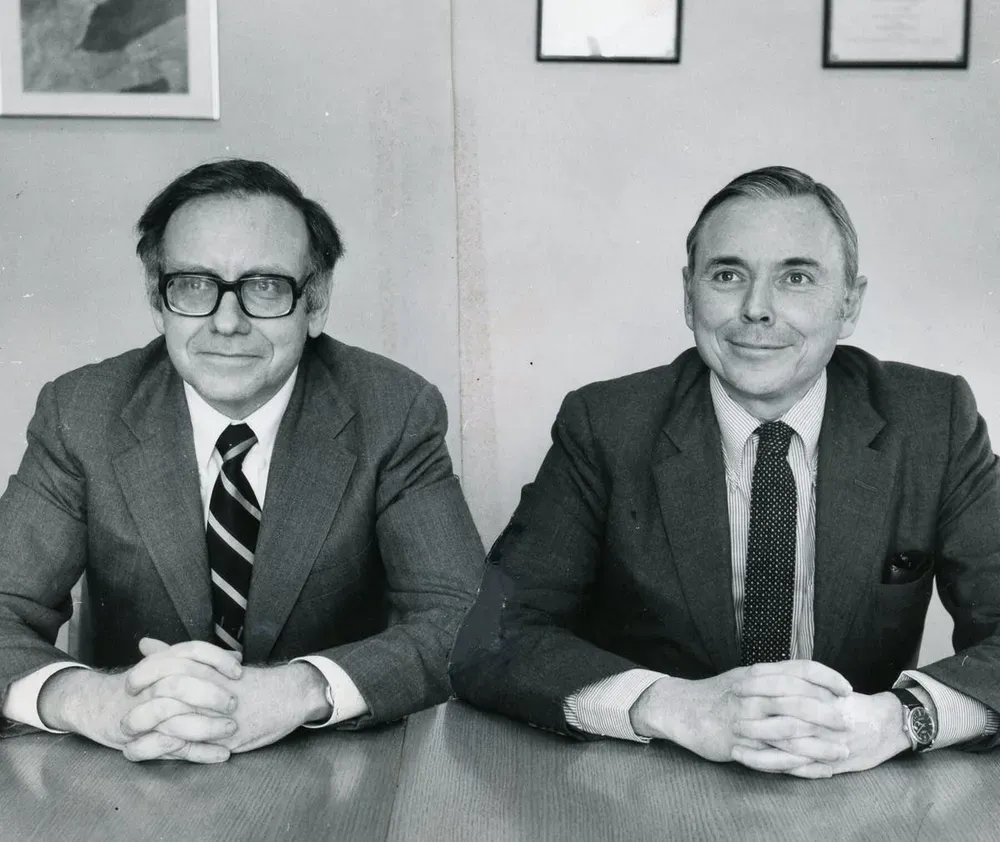
In early 1972, Warren Buffett had the chance to acquire See's Candies — paying $25 million for a company with $8 million in tangible assets. A price his mentor Graham would have flatly refused. Just as Buffett was about to pass, Charlie Munger said: "Warren, assets aren't what matter here. This company's real assets aren't on the balance sheet." That one line turned $25 million into $1.35 billion over 35 years.

Never Buy a Bad Business Cheap
In 1972, Warren Buffett was about to acquire a small California candy company. The price was too high. His mentor Benjamin Graham would never have paid it. Buffett was ready to walk away. Then the man beside him spoke: "Warren, stop trying to buy fair companies at wonderful prices. Buy wonderful companies at fair prices." This is the record of the day Charlie Munger said the single most important sentence in American investment history.
1. The Lawyer from Omaha
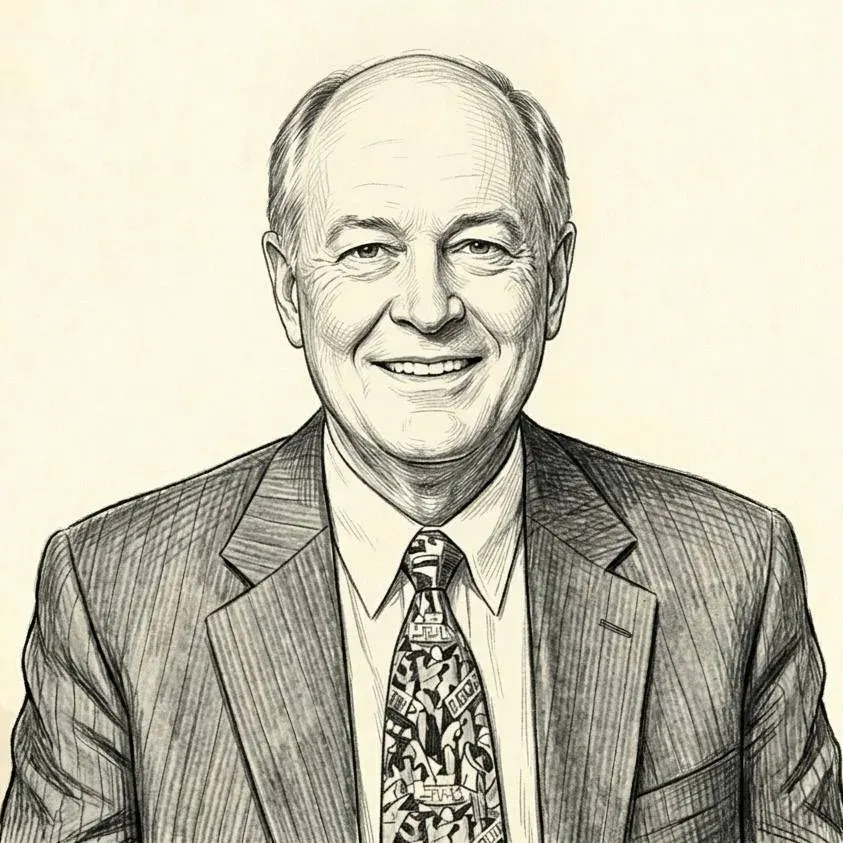
Charlie Munger was born on January 1, 1924, in Omaha, Nebraska — the same city as Buffett. More remarkable still: in his teenage years, Munger had worked part-time at the grocery store run by Buffett's grandfather. Yet the two men didn't meet in person until much later.
Munger majored in mathematics at the University of Michigan. When World War II broke out, he enlisted in the Army Air Corps and studied meteorology. After the war he entered Harvard Law School — without an undergraduate degree. Harvard admitted him as an exception, because of his military service and outstanding test scores.
After graduating from law school in 1948, he went to California. He began practicing law in Los Angeles, specializing in real estate and corporate law. He was a good lawyer — but not a great one. As he later said:
"Law work wasn't bad. But I found managing my own money far more interesting than solving other people's problems."
In 1959, Munger visited Omaha for his father's funeral. A mutual acquaintance introduced him to one person: Warren Buffett. Buffett was 29; Munger was 35.
The two men talked for hours over dinner on their first meeting — about investing, business, life, books. Buffett later recalled the meeting:
"Charlie had deeper opinions on a wider range of subjects than anyone I'd ever met. He was a lawyer, but he didn't think like a lawyer. He was a thinking machine."
Munger had a similar impression of Buffett. "Buffett was the fastest brain I'd ever encountered. His speed with numbers was abnormal."
After that day, the two talked by phone every week — Los Angeles to Omaha. The long-distance charges ran hundreds of dollars a month. In the late 1950s, hundreds of dollars was not a small amount.
2. Munger's Investment Style
In the 1960s, Munger began investing alongside his law practice. He pooled his own money and friends' money to form an investment partnership called Wheeler, Munger & Company in 1962.
His early investment style resembled Buffett's: the Benjamin Graham method. Buying cheap stocks. Finding companies where the stock price was low relative to asset value, buying, and waiting for the market to recognize the value. The method Buffett called "cigar butt investing."
But Munger increasingly grew dissatisfied with this approach.
The reason was simple. Cheap stocks were cheap for a reason. The business was bad, or management was incompetent, or the industry was in decline. You could buy cheap and sell for a small profit, but these companies almost never grew tenfold or twentyfold. You could get one last puff from a cigar butt, but that cigar would never become a premium Cuban.
Munger began looking at something else. Good companies. Companies with truly excellent businesses. Companies with clear competitive advantages. Companies with capable management. These companies didn't look "cheap." By Graham's standards they were expensive. But Munger thought:
"A price that looks expensive may actually be cheap — because good companies grow in value over time. Looking out 10 or 20 years, a good company bought at a fair price returns far more than a bad company bought cheaply."
This thinking directly contradicted Graham. Graham taught "buy only when price is sufficiently below value." Munger was saying "if the value is sufficiently high, it's fine to pay a fair price."
Buffett didn't accept this idea at first. Graham was his mentor, and he was already making good money with Graham's methodology.
Then in 1972, a company appeared.
3. See's Candies
In early 1972, an acquisition opportunity came before Buffett and Munger: See's Candies, a California candy company.
See's Candies was a premium chocolate and candy company founded in 1921. It had a strong brand in California and the western United States. Sales were concentrated in the Christmas and Valentine's Day seasons. Customer loyalty was extremely high. For Californians, "See's Candies" wasn't just candy — it was synonymous with giving gifts.
The asking price: $30 million.
Buffett looked at the numbers. See's tangible net assets: approximately $8 million. Pre-tax earnings: approximately $4 million. In other words, the seller was asking approximately 3.75x net assets and approximately 7.5x pre-tax earnings.
By Graham's standards, this price was expensive. Graham preferred buying below net asset value. Paying $30 million for a company with $8 million in assets was the opposite of the Graham method.
Buffett hesitated. What he told Berkshire Vice Chairman Rick Guerin:
"I could go to $25 million. $30 million is too expensive."
That's when Munger intervened.
4. That One Line
Munger spoke to Buffett:
"Warren, look at this company. The brand loyalty is extraordinary. There isn't a person in California who doesn't know See's Candies. They raise prices every year and customers don't leave. This is a company with a moat."
Buffett pushed back. "Paying $30 million for a company with $8 million in net assets is too expensive relative to assets."
Munger said:
"The assets aren't what matter. This company's real assets don't show up on the balance sheet. It's the brand. It's customer habits. It's the power to raise prices every year without losing sales. That power is worth $300 million, not $8 million."
Then he delivered the decisive line:
"Warren, stop trying to buy fair companies at wonderful prices. Buy wonderful companies at fair prices."
"Forget what you know about buying fair businesses at wonderful prices; instead, buy wonderful businesses at fair prices."
This single sentence changed Warren Buffett's investment philosophy.
Buffett turned it over in his mind for a long time. Then he agreed. They would buy See's Candies for $25 million — the seller came down from $30 million.
In 1972, Berkshire Hathaway acquired See's Candies for $25 million.
5. The Miracle That $25 Million Made
What happened after the See's Candies acquisition?
Munger's prediction was accurate. See's brand power created a structure where customers didn't leave even as prices rose every year. The candy price of $1.95 per pound in 1972 became $11.85 per pound in 2007. Sixfold in 35 years. And sales volume didn't decline.
This was the actual operation of what Munger called a "moat." A company where customers don't leave even when prices rise. A brand that competitors can't replicate. A company like this is like a machine that pumps out more cash every year.
The numbers:
- 1972 acquisition price: $25 million
- 1972 pre-tax earnings: $4 million
- 2007 pre-tax earnings: approximately $82 million
- 1972–2007 cumulative pre-tax earnings: approximately $1.35 billion
A $25 million investment that pumped out $1.35 billion in cash over 35 years. Returning 54 times the investment in cash — with the company still worth hundreds of millions.
In his 2007 shareholder letter, Buffett wrote about See's Candies:
"Acquiring See's was the turning point of my investment life. Without Charlie, I would still be picking up cigar butts."
He added:
"The lessons learned from See's led to buying Coca-Cola. Coca-Cola is the same kind of company as See's — a company where the brand is the moat and pricing power is the weapon."
The $1 billion Coca-Cola purchase in 1988. That was an expansion of the thinking that began with See's Candies for $25 million in 1972. Munger's one sentence led to a $1 billion bet sixteen years later.
6. Why Munger Was Different from Buffett
Same hometown. Same investor type. Same value investing lineage. So why did Munger move beyond Graham's method when Buffett, before meeting Munger, could not?
The answer lay in Munger's reading habits.
Buffett read financial statements. He read numbers. He read the Moody's Manual from A to Z. His reading was concentrated on investing.
Munger read everything. Physics, biology, psychology, history, law, economics, mathematics. He stacked thousands of books in his study and read for hours every day. His family called him "a book with legs."
This multidisciplinary reading broadened his investment thinking. What Graham taught was "accounting value analysis" — reading balance sheets and calculating asset values. This method sees only what can be quantified.
Munger saw what couldn't be quantified. Brands. Consumer psychology. Competitive structure. The quality of management. These things don't appear in financial statements. But these intangible assets are what determine a company's long-term value.
He could arrive at this insight because he read psychology (consumer behavior), biology (competition and adaptation), and physics (compounding and nonlinearity) simultaneously.
"To a man with a hammer, every problem looks like a nail."
A line Munger repeated all his life. Graham's methodology was an excellent hammer. But not every problem in the world is a nail. Munger was a man who carried a screwdriver, pliers, and a saw alongside his hammer.
7. The Structure of the Partnership
The Buffett–Munger partnership was one of the most unusual relationships on Wall Street.
Formally, Munger was Berkshire Hathaway's Vice Chairman. But he didn't live in Omaha. He lived in Los Angeles — for his entire life. He never commuted to Berkshire's headquarters. He read books in his study and talked to Buffett by phone.
Their working dynamic: Buffett calls Munger with an investment idea. Munger listens for 15 minutes. Then responds in one of three ways:
- "Good idea." (Rare.)
- "That's a dumb idea." (Frequent.)
- "Need to think more." (Most common.)
Buffett didn't fear Munger's "dumb idea" response. He welcomed it. From the shareholder letters:
"Charlie's greatest value is that he tells me 'no.' Most people around me tell me what I want to hear. Charlie tells me what I need to hear."
The relationship looked similar from Munger's side:
"Warren is the fastest learner I've ever met. Give him an idea and he pushes it further than I thought possible. See's Candies proved that. When I said 'buy wonderful companies at fair prices,' he extended that principle to Coca-Cola, American Express, and Moody's. When you give your idea to Buffett, it stops being your idea."
Early 1972. You are Warren Buffett. An opportunity has arrived to acquire See's Candies. The ask is $25 million for a company with just $8 million in net tangible assets — a price your mentor Graham would never pay. But your partner Munger tells you, "The real assets of this company don't appear on any balance sheet."
8. What Kind of Investor Would Buffett Have Been Without Munger?
This is one of the most interesting counterfactual questions in investment history.
What if the two men hadn't met in 1959? What if Munger hadn't said "buy wonderful businesses at fair prices" in 1972?
Buffett would probably have kept investing the Graham way. Buying cheap stocks, selling when value recovered, finding the next cheap stock. He would have made good returns. But he would never have held Coca-Cola for 36 years. He would never have bought See's Candies.
Buffett himself once answered this question:
"Without Charlie, I would have been much poorer. Not in money — in thinking."
Munger said something similar:
"Without Buffett, I would have remained a good lawyer. But Buffett would have become a great investor without me. Just a different kind of greatness."
This mutual humility was why the partnership lasted 60 years.
Once you've made your choice, reveal what the legend actually did
9. Three Lessons This Story Left Behind
First, "cheap" doesn't mean "good."
One of the most common mistakes Korean individual investors make is judging "the P/E is low, so it's cheap" or "the P/B is below 1, so it's undervalued." Graham taught this too. But Munger said the opposite. Cheap stocks are cheap for a reason. The real question to ask isn't "is this company cheap?" — it's "is this company good?" What is a good company? One with a clear competitive advantage, pricing power, capable management, and value that grows over time. Buy such a company at a fair price, and time works in your favor.
Second, a partner's value lies in disagreement, not agreement.
The greatest value Munger gave Buffett wasn't new ideas — it was saying "no." Most investors look for someone who will validate their judgment. What you actually need is someone who will say "that's a dumb idea." Do you have someone who will give you a contrary view on your investment decisions? If not, you may be investing inside an echo chamber.
Third, investment philosophy must evolve.
Buffett learned from Graham in 1951 and from Munger in 1972. The same person changed his investment philosophy 21 years later. The most dangerous investor is the one who says "I know my method." Markets change, economies change, the world changes. Graham's method was optimal in the 1930s–50s; after the 1970s, Munger's method was more effective. If your investment approach is identical to what it was 10 years ago, that may be rigidity, not consistency.
- 그레이엄 방식
- 순자산 가치 이하로 매수, 가치 회복 시 매도 (시가 꽁초)
- 멍거 방식
- 경제적 해자가 있는 좋은 회사를 적당한 가격에 매수, 장기 보유
- 씨즈 캔디 인수가
- 2,500만 달러 (1972년)
- 씨즈 순유형자산
- 800만 달러 (그레이엄 기준 3.75배 비쌈)
- 35년 누적 세전 이익
- 13억 5,000만 달러 (54배 회수)
- 52년 누적 세전 이익
- 약 20억 달러 이상 (80배)
- 핵심 교훈
- "비싸 보이는 좋은 회사가 싸 보이는 나쁜 회사보다 결국 더 싸다"
10. See's Today
As of 2024, See's Candies is still a Berkshire Hathaway subsidiary — in its 52nd year.
The cumulative pre-tax earnings See's has generated for Berkshire since the 1972 acquisition are estimated at well over $2 billion.
A $25 million investment. $2 billion returned. 80 times over.
And Buffett reinvested that money into other investments. The cash from See's funded the purchases of Coca-Cola, American Express, Moody's, and Apple. The cash flow that began with a single candy company became the fuel for the Berkshire Hathaway empire.
Munger died on November 28, 2023, 33 days before his 99th birthday.
What Buffett said after he was gone:
"Berkshire Hathaway could not have come to its present position without Charlie Munger."
One sentence in 1972. Don't buy bad companies cheaply. Buy wonderful companies at fair prices.
That one sentence turned $25 million into $2 billion, changed one investor's philosophy, and determined the direction of the largest investment empire in American history.
And the man who said it was a lawyer from Omaha.
Sources: Alice Schroeder, "The Snowball" (2008) / Janet Lowe, "Damn Right!" (2000) / Tren Griffin, "Charlie Munger: The Complete Investor" (2015) / Berkshire Hathaway Annual Letters / Charlie Munger, "A Lesson on Elementary, Worldly Wisdom" (1994 USC lecture)
What's your take on this story?
What do you think about Charlie Munger's decision?
Sign in to participate
Sign In