1929: The Sound of the World Falling Apart
Black Tuesday, 1929. The Dow fell 12% in one day — the worst trading day in history. In a Manhattan apartment, a 52-year-old man quietly counted his profits: roughly $100 million (≈$1.8 billion today). On the day millions lost everything, Jesse Livermore — with short positions hidden across 100 accounts — became America's wealthiest speculator. His peak, and the beginning of his tragedy.
1929: The Sound of the World Falling Apart
Tuesday, October 29, 1929. The New York Stock Exchange. The moment the opening bell rang, sell orders flooded in. 16.4 million shares traded in a single day. The Dow fell 12%. The worst trading day in American history. That evening, in a Manhattan apartment, a 52-year-old man quietly calculated his profits. Approximately one hundred million dollars. This is the record of the day Jesse Livermore turned the end of the world into money.
1. The Madness of the 1920s
To understand the 1929 crash, you first have to see the decade of madness that preceded it.
America in the 1920s was the "Roaring Twenties." World War I had ended, and the American economy entered an unprecedented boom. The automobile industry exploded. Radio spread. Electricity lit the cities. Consumption surged.
Stock markets rose with it. From 1921 to 1929, the Dow rose approximately sixfold — from 63 to 381 points.
The problem lay in the structure of that rise. Margin trading expanded explosively. At the time, Americans didn't have to pay the full price when buying stocks — you could put down just 10% in cash and borrow the remaining 90%. In other words: 10x leverage. You could buy $1,000 worth of stock with $100.
When prices rose, this leverage multiplied gains tenfold. But when prices fell, losses were multiplied tenfold too. A 10% price drop wiped out the entire principal.
From 1928, margin trading had become everyday practice across America. Taxi drivers bought stocks. Shoe-shine boys bought stocks. Housewives bought stocks. Everyone was using leverage.
The most famous anecdote from this period involves Joseph Kennedy, father of JFK, who went to get his shoes shined. The shoe-shine boy gave him a stock tip. Kennedy went back to his office and sold all his stocks immediately.
"When the shoe-shine boys are talking stocks, it's time to get out." — Joseph Kennedy (attributed)
2. Livermore in the 1920s
What was Livermore's position in the 1920s?
He had already experienced two bankruptcies and two comebacks. He'd made three million dollars in the 1907 Panic, only to lose everything in cotton futures speculation in 1908. He came back and made millions again, then went bankrupt again in 1915.
Both bankruptcies followed the same pattern: immediately after a large gain, overconfidence mounted, he made larger bets, the market moved against him, and leverage wiped out everything.
In 1917, he staged his third comeback — profiting from commodity markets during World War I. By the early 1920s, he had again accumulated millions.
Then, from the mid-1920s, he began watching the market. While everyone else was elated, he quietly studied the numbers.
He saw three things.
- First, the scale of margin debt. The NYSE's margin loan balance began surging from 1927. By 1928, it had doubled year-over-year. The entire market was being levitated by borrowed money.
- Second, abnormal volume. Trading volume was growing faster than stock prices were rising. From thirty years of experience, Livermore recognized this as a signature of market peaks.
- Third, weakening leadership stocks. The large-cap stocks that had been leading the market were no longer making new highs, while only small-caps and speculative plays kept rising. Livermore read this as "the market's final stage."
In the summer of 1929, Livermore made his decision: he would begin shorting.
3. The Secret Campaign
Summer and early autumn of 1929. Livermore began building his short position — but this time using a different method. Secretly.
He did not trade under his own name. He used over one hundred broker accounts, placing small orders in each. Some accounts were in his wife's name, some in the names of companies, some in the names of close associates. He arranged it so that no single place could know the full size of his position.
Two reasons for this approach.
First, market impact. If rumors spread that Livermore was taking a massive short, other speculators would follow. That would drive prices down too fast, making it difficult to build his position.
Second, political risk. During the 1907 Panic, JP Morgan had asked him to stop shorting. If a large-scale short became known in 1929, the government or financial authorities might intervene.
Over months, he quietly grew the position. The exact final size was never disclosed, but various estimates suggest a short position worth tens of millions of dollars.
Then October arrived.
4. Black Thursday and Black Tuesday
Thursday, October 24, 1929. Black Thursday.
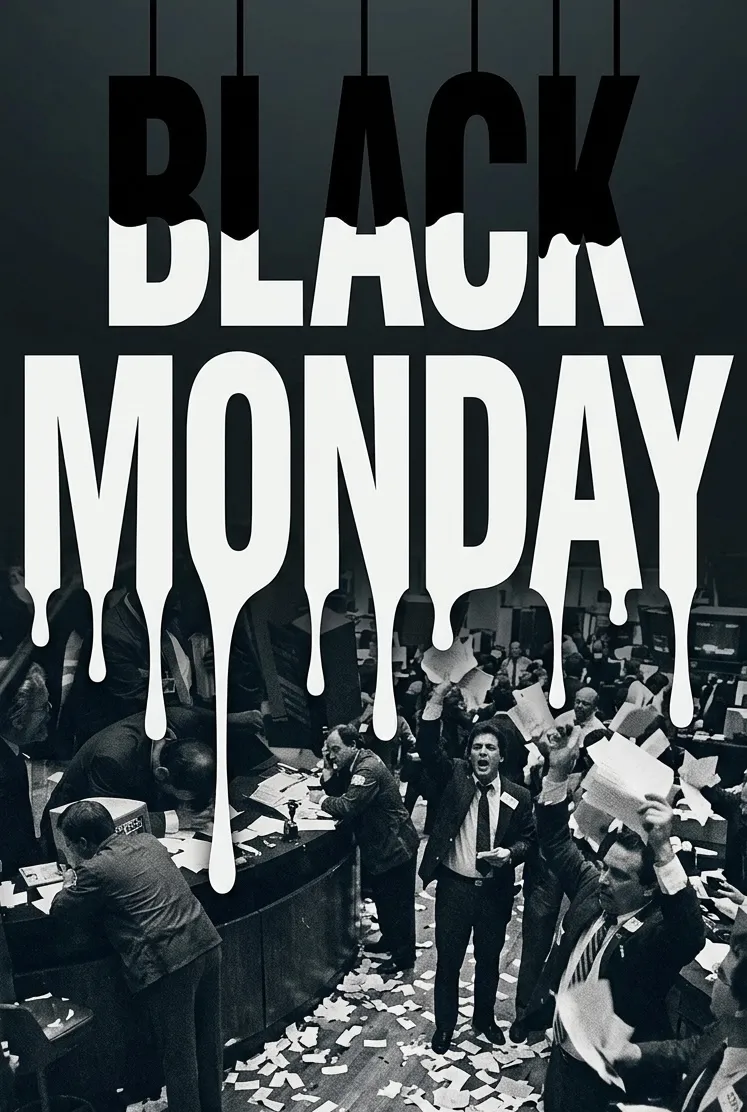
The moment the NYSE opened, sell orders flooded in. Prices plunged in the first thirty minutes. Panic set in. The exchange floor descended into chaos — traders shouting, paper flying everywhere, the telegraph system overloaded so that price information ran over an hour behind.
In the afternoon, key bankers including Thomas Lamont of JP Morgan held an emergency meeting. They agreed to pool capital and buy major stocks to support the market. This news temporarily stabilized things. The Dow closed down just 2% that day.
Friday and Saturday were relatively quiet.
Monday, October 28. Black Monday. The Dow fell 13%. The bankers' support buying no longer worked.
Tuesday, October 29. Black Tuesday. The worst day in history.
Sell orders flooded in at the open. Daily volume: 16.4 million shares — unimaginable at the time (four to five times normal daily volume). The Dow fell another 12%.
The Dow fell 25% in two days. Over 30% in a week. Margin calls cascaded through the system, forcing leveraged investors to close positions simultaneously. Each forced sale pushed prices lower, which triggered more margin calls. A vicious cycle.
Livermore watched all of this from his office. His short positions were generating millions of dollars in profits every hour.
5. One Hundred Million Dollars
After Black Tuesday ended, Livermore calculated his profits. Estimates vary — Livermore himself never officially disclosed a number. But according to multiple financial historians, his gains from shorting during the 1929 crash reached approximately one hundred million dollars.
One hundred million dollars in 1929. Adjusted to 2025 values: approximately $1.8 billion. The largest amount ever made by an individual in the stock market up to that time. He became one of the richest people in America.
His lifestyle matched it.
- A ten-room apartment on Fifth Avenue with a private elevator.
- A separate office on Park Avenue with a dedicated telegraph system.
- Multiple Rolls-Royces, each with a chauffeur.
- The yacht Anita: 300 feet (approximately 90 meters) long. A crew of 50. One of the largest private yachts in America at the time.
His personal life was equally extravagant. His marriage to his second wife Dorothy was already cracking. He was involved with multiple women. He was a fixture at Manhattan nightclubs.
The Boy Plunger had become the King of America.
But even at this peak, fractures were already appearing.
October 1929. You are Jesse Livermore. You've just made $100 million selling short. You're the wealthiest speculator in America. But millions of people lost everything on the other side of your trades. The press is painting you as a villain. Your family is receiving threats. What do you do?
6. America in 1929
During the same days Livermore was making one hundred million dollars, what was happening in America?
Suicides. An urban legend circulated that suicide rates had spiked in New York after Black Tuesday. Actual statistics show no explosive increase, but several high-profile cases were extensively covered in the press.
Bank runs. Banks began failing. From 1930 to 1933, approximately 40% of American banks collapsed. Over 9,000 banks closed their doors. Depositors' money vanished. There was no deposit insurance system at the time.
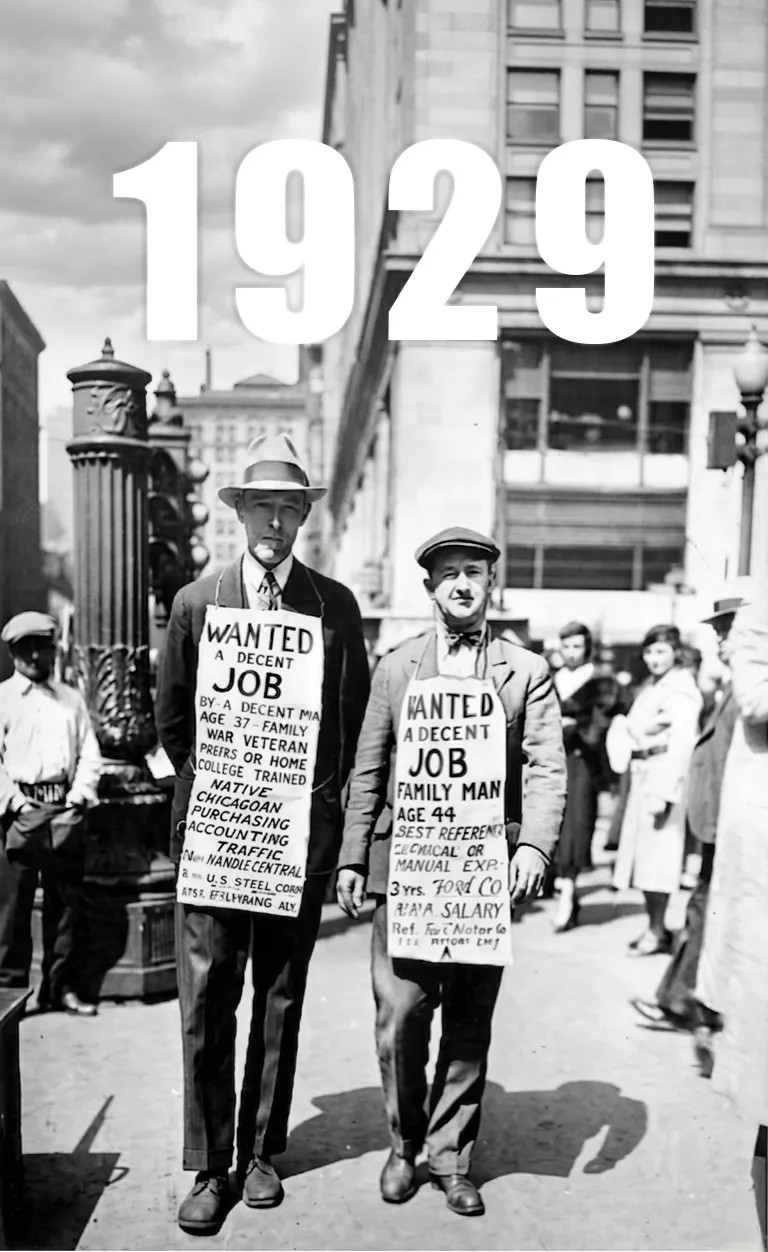
Unemployment. The Great Depression had begun. The unemployment rate, 3% in 1929, rose to 25% by 1933. One in four Americans had lost their job.
Livermore was the man who had made money from this catastrophe. The press began to notice him. Some called him "The Man Who Crashed America."
This was not accurate. Livermore didn't create the Depression — structural market overheating and reckless margin trading were the causes; Livermore had simply bet on the outcome. But public sentiment toward a man who had made one hundred million dollars while millions lost everything was not sympathetic.
People gathered in front of his Fifth Avenue apartment in protest. His family received threats. His sons were mocked at school: "Your father destroyed America."
Livermore hired bodyguards. He went out less. He spent increasing time on the yacht.
He had made one hundred million dollars — but his life did not become happy.
7. Why He Couldn't Hold the Money
Here the biggest question arises. Livermore made one hundred million dollars in 1929. Ten years later, in 1940, he was bankrupt. Where did the hundred million go?
The full story will be told in the third episode — but the core points are these.
First, he couldn't stop. After making the hundred million, he didn't retire. He kept trading. Kept making bigger bets. When markets found a bottom and began recovering, he couldn't switch direction in time. He'd made money shorting, so he believed he could make more money shorting.
Second, leverage. His eternal weakness. If he had only traded with his own money, losing one hundred million would have been nearly impossible. But he always used leverage — he traded with borrowed money, betting ten or twenty times the size of his own capital. One or two large wrong calls and all of it was gone.
Third, the cost of his personal life. A ten-room apartment, a yacht, Rolls-Royces, bodyguards, parties. His living costs ran into the millions per year. Even during periods when trading generated no profits, these costs kept flowing out.
Fourth, divorce. His divorce from his second wife Dorothy in 1932 required substantial assets in alimony and settlement.
These four factors combined to turn the hundred million dollars of 1929 into zero by 1940.
Once you've made your choice, reveal what the legend actually did
8. Livermore and Burry
Livermore's 1929 and Michael Burry's 2008 are remarkably alike.
Both saw the market's overheating. Both bet on the other side. Both were called crazy by everyone. Both were right. Both made extraordinary profits.
But what they did after making the money was completely different.
Burry stopped. He closed Scion Capital. He refused interviews. He disappeared for twelve years. He managed only his own money, quietly. So his gains were preserved.
Livermore couldn't stop. He kept trading. Kept making larger bets. Kept living more extravagantly. So his gains vanished.
Same talent. Same success. Opposite endings.
What was the difference? In Munger's terms: "the capacity to avoid foolish behavior." Burry avoided the foolish behavior (stopping at the peak). Livermore repeated the foolish behavior (accelerating further past the peak).
Livermore knew this himself:
"There is nothing new on Wall Street. Speculation is as old as the hills. Whatever happens in the market today has happened before and will happen again. I have never forgotten this. Only, it is a human thing to remember and still repeat the same mistakes."
- 1921-29 다우 상승
- 63 → 381 포인트 (약 6배)
- 1929년 마진 비율
- 현금 10% + 빌린 돈 90% (10배 레버리지)
- 검은 화요일 다우 하락
- -12% (하루)
- 검은 화요일 거래량
- 1,640만 주 (평상시 4-5배)
- 일주일 하락률
- -30%+
- 리버모어 공매도 수익
- 약 $100M (현재 가치 ~$1.8B)
- 1933년 미국 실업률
- 25% (1929년 3%)
- 1930-33 파산 은행
- 9,000개+ (미국 은행의 약 40%)
- 리버모어 vs 버리 차이
- 정점에서 "멈추기"의 유무
- 핵심 자기 고백
- "기억하면서도 같은 실수를 반복하는 것이 인간이다."
9. Three Lessons This Story Left Behind
First, recognizing the peak and stopping at the peak are different abilities.
Livermore correctly recognized the market's 1929 peak. So he made a hundred million dollars. But he couldn't stop at the peak of his own life. Reading the market and controlling oneself are entirely different muscles. The moment an investor books a large gain, the first question should not be "what do I buy next?" — it should be: "Is it time to stop?"
Second, leverage kills even geniuses.
Livermore was a genius at reading markets. Yet this genius went bankrupt four times. Every single time because of leverage. Without leverage, he would never have gone bankrupt. Munger said "three ways smart people go broke: alcohol, women, and leverage" — all three applied to Livermore. Many Korean retail investors use margin accounts, credit, futures, and CFDs. Are you more skilled at reading markets than Livermore? If not, don't use leverage.
Third, "it is a human thing to remember and still repeat the same mistakes."
Livermore knew this about himself. He wrote it in his own book. And still he repeated it. This is humanity's deepest limitation. If you know you're repeating the same mistakes, knowing is not enough. Build a system. Stop-loss rules, position limits, cooling periods. Control yourself with systems, not willpower. If Livermore had had those systems, his life would have been different.
10. At the End of 1929
December 1929. Jesse Livermore, age 52, was America's wealthiest speculator.
From the apartment on Fifth Avenue, looking out the window, he could see Central Park. The yacht Anita was moored in New York Harbor. The bank account held one hundred million dollars.
He was the boy who had walked into a Boston bucket shop at age 14 with five dollars. Thirty-eight years later, he had reached the summit of his era.
What he should have known in that moment — what Buffett knew, what Lynch knew, what Burry knew — was this: stop at the peak.
But Livermore didn't know it. Or he knew it and couldn't do it.
Ahead of him lay eleven years. In those eleven years, the hundred million dollars would vanish — not once, but multiple times. Make and lose, make and lose. This pattern had repeated since 1907, and after 1929, it would not stop.
The story of a genius who could read the market's patterns, but could never change his own.
The next chapter was about to begin.
What's your take on this story?
What do you think about Jesse Livermore's decision?
Sign in to participate
Sign In