Four Bankruptcies
1908, 1915, 1934, 1940. Jesse Livermore lost his entire fortune four times. Each time he had just booked enormous profits. Each time leverage and overconfidence brought him down. "I know the market's patterns. I know I repeat my own. But knowing and stopping are different things." A record of why a genius could never break his own pattern.

Four Bankruptcies
1908. 1915. 1934. 1940. Jesse Livermore lost everything four times. And came back three times. The fourth time, he didn't return. This is the record of why a genius at reading market patterns could not change his own patterns.
1. The First Bankruptcy — The Cotton Temptation (1908)
It was immediately after making three million dollars in the 1907 Panic. He was 30. Livermore felt invincible.
The following year, 1908, he turned his eyes to a different market: cotton futures. An acquaintance gave him inside information that cotton prices would rise. Livermore believed it. He poured most of his assets into cotton futures — using leverage.
Cotton prices rose. At first. Livermore's profits accumulated. He grew his position. Then at some point prices reversed — sharply. Margin calls came before he could close his positions.
Three million dollars vanished. All of it.
The lesson he drew from this bankruptcy he wrote down in his own book:
"I made two mistakes. First, I trusted someone else's information. Second, I traded in a market I didn't know. I could read the patterns of the stock market. But the cotton market was different. Different rules governed it. I didn't know those rules."
This was the exact same lesson as Munger's "Circle of Competence" — sixty years before Munger coined the term, Livermore had learned the same thing through experience.
The difference between Munger and Livermore was this: Munger adhered to this lesson for life. Livermore wrote it down and broke it again.
2. The First Return
After the bankruptcy, Livermore went back to Boston — for the third time — to build seed capital at a bucket shop. But this time even the bucket shops weren't easy. His name was too well known.
He borrowed money from a friend. With a small stake, he began trading again in the New York market. Carefully. Starting with small positions. Only in markets he knew, only in patterns he recognized.
Two years passed. By 1910 he had rebuilt hundreds of thousands of dollars. By 1911, he had crossed a million.
He had returned. The first bankruptcy was a temporary mistake, he told himself — entering the cotton market was the error. In his true business of stock speculation, he was still the best.
This self-conviction was the seed of the second bankruptcy.
3. The Second Bankruptcy — The Market Changed (1915)
In 1913–1914, World War I began. American stock markets temporarily closed. When they reopened, everything had changed.
A war economy. Exploding demand for materiel. Industrial restructuring. The environment where the market patterns Livermore knew no longer functioned.
He failed to recognize this change. He continued trading according to established patterns. And he was consistently wrong — when direction was right, timing was off; when timing was right, size was too large.
In 1915, the second bankruptcy. He lost everything again. This time he accumulated debt too — approximately one million dollars in liabilities. He was 38.
"I believed the market didn't change. Market patterns don't change. But the market's environment does change — the conditions under which patterns operate become different. I refused to acknowledge that conditions had changed."
The lesson from the first episode — "the rules of the game change" — he was learning again. The same lesson, the second time. The price was higher.
4. The Second Return
After the second bankruptcy, Livermore was in a miserable state. A million dollars in debt. Credit destroyed. Brokers refused to deal with him. Nobody would lend money to a bankrupt speculator.
He found one way: since he couldn't trade under his own name, he borrowed other people's accounts. He began trading in small amounts through the accounts of friends and acquaintances.
Again it took time. From 1916 through 1917, he slowly built capital back. He found opportunities in the wartime economy of World War I — steel, copper, munitions.
By late 1917, he began repaying his debts. By 1919, he had cleared them entirely. By the early 1920s, he was again a man with millions.
The second return. Five years. Then the bull market of the 1920s began — the upward curve that led to the hundred million dollars of 1929.
5. The Third Bankruptcy — One Hundred Million Evaporates (1930–1934)
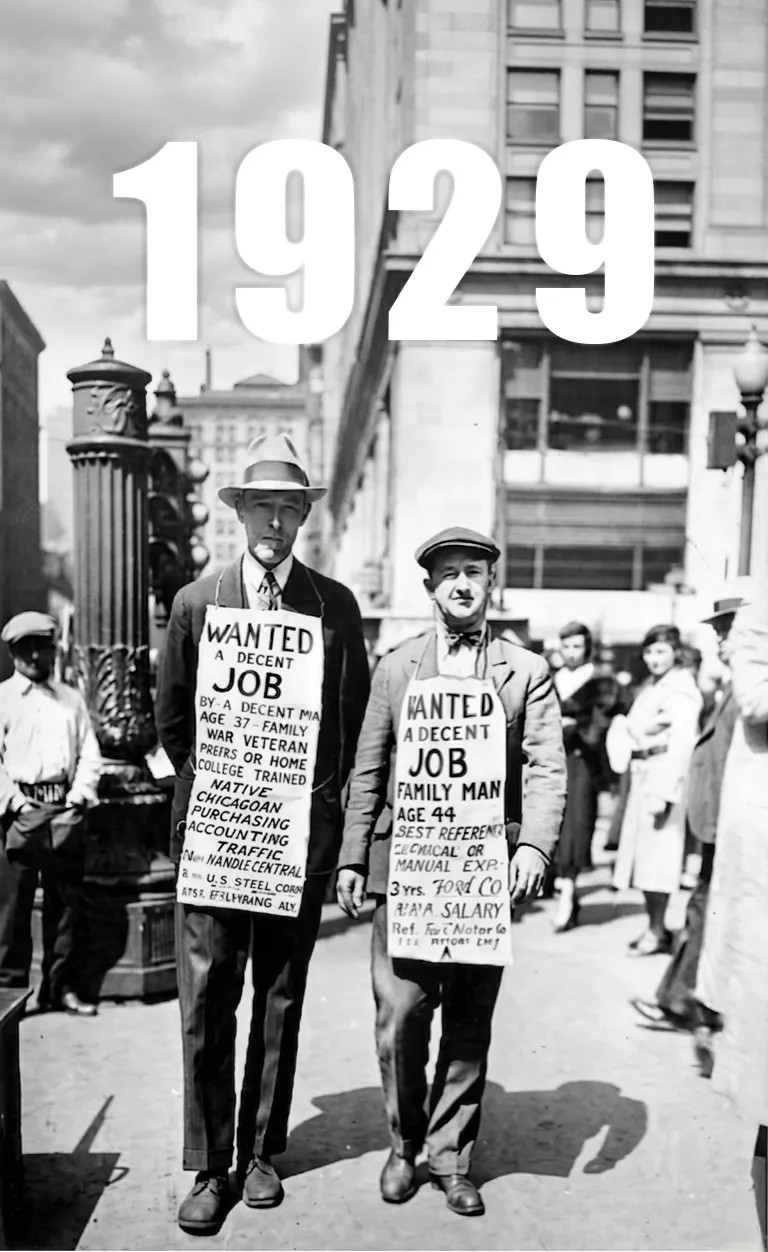
October 1929: one hundred million dollars. As covered in the second episode, Livermore could not protect it.
Here, in chronological order, is what happened from 1930 to 1934.
1930: After the Depression began, markets temporarily recovered. Livermore took long positions in the rebound. Initially profitable. Then in the second half of 1930, markets plunged again. He was holding longs. Massive losses.
1931: He switched direction and began shorting. This time he was right — markets kept falling. He recovered gains. But when the Federal Reserve raised rates in late 1931, markets temporarily reversed, and he was still holding shorts. Losses again.
1932: He repeatedly reversed direction. Long, short, long, short. Each time the timing was off. In the extreme volatility of markets struggling to find a bottom, his leveraged positions kept landing on the wrong side.
1933–1934: Divorce costs, living expenses, debts. Trading losses combined with personal expenses to rapidly drain his assets.
In 1934, Livermore formally declared his third bankruptcy, filing in court. Assets: approximately $84,000. Liabilities: approximately $2.26 million.
The man who had held one hundred million dollars five years earlier was left with $84,000. Reduced by a factor of 1,190.
The list of assets on his bankruptcy filing was bleak. Clothing and personal effects. That was nearly all.
You are Jesse Livermore. You've gone bankrupt three times. You've come back three times. It's 1934 — right after your third bankruptcy. You're 57 years old. You owe $2.26 million. You have $84,000 to your name. Three choices lie before you.
6. The Pattern Within the Patterns
Setting the three bankruptcies side by side, a pattern appears. Livermore's own pattern.
- 1st bankruptcy (1908): Prior wealth: $3M → cotton futures → entered an unfamiliar market
- 2nd bankruptcy (1915): Prior wealth: millions → failed to adapt to wartime economy → ignored environmental change
- 3rd bankruptcy (1934): Prior wealth: $100M → excessive leverage + repeated direction reversals → couldn't stop at the peak
All three share common elements.
Common factor 1: He went bankrupt immediately after a great success. Made three million, went bankrupt. Made millions, went bankrupt. Made a hundred million, went bankrupt. Success itself bred overconfidence, overconfidence bred excessive bets, excessive bets bred bankruptcy.
Common factor 2: Leverage was always the cause. All three times he borrowed beyond his own capital to trade. Without leverage, he never would have gone bankrupt. He would have suffered losses, but he would never have lost everything.
Common factor 3: He broke his own rules. "Don't enter unfamiliar markets." "When the environment changes, change your strategy." "Big money is made in the waiting." He wrote all three in his own books — and broke all three in each bankruptcy.
Livermore was a genius at reading market patterns. But he could not read his own patterns. Or he read them but could not change them. This was the essence of his tragedy.
7. The Third Return, and the Approaching Fourth Bankruptcy
After the 1934 bankruptcy, Livermore tried once more to return.
From 1935, he began trading at small scale again. Seed capital came from money borrowed from friends and from the assets of his third wife, Harriet Metz Noble — a wealthy heiress.
At first, he was careful. Small positions. He reminded himself of his own rules. "Wait. Until the big move comes."
In 1937, markets fell sharply. Livermore made money shorting again — hundreds of thousands of dollars. In 1938 too, some profits.
But this return was different from before. The scale was smaller, conviction wavered, physical energy was diminished. He was passing 60. Thirty years of speculative life had worn him down.
In 1939, he published the last book of his life: How to Trade in Stocks — a summary of the trading principles he had learned over thirty years. The book sold poorly. Americans in 1939 had little interest in stock trading manuals; the wounds of the Depression were still too deep.
From late 1939 through 1940, Livermore's trades failed in succession. The exact size of his losses was never documented, but his last remaining assets were rapidly diminishing.
In the autumn of 1940, he was again burdened with debt. A fourth bankruptcy was approaching.
But this time was different from the previous three. The previous times, even after bankruptcy, he had had the energy to come back — in his twenties, thirties, forties. At 63, that energy no longer remained.
Once you've made your choice, reveal what the legend actually did
8. Why Couldn't He Stop?
Livermore's four bankruptcies are lessons about investing — but looked at more deeply, they are also a story of addiction.
He was addicted to speculation. Reading market patterns, betting on direction, the euphoria of being right. That euphoria kept him tethered to the market. He should have retired when he made one hundred million dollars. He could have retired when he made three million. But he could not stop.
This has the same structure as gambling addiction. When winning, you want more. When losing, you want to recover. Either way, there's no reason to stop.
There is evidence that Livermore recognized this himself. One sentence he wrote in his book:
"The greatest enemy of the speculator is not ignorance. It is hope. Hope is the only emotion that prevents a speculator from cutting losses. And hope is also the only emotion that prevents a speculator from retiring."
He knew precisely what his enemy was. Yet knowing, he could not overcome it. Why?
First, identity. For Livermore, speculation was not a profession — it was his identity. He had been a speculator since age 14. He had never lived any other life. If he stopped speculating, who was he? He had no answer to that question.
Second, absence of relationships. He had no partner to tell him to stop — the way Berkshire had Munger for Buffett, the way Quantum had Druckenmiller for Soros. Livermore was alone. His marriages were unstable, his friendships mostly transactional, his relationship with his children distant.
Third, the limits of the era. In the 1930s and 40s, the concept of "speculative addiction" didn't exist. Psychological understanding of compulsive gambling was almost nonexistent. Had Livermore been born today, someone might have recommended behavioral addiction treatment. But in his era, that help didn't exist.
"I know the market repeats. And I know that I repeat too. Only, knowing and stopping are different problems." — Jesse Livermore
- 1차 파산 (1908)
- 직전 $3M → 면화 선물 실패 → 전 재산 상실
- 첫 복귀
- 1910-11년 ($1M+ 회복, 약 2년 소요)
- 2차 파산 (1915)
- 전시 경제 환경 변화 무시 → 부채 $1M
- 둘째 복귀
- 1917-19년 빚 청산 (약 5년 소요)
- 3차 파산 (1934)
- 직전 $100M → $84K로 1,190분의 1 감소, 부채 $2.26M
- 셋째 복귀 시도
- 1935-38년 소규모 거래, 1937 급락에서 공매도 수익
- 4차 파산 (1940 임박)
- 1939-40년 연속 실패, 63세, 에너지 고갈
- 공통 원인
- 레버리지 + 과신 + 자기 규칙 위반
- 본인의 자기 고백
- "아는 것과 멈추는 것은 다른 문제다."
9. Three Lessons This Story Left Behind
First, if you repeat the same mistake, use systems — not willpower — to stop it.
Livermore knew his own pattern of mistakes precisely. He even wrote them down. Yet he repeated them. This is not a willpower problem. It's a structural problem. If you're repeating the same investing mistakes (can't cut losses, too much leverage, FOMO), don't try to fix it with willpower. Build systems. Automatic stop-loss orders. Leverage limits. A 24-hour cooling period before buying. Willpower wavers; systems don't.
Second, investing becomes dangerous when it becomes your identity.
For Livermore, speculation was life itself. Remove it and nothing remained. This was the root reason he couldn't stop. If your investing is becoming your identity, that is a warning sign. Buffett had family, philanthropy, reading, and friendship alongside investing. So did Munger. Lynch chose a life outside investing at age 46. Investing should be one part of your life — not the whole of it.
Third, investing alone is the most dangerous way to invest.
Livermore had no partner. Nobody to say "that's a foolish idea." He made every decision alone. This was the structural cause that allowed his overconfidence to run unchecked. Do you have someone who can give you dissenting views on your investment decisions? If not, at least build the habit of asking yourself for a dissenting opinion. Munger's inversion thinking: "What are three reasons this investment could fail?" Asking this question every time would have prevented many of Livermore's mistakes.
10. Autumn 1940
November 1940. Jesse Livermore, age 63. His life in numbers:
- Started at 14 with five dollars.
- At 16: $10,000.
- At 30: $3,000,000. First bankruptcy: zero.
- At 35: millions again. Second bankruptcy: negative $1 million.
- At 42: millions again.
- At 52: $100,000,000. Third bankruptcy: $84,000.
- At 58: hundreds of thousands again.
- At 63: a fourth bankruptcy approaching.
Up, collapse, up again, collapse again. Forty-nine years of cycles. The amplitude grew larger each time; the recovery slower each time. And now there was no energy left for another return.
Late November 1940. Livermore was staying at a hotel in New York. His last day was approaching.
That is the story for the next episode.
What's your take on this story?
What do you think about Jesse Livermore's decision?
Sign in to participate
Sign In