The Last Night at the Sherry-Netherland Hotel
Thanksgiving Day, November 28, 1940. The coat-check room of Manhattan's Sherry-Netherland Hotel. A 63-year-old man left a six-page note and ended 49 years of speculation. Four bankruptcies, depression, isolation, a lost identity — the final chapter of a genius who read the market's patterns but could never change his own.

The Last Night at the Sherry-Netherland Hotel
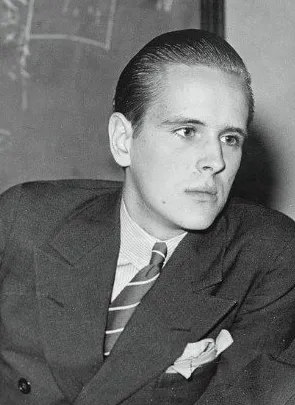
Thursday, November 28, 1940. Thanksgiving. The Sherry-Netherland Hotel, Manhattan. A 63-year-old man sat in the cloakroom. A small leather notebook lay open in front of him. He picked up his pen. He filled six pages. Then he closed the notebook. This is the record of Jesse Livermore's last day.
1. Livermore in 1940
To summarize Livermore's condition in the autumn of 1940:
Financial: After his third official bankruptcy (1934), he had returned at a smaller scale — but consecutive losses in 1939-1940 had driven his assets near zero again. His exact balance was unknown, but the Fifth Avenue apartment and the yacht had been disposed of long before.
Family: His relationship with his third wife Harriet had grown cold. He had intermittent contact with his son Jesse Jr. from his first wife Nettie, and had grown distant from Paul, his son from his second wife Dorothy.
Health: He suffered from chronic depression. No precise clinical records survive, but testimony from those around him indicates depressive symptoms had worsened since the mid-1930s. Sleep disorder, loss of appetite, social isolation.
Social standing: The glamour of the 1920s had completely vanished. His name was still known on Wall Street, but he was regarded as "a figure from the past." To a new generation of traders, he was not a legend but a warning.
His last published book, How to Trade in Stocks, appeared in March 1940. Sales were disappointing. Americans in 1940, still bearing the wounds of the Great Depression, had little interest in stock trading manuals.
Livermore had poured every lesson of his life into that book. Market patterns. The importance of trends. The value of waiting. The necessity of cutting losses. The danger of leverage. Everything he had learned over forty-nine years compressed into two hundred pages.
And those lessons could not save the man who wrote them.
2. November 28th
Thursday, November 28, 1940. Thanksgiving in America.
That afternoon, Livermore was at the Sherry-Netherland Hotel in Manhattan — a luxury hotel at the corner of Fifth Avenue and 59th Street, overlooking Central Park.
Why he was at this hotel remains a matter of competing accounts. One says he had arranged to have dinner with his wife Harriet. Another says he went alone to drink. The precise reason has never been confirmed.
What is confirmed: in the late afternoon, Livermore entered the hotel's cloakroom on the ground floor. He sat there alone. He took out a small leather notebook. He picked up a pen. He filled six pages. It was a letter to his wife Harriet.
The full text of the letter was never made public. But part of the final paragraph is known:
"My dear Nina: Can't help it. Things have been bad with me. I am tired of fighting. Can't carry on any longer. This is the only way out. I am unworthy of your love. I am a failure. I am truly sorry, but this is the only way out for me. Love, Lauriston."
Nina was Harriet's nickname. Lauriston was Livermore's middle name.
He closed the notebook. And he ended his life. He was 63 years old.
3. The Aftermath
Livermore's death was reported in newspapers the following day. The New York Times ran it on the front page:
"Jesse L. Livermore, Stock Trader, Dies. Famed for Enormous Market Operations." — The New York Times, November 29, 1940
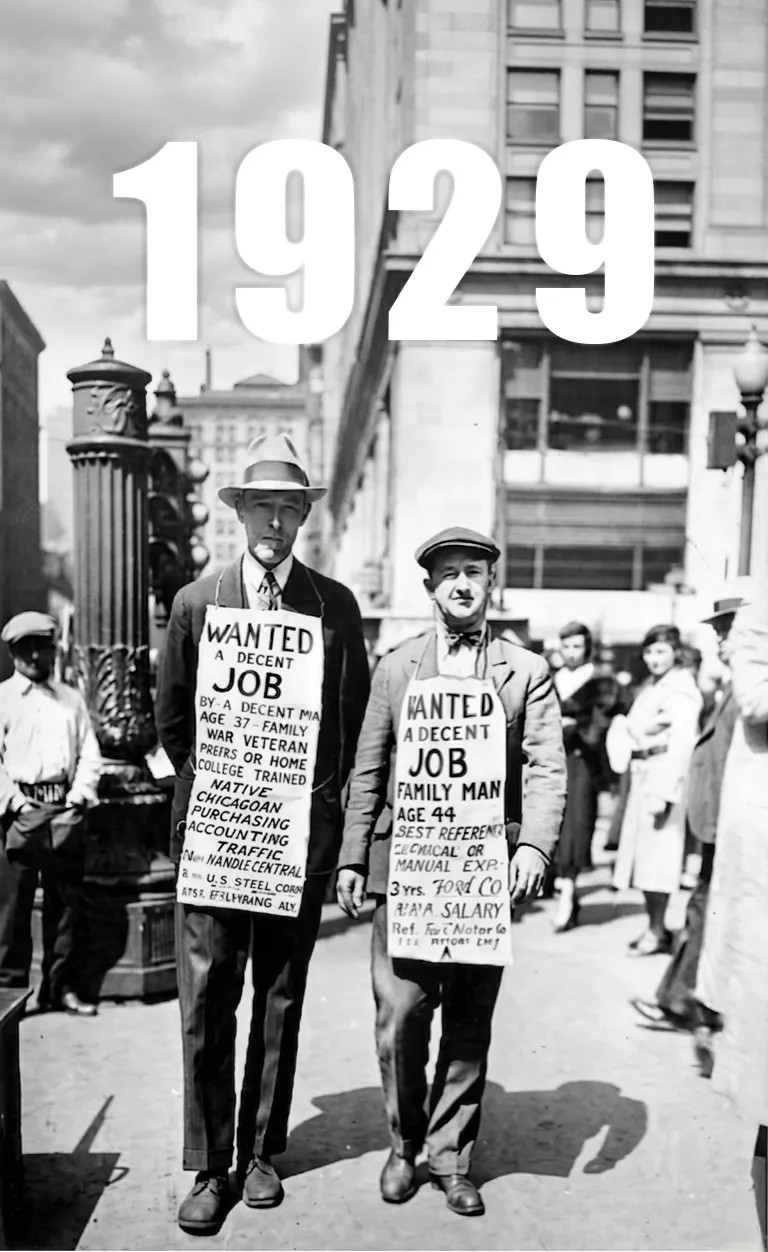
The article summarized his speculative career. The 1907 Panic. The 1929 Crash. Four bankruptcies. One hundred million dollars. And his death.
Wall Street's reaction was quiet. The Wall Street of 1940 was not Livermore's Wall Street. New regulation (the SEC, the Securities Exchange Act) had been introduced, market structure had changed, and the era of the individual speculator of Livermore's kind was drawing to a close.
His legacy was complicated.
Estate: Almost nothing. Officially, the remaining assets were negligible.
Family: His wife Harriet lived long after Livermore's death. His son Jesse Jr. lived quietly, keeping distance from his father's name. Livermore's second wife Dorothy took her own life in 1959. His grandson Jesse Livermore III died by suicide in 2006. A family's tragedy repeated across generations.
Books: The 1923 book Reminiscences of a Stock Operator, written by Edwin Lefèvre based on Livermore's story, became his greatest legacy. The protagonist's name was changed to Larry Livingston, but everyone knew it was Livermore's story. This book grew even more famous after Livermore's death. It remains essential reading for traders more than a hundred years later. Paul Tudor Jones called it "the greatest book ever written about investing." Edward Thorp, Michael Steinhardt, and countless hedge fund managers have cited its influence on them.
Livermore's lessons outlived him.
4. Why Did He Die?
There is a temptation to offer a simple explanation for Livermore's death: "He lost his money and died." But this is not true. Or not the whole truth.
Livermore went bankrupt four times. He came back the first three times. The absence of money alone was not what killed him. What killed him was more complex.
First, depression. Livermore suffered from severe depression from the mid-1930s. This was partly a consequence of bankruptcy, but it also related to his temperament. All his life he swung between emotional extremes — intense exhilaration when winning in the market, intense despair when losing. As he aged, the amplitude of these emotional swings exhausted him.
Second, isolation. As discussed in the third episode, Livermore had no partner. All three marriages were unstable. His friendships were mostly transactional — when money was gone, relationships followed. At 63, he was almost entirely alone.
Third, loss of identity. For Livermore, speculation was his identity. Remove speculation and nothing remained. By 1940, he was no longer a speculator — because he had no money, because he had no place in the market, because his era had ended. A person who has lost their identity struggles to find the meaning of their own existence.
Fourth, the limits of the era. In 1940, effective treatment for depression barely existed. Antidepressants were not developed until the 1950s. Social awareness of psychological treatment was low. Had Livermore been born today, he could have received appropriate care.
These four elements combined to produce November 28, 1940. Not a single cause — a complex of causes. Understanding that complexity matters. The simplification "he lost his money and died" distorts his story and sends the wrong message to others who may be in similar circumstances.
5. One Line in the Note
The most frequently quoted line from Livermore's final note is this:
"I am a failure."
This line deserves careful thought. Was Livermore really a failure?
By the numbers, he failed. He made one hundred million dollars and ended at zero. He went bankrupt four times.
But from another perspective, he did not fail.
- The method of reading market patterns he discovered at age 14 remains valid a hundred years later. He laid the foundations of technical analysis.
- His book Reminiscences of a Stock Operator is one of the most widely read investment books in history.
- The principles he left behind — "big money is made in the waiting," "follow the trend," "cut losses," "beware of leverage" — are still the foundation of every trader's education.
- His failures became his greatest lesson. His four bankruptcies proved to the world that "leverage kills even geniuses," "knowing when to stop matters," and "investing alone is the most dangerous way."
Livermore defined himself as a failure. But to the millions of investors who read his story and avoided the same mistakes, he was the most valuable teacher.
A failed man's story can teach more than a successful man's story. Livermore's tragedy is the proof.
6. Livermore and the Others in This Series
Comparing Livermore with others featured in this series completes a picture.
- Buffett: Did not stop at the peak. But he didn't use leverage, he had a partner (Munger), and he had a life beyond investing (family, philanthropy). So he didn't collapse over sixty years.
- Burry: Stopped at the peak. Closed the fund and disappeared for twelve years. He did what Livermore could not. So he survived.
- Lynch: Stopped at the peak. Retired at 46. With a reason outside investing — "my daughters' school events." A life outside investing saved him.
- Keith Gill: Stopped at the peak. Disappeared for three years. Legal risk and family protection provided the external force that made him stop.
- Livermore: Could not stop at the peak. Had no partner. Had no life outside investing. Used leverage. So he collapsed.
Setting five stories side by side reveals what protects an investor. Not returns. Not analytical ability. Not genius.
Knowing when to stop. Having a partner. Having a life outside investing. Not using excessive leverage.
With these four, you survive sixty years. Without them, even a genius collapses.
7. For Those Who Need Help
Because this episode deals with suicide, one thing first.
This story did not include a choice prompt asking "what would you do." This is not an investment decision — it is a matter of life and death.
If you or someone you know is struggling with severe stress, financial hardship, or depression, please don't carry it alone. Reach out.
- Korea Suicide Prevention Hotline: 1393
- Mental Health Crisis Counseling: 1577-0199
- International Association for Suicide Prevention: https://www.iasp.info/resources/Crisis_Centres/
In Livermore's era, these resources didn't exist. Today, they do.
Once you've made your choice, reveal what the legend actually did
8. Three Lessons This Story Left Behind
First, the final scorecard of investing is not returns — it's life.
Livermore's returns were extraordinary. Yet his life ended in tragedy. Judging investment success by returns alone is seeing only half the picture. That Buffett at 94 lives healthily with his family. That Lynch at 82 goes to his grandchildren's school plays. This is the true scorecard of investing. Is your investing enriching your life? Or is it consuming it?
Second, asking for help is not weakness.
Livermore carried everything alone — bankruptcy, depression, family problems. He never asked for help. In his era, doing so was considered weakness. A hundred years later, we know that was wrong. Asking for help is courage. When you've suffered large losses. When you're in financial difficulty. When you've hit emotional bottom. Seeking professional help is the most rational action you can take.
Third, learning from others' failures is the cheapest education there is.
Munger said: "Learning from other people's mistakes is far cheaper than learning from your own." Livermore's story is exactly that education. If you understand why he went bankrupt four times, you can avoid the same mistakes. Don't use excessive leverage. Practice knowing when to stop. Maintain a life outside investing. Don't go it alone. These four things Livermore taught us over forty-nine years, at a cost of one hundred million dollars and his own life. There is no cheaper education than this.
- 버핏
- 정점에서 멈추지 않음. 단 레버리지·파트너·투자 밖의 삶으로 60년 생존.
- 버리
- 정점에서 멈춤. 사이언 캐피털 폐쇄, 12년간 사라짐 → 생존.
- 린치
- 46세 정점에서 은퇴. "딸의 학교 행사"가 이유 → 생존.
- 키스 길
- 정점에서 멈춤. 3년 침묵 (법적 리스크·가족 보호) → 생존.
- 리버모어
- 정점에서 멈추지 못함. 파트너·투자 밖 삶 없음. 레버리지 씀 → 49년 후 파멸.
- 공통 분모
- 멈출 줄 아는 것. 파트너. 투자 밖의 삶. 레버리지 절제.
- 리버모어가 남긴 마지막 원칙
- "게임을 떠날 줄 아는 것."
- 그의 책의 생명력
- 『Reminiscences』는 100년간 절판된 적 없음.
- 도움 전화 (한국)
- 자살예방 1393 · 정신건강위기 1577-0199
9. Epilogue — Two Books
Jesse Livermore's legacy lives on in two books.
1923: Reminiscences of a Stock Operator, written by Edwin Lefèvre based on Livermore's story. It has never gone out of print since publication, now over a hundred years ago. Millions of copies sold to date. Paul Tudor Jones, Ray Dalio, and Stanley Druckenmiller have all named it as the single most influential investment book of their lives.
1940: How to Trade in Stocks, written by Livermore himself. Published eight months before his death. It barely sold at first. Rediscovered only decades later. This book contains his trading system in specific detail: how to read trends, position sizing, cut-loss rules, pivot points.
Seventeen years separate the two books. The first appeared at the height of his powers. The second appeared at the nadir of his suffering.
The first book contains his genius. The second contains his wisdom. Genius earns money. Wisdom protects it. Livermore had the genius, but acquired wisdom too late.
The final sentence he wrote in the second book:
"The most important thing in the market is not right or wrong. It is how much you make when you are right, and how much you lose when you are wrong. And more important than both: knowing when to leave the game."
Knowing when to leave the game. The final lesson he wrote in his book but could not execute in his life.
10. Forty-Nine Years
July 26, 1877. Shrewsbury, Massachusetts. A boy was born to a farming family.
That boy went to Boston at age 14. With five dollars.
- At 16, he had made ten thousand dollars.
- At 30, he had made and lost three million dollars.
- At 38, he made it again and lost it again.
- At 52, he made one hundred million dollars.
- At 57, he lost it again.
- At 63, he sat in the cloakroom of the Sherry-Netherland Hotel.
Forty-nine years of speculative life.
Everything he learned in the markets survives in two books. All the money he made and lost is gone. The one thing he couldn't protect in the markets — himself — did not return.
But his story is alive one hundred years later. The patterns in numbers that a fourteen-year-old boy found on a chalkboard are still being read by traders around the world.
His failures taught millions one thing:
Beating the market is harder than beating yourself. And the most important thing in the market is knowing when to leave the game.
What's your take on this story?
What do you think about Jesse Livermore's decision?
Sign in to participate
Sign In