Chaevi IPO Book-Building: 70% of Foreign Institutions Bid at Top of Range, 62% of Domestic at Bottom
Despite the offer price being set at the bottom of the band at KRW 12,300, a sharp divergence in investor sentiment emerged — foreign institutions betting on a winner-takes-all dynamic, while domestic investors flagged EV demand headwinds.
Chaevi, South Korea's No. 1 EV fast-charging infrastructure operator (CPO), has priced its IPO at KRW 12,300 — the bottom of its indicative range. Yet analysts caution against writing this off as a straightforward deal failure. A closer look at the institutional order book reveals a striking divergence: domestic and foreign investors were effectively on opposite sides of the trade.
According to IB industry sources on the 20th, Chaevi's book-building period ran from the 10th to the 16th, attracting 751 institutional participants and recording a subscription competition ratio of 55.23x. The final offer price was set at KRW 12,300, the floor of the indicative range (KRW 12,300–15,300), and the number of shares offered was trimmed 10% from 10 million to 9 million shares. Total gross proceeds stand at KRW 110.7 billion, implying a post-listing market capitalization of approximately KRW 575.5 billion.
On the surface, the numbers look soft. But the composition of the order book tells a different story. Approximately 70% of foreign institutional investors submitted bids at or above the top of the range, while roughly 62% of domestic institutions came in at or below the floor. On a volume-weighted basis, approximately 38% of total demand was concentrated at the upper end of the range.
A spokesperson for Samsung Securities, the lead managing underwriter, explained: "Domestic institutions were heavily influenced by concerns over the prolonged EV demand slowdown — the so-called 'chasm' — over the past three years. Foreign institutions, by contrast, showed strong conviction in the winner-takes-all market structure and the compounding revenue model driven by continued EV adoption."
Supply Down 95%, Demand Up 2.2x — A Structure Shaped by Big Players Exiting
Foreign institutional conviction appears rooted in the supply-side dynamics. According to Chaevi, the number of newly installed domestic fast chargers plunged 95% year-over-year — a direct consequence of major conglomerates including LG, SK, Hanwha, Lotte, POSCO, and KT exiting the EV charging business between 2024 and 2025.
Demand, meanwhile, is trending in the opposite direction. EVs accounted for 25% of new domestic vehicle sales in March, representing a 2.2x increase versus the same month last year. Government fast-charger subsidy budgets are also going largely unspent due to the absence of new market entrants.
Chaevi currently manages over 10,000 fast-charging stalls, including approximately 6,000 company-operated stalls and units supplied and operated under government contracts. The company reaches breakeven at an average daily utilization rate of 2.8 sessions per stall — and while its annual target for 2026 was set at 2.0 sessions, that figure was already surpassed in Q1 2026. The combination of competitor exits and the expiration of the mandatory slow-charger installation moratorium has driven utilization ahead of schedule.
Tesla Clause Listing — KRW 29.6B Operating Loss, Put-Back Option Included
The reasons behind domestic institutions' reluctance are equally clear. Chaevi is listing under the pre-profit exemption (the so-called "Tesla Clause"), making it a loss-making issuer. Full-year 2024 consolidated revenue came in at KRW 101.7 billion, with an operating loss of KRW 29.6 billion. Management's profitability roadmap targets EBITDA breakeven in Q4 2026 and operating profit breakeven in 2027.
Investor sentiment in the 2026 IPO market has also been deeply negative. The majority of newly listed stocks on the KOSDAQ and KOSPI this year have traded below their offer prices from day one, with Tesla Clause listings such as Day1 Company (-44%) and IGNet (-39%) serving as cautionary examples of sharp post-listing declines.
In response, Chaevi has incorporated a put-back option into the deal structure. Under the arrangement, if the share price falls below the offer price within a specified post-listing window, the lead underwriters are obligated to repurchase shares at approximately 90% of the offer price (roughly KRW 11,070). The lead underwriters are KB Securities and Samsung Securities, with Daeshin Securities and Hana Securities serving as co-managers.
Chaevi CEO Choi Young-hoon commented: "We set an investor-friendly offer price that reflects current market conditions. Post-listing, we will accelerate the build-out of core infrastructure and the expansion of our global business, and let our financial performance speak to the company's value."
Day-One Retail Subscription at 4x — 23.18% Float a Key Overhang
The temperature on the first day of the retail subscription period, which opened April 20, was lukewarm. As of the morning of the 20th, the aggregate competition ratio stood at 4.16x at KB Securities and 4.41x at Samsung Securities — well below the double-digit ratios seen on day one of recent high-demand IPOs.
The minimum subscription lot is 10 shares (requiring a deposit of KRW 61,500), and institutional lock-up commitment applications came in at just 6.49%. Post-listing freely tradeable shares total 10,846,030 shares, representing 23.18% of total shares outstanding — a level that could weigh on early supply-demand dynamics.
The Key Variable: Opening Price on Listing Day, April 29
The retail subscription window closes on the 21st, with Chaevi's KOSDAQ debut scheduled for April 29. The prevailing view in the IPO market is that the key question is which narrative wins out in early trading — domestic institutions' framing of Chaevi as a loss-making market leader navigating an EV demand trough, or the foreign institutional view of a structural supply shortage beneficiary.
Three key checkpoints will determine the investment thesis: ▲ Whether Chaevi delivers on its Q4 2026 EBITDA breakeven target ▲ Whether average daily utilization per stall sustainably exceeds 2.8 sessions ▲ The pace at which the 23.18% post-listing float enters the market.
 BTCUSDT
Frequently Asked Questions
왜 국내·해외 기관 시각이 정반대로 갈렸나요?
삼성증권에 따르면 국내 기관은 지난 3년간 전기차 캐즘 우려가 컸던 반면, 해외 기관은 승자독식 시장 구조와 "쌓이는 매출"에 강한 확신을 보였습니다. 채비는 적자기업이지만 동시에 국내 급속충전 1위라는 양면성을 가집니다.
공급 부족이 얼마나 심한가요?
국내 급속충전기 신규 보급 대수가 전년 대비 95% 급감했습니다. LG·SK·한화·롯데·포스코·KT 등 주요 대기업이 2024~2025년 사이 전기차 충전 사업에서 전면 철수한 결과입니다. 반면 3월 신차 판매 중 전기차 비중은 25%로 전년 동월 대비 2.2배 늘었습니다.
흑자 전환은 언제 가능한가요?
회사가 제시한 타임라인은 2026년 4분기 EBITDA 흑자, 2027년 영업이익 흑자입니다. 1면당 하루 평균 2.8회 회전이 흑자 기준선인데 올해 연간 목표 2회를 2026년 1분기에 이미 달성했습니다. 경쟁사 이탈과 완속충전기 의무설치 유예 종료가 동시에 작용한 결과입니다.
환매청구권은 어떻게 작동하나요?
상장 후 일정 기간 내 주가가 공모가를 밑돌면 공모가의 90%(약 1만1,070원)에 대표주관사가 되사주는 구조입니다. 데이원컴퍼니(-44%)·아이지넷(-39%) 등 테슬라 요건 상장사 급락 사례가 반복된 시장 상황을 의식한 설계입니다.

South Korea's Kospi Hits All-Time High as U.S.-Iran Deal Hopes Lift Asia Markets
 005930
 000660
 EWY
EWY
Samsung and SK Hynix Workers Are Buying Ferraris as AI Memory Boom Mints New Wealth
005930000660 NVDA
NVDA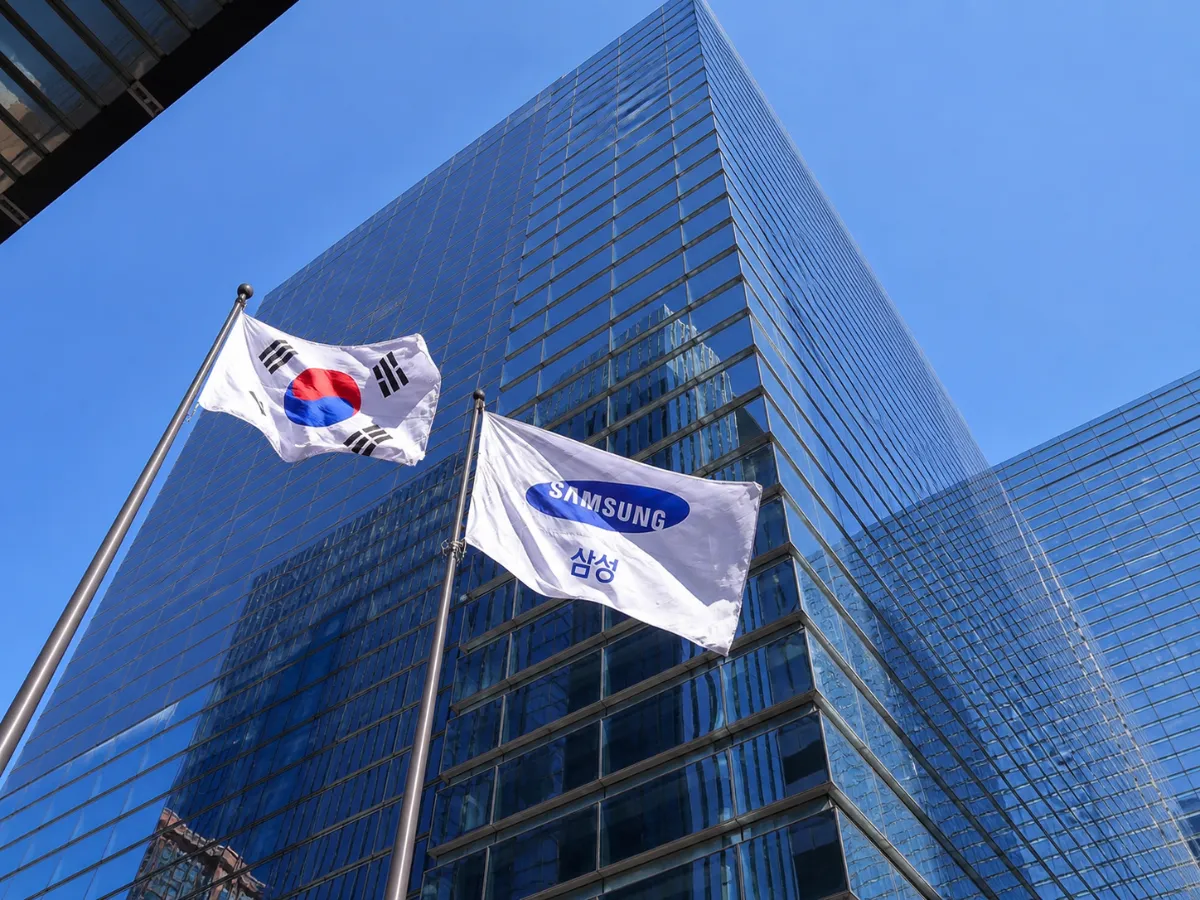
Samsung Electronics Reaches Last-Minute Labor Deal — Bonus Reform Agreed, Semiconductor Shutdown Averted
005930Wall Street's Defining Moments
See more


Sunday's SEC 8-K Earnings Filings Quiet, but Royal Gold Doubles Net Income and Launches Buyback
 RGLD
RGLDVeritone Earnings Shock Sends Shares Down 23%...York Space Systems Among 25 US Companies Filing SEC 8-K Earnings Reports
 YSS
YSS CODX
CODX IPWR+26
Applied Materials Posts Record Q3 Revenue of $9.1 Billion, All-Time High EPS
 AMAT
AMATSmart Money Briefing
Weekly summaries of Wall Street guru moves and crypto whale activity.