Lilly and Novo Nordisk Locked In as Beneficiaries — Medicare to Cover GLP-1 Obesity Drugs for the First Time in July
Trump announced Medicare will cover Ozempic, Wegovy, and Zepbound at a $50 patient copay starting July. With a $245 government price and millions of new patients incoming, volume growth is the core thesis for Lilly and Novo Nordisk.
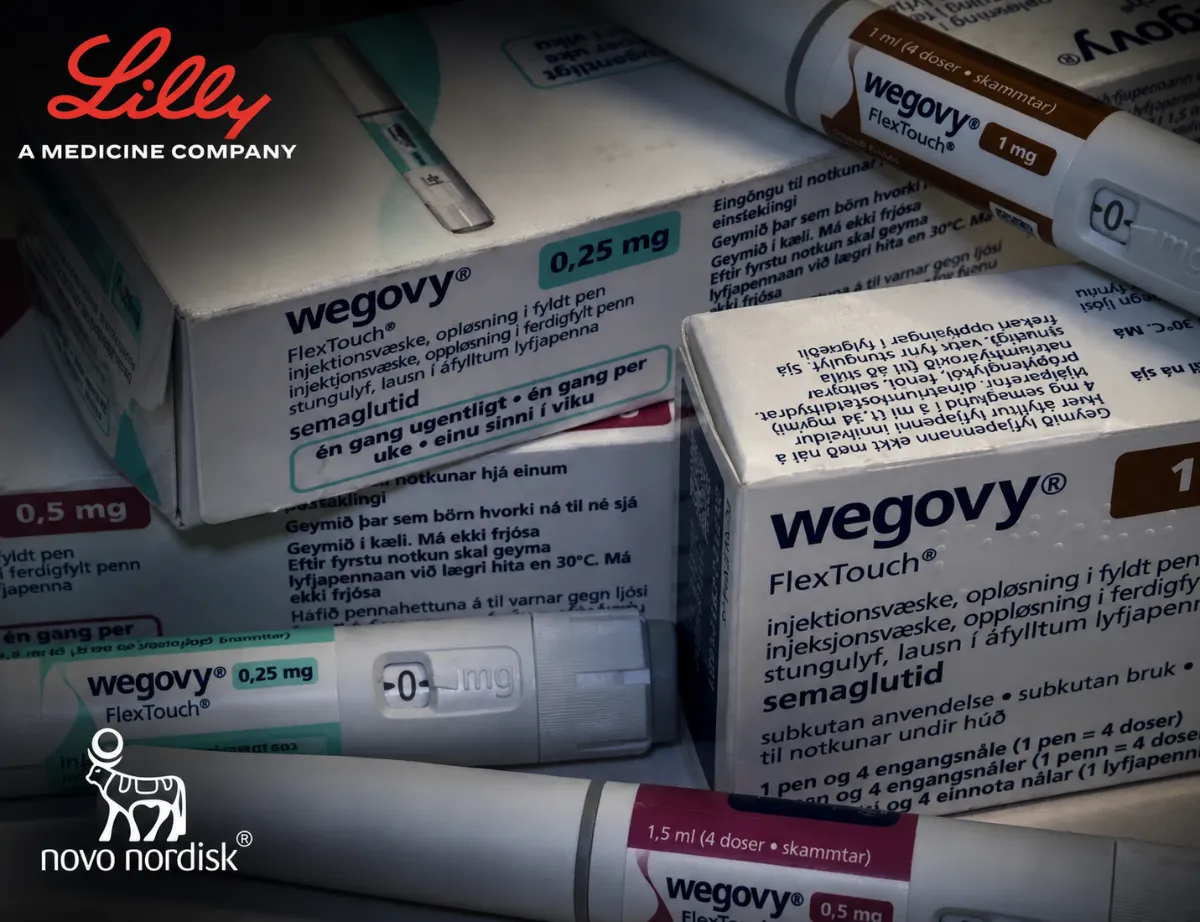
- Trump announced Medicare will cover GLP-1 obesity drugs starting July at a $245 government procurement price and a $50 patient copay — the first time pure weight-loss drugs are covered in Medicare history
- Lilly and Novo Nordisk accept margin compression in exchange for millions of new patients, a 3-year tariff exemption, and a second TrumpRx channel
Trump's "$50/month Ozempic" plan funnels millions of new Medicare patients to Lilly and Novo Nordisk, plus a second monetization channel through TrumpRx.
At a Florida event on May 1, President Trump announced that beginning July 1, Medicare beneficiaries will be able to access GLP-1 weight-loss drugs — Ozempic, Wegovy, Zepbound — for a $50 monthly out-of-pocket cost. These are drugs that currently retail at $1,000–1,350 per month.
The direct beneficiaries are clear: Eli Lilly and Novo Nordisk, both of which signed MFN (most-favored-nation) pricing agreements with the administration. They accept short-term margin pressure in exchange for millions of new Medicare patients and a three-year tariff exemption.
Pricing — government buys at $245, beneficiary pays $50
The key is the government procurement price. The administration negotiated a Medicare procurement price of $245/month for major GLP-1 injectables (Ozempic, Wegovy, Zepbound, Mounjaro). Medicare buys at that price; beneficiaries pay $50/month.
The July rollout runs through the "Medicare GLP-1 Bridge," a near-term precursor to the broader BALANCE model. The window is July 1, 2026 through December 31, 2027. Eligibility is limited to Medicare Part D enrollees with obesity plus a comorbidity (diabetes, cardiovascular disease, etc.), subject to prior authorization.
First time in Medicare history — the legal wall is effectively bypassed
This is more than a price cut. Federal law prohibits Medicare from covering pure weight-loss drugs. The Biden administration never cleared that hurdle. The Trump administration has effectively bypassed it through a combination of price negotiation with manufacturers and a pilot program structure.
The combined Medicare and Medicaid pool of potentially eligible beneficiaries is estimated at roughly 7.4 million. Per KFF, several million Medicare Part D enrollees have obesity plus a qualifying comorbidity.
Eli Lilly and Novo Nordisk — volume beats price compression
Margin pressure is real. A drug that was selling above $1,000 per month dropping to a $245 government procurement price compresses ASP (average selling price).
But the investment thesis is volume. With millions of new prescription patients coming in from Medicare alone, the contribution to total revenue offsets — or exceeds — the price decline. As part of the agreement, Eli Lilly committed $27 billion to U.S. manufacturing and research and secured a three-year tariff exemption. Novo Nordisk has similar terms.
TrumpRx is the second channel. Even non-Medicare consumers can buy oral Wegovy at $149/month and injectable Wegovy/Ozempic from $199 on the platform. Novo Nordisk's insulins (NovoLog, Tresiba) come down to $35/month. With prescription volumes set to surge, both companies' 2027 GLP-1 guidance becomes the next thing to watch.
Frequently Asked Questions
Who benefits more — Eli Lilly or Novo Nordisk?
Both. Wegovy (semaglutide, Novo) and Zepbound (tirzepatide, Lilly) are both covered. Novo currently leads on market share; Zepbound has better clinical efficacy data, which gives Lilly room to gain share.
Will Pfizer's oral orforglipron be added if FDA-approved?
CMS has indicated orforglipron would be added once FDA-approved. Pfizer is also expected to participate in TrumpRx.
What are the eligibility conditions for the $50 copay?
Medicare Part D enrollees with obesity (BMI ≥30, or ≥27 with comorbidities) plus a qualifying comorbidity such as diabetes or cardiovascular disease, subject to prior authorization.
How damaging is the short-term margin pressure?
ASP clearly declines. But both companies maintain higher pricing outside the U.S., and the influx of Medicare beneficiaries could lift total prescription volumes by double-digit percentages — leaving total revenue net positive.
Could this become permanent coverage?
The Bridge program runs through December 31, 2027. As outcome data accumulates and savings from reduced obesity complications get measured, the political case for extending the BALANCE model into permanent coverage strengthens.

4 Mega-Cap Stocks With $400–$5,400 Share Prices Positioned for a Potential Split in 2026
 META
META MSFT
MSFT BKNG+4
Agentic AI Is Reshaping Healthcare — Three Sub-$20 Stocks Worth Watching: SOUN, EVH, AI
 SOUN
SOUN EVH
EVH AI
AI
Trump Bets $2 Billion on Quantum Computing — IBM Takes $1 Billion, Rigetti and D-Wave Surge 25%
 IBM
IBM INTC
INTC RGTI+3
Wall Street's Defining Moments
See more








Smart Money Briefing
Weekly summaries of Wall Street guru moves and crypto whale activity.