A Mathematician's Legacy: What Jim Simons Left Behind
Jim Simons died May 10, 2024, leaving $31B mostly to mathematics, science, and autism research through his foundation. He lost two sons tragically and faced political and tax controversies at Renaissance Technologies. His legacy posed a final question: what is the human investor's role in the age of AI-driven trading?
A Mathematician's Legacy: What Jim Simons Left Behind
Inteliview Guru Story — Jim Simons EP.3 (Final)
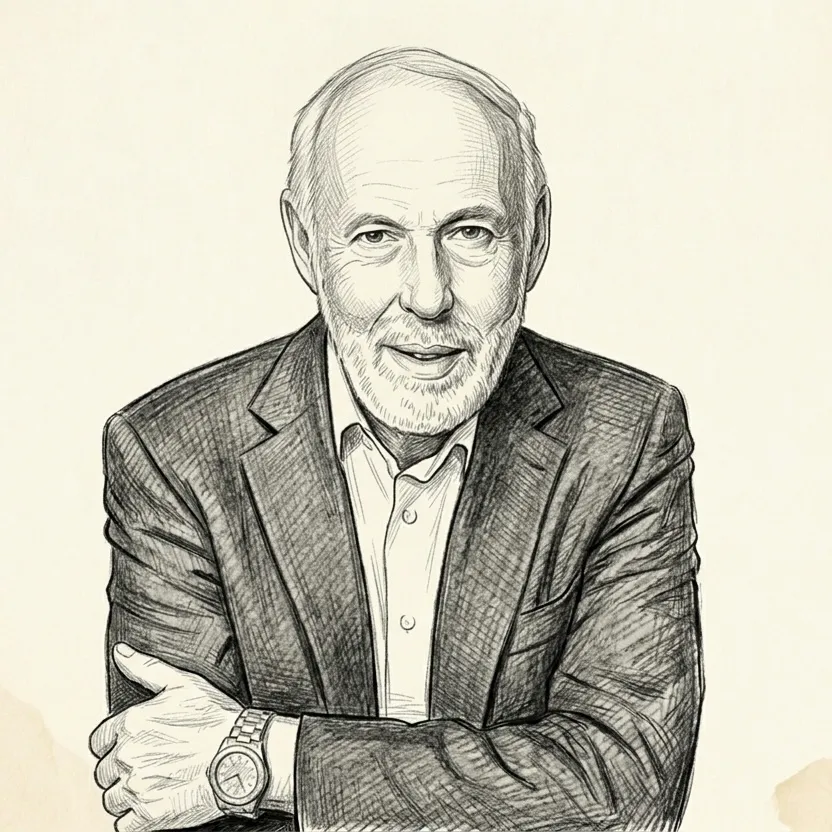
Friday, May 10, 2024. New York. Jim Simons passed away. Age 86. Cause undisclosed. His estate: approximately $31 billion. And the question he left behind: "In an age where machines read markets better than humans, what is the role of the human investor?" This is a record of what Jim Simons left before he departed.
1. The Disposition of $31 Billion
Simons' $31 billion wealth. Where did it go? Mostly to philanthropy. Or was set to go there.
The Simons Foundation, established by Jim and his wife Marilyn Simons in 1994, was the centerpiece of his charitable work. The foundation's assets exceeded $5 billion at the time of Simons' death. And the Simons couple had already donated billions during their lifetimes.
The Simons Foundation supported three primary areas.
First, Mathematics and Basic Science.
The Simons Foundation invested most heavily in mathematics and theoretical physics research. Mathematics institutes, physics research programs, university research funding. What he particularly prioritized was support for "seemingly useless research."
"People ask me, 'What use is this research?' I answer: 'I don't know. That's the point.' When I published the Chern-Simons form in 1974, nobody knew it would be applied to physics. Thirty years later, it became central to string theory. Basic research may seem useless immediately, but it ultimately changes the world. The problem is, nobody knows when. That's why government and industry hesitate to invest. That's why foundations like ours must step in."
Second, Mathematics Education.
The field where Simons invested most passionately. Particularly K-12 mathematics and science education in American public schools.
The Math for America program. Founded by Simons in 2004. Core insight: American math and science teachers earn low salaries. A top math major becomes a teacher earning $50,000 annually. The same person on Wall Street earns $300,000. Naturally, Wall Street wins.
Math for America provided top-tier math and science teachers an additional annual stipend of $15,000. It also offered professional development programs, community, and mentoring. Starting in New York City, it expanded nationwide.
"The best use of the money I earned at Medallion is developing the next generation of mathematicians. And to develop mathematicians, you must first develop math teachers."
Third, Autism Research.
Simons' daughter Audrey has autism spectrum disorder. This led the Simons couple to support autism research. The Simons Foundation Autism Research Initiative (SFARI) became the world's largest private funder of autism research.
2. The Loss of Two Sons
Simons' life was not without tragedy.
In 2003, Simons' son Paul Simons died in a bicycle accident. Age 34.
In 2006, his other son Nicholas Simons drowned in Bali. Age 24.
He lost two sons.
Simons rarely spoke publicly about this tragedy. In one interview, he said:
"Losing a child is the most terrible thing that can happen to a parent. There is no way to overcome it. But it is possible to keep walking forward."
Remarkably similar to what Munger said after losing his son Teddy: "'Overcome' is not the right word. But it is possible to keep walking forward."
Two giants experienced the same tragedy and reached the same conclusion. And both kept walking forward. Munger until age 99, Simons until 86. Tragedy did not stop them.
Much of Simons' charitable work was conducted in his sons' names. Avalon Park and the Nicholas Simons Foundation exemplify this. He transformed the pain of losing his sons into energy to help others.
3. Renaissance's Political Controversy
Simons' legacy has a darker side.
Robert Mercer, Renaissance's co-CEO, and his daughter Rebekah Mercer became deeply involved in far-right American politics.
The Mercer family were major backers of Breitbart News. They funded Steve Bannon. They were significant investors in Cambridge Analytica—the firm that leveraged Facebook data to support Trump's 2016 campaign. They were identified as among the largest donors contributing to Trump's 2016 victory.
This created a problem for Simons: he himself was a Democrat. He made substantial donations to Hillary Clinton. He supported Obama. Yet his company's co-CEO was backing the opposite side.
Simons expressed discomfort with the situation. When Mercer stepped down as co-CEO in 2017, the issue was partially resolved, but Renaissance's association with far-right politics remained a blemish on Simons' legacy.
"I disagree with Robert's political views. However, he is an outstanding scientist and has made an enormous contribution to Renaissance. I don't believe in excluding a colleague I've worked with for 30 years simply because we differ politically."
This response did not silence critics. Some argued Simons should have sanctioned Mercer earlier.
4. Tax Controversy
Another controversy: taxation.
Renaissance Technologies engaged in years of disputes with the Internal Revenue Service (IRS). The core issue: whether Medallion's trading gains should be taxed as short-term capital gains or long-term capital gains.
In the U.S., the short-term capital gains rate is approximately 37% (top bracket). The long-term rate is approximately 20%. The difference is substantial.
Medallion's trades were predominantly short-term (days to weeks). Normally, short-term capital gains rates would apply. However, Renaissance allegedly used complex financial structures to classify these returns as long-term capital gains.
In 2014, a U.S. Senate Permanent Subcommittee investigated this issue. According to the report, Renaissance saved approximately $6.8 billion in taxes through this structure.
Renaissance subsequently settled with the IRS and paid additional taxes. The exact settlement amount was not disclosed.
Simons himself rarely spoke publicly about this controversy in detail. In one interview:
"We believe we complied with the law. Tax law is complex and subject to interpretation."
This is the most contentious aspect of Simons' legacy: the man who donated billions to mathematics education simultaneously optimized tax structures to save billions.
5. May 10, 2024
Friday, May 10, 2024. Jim Simons passed away. Age 86.
Statement from the Simons Foundation: "Jim Simons profoundly impacted the world as a mathematician, investor, and philanthropist."
Wall Street's reaction approached reverence. His competitors, those who had criticized his methods—all expressed admiration.
Renaissance Technologies continued operating after Simons' death. The Medallion Fund continued running. A test had begun: whether the system Simons built would function without him.
During his lifetime, Simons addressed this question:
"I stepped back from day-to-day decision-making at Renaissance long ago. The system runs. People maintain and improve it. It will function without me. My one concern is that when new problems arise, we need someone to ask: 'How should we approach this?' That's leadership's role—difficult to replicate through systems alone."
AI가 단기 거래·패턴 인식에서 인간을 이기는 시대. 개인투자자인 당신이 가진 무기 중 기계가 가장 따라하기 어려운 것은?
6. The Question for the AI Era
2024, when Simons died, stood at the heart of an AI revolution. Two years after ChatGPT's launch. Generative AI was transforming every industry.
What Simons began in 1988—computers making investment decisions instead of humans—had become industry standard by 2024. Quant funds, algorithmic trading, AI-driven investing. What Simons pioneered was now mainstream.
This transformation posed a question for individual investors:
"In an age where machines read markets better than humans, what is the role of the human investor?"
What Medallion proved: with sufficient data and sufficient mathematics, machines beat humans. In short-term trading, certainly. In pattern recognition, absolutely.
So what can human investors do? Answers from the masters covered in this Guru Story series:
- Buffett: "Buying good companies at reasonable prices and holding long-term cannot be replicated by machines. Because judging a 'good company' requires understanding the business, trusting management, and grasping industry direction long-term."
- Munger: "A machine can learn 25 human biases. But using those biases to 'buy when others panic' requires human judgment."
- Lynch: "Discovering a good product in a shopping mall, then analyzing that company, is something a human consumer does better than a machine."
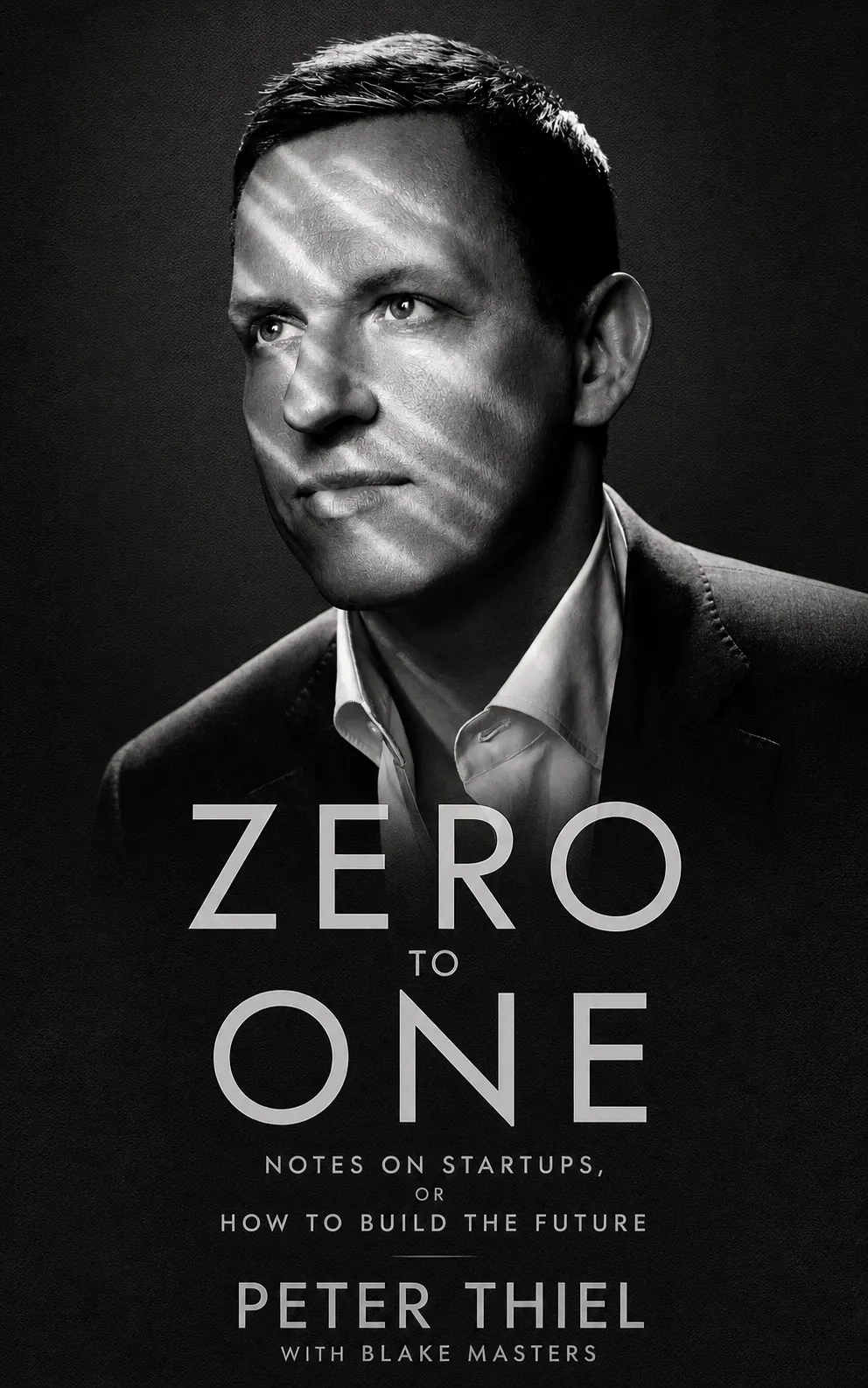
- Thiel: "Recognizing companies creating 0-to-1 value—machines cannot do this. There's no data yet. Only humans can assess the worth of something that doesn't exist."
Simons himself offered this answer:
"Machines beat humans in the short term. Humans can beat machines in the long term. Because long-term judgment requires understanding the world, and humans still understand the world better than machines. Still."
Two words he added at the end: "Still."
7. Three Lessons From This Story
First, what you do with money after earning it defines you.
Simons earned $31 billion. He devoted most of it to mathematics education, basic science, and autism research. Livermore earned $100 million and spent it on yachts and parties. Buffett earned over $100 billion and pledged to give away 99%. Munger left most of his $2.6 billion to charity. Making money is remarkable. How you spend it determines legacy. If you've earned money through investing, what will you do with it? This question matters more than your return rate.
Second, tragedy is not a signal to stop—it is a test to keep walking.
Simons lost two sons. Munger lost a son. Lynch lost his father at age 10. Buffett lost his father early. These giants share one trait: tragedy did not stop them. They kept walking. And as they walked, they left more for the world. In investing and in life, the darkest moment is not the end. If the next step is possible, it is not the end.
Third, human value in the machine age is asking "Why."
Simons' machines answer "How." How to find patterns. How to trade. How to generate returns. But not "Why." Why does this pattern exist? Why are markets inefficient? Why invest at all? Only humans ask "Why." As Munger asked "Why do people make stupid decisions?" and Buffett asked "Why do great companies increase in value over time?" Your competitive edge in the AI era is not trading faster. It is asking deeper.
Once you've made your choice, reveal what the legend actually did
8. Epilogue—A Bridge Between Two Worlds
Jim Simons' life was a bridge between two worlds.
Mathematics and money. The most abstract discipline and the most concrete pursuit. The Chern-Simons form and the Medallion Fund. The curvature of manifolds and patterns in stock prices. He could bridge these worlds because they ultimately deal with the same thing: Pattern.
Mathematics discovers patterns in the universe. Investing discovers patterns in markets. Simons saw both through the same lens.
And his legacy spans both worlds. Medallion remains in the investment world. Math for America remains in education. The Chern-Simons form remains in science.
1938. Brookline, Massachusetts. A boy pondered automotive fuel:
"If it keeps halving, doesn't that mean it never becomes zero?"
This question spanned 86 years of life.
The boy became a mathematician. A codebreaker. A department chair. A hedge fund manager. A philanthropist.
And the machine he built keeps running, undisturbed by his absence.
66% annually. 32 years. A number no one in human history has reached.
It was born from a mathematician's question:
"Could there be a pattern?"
There was.
Jim Simons Trilogy Complete
- EP.1—The Codebreaker Goes to Wall Street: NSA, Stony Brook, a team of mathematicians. Quant is born.
- EP.2—Medallion, Humanity's Greatest Returns: 66% annually, 32 years, the triumph of machines.
- EP.3—A Mathematician's Legacy: Philanthropy, tragedy, and the question posed to the AI age.
What's your take on this story?
What do you think about Jim Simons's decision?
Sign in to participate
Sign InJim Simons (Estate) Today
Where is Jim Simons investing right now? See their latest 13F portfolio and current convictions.