Druckenmiller Calls Soros
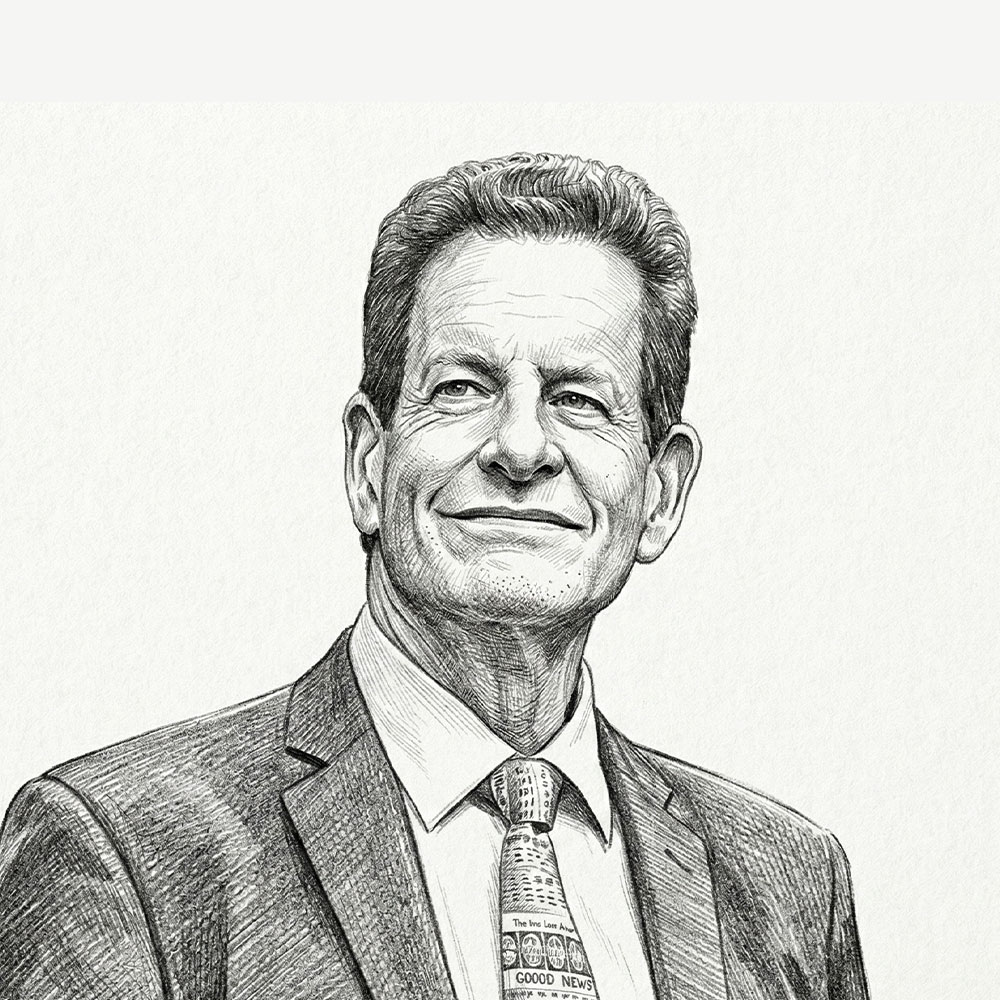
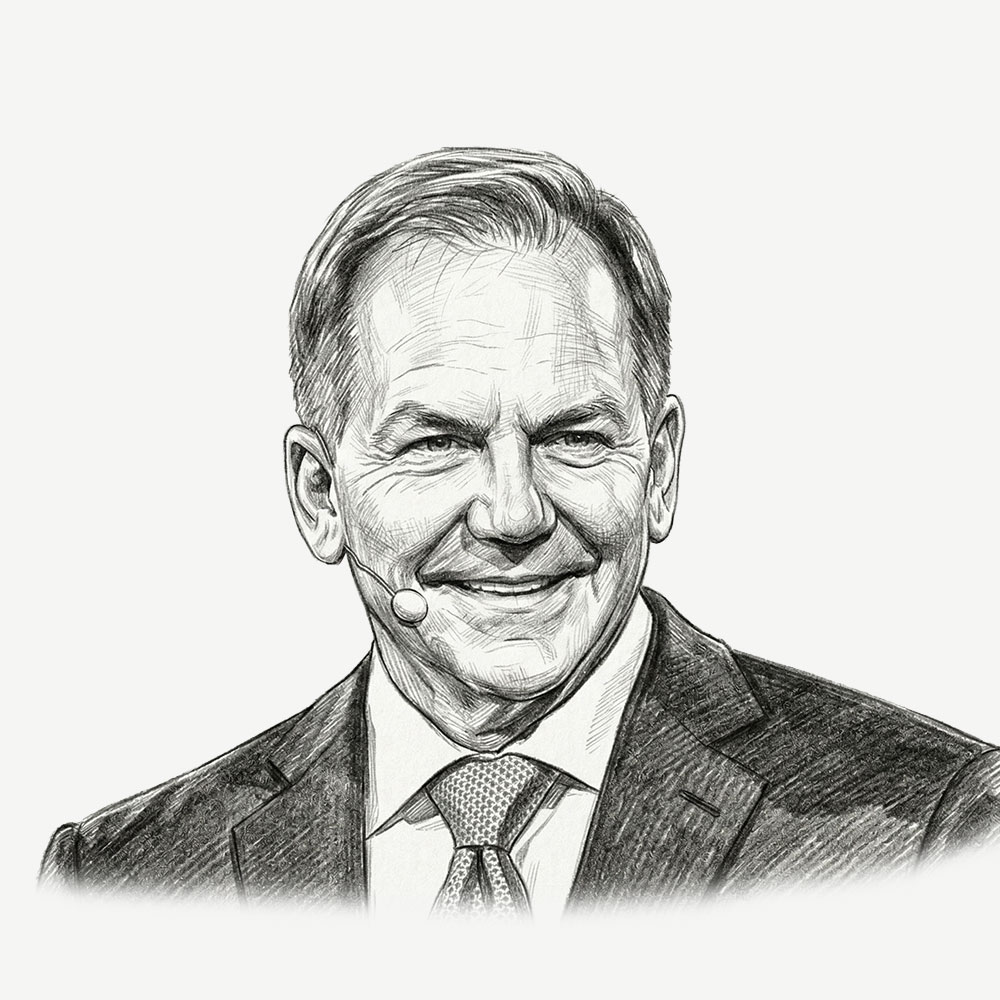
In August 1992, a 39-year-old analyst reported a $1.5 billion short position to his 62-year-old boss. The boss listened, then asked one question: "Why only $1.5 billion?" This is the record of the 72 hours before Stanley Druckenmiller made the largest bet of his life.
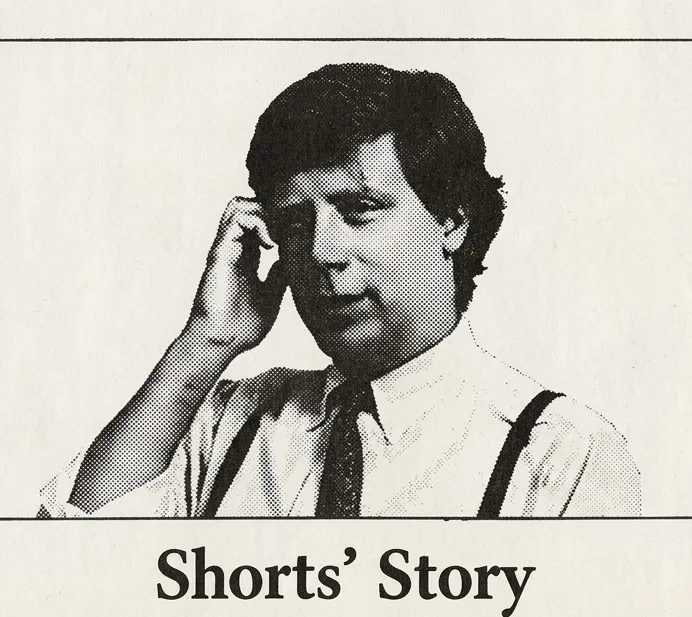
Druckenmiller Calls Soros
1. From Pittsburgh to New York
In 1953, Stanley Druckenmiller was born in Pittsburgh, Pennsylvania. His father was a chemical engineer. An ordinary middle-class family.
He studied English and economics at Bowdoin College. After graduating, he began a Ph.D. program in economics at the University of Michigan — but dropped out midway. The reason was simple: the economics his professors taught was too removed from the real economy. "The models were beautiful, but markets didn't move that way."
In 1977, he joined the research department at Pittsburgh National Bank. Age 24. Low salary, simple work — writing reports on stocks the bank was interested in.
Then, just one year in, something strange happened. His department head quit. And the bank promoted 24-year-old Druckenmiller to head of research. Most of his team members were in their 40s and 50s. They suddenly had a 25-year-old boss.
Druckenmiller later recalled the reason for this promotion:
"My boss Spiros Drereotis told me: 'You don't know anything. That's why I'm promoting you. People who know a lot get trapped by their own knowledge.'"
This became the starting point of his investment philosophy: flexibility matters more than knowledge.
2. Independence at Twenty-Eight
In 1981, 28-year-old Druckenmiller started his own firm: Duquesne Capital Management. The initial capital: just $1 million.
The early years were difficult. His research skills were exceptional, but he had no sales experience. Building a client base was harder than expected.
But his performance spoke for itself. Duquesne generated annual returns of over 30% in its first ten years. Not a single losing year. In 1986, Dreyfus Fund recruited him. He kept Duquesne while also managing several Dreyfus funds.
In the spring of 1988, a phone call came. From New York.
"This is George Soros. I'd like to speak with you."
3. Soros's Offer
Druckenmiller knew Soros's name. He had heard that Soros had taken heavy losses right after Black Monday in 1987. But he hadn't expected Soros to call him directly.
Their first meeting was at a New York restaurant. Soros was 58; Druckenmiller was 35. Over lunch, Soros made his proposal:
"Take over my fund. I want to focus on philosophy and philanthropy now."
Druckenmiller hesitated. Running his own Duquesne while also managing Soros's Quantum Fund would be a burden. The bigger issue was Soros's style — he was known as a difficult person to work for. The concern was that he would say he was stepping back but ultimately interfere.
Druckenmiller asked:
"Can you really step back?"
Soros replied:
"I'll be involved for the first few months. After that, your decision. Even if I disagree, if you're confident, ignore my opinion."
Druckenmiller accepted the offer. In September 1988, he became lead portfolio manager of the Quantum Fund.
4. German Reunification and the Pound's Contradiction
In November 1989, the Berlin Wall fell. In October 1990, East and West Germany officially reunified.
While most people focused on the political significance of reunification, Druckenmiller saw something else: the economic cost of reunification.
West Germany had to inject enormous capital to absorb East Germany. It exchanged East German marks for West German marks at 1:1, and poured hundreds of billions of marks into rebuilding East German infrastructure. This capital injection created severe inflationary pressure on the German economy.
The German central bank, the Bundesbank, raised interest rates to control inflation. From 1991 to mid-1992, the Bundesbank steadily hiked its benchmark rate.
This is where the problem began.
The European Exchange Rate Mechanism (ERM), established in 1979, required participating European countries to peg their currencies to the German mark and maintain exchange rates within a set band. The goal was exchange rate stability across Europe.
Britain joined the ERM in October 1990. But by 1992, the situation was the worst possible for Britain.
Germany was raising rates. Britain — pegged to Germany — had to keep its own rates high to match Germany's rate increases to cover reunification costs.
But Britain was in recession. Unemployment exceeded 10%. The housing market was collapsing. The British economy needed lower rates to function normally. But the ERM prevented that.
Druckenmiller saw this contradiction. What he said to his team in the summer of 1992:
"Britain faces one of two choices: sacrifice its domestic economy to maintain the ERM, or abandon the ERM. Given Britain's current political situation, can they keep sacrificing their economy?"
The answer seemed clear. Britain would break. The question was when.
5. A $1.5 Billion Opening Position
In the summer of 1992, Druckenmiller began building his pound short position — approximately $1.5 billion.
Even by Quantum Fund standards, it was a large position. Total fund assets at the time were approximately $7 billion. Over 20% of the fund was going into a single trade.
Druckenmiller's logic was precise. He calculated four scenarios:
Scenario 1: Britain maintains the ERM. The pound holds its current level. Position loss is limited (essentially just the cost of carry from the interest rate differential).
Scenario 2: Britain voluntarily adjusts within the ERM. The pound depreciates 5–10%. Position profit: approximately $100–200 million.
Scenario 3: Britain tries to defend, fails. Pound crashes 10–20%. Position profit: $300–500 million.
Scenario 4: Market panic. Pound in free fall. Position profit: $500 million to $1 billion.
Even in the worst-case scenario (Scenario 1), the loss was roughly 3%. In the best-case scenario, profit potential exceeded 300%.
An extremely favorable risk-to-reward ratio. This was the core of Druckenmiller's style. He later explained it this way:
"I don't need to be right every time. I just need to construct a structure where I lose a little when I'm wrong and gain a lot when I'm right. That's asymmetric betting."
He reported the position to Soros: $1.5 billion, short the pound, expected scenarios, risk calculations — everything in writing.
6. That One Line
One day in August 1992. Soros's New York office.
Druckenmiller finished his presentation. Soros sat silently behind his desk for a long time. He fiddled with a pipe and looked out the window.
Druckenmiller was tense. Even by Soros's standards, $1.5 billion was a large position. He worried Soros might say it was "too big."
Soros finally spoke.
"Why did you only put on $1.5 billion?"
Druckenmiller stopped.
Soros continued:
"Listening to your analysis — this is a once-in-a-generation trade. How many moments like this will come in a lifetime where you can have this level of conviction? And yet you've only bet 20% of the fund. Is that cowardice? Or do you lack confidence in your own analysis?"
Druckenmiller started to push back — then stopped.
Soros was right. He had full conviction in his analysis. Yet he had capped the position at $1.5 billion. The reason wasn't a lack of confidence in the analysis — it was fear of the responsibility if things went wrong.
Soros was seeing that fear.
"If you're right, bet everything you've got. You can bet the whole fund. If you're wrong, we'll find a way out together. There's no middle ground."
Druckenmiller walked out of that office. Over the following weeks, he steadily built the position: from $1.5 billion to $3 billion, $5 billion, $8 billion. By early September, the position had reached approximately $10 billion — meaning the entire fund capital, leveraged, was on the table.
This was the Quantum Fund's state in the days before Black Wednesday.
7. Druckenmiller on That Day
Wednesday, September 16, 1992. 5:00 a.m. New York time.
The moment he woke up, Druckenmiller turned on the TV. CNN was broadcasting breaking news from Britain. The pound had broken through the ERM lower limit.
He said one sentence to his wife:
"It ends today."
And he went to the office.
At 8:30 a.m., the Bank of England announced its first rate hike — from 10% to 12%. Druckenmiller watched his monitors. The pound didn't move.
At 2:15 p.m., a second rate hike: from 12% to 15%. Still the pound didn't move. The market was already ignoring the Bank of England's defense.
At that moment, Druckenmiller decided to increase the position further.
He went to Soros's office. "Let's add to our shorts now." Soros nodded. That afternoon, they built additional billions of dollars in position.
At 7:00 p.m., Norman Lamont, the UK Chancellor, announced Britain's withdrawal from the ERM — on the steps of the Bank of England in the rain. Druckenmiller watched the press conference live from his New York office.
He later described that moment this way:
"Watching the press conference, I felt strangely nothing. No joy that we had won, no guilt about a nation's policy collapsing. Just the thought: 'This is the outcome we predicted.'"
The Quantum Fund earned approximately $2 billion that week — the largest single trade profit during Druckenmiller's four years working under Soros.
August 1992. You are Stanley Druckenmiller, 39 years old. You're convinced your analysis is right. Britain's ERM structure is unsustainable. You've already put up $1.5 billion — 20% of the fund's assets. Then your boss looks at you and asks, "Why so small?" He tells you to bet the whole fund.
8. Three Lessons This Story Left Behind
First, analysis and execution are different abilities.
In the summer of 1992, Druckenmiller correctly analyzed Britain's contradiction. His analysis was perfect. Yet he couldn't act at the scale his analysis deserved. His analytical ability was 10 out of 10; his execution ability was 5 out of 10. Most individual investors face the same problem. Getting a stock right and buying it at the size your conviction deserves are completely different challenges. If you know the answer but only bet a medium amount, that answer won't change your life. The question to ask after analysis is: "How much am I willing to bet?"
Second, when risk-to-reward is extremely asymmetric, bet big.
The essence of what Druckenmiller learned in 1992 was not "bet big on every trade" — it was the opposite: "bet big only when the asymmetry is extreme." A trade where you lose 3% in the worst case and make 300% in the best case. Opportunities like this come once or twice a decade. You must maintain cash and flexibility the rest of the time so you can act when they arrive. This is the opposite of what most Korean retail investors do — many are fully invested at all times, then have no capital left when a true opportunity comes.
Third, don't miss the moment your mentor tells you to be bolder.
This applies in careers and investing alike. When someone who has seen more than you says "be bolder," that is an opportunity to expand your boundaries. Most of the time we operate within limits — safely. But sometimes that safety becomes a prison that contains your own potential. The moment Druckenmiller broke through his boundaries with one line from Soros was the moment of greatest growth in his life. Do you have such a mentor? If so, don't be afraid of their words — follow them. If not, find one.
Once you've made your choice, reveal what the legend actually did
9. Druckenmiller After
In the spring of 2000, Druckenmiller left the Quantum Fund — shortly after taking heavy losses in the dot-com collapse. He wrote a letter to Soros: "I can no longer handle this." That story is for another chapter.
After leaving Quantum, he continued running his own Duquesne through 2010. In August 2010, he announced he was closing the fund to outside investors. Duquesne converted to a family office.
The performance record he disclosed at retirement was extraordinary:
Approximately 30% average annual return over 30 years.
Not a single losing year.
In Wall Street history, almost no one can claim this record. Not Buffett, not Soros. Buffett had a few losing years; Soros took large losses in 1987 and 1994.
Only Druckenmiller had never lost.
10. Why He Never Lost
Many people asked him: how did you win 30 consecutive years?
His answer was similar every time:
"I look seriously at my positions every day. The moment I see any possibility that my analysis might be wrong, I reduce the position without hesitation. Most managers try to prove they're right. I'm not interested in being right. I'm interested in not losing money."
Another principle:
"When a large loss starts happening, don't try to find the reason first. Get out first. You can analyze the reason afterward."
As of late 2024, his personal net worth is approximately $10 billion. He has donated or plans to donate most of it to charitable foundations, with a focus on children's education and medical research.
Soros, now 95, is still alive. Druckenmiller, now 72, still watches the markets. In 2023, he publicly expressed a positive view on AI-related stocks in media interviews — while also voicing concern about long-duration U.S. Treasuries. His market analysis remains sharp well into his 70s.
On Wednesday, September 16, 1992, he was 39 years old.
And that afternoon, in Soros's office, he heard one line:
"Why did you only bet this much?"
That one line turned an ordinary analyst into a legend.
- 드러켄밀러의 강점
- 비대칭 리스크 계산 + 빠른 손절
- 소로스의 강점
- 역사적 순간을 읽는 직관 + 과감한 실행
- 드러켄밀러 30년 성적
- 연평균 30%, 손실 연도 0회
- 버핏 60년 성적
- 연평균 20%, 손실 연도 수회 (장기 복리)
- 공통 원칙
- 틀렸을 때 빠르게 빠져나오는 것이 맞았을 때 크게 버는 것보다 중요하다
What's your take on this story?
What do you think about Stanley Druckenmiller's decision?
Sign in to participate
Sign InStanley Druckenmiller Today
Where is Stanley Druckenmiller investing right now? See their latest 13F portfolio and current convictions.