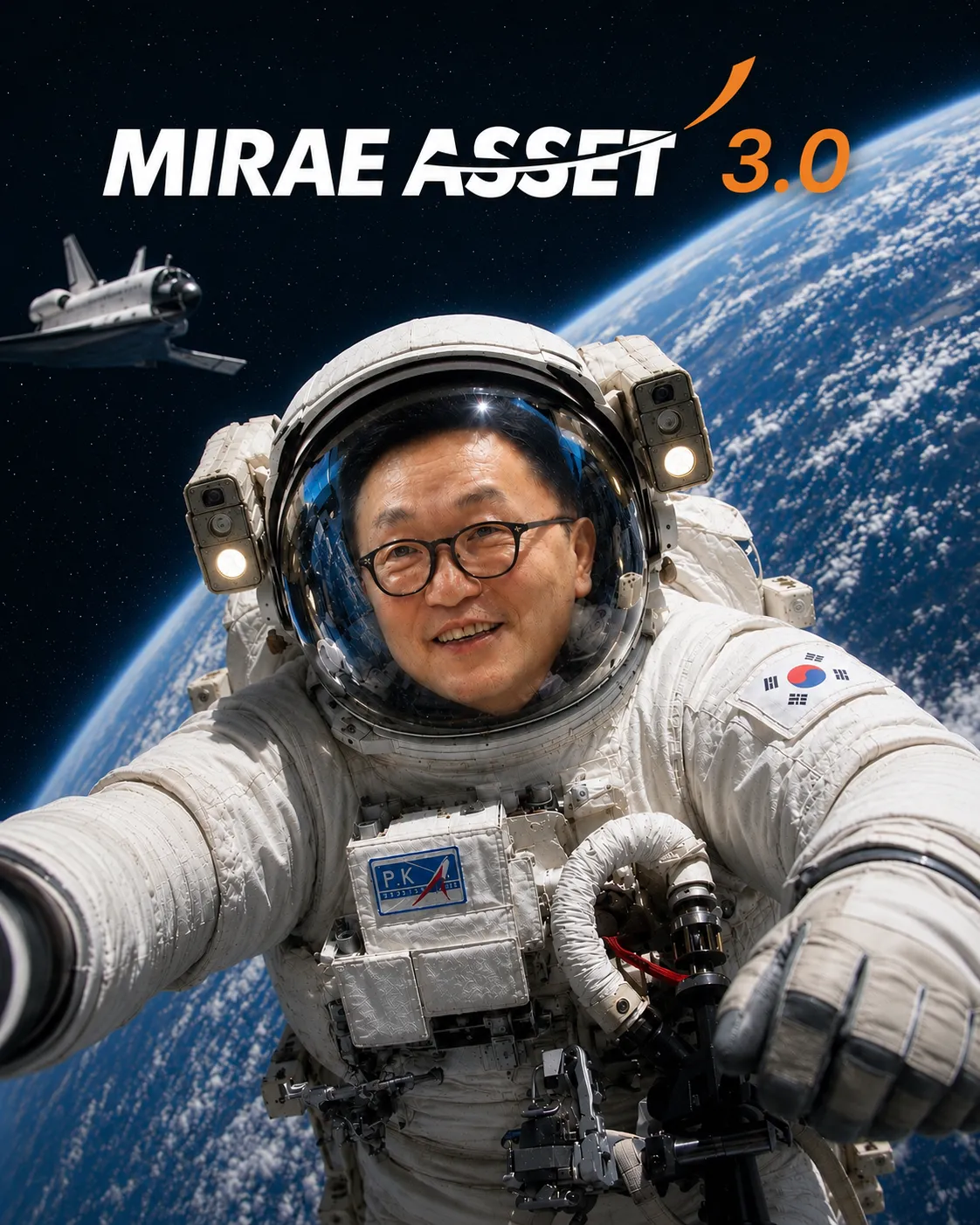
How to Turn a Windmill
A 120,000-won-per-month broker founds Mirae Asset in the middle of the 1997 IMF crisis and creates the Korean asset-management industry. With 10B won of capital, he runs a three-stage bet — bonds, equities, then Korea's first mutual fund "Park Hyun-joo No. 1" launched in December 1998.
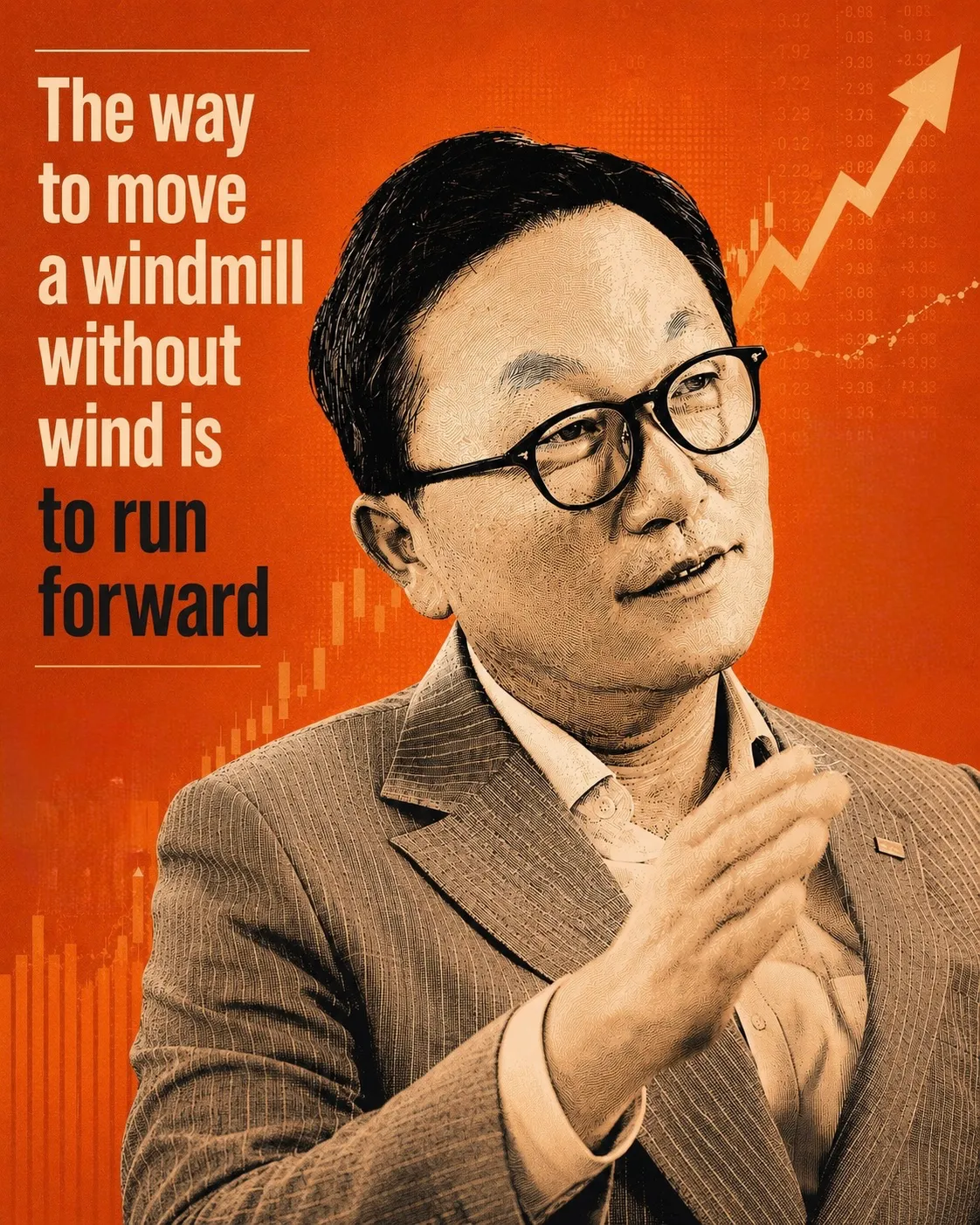
How to Turn a Windmill
Inteliview Guru Story — Park Hyun-joo EP.1
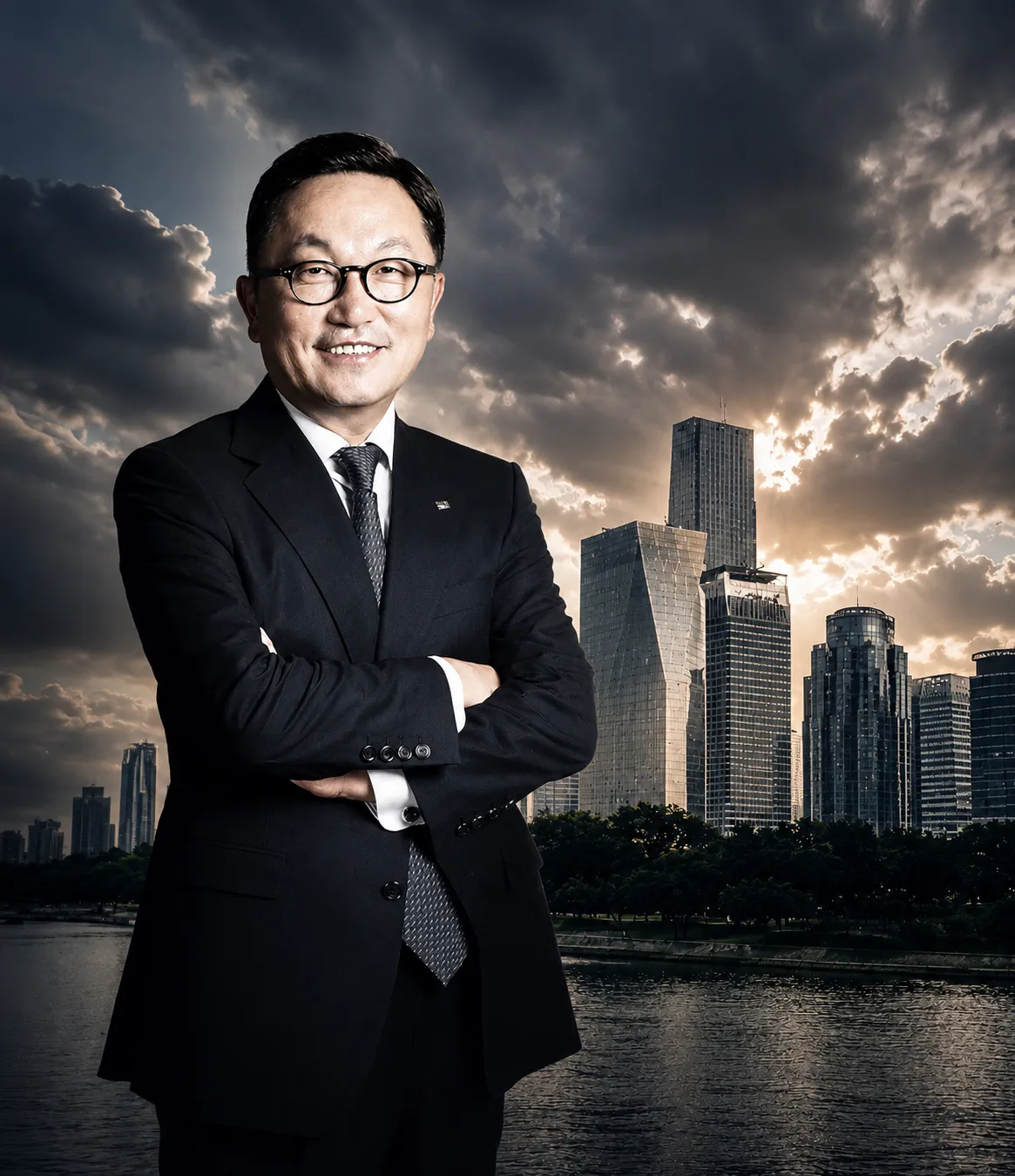
In 1990, a 32-year-old branch manager at a Korean securities firm hung a single line on his branch wall: "When there is no wind, the way to turn a windmill is to run forward." That sentence became his branch motto, and over the next 30 years it became the principle that ran through his entire career. This is the story of how Park Hyun-joo, the son of a farmer, became the pioneer of Korea's capital market.
1. The Boy from Gwangju
Park Hyun-joo was born on October 17, 1958, in Gwangju, South Jeolla Province. His father was a farmer. The household was not wealthy.
The first event that changed his life was his father's death. On the same day Park received his acceptance letter to Gwangju Jeil High School — the most prestigious school in the province — his father passed away. The joy of acceptance and the grief of loss landed on the same day.
Just as Peter Lynch lost his father at age 10 and went to caddy on a golf course, Park developed an obsession with financial independence after his early loss. But the responses diverged. Lynch listened to financiers' conversations on the course. Park found his direction in his mother's teaching.
His mother taught two things. Trust, diligence, honesty. And how to plan with money. While he attended university in Seoul, she gave him pocket money only once a year. Whatever he received had to last 12 months. That habit became the root of his money-management instinct.
"My mother was generous enough to give freely to anyone who needed to borrow. But to me, she gave pocket money only once a year. I had to live a year on what she gave me. That is where I learned how to manage money."
"I have always thought of money as a flower. When earned rightly and spent rightly, money is as beautiful as a flower. The person who planted that philosophy in me was my mother — my greatest teacher."
2. The Student in Myeong-dong
He entered Korea University, Department of Business Administration. He had moved to Seoul. During his university years, one sentence determined his life.
"Capitalism cannot develop without a developed capital market."
Who said it, where he read it — neither is precisely recorded. But that single sentence drew him into the securities industry.
From his second year, he started investing in stocks with the living allowance his mother sent. At the time, Myeong-dong was the heart of Korean securities trading. He walked the Myeong-dong streets, watched the price boards, bought stocks, and learned the market.
Just as Lynch learned the market by listening to financiers on the golf course, just as Livermore learned the patterns of numbers in front of a securities-firm chalkboard, Park learned the Korean capital market in front of the Myeong-dong price boards.
During this period he sought out one person — Baek Hee-yeop, a legend of Korean securities history, the individual investor known as "Grandma Baek." As a young university student, Park went directly to her for advice. He even joined her on company visits. Just as Buffett went to Graham, Park went to Baek Hee-yeop.
3. The Stockbroker on Yeouido
After graduating from Korea University, Park entered the capital market. He was 27. He first founded an investment-advisory firm and ran it as principal. But to learn the market more deeply, he chose to enter a brokerage.
Several brokerages tried to recruit him. He chose the one where he could learn market analysis systematically — the sales department of Dongyang Securities (now Yuanta Securities).
His first month's salary: 120,000 won. He had been a CEO of an advisory firm and now he was a 120,000-won-a-month sales associate. People around him said he was crazy. His logic was different.
"I didn't join a brokerage to make money. I joined to learn the market. If you learn the market properly, the money follows."
Within three months he won an institutional order worth 300 million won. Promoted to deputy. Then he moved to Hanshin Securities. The promotion pace was abnormal. At 32, he became branch manager — the youngest in the Korean securities industry. The next year, his branch was the top performer. And the youngest executive promotion.
On Yeouido, no one in securities did not know Park Hyun-joo. The back of his business card always carried the same line: "When there is no wind, the way to turn a windmill is to run forward."
4. Refusing 1 Billion Won
In the mid-1990s, an offer came. A foreign brokerage offered him 1 billion won (~USD 750K) annually. In mid-1990s Seoul, Gangnam apartments traded at roughly 3.5M won per pyeong. A 1B won salary meant buying a Gangnam apartment a year.
Park refused.
"I didn't want to sell my dream for money."
What was his dream? To build his own firm. To build an asset management company. To change Korea's capital market. The sentence he had heard in university — "capitalism cannot develop without a developed capital market." He wanted to make that sentence real himself.
In 1997, the year he turned 39, Park resigned. He added the money he had saved across roughly a decade of work. He raised additional capital from acquaintances. The total: 10 billion won (~USD 11M).
He founded Mirae Asset Venture Capital (today's Mirae Asset Capital) and Mirae Asset Investment Advisory (today's Mirae Asset Asset Management). June 1997.
Six months later, the Korean economy collapsed.
5. IMF — Crisis Six Months In
November 1997. The IMF foreign-exchange crisis.
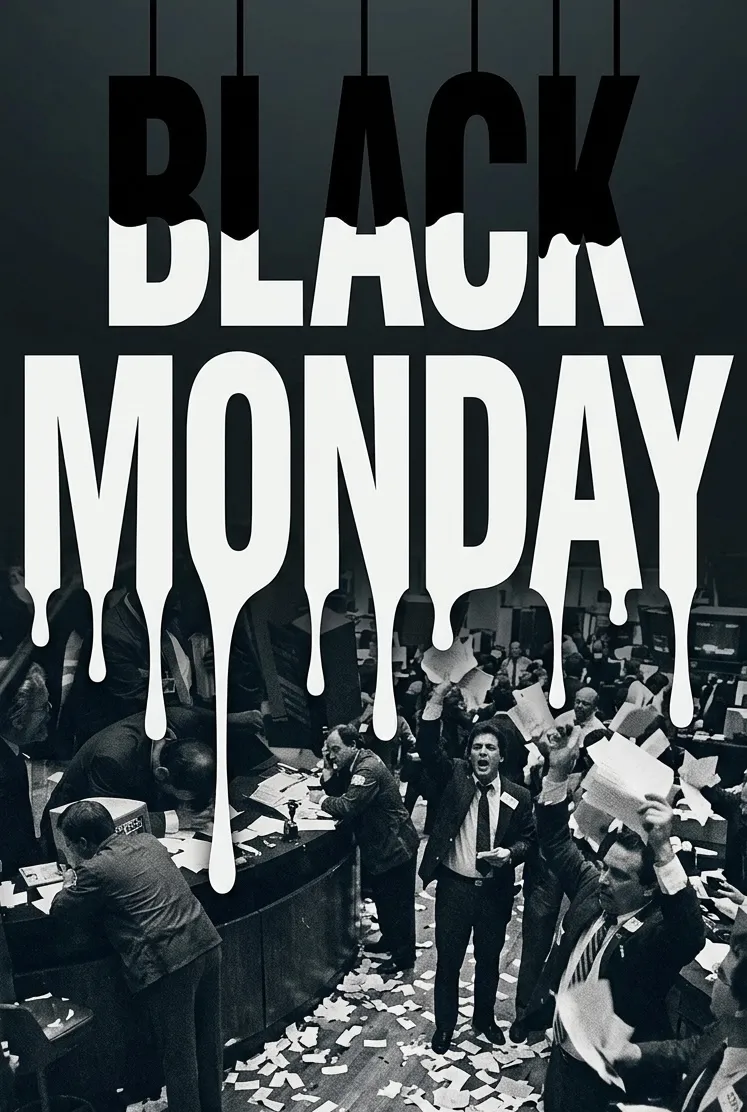
The won crashed. USD/KRW rocketed from the 800s to nearly 2,000. Companies failed in chain — Daewoo, Hanbo, Sammi, Jinro. Conglomerates collapsed overnight. Unemployment surged. Banks closed.
The KOSPI fell to the 300s. From 1,000 a year earlier, it had been cut to a third. Korean Air's market cap fell to about 200 billion won — roughly the price of a single airplane.
Park ran into this disaster six months after founding his firm. Most people would have regretted starting at all. Six months earlier, six months later — the timing could not have been worse.
But Park saw it differently.
"Why has this country collapsed like this?"
His diagnosis: the structural problem of Korea's financial system. Banks lent only against real estate collateral. Corporations depended only on bank loans. Individuals kept their money only in deposits. There was almost no direct investment through the capital markets. Money did not flow into productive places — it sat trapped in real estate and bank deposits.
Out of that diagnosis came the sentence that would later become Mirae Asset's slogan.
"From savings to investment."
6. Crisis Is Opportunity
Inside the IMF crisis, Park went on the offensive. His strategy had three stages.
Stage 1 — bonds. Just after the crisis Korea's interest rates spiked to 30%. The government had pushed rates to extremes to attract foreign currency. 30% rates meant bond prices were at the floor. As rates fall, bond prices rise.
Park put 95% of his managed capital into bonds. The remaining 5% in futures. His thesis: short of full Korean economic collapse, rates have to come back down. Korea still had Samsung Electronics, Hyundai Motor, POSCO — globally competitive manufacturers. The economic base was intact. The overshoot in FX and rates was temporary.
He was right. From the second half of 1998, rates began to decline. Bond prices rose. Park's bond bet produced large gains.
Stage 2 — stocks. After harvesting the bonds, Park rotated to equities. KOSPI in the 300s. Quality companies were trading at fire-sale prices.
"Korean Air's market cap is the price of a single airplane. That's insane. The company is not going to stop flying forever."
He bought the crushed quality names in size. Minority view. "You will never make big money following the path the majority takes." Just as Soros stood opposite the Bank of England, just as Burry stood opposite subprime, Park stood opposite Korean pessimism. And he was right.
Stage 3 — the mutual fund. December 1998. Park launched Korea's first mutual fund. "Park Hyun-joo No. 1." The name itself was unprecedented — putting a personal name on a financial product had never been done in Korea.
"I put my own name on it. If this fund fails, my name fails. That's how confident I was."
— What would you do? —
December 1997. You are Park Hyun-joo, age 39. Your firm is six months old. The IMF crisis just hit. KOSPI 300. Rates 30%. Conglomerates bankrupt. Everyone around you says, "Stocks are over." Your 10 billion won of capital is in danger.
- A. Wind down. Timing was awful. Survival first.
- B. Hold cash and wait for the crisis to pass.
- C. Buy bonds and equities. This crisis is the opportunity.
Park chose C. He put 95% of capital into bonds, then bought crashed quality stocks, then launched Korea's first mutual fund. His words: "If KOSPI is at 300, it can fall further. But Korea is not going to disappear. Samsung Electronics is not going to close. Hyundai will not stop building cars. So the answer is one thing — buy."
7. The Miracle of Park Hyun-joo No. 1
The Park Hyun-joo No. 1 fund, launched December 1998, changed Korean financial history.
At the time, Korean wealth lived almost entirely in bank deposits. Direct stock investors were a tiny minority, and the concept of indirect investing through a fund was alien. "Letting someone else handle your money to buy stocks" was a structure most Koreans did not yet understand.
Park Hyun-joo No. 1 changed that perception. The performance backed it up. As KOSPI rebounded from the 300s to 1,000 in 1999, Park Hyun-joo No. 1 returned over 100%. While bank deposit rates fell into the single digits, the fund returned roughly twice principal.
Word spread. "If you put money in Park Hyun-joo's fund, it makes money." Koreans who had only kept their money in bank deposits started, for the first time, to look at funds.
Mirae Asset's AUM accelerated. From hundreds of millions of won in 1998 to trillions in the early 2000s. The Korean asset-management industry was being born.
Just as Buffett started Buffett Associates in 1956 in Omaha with USD 105K, Park started the Korean asset-management industry in 1998 in Seoul with 10 billion won. The size differed; the meaning was the same. One person changing a country's investing culture.
8. Differences and Commonalities with Buffett
Comparing Park to Buffett is natural. Both started in asset management. Both ran a fund with their own name on it. Both shaped a country's investing culture.
Differences. Buffett did only stocks. Buy a great company, hold forever. He never widened the business itself. He stayed focused on investing. Park started in asset management, then expanded into brokerage, insurance, real estate, venture capital, and global ETFs. He was an investor and a financial-industry entrepreneur at the same time. If Buffett is the master of investing, Park is the builder of a financial industry.
Commonalities. Both saw opportunity in crisis. Just as Buffett bought Goldman Sachs in the 2008 crisis, Park bought Korean blue-chips in the 1997 IMF crisis. Both were investors who "got greedy when the crowd got fearful." Both put their own names on it. Buffett Associates. Park Hyun-joo No. 1. The name was the trust. The name was the brand. Both were shaped by their mothers — Buffett's mother Leila, Park's mother. Both received the foundation of their values from their mothers.
And the most important commonality. Both are still active. Buffett 94, Park 67. Both are still fighting.
9. Three Lessons
1. Crisis is opportunity for those who read structure. In the 1997 IMF crisis most people thought "Korea is over." Park thought "Korea's financial structure is broken; the Korean economy is not over." Because he read structure (the real-estate-and-loan-dependent system), not surface (the falling stock prices), he found opportunity in crisis. The same way Soros read the structural flaw in the Exchange Rate Mechanism, the same way Burry read the structural rot in subprime. People who make money in crises read structure, not surface.
2. Putting your own name on it is the strongest form of trust. Park named Korea's first mutual fund after himself. That created investor trust. "If he put his name on it, he won't cut corners." Trust is the most important asset in investing. Munger's "don't work with people you don't respect" is the inverse — "do things you can put your own name on." For Korean retail investors, the same applies. Can you put your name on this investment? Can you show it to your family? If not, reconsider it.
3. Running forward is the only way to turn a windmill. Park's branch motto: "When there is no wind, the way to turn a windmill is to run forward." Anyone makes money when the market is good — when the wind blows, the windmill turns by itself. The difference shows up when the market is bad. When the wind stops. The IMF crisis. The COVID crash. Rate-hike cycles. The gap between people who run forward in those moments and people who stop is what determines results 10 years later.
10. At the End of 1998
December 1998. Park Hyun-joo, 40 years old. A year and a half of his firm. He had walked head-on through the IMF crisis. The Park Hyun-joo No. 1 fund had launched. He had made money in bonds and in equities.
But this was the beginning. Twenty years remained ahead of him to reshape Korean finance. From savings to investment. From deposits to funds. From Korea to the world. Until the name Mirae Asset became a synonym for Korean finance, and a small Seoul asset manager became a global ETF player.
1990. A branch of Hanshin Securities. A 32-year-old branch manager hung one line on the wall.
"When there is no wind, the way to turn a windmill is to run forward."
For the next 35 years, he ran.
He refused 1 billion won and chose the experience of 120,000 won. He refused the safety of a foreign firm and chose the founding of his own with 10 billion won. He refused the fear of the IMF and chose bonds and equities. He refused the safety of deposits and chose the possibility of investing. Every time, he stood opposite the majority. Every time, he ran forward.
And the windmill turned.
▶ For more on Korean investing legends — Inteliview 〈Yeouido Stories〉
Next Episode
〈From Savings to Investment — The Man Who Moved Korea's Money〉 In the 2000s, Park moved Korean money from bank deposits to mutual funds. He opened the era of the "people's stocks." And in his 40s, he enrolled in UC Berkeley's Beginner English course — the oldest student among teenagers. Harvard adopted his story as an MBA case.
Investment Decision Simulation
What would you have done? Compare your decision with the legend's actual choice.
1997년 12월. 당신이 박현주다. 39세. 회사를 만든 지 6개월. IMF 외환위기가 터졌다. 코스피가 300대로 추락했고 금리는 30%. 대기업이 부도를 맞고 주변 모두 "주식은 끝났다"고 말한다. 당신의 자본금 100억 원이 위험에 처했다. 어떻게 할 것인가?
Once you've made your choice, reveal what the legend actually did
What's your take on this story?
What do you think about Park Hyun-joo's decision?
Sign in to participate
Sign In