Final Words at 99
On November 28, 2023, Charlie Munger passed away 33 days before his 100th birthday. His final year: "Lower your expectations" at the Daily Journal AGM, a confession about his son's death on the Acquired podcast, AI skepticism at his last Berkshire appearance, and Buffett's one line on stage a year later with an empty chair beside him. Ninety-nine years distilled: "Be rational. Don't do stupid things."

Final Words at 99
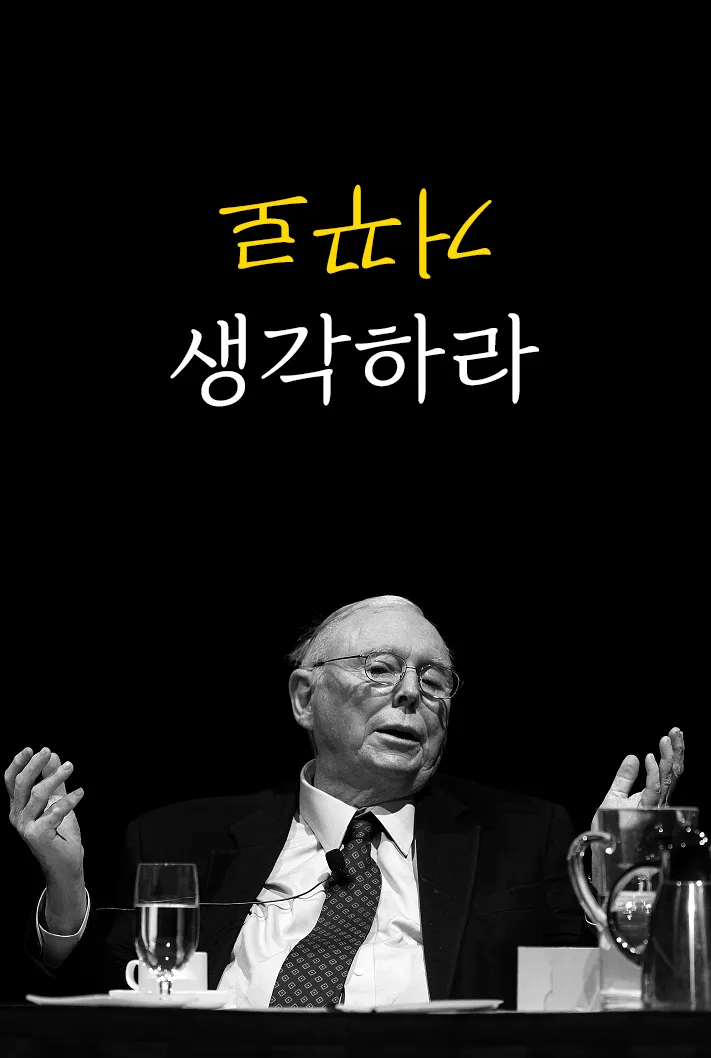
Tuesday morning, November 28, 2023. In a Los Angeles hospital, Charlie Munger closed his eyes. It was 33 days before his 99th birthday. His last public appearance had been at the Daily Journal shareholder meeting in February of the same year. He was seated in a wheelchair, but his mind was sharp. This is the record of the words Charlie Munger left behind in the final year of his life.
1. February 2023, Daily Journal Annual Meeting
Wednesday, February 15, 2023. Los Angeles.
The annual shareholder meeting of Daily Journal Corporation was held. The company was originally a legal newspaper publisher. Its revenue wasn't large. Yet every year, hundreds of investors flocked to this company's meeting. The reason was simple: Charlie Munger was the chairman.
At Berkshire Hathaway's annual meeting, Buffett was the star. Munger sat beside him, occasionally dropping a line. His most famous line was "I have nothing to add."
But at the Daily Journal annual meeting, Munger was the sole star. For two hours he took questions and laid out his thoughts on investing, life, and society. Many people called this "Munger's real annual meeting."
At the February 2023 meeting, he was seated in a wheelchair. His 99th birthday was a month away. His eyesight had deteriorated and he couldn't see the questioners' faces. But the moment he heard a question, an answer came. His mind was unchanged.
A shareholder asked: "Mr. Munger, you're turning 99 — what is the single most important thing you'd say to young investors?"
Munger thought for a moment. Then he spoke.
"Lower your expectations."
The audience laughed. But he didn't laugh. He was serious.
"The secret to happiness is lowering your expectations. High expectations mean disappointment with most outcomes. Low expectations mean gratitude for most outcomes. This applies to investing too. If you expect 30% annually, 15% will disappoint you. If you expect 8% annually, 15% will feel like a gift. Same result — different happiness."
He added:
"Low expectations don't mean low ambition. Work hard. Do your best. But be humble about results. The world is far larger than what you can control."
2. "I Was Lucky"
At the same meeting, another shareholder asked: "What is the secret to your success?"
Munger answered.
"Luck."
The audience laughed again. Munger continued.
"I was born in America in 1924. If I had been born in China or India in 1924, there would be no 'me' today. I was born a white male. In 1924 America, that meant every door was open to me. If I had been a woman or Black, I wouldn't have had the same opportunities."
"I had good parents. I grew up in an environment that loved books. I received a good education. I survived World War II. And I met Warren Buffett."
"None of these were my choices. They were luck. What I did was try to act rationally on top of that luck."
He emphasized once more: "Be rational. That's all."
3. The Last Berkshire Annual Meeting
Saturday, May 6, 2023. Omaha.
Berkshire Hathaway's annual meeting. Called "the Woodstock of capitalism." Every year more than 40,000 people gather in Omaha.
93-year-old Buffett and 99-year-old Munger sat side by side on stage. Probably the last stage of their 60-year partnership. Both of them likely knew that. But neither spoke the words aloud.
For five hours they took shareholders' questions. Buffett answered most questions; Munger, as always, was brief.
A shareholder asked: "How will AI affect investing?"
After Buffett gave a long answer, he looked at Munger. Munger said:
"I think AI is overrated. It's certainly an important technology. But when people say AI will change everything, I'm skeptical. Human foolishness cannot be fixed by AI."
The audience applauded.
Another shareholder asked: "Do you see bubbles in the market right now?"
Munger answered:
"There is always a bubble somewhere. The problem isn't knowing that. The problem is whether you have the discipline to avoid it. Most people know there's a bubble and jump in anyway — because everyone else is making money."
He paused for a moment. Then said:
"Avoiding bubbles is simple. Don't buy what you don't understand. But that's what makes it so hard."
4. Podcast Interview — On Failure
In early 2023, Munger rarely agreed to a podcast interview. The podcast was "Acquired" — a Silicon Valley–based business podcast.
In this interview, Munger was more candid than usual. He spoke about the failures in his life.
"My first marriage failed. I divorced. That was the most painful thing in my life."
He had divorced his first wife, Nancy Huggins, in 1953. At the time he had three young children.
"The years after the divorce were very difficult. I had no money, I had to raise the children, and legal work didn't satisfy me."
And there was a greater tragedy.
"My son Teddy died of leukemia. He was nine years old."
This was in 1955. Munger was 31, just after his divorce, in a period of financial hardship. He recalled walking down the hospital corridor where his son was admitted, weeping.
"After losing my son, I learned one thing. Terrible things happen in life. No matter how wise you are, no matter how wealthy, terrible things happen. All you can do is not let them destroy you."
This experience may have been the root of his philosophy of "lowering expectations." Someone who has experienced the most terrible things knows that lowering expectations is not resignation — it is a survival strategy.
The interviewer asked: "How did you get through that period?"
Munger answered:
"The word 'get through' doesn't fit. Losing a son is not something you get through. But walking forward is possible. One step at a time. And as you walk forward, other good things happen. I met my second wife Nancy. I got a new family. I met Warren. Life is an alternation of terrible things and good things. If you stop at the terrible things, you miss the good ones."
You are sitting across from Munger at age 99. You get to ask him one question — just one. It can be about investing, about life, about anything. What do you ask?
5. Munger's List
Munger was a list-maker all his life. The Psychology of Human Misjudgment — 25 causes. A catalog of foolish behavior. The "Too Hard" file. If you gather the things he repeated across various interviews and meetings in his final year, a single list emerges.
Life principles left behind by 99-year-old Charlie Munger.
- Be rational. "You don't need to be brilliant. Just rational."
- Lower your expectations. "High expectations are a prescription for unhappiness."
- Grow a little wiser every day. "Before you go to sleep, be at least a little wiser than when you woke up. Every day."
- Avoid foolish behavior. "Don't try to do great things. Just avoid doing stupid things."
- Admit what you don't know. "The courage to say 'I don't know' is the most important thing."
- Work with good people. "Never work with someone you don't respect. Never."
- Be patient. "Big money is made not from buying — it's made from waiting."
- Understand compounding. "The first rule of compounding: never interrupt it unnecessarily."
- Acknowledge luck. "A significant portion of your success is luck. Be humble."
- Keep walking. "Terrible things happen. Don't stop."
These ten things were left behind by a 99-year-old man. And these ten things were not principles he said he wished he'd known at age 20. These were principles he had applied — and failed at — and tried again, every day, across 99 years.
6. Buffett's Final Words
November 28, 2023. Charlie Munger died.
Berkshire Hathaway immediately issued a statement. It was written personally by Buffett.
"Berkshire Hathaway could not have come to its present position without Charlie Munger."
Buffett was more candid in a CNBC interview:
"Charlie was the architect of this company. I was the general contractor. Without a design, no building stands."
And he added one more line. 93-year-old Buffett, seeing off his 99-year-old partner:
"The time with Charlie was the greatest luck of my life. In 60 years, I was never angry at Charlie. Not once. We had many differences of opinion. But anger — never once."
Sixty years of partnership. Many differences of opinion, but never anger. How many relationships in the world can say that.
At the May 2024 Berkshire annual meeting, Buffett took the stage with Munger's empty chair beside him. No one sat in the chair. Buffett looked at that chair several times.
"This is what Charlie would have said."
He paused.
"'I have nothing to add.'"
The audience laughed. Then fell silent.
Once you've made your choice, reveal what the legend actually did
7. Their Last Conversation
It is known that Munger and Buffett had a final phone call in the days before Munger's death. The contents of the conversation were not made public. Buffett refused to speak about it.
But at the 2024 annual meeting, a shareholder asked: "What did you talk about with Charlie the last time?"
Buffett was silent for a moment. Then he said:
"That's between Charlie and me."
He said nothing more. The audience asked nothing more.
In the relationship between the two men, what mattered most was probably not the words that were made public — but the words that weren't. A single phone call at the end of 60 years of partnership. What was in it, no one knows. No one needs to know.
8. Three Lessons This Story Left Behind
First, humility is not weakness — it is accuracy.
When asked "what's the secret to your success?", Munger answered "luck." A 99-year-old billionaire attributed his success to luck. This was not performed humility. It was accurate analysis. The country he was born in, the era, the family, the people he met — none of these were his choices. What he did was try to act rationally on top of the luck he was given. For investors, this lesson applies: distinguish whether your returns are your skill or the market's luck. Making 30% in a bull market doesn't make you a genius. When you can make money even in a bear market — that's when it's skill.
Second, terrible things happen. And you must keep walking.
Munger experienced divorce, a son's death, financial hardship. What he learned across 99 years was not "how to avoid terrible things." It was "how to keep walking after terrible things happen." The same is true in investing. Large losses happen. A portfolio getting cut in half happens. The question is not the loss itself — it is what you do after the loss. Stop, and it's over. Keep walking, and the next opportunity comes.
Third, the most important investment is relationships.
Munger and Buffett's 60-year partnership. A relationship in which anger was never felt, not once. This is a rarer achievement than any investment return. What Munger left behind at the end was not a return on investment — it was a relationship. When Buffett took the stage with an empty chair beside him, that showed the value of 60 years of partnership. In your investment journey, the most important asset is not a stock — it is the person sitting beside you who will say "that's a stupid idea." If you have such a person, protect that relationship. It lasts longer than any stock.
- 생몰
- 1924년 1월 1일 ~ 2023년 11월 28일 (99년)
- 버핏과의 첫 만남
- 1959년 (멍거 35세, 버핏 29세)
- 파트너십 기간
- 64년 (1959-2023)
- 버핏의 평가
- "60년 동안 단 한 번도 화가 난 적이 없습니다."
- 99세 마지막 인생 원칙
- 합리성·기대 낮추기·매일 학습·어리석음 회피·운 인정
- 결정적 한 마디 (1972)
- "좋은 회사를 적당한 가격에 사."
- 결정적 한 마디 (2023)
- "합리적이 되세요. 그게 전부입니다."
- 재산 처분
- 약 26억 달러 — 대부분 자선 재단 기부
- 진짜 유산
- 함께한다는 것의 의미
9. 1924–2023
Charlie Thomas Munger.
January 1, 1924 — November 28, 2023.
99 years.
Born in Omaha, died in Los Angeles. In between: he became a lawyer, divorced, lost a son, remarried, started investing, met Warren Buffett, persuaded him to buy See's Candy, persuaded him to buy Coca-Cola, designed Berkshire Hathaway, compiled the Psychology of 25 Human Misjudgments, taught "think in reverse," read books every day, said lower your expectations, said be rational, and was sharp until the very last day.
The estate he left behind was approximately $2.6 billion. Most of it was donated to charitable foundations.
The words he left behind will last longer than the money.
May 2024. Omaha. Berkshire Hathaway Annual Meeting.
93-year-old Warren Buffett sits on the stage. An empty chair is placed to his right. No one sits in the chair.
Buffett looks at that chair. And speaks.
"This is what Charlie would have said."
A brief pause.
"'I have nothing to add.'"
40,000 people laugh. Then go quiet.
That empty chair had something to say.
The most important thing the person who had sat in that chair for 60 years had taught Buffett was not investing.
It was the meaning of being together.
Sources: Charlie Munger, Daily Journal Annual Meeting (2023-02-15) / Berkshire Hathaway Annual Meeting (2023-05-06, 2024-05-04) / "Acquired" Podcast (2023) / Warren Buffett, Berkshire Hathaway official statement + CNBC interview (2023-11-28) / Peter D. Kaufman, "Poor Charlie's Almanack" (2005) / Janet Lowe, "Damn Right!" (2000) / Wall Street Journal obituary (2023-11-28)
What's your take on this story?
What do you think about Charlie Munger's decision?
Sign in to participate
Sign In