
KOSPI Tumbles Below 7,300 as Foreigners Sell $9B Over 9 Sessions — Semiconductor Concentration Triggers Fear Spike
The KOSPI, which had surged 80% year-to-date toward the 8,000 level, fell below 7,300 as foreign investors offloaded over 13 trillion won across nine straight sessions. Extreme semiconductor concentration — three stocks drove 87% of the KOSPI's market cap gains — triggered a wave of profit-taking and pushed South Korea's fear index above 70.
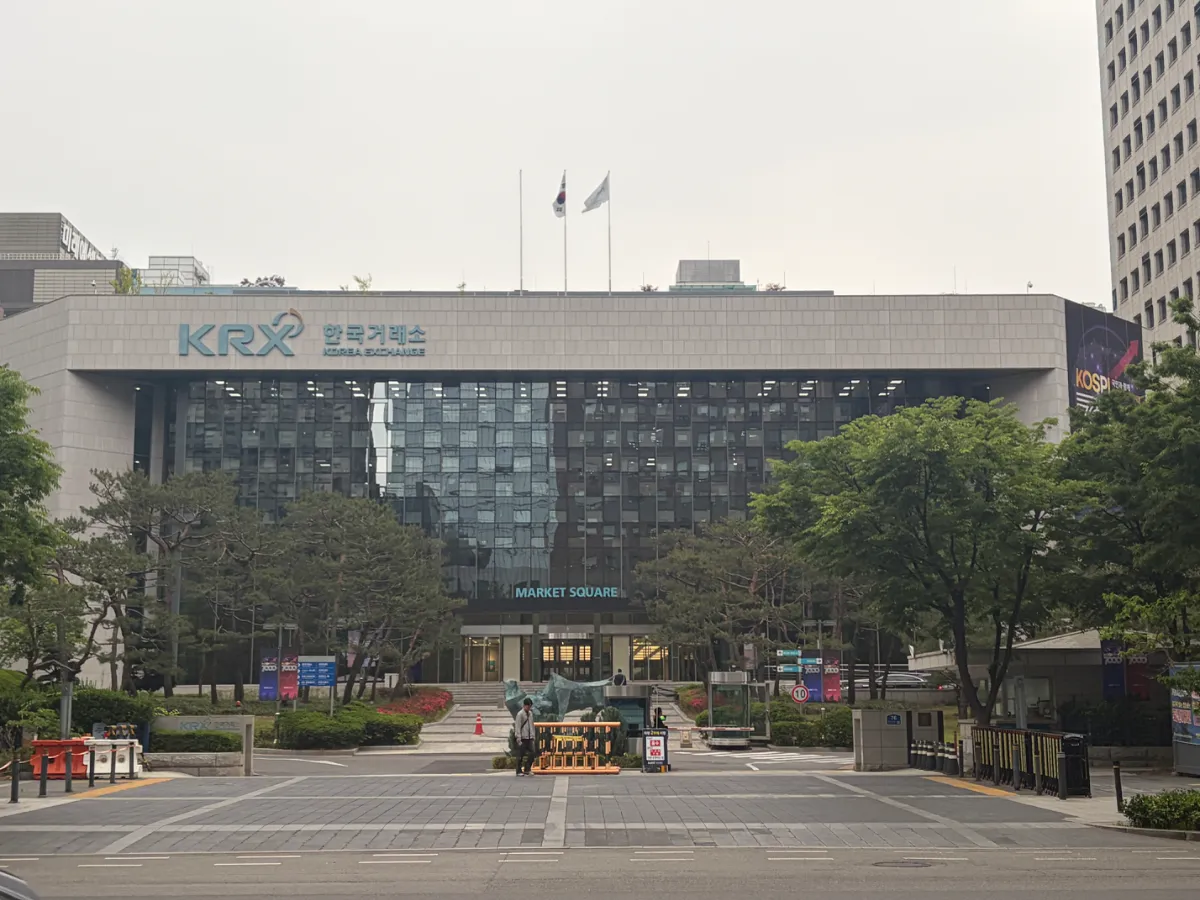
- Foreign investors sold over 13 trillion won across nine consecutive sessions, pushing the KOSPI below 7,300
- The root cause is extreme semiconductor concentration — three stocks drove 87% of the KOSPI's entire market cap gain
The KOSPI, which had surged 80% year-to-date and was knocking on the 8,000 level, tumbled below 7,300 as foreign investors sold for nine consecutive sessions — offloading over 13 trillion won (approximately $9 billion). The VKOSPI 200 (South Korea's fear index) spiked above 70, hitting a year-to-date high. The root cause: three semiconductor stocks accounted for 87% of the KOSPI's entire market cap gain.
The KOSPI is deep in volatility territory just as it was approaching its first-ever close above 8,000. Beginning May 7, when the index first crossed the 8,000 zone on a weekly basis, foreign investors flipped to consecutive net selling. By May 18, nine straight sessions of outflows had accumulated more than 13 trillion won ($8.9 billion) in net selling, and the index broke below 7,300 for the first time since its early-May surge.
The 8,000 Level Trigger: 5% Crash in Under Two Hours
On May 12, the KOSPI opened at 7,953 and briefly touched 7,999.67 — a hair's breadth from the historic 8,000 mark — before collapsing to 7,421 intraday, a 530-point swing in under two hours. The session closed at 7,643.15, down 2.29%. Foreign investors alone sold a net 5.62 trillion won on that single day.
The VKOSPI 200 surged to 70.14, the highest since March 9 (during the U.S.-Iran war spike). Short interest outstanding exceeded 20 trillion won, and securities lending balances broke 180 trillion won for the first time ever.
- Foreign net selling: 9 consecutive sessions (May 7 to May 18)
- Cumulative foreign net selling: 13+ trillion won; retail offset: 13+ trillion won
- VKOSPI 200 peak: 70.14 (year-to-date high)
- Short interest > 20 trillion won; securities lending > 182 trillion won
- KOSPI below 7,300 on May 18 — roughly 8.7% off the intraday high
Semiconductor Concentration: Samsung, SK Hynix, SK Square Drove 87% of Gains
The deeper cause is extreme semiconductor concentration. In May alone, Samsung Electronics surged 29.5%, SK Hynix 46.2%, and SK Square 41.1% — all far outpacing the KOSPI's 18.5% monthly gain. According to Kiwoom Securities, these three stocks accounted for a staggering 87.4% of the KOSPI's total market cap increase.
"There's nothing wrong with the fundamentals — earnings and valuations are fine. But the stocks simply went up too fast in too short a time, and FOMO was intense, so profit-taking urges erupted all at once and triggered a sudden correction."
Han Ji-young, Kiwoom Securities
The selloff was accelerated by reports that President Trump discussed resuming military operations against Iran with his national security team, pushing WTI crude above $99 per barrel. The 30-year U.S. Treasury yield briefly touched 5.0%, and after-hours U.S. semiconductor futures (including Micron) sold off sharply, further dampening sentiment toward Korean chip stocks.
Retail Stepped In: 13 Trillion Won Absorbed, KOSPI Hit a New All-Time High
Despite the foreign selling wave, retail investors were extraordinary buyers. Between May 12 and 14, individuals net-bought roughly 19.5 trillion won, absorbing nearly all foreign outflows. On May 14, the KOSPI actually closed at a new all-time high of 7,981.41, up 1.75%, even as foreign selling entered its sixth consecutive session.
The dynamic reversed sharply on May 18, when a fresh jump in U.S. Treasury yields and renewed oil price pressure pushed the KOSPI below 7,300 as the foreign selling streak hit nine sessions.
Goldman Targets 9,000; JPMorgan Goes to 10,000
Paradoxically, global investment banks are still raising their KOSPI targets. Goldman Sachs upgraded its target from 8,000 to 9,000, saying "it has already delivered one of the most astonishing rallies in the world, but it is not over yet." JPMorgan set a base-case target of 9,000 and a bull-case of 10,000 — the first major overseas institution to put a 10,000 handle on the KOSPI.
- Goldman Sachs KOSPI target: 8,000 → 9,000
- JPMorgan base target: 9,000; bull target: 10,000 (first foreign IB)
- JPMorgan raised Samsung Electronics and SK Hynix price targets on May 18
- "Memory demand has entered a phase of structural growth due to AI investment" — JPMorgan
"Although a short-term correction is possible, for now the market remains resilient thanks to the memory semiconductor cycle and corporate governance reform."
JPMorgan research
The KOSDAQ has lagged in the KOSPI's shadow. While the KOSPI surged 80% year-to-date, the KOSDAQ rose just 28% — a historic performance gap. Some market observers see the KOSPI's pullback as a potential near-term catalyst for rotation into the relatively neglected secondary market.
Frequently Asked Questions
Why are foreign investors selling Korean stocks heavily?
Two forces converged. Near-term: Iran military risk pushed WTI crude above $99 and the 30-year U.S. Treasury yield to 5%, reigniting global inflation fears. Structurally: extreme semiconductor concentration — Samsung, SK Hynix, and SK Square drove 87% of the KOSPI's market cap gain — built up enormous pent-up profit-taking pressure that erupted all at once.
Is a VKOSPI reading above 70 alarming?
70.14 is the highest since the U.S.-Iran war spike, but after that episode the index stabilized within two months. Goldman Sachs and JPMorgan still have KOSPI targets of 9,000–10,000, suggesting the underlying bull case remains intact despite short-term volatility.
Are retail investors actually absorbing all the foreign selling?
From May 7 to 14, retail investors net-bought nearly the full 30 trillion won that foreigners sold, lifting the KOSPI to a record high of 7,981 on May 14. The dynamic turned on May 18 when renewed U.S. yield and oil price surges triggered another leg of foreign outflows.
Why is the KOSDAQ underperforming the KOSPI so dramatically?
The KOSPI's 80% year-to-date rally has been driven almost entirely by large-cap semiconductor names not listed on the KOSDAQ. The secondary market has risen just 28%, creating a historic performance gap. A KOSPI consolidation phase could trigger near-term rotation into KOSDAQ mid- and small-cap tech stocks.
What is the investment outlook for Korean stocks?
Global investment banks maintain a bullish structural case on AI semiconductor demand. However, the unwinding of extreme concentration and near-term overheating may keep volatility elevated. JPMorgan noted 'a short-term correction is possible, but the market remains resilient.' Each investor's risk tolerance and time horizon should inform the decision.

Applied Materials Posts Record Q3 Revenue of $9.1 Billion, All-Time High EPS
 AMAT
AMATCoherent, Performance Food Among 25 US Firms File SEC 8-K Earnings Disclosures as AI Chip, Biotech Earnings Season Kicks Off
 COHR
COHR CBRS
CBRS AOSL+21
25 SEC 8-K Earnings Disclosures Flood In, Including Owens Corning, Extreme Networks, Utz Brands
 HBB
HBB NC
NC EPC+27
Wall Street's Defining Moments
See more
Sunday's SEC 8-K Earnings Filings Quiet, but Royal Gold Doubles Net Income and Launches Buyback
 RGLD
RGLDVeritone Earnings Shock Sends Shares Down 23%...York Space Systems Among 25 US Companies Filing SEC 8-K Earnings Reports
 YSS
YSS CODX
CODX IPWR+26
Applied Materials Posts Record Q3 Revenue of $9.1 Billion, All-Time High EPS
AMATSmart Money Briefing
Weekly summaries of Wall Street guru moves and crypto whale activity.