The Golf Course on Black Monday — An Afternoon That Lost $1.8 Billion
October 19, 1987 — Black Monday. Peter Lynch got a call on an Irish golf course: "Magellan lost $1.8 billion today." What he did when he flew back across the Atlantic. How he bought instead of selling into the panic — a stark contrast to Paul Tudor Jones' opposite decision.
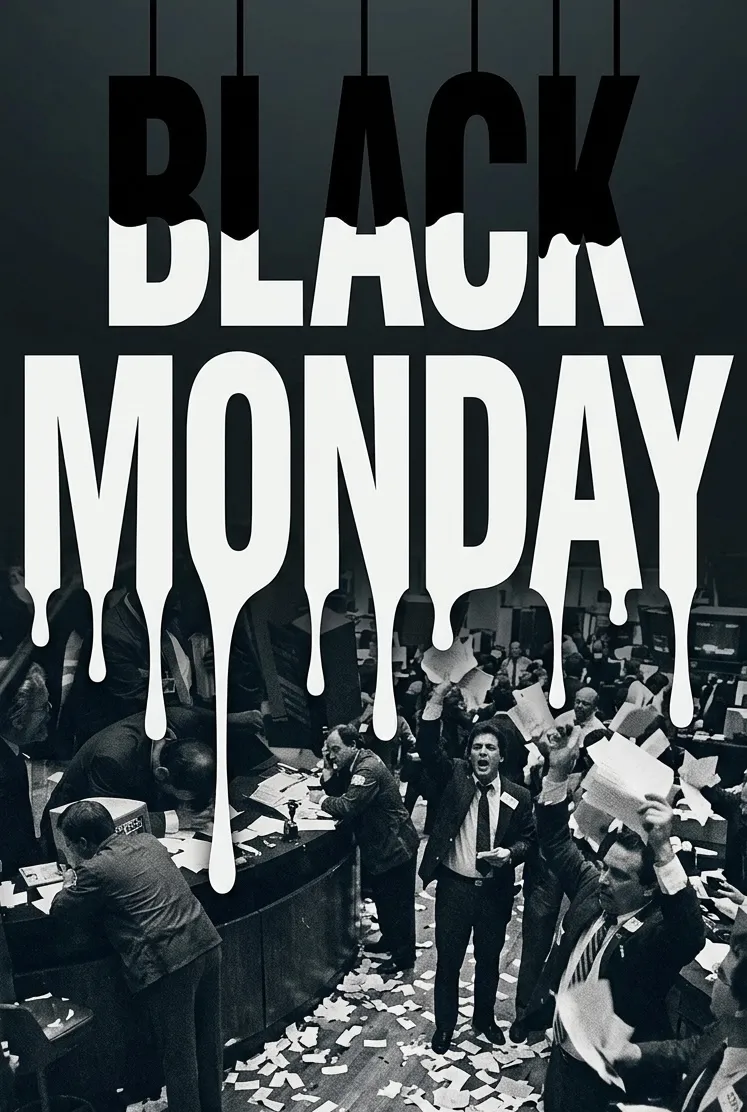
The Golf Course on Black Monday — An Afternoon That Lost $1.8 Billion
Monday, October 19, 1987. Peter Lynch was in Ireland. A vacation with his wife Carolyn. The two were standing on a golf course. Lynch was about to tee off when someone came running from the clubhouse. "Mr. Lynch, phone call. From New York. They say it's urgent." This is the story of how Peter Lynch faced the worst day in American financial history from across the Atlantic.
1. October in Ireland
Mid-October 1987. Lynch was taking one of his rare vacations. He had been running the Magellan Fund for ten years. Fund assets had already surpassed ten billion dollars. Ten years of fourteen-hour days, six days a week. Carolyn had suggested a trip. Ireland.
Before departing, Lynch checked the state of the markets. There were troubling signals. Wednesday, October 14: the Dow fell 3.8%. Friday, October 16: another 4.6% drop. More than 8% in two days.
Lynch hesitated. But he didn't want to break his promise to Carolyn. He left instructions at the office: "If anything happens, reach me."
Monday, October 19. The day had come.
2. The Phone Call
Monday afternoon, October 19. Lynch and Carolyn were at a golf course in southwestern Ireland. The sky was overcast. Wind was blowing. Lynch was preparing to tee off.
A staff member came running from the clubhouse.
"Mr. Lynch, there's a call from America. They say it's urgent."
Lynch picked up the phone. On the other end: Fidelity's Boston headquarters.
"Peter, the market is collapsing. The Dow is down more than 300 points. It's still open."
A 300-point drop in the Dow meant roughly 15% in one day. Nothing like that had happened since the Great Depression of 1929.
"What about Magellan?" "Magellan is... currently showing a loss of about $1.8 billion."
$1.8 billion. In one day. Approximately 18% of Magellan's entire assets. Hundreds of millions of dollars evaporating every hour.
Lynch hung up. He walked back to Carolyn and said: "We have to go home."
3. Black Monday
Monday, October 19, 1987. The day recorded in American financial history as Black Monday.
- Dow Jones Industrial Average: fell 508 points in one day. A 22.6% crash.
- The worst single trading-day percentage decline in history — nearly double the first day of the Great Depression (12.8%).
- S&P 500: down 20.5%
- Nasdaq: down 11.4%
- Hong Kong: fell 45.5%, then markets closed for a week
The primary culprit was identified as computerized trading programs called portfolio insurance. As markets fell sharply, these programs simultaneously issued sell orders, which pushed markets further down. Machines bringing down machines.
Roughly $500 billion in market capitalization evaporated in the United States alone in a single day. Magellan Fund lost $1.8 billion of that.
4. Crossing the Atlantic
Lynch immediately sought a return flight from Ireland. No same-day direct flight to Boston. The next morning — Tuesday, October 20 — via London to Boston.
That night in his Irish hotel room, Lynch couldn't sleep. Carolyn was beside him. She asked: "What happens in the worst case?"
Lynch replied: "I don't know. If the market falls again tomorrow, Magellan might not be able to handle the redemption requests."
What Lynch feared was not the price decline itself. It was a redemption rush. If investors panicked and simultaneously requested redemptions, the fund would have to forcibly sell stocks to raise cash.
5. The Day He Returned
Tuesday afternoon, October 20. Lynch arrived in Boston. He went straight from the airport to Fidelity headquarters. The market was recovering from the previous day's plunge — the Dow was up 5.9% intraday.
Lynch reviewed 1,400 stocks one by one. He took notes on his yellow legal pad. Then he made his decision.
He didn't sell. He bought.
Lynch selected from among the stocks that had plunged those whose fundamentals had not changed, and added to his positions — Ford, Fannie Mae, Philip Morris.
"Did Coca-Cola's taste change because its stock fell 22%? Did Ford's factories stop? Did Dunkin' Donuts' coffee get worse? Nothing changed. The only thing that changed was people's emotions."
6. The Battle with Redemptions
In the days following Black Monday, Magellan was flooded with redemption requests. Hundreds of millions of dollars' worth.
Lynch's principle: never sell the best holdings. If he had to sell to raise redemption cash, he sold second-best holdings.
"The hardest thing about Black Monday was not that the market fell. The hardest thing was having to sell good stocks at low prices — because investors were redeeming. When they sold in fear, I had to sell good stocks because of their fear. This is the biggest limitation of being a mutual fund manager."
This experience likely influenced his retirement decision three years later.
October 19, 1987. You are Peter Lynch. You receive a phone call on a golf course in Ireland. Magellan has lost $1.8 billion in a single day. Investors are flooding in with redemption requests. You're on the other side of the Atlantic — there's no way back today. All you can do is give instructions by phone. You have to decide right now.
7. The Recovery
Markets recovered quickly after Black Monday. By the end of 1987, the Dow had rebounded approximately 15% from its Black Monday lows. By 1989, the market had fully recovered its pre-Black Monday peak. In two years.
Magellan recovered too. For all of 1987, the fund's annual return was 1% — nearly making back the $1.8 billion Black Monday loss. In 1988: 22.8%. In 1989: 34.6%.
Meanwhile, the investors who had panicked and redeemed at the bottom sold out at the lows and were unable to participate in the recovery when it came.
"Market crashes are temporary. But selling in fear produces a permanent loss."
"If you had invested in the S&P 500 for 30 years from 1965 to 1995, you would have earned 11.1% annually. But if you missed the best 10 days out of those 30 years — just 10 days — your return falls to 8.5% annually. Miss the best 30 days and it falls to 6.1%. Staying in the market matters. The best days always come right after the worst days."
The day after Black Monday — October 20 — the Dow rebounded 5.9%. On October 21 it rose another 2.6%. The best days came right after the worst day.
"Most decisions made in the middle of fear are bad decisions. If you can, wait one day."
Once you've made your choice, reveal what the legend actually did
8. Contrast with Paul Tudor Jones
On the same Black Monday, someone was telling a completely opposite story: Paul Tudor Jones, macro hedge fund manager. He was the man who had predicted Black Monday.
Before October 1987, Jones had discovered that the U.S. stock market was tracing the exact same chart pattern as in the period just before the 1929 Great Depression. He built a massive short position. On Black Monday, his fund made approximately $100 million in a single day. Monthly return: 62%.
Lynch lost $1.8 billion on the crash; Jones made $100 million on the crash. Same day. Opposite outcomes.
Lynch was a bottom-up stock picker. Jones was a top-down macro trader. Looking at just that one day of Black Monday, Jones won. Looking at the full thirteen years, Lynch won.
"There are people who predict market crashes. Some of them are occasionally right. But the problem is, they also hold short positions when markets aren't crashing. The opportunity cost of waiting for a crash often exceeds what they make on the crash itself. I spend zero minutes trying to predict the market."
- 블랙먼데이 다우 하락
- -22.6% (역대 최악)
- 마젤란 당일 손실
- -18억 달러 (자산의 18%)
- 린치의 선택
- 대서양 건너편에서 아무 지시도 안 함
- 귀국 후 액션
- 공포에 팔지 않고 오히려 매수
- 1987년 연 수익률
- +1% (손실 거의 만회)
- 1988-89년 수익률
- +22.8%, +34.6%
- 폴 튜더 존스 (정반대)
- 공매도로 하루 1억 달러 수익, 월 +62%
- 장기 누적 (13년)
- 린치 승 (연 29.2%)
- 핵심 교훈
- "공포에 파는 것은 영구적 손실이다"
9. Three Lessons This Story Left Behind
First, most decisions made in the middle of fear are bad decisions.
Investors who redeemed on Black Monday sold at the bottom and missed the recovery. Lynch waited one day. The same principle applies to Korean individual investors. On a day when the market is crashing, the best action is often to do nothing. Wait at least one day.
Second, staying in the market is better than trying to predict it.
Miss the best 10 days over 30 years and your return falls from 11% to 8.5% annually. A strategy of exiting and re-entering the market (market timing) is theoretically appealing but nearly impossible in practice. Lynch's approach: stay in the market continuously, and buy more on crashes.
Third, understand the true cost of managing other people's money.
The most painful part of Black Monday for Lynch was not the market's decline. It was being forced to sell good stocks at low prices because investors were redeeming. Individual investors don't face this constraint. You won't receive redemption requests. Being able to manage your own money on your own timeline is a privilege that no institutional investor on Wall Street has.
10. Three Decisive Days
Peter Lynch's life contains three decisive days.
- May 1977. The day 33-year-old Lynch took over the Magellan Fund.
- October 19, 1987. The day 43-year-old Lynch received a phone call on an Irish golf course.
- May 31, 1990. The day 46-year-old Lynch submitted his resignation letter to Fidelity.
These three days show the entirety of one person's investment life. The beginning. The test. And the choice.
Thirty-five years later, if you ask 82-year-old Peter Lynch "what was your best investment?", he answers:
"Retiring in 1990."
What's your take on this story?
What do you think about Peter Lynch's decision?
Sign in to participate
Sign In