Cathie Wood Sold $40.6 Million of TSMC — On the Day Semiconductor ETF Plunged 4%
Cathie Wood sold $40.6M of TSMC as the semiconductor ETF (SOXX) fell 4%, simultaneously buying newly listed Cerebras (CBRS). ARKK is down 3.81% YTD versus S&P 500's +8%, yet attracted $1.48B in inflows over five trading sessions.
- Cathie Wood sold $40.6M of TSMC during a 4% semiconductor selloff and bought Cerebras (CBRS) on its IPO week
- ARKK trails the S&P 500 by nearly 12 points YTD but attracted $1.48B in fresh capital over five trading days
On the day semiconductors fell 4%, Cathie Wood sold TSMC and bought Cerebras.
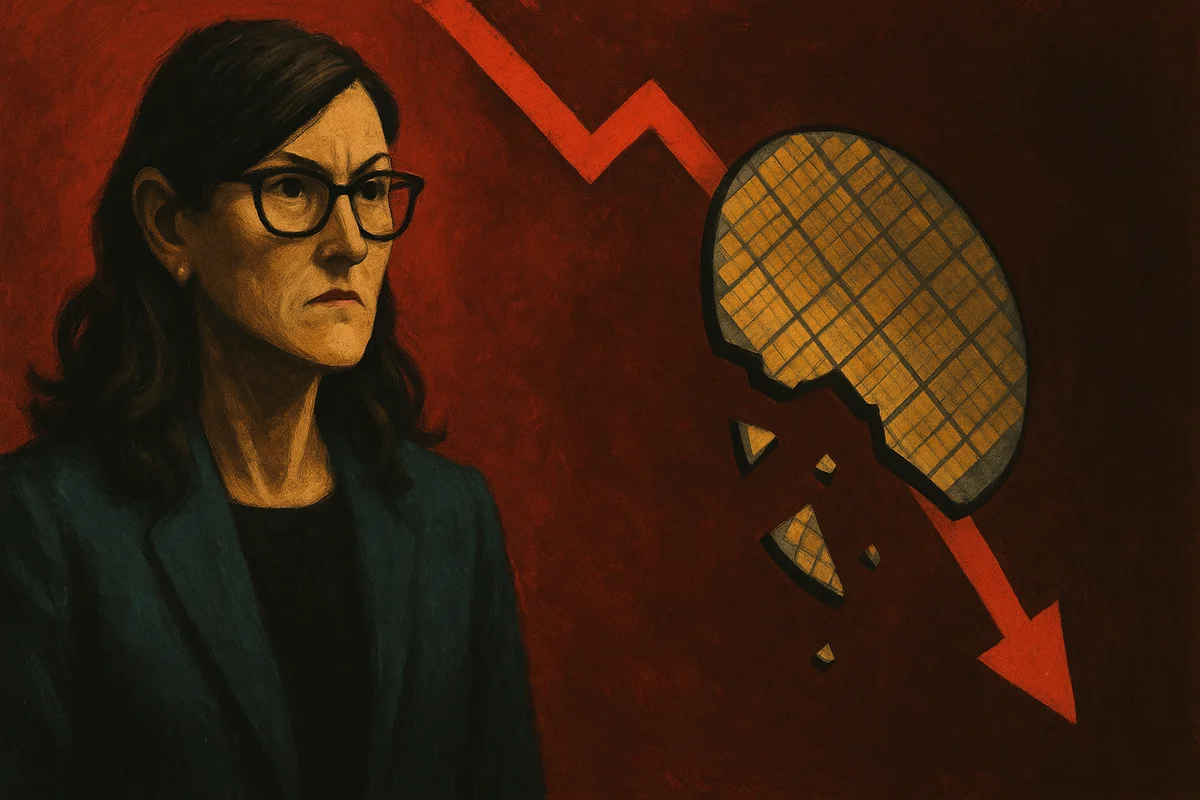
On May 15, the iShares Semiconductor ETF (SOXX) fell roughly 4% in a single session. That same day, Cathie Wood (Ark Investment Management) made her move. She sold 100,549 shares of TSMC over two days — a total of $40.6 million. Buy CoreWeave on the dip, sell TSMC on the dip — ARK's contrarian pattern played out again.
Why She Sold TSMC
TSMC does not appear in ARKK's top 10 holdings. That makes it a peripheral position. Trimming peripheral positions during broad sector pullbacks while concentrating resources in core holdings is a classic ARK playbook move.
The sell is not a verdict on TSMC's fundamentals. Q1 results were strong across the board:
- Revenue growth: +35.1%
- Net income and diluted EPS growth: +58.3%
- Gross margin: 66.2%
- Full-year revenue growth guidance raised to 30%+
- 2030 global semiconductor market forecast raised from $1T to $1.5T
- AI and HPC share projected at 55%
"AI-related demand continues to be extremely robust."
TSMC CEO C.C. Wei — May 14 Symposium
Barclays raised its price target from $450 to $470 and maintained an Overweight rating. Wood's TSMC sale was portfolio management, not a business judgment call.
She Bought Cerebras the Same Day
While selling TSMC, Wood bought Cerebras (CBRS), which had just listed on Nasdaq that week. Cerebras is an NVIDIA challenger in AI inference chips. It surged 68% on its first trading day before pulling back 10% on day two. Wood repeated her buy-the-dip pattern — this time on a freshly listed name.
Stocks sold on the same day:
ARKK Scorecard — Inflows Rise, but Still Trailing the S&P 500
- ARKK YTD return: -3.81%
- S&P 500 YTD: +8%
- ARKK 5-year annualized: -6.25%
- S&P 500 5-year annualized: +13.8%
- ARKK net inflows over last 5 trading days: $1.48B
Despite dismal long-term performance, short-term AI rally excitement keeps drawing capital back in. Morningstar estimates investors lost $7 billion in ARKK between 2014 and 2024.
"AI training costs are falling 75% per year and inference costs are falling 8,598%. We could be entering an era of 78% economic growth."
Cathie Wood — Bloomberg Podcast, March 2026
Wood maintains that the AI bubble is "still years away" and frames this moment as the "Great Acceleration."
Frequently Asked Questions
Did Wood sell TSMC because its outlook deteriorated?
No. TSMC reported 58.3% EPS growth in Q1 and raised its 2030 semiconductor market forecast to $1.5 trillion. Wood manages TSMC as a peripheral position outside ARKK's top 10 holdings, and trimming peripheral positions during sector pullbacks is a standard ARK playbook move.
What is Cerebras (CBRS)?
Cerebras is an AI inference chip company positioned as a challenger to NVIDIA. It listed on Nasdaq in May 2026, surging 68% on its first day. Wood bought shares after the stock pulled back 10% on day two — repeating her buy-the-dip pattern on a newly listed name.
Why do investors keep buying ARKK despite poor long-term performance?
Short-term AI rally excitement. ARKK's 153% return in 2020 left a powerful impression, and capital tends to flow back in whenever AI themes surge. Over the past five trading days, $1.48 billion flowed in — yet the 5-year annualized return is -6.25% versus S&P 500's +13.8%.
What is the outlook for TSMC stock?
Barclays raised its price target to $470 and maintained an Overweight rating. TSMC projects AI and HPC will account for 55% of the $1.5 trillion global semiconductor market by 2030 and guides for 30%+ annual revenue growth. Taiwan geopolitical risk remains a constant variable.
What is Cathie Wood's "Great Acceleration" thesis?
The idea that rapidly falling AI training and inference costs will drive explosive productivity gains across the economy. Wood argues the AI bubble is "years away" and that we are currently in the early phase of a major acceleration cycle.

Applied Materials Posts Record Q3 Revenue of $9.1 Billion, All-Time High EPS
 AMAT
AMATCoherent, Performance Food Among 25 US Firms File SEC 8-K Earnings Disclosures as AI Chip, Biotech Earnings Season Kicks Off
 COHR
COHR CBRS
CBRS AOSL+21
25 SEC 8-K Earnings Disclosures Flood In, Including Owens Corning, Extreme Networks, Utz Brands
 HBB
HBB NC
NC EPC+27
Wall Street's Defining Moments
See more
Sunday's SEC 8-K Earnings Filings Quiet, but Royal Gold Doubles Net Income and Launches Buyback
 RGLD
RGLDVeritone Earnings Shock Sends Shares Down 23%...York Space Systems Among 25 US Companies Filing SEC 8-K Earnings Reports
 YSS
YSS CODX
CODX IPWR+26
Applied Materials Posts Record Q3 Revenue of $9.1 Billion, All-Time High EPS
AMATSmart Money Briefing
Weekly summaries of Wall Street guru moves and crypto whale activity.