100x in 30 Days — How $27 Million Became $2.6 Billion
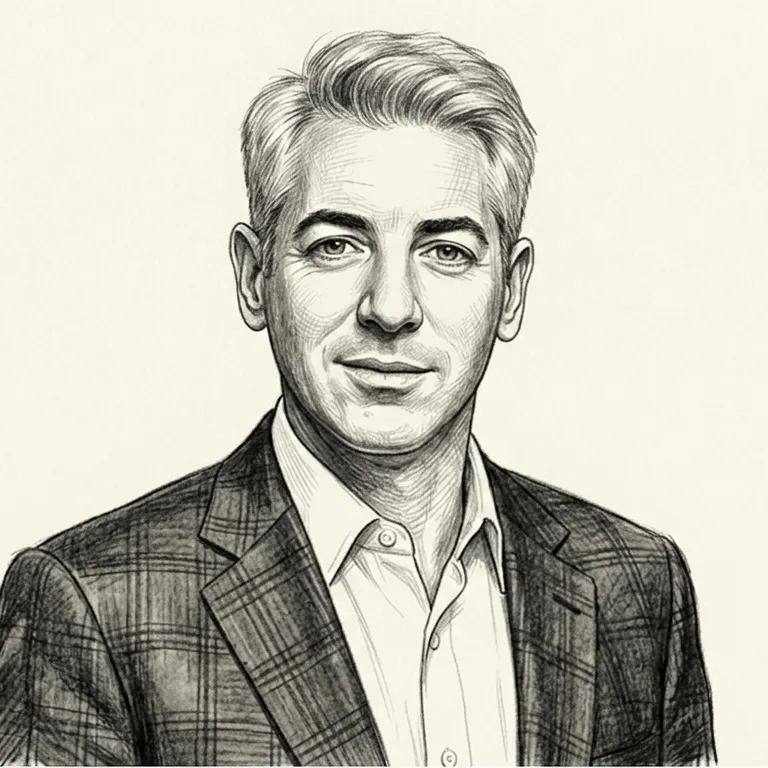
In February 2020, Bill Ackman bought $27 million worth of credit protection. Thirty days later, that position was worth $2.6 billion. 100x. The man who spent seven years fighting Herbalife and lost — recouping everything in a month.
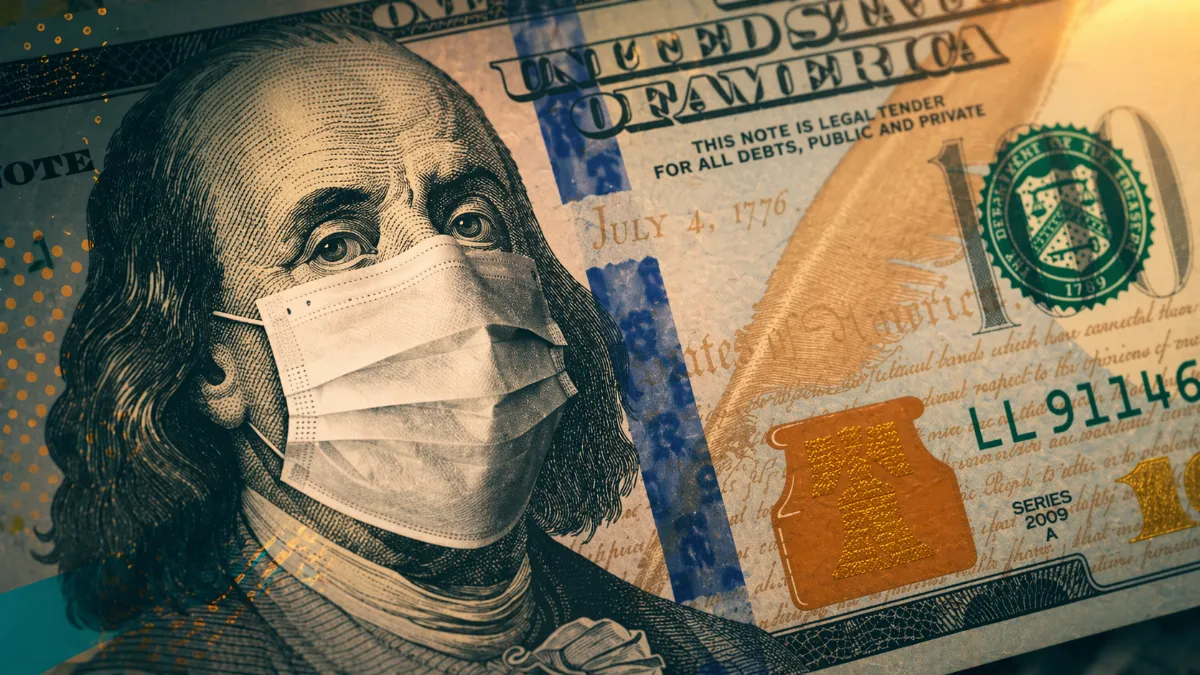
100x in 30 Days — How $27 Million Became $2.6 Billion
In late February 2020, Bill Ackman spent $27 million to buy insurance — a derivative that would pay off if credit markets collapsed. Thirty days later, that insurance was worth $2.6 billion. One hundred times his money. This is the story of how the man who fought Herbalife for seven years and lost recovered everything in thirty days.
1. January 2020 — The First Signal
Early January 2020. Reports of an unidentified pneumonia began emerging from Wuhan, China.
Most of Wall Street paid little attention. SARS in 2003, MERS in 2012, Ebola in 2014. Epidemic news came around periodically, but its impact on American markets had always been minimal. The mainstream view was that this would be the same.
Ackman saw it differently.
What drew his attention to COVID was information brought in by a Pershing Square team member: social media videos showing Wuhan hospitals overwhelmed, news that the Chinese government was locking down entire cities. Sealing off a city of 11 million people was no ordinary event.
Ackman asked his team: "What happens if this reaches the United States?"
The team began scenario analysis. If the epidemic spread globally, through what channels would the economic impact arrive? Travel halted, factories shuttered, consumption collapsed, supply chains broken. What happens if all of this hits simultaneously?
By late January, Ackman had reached his conclusion: "The market is underestimating this."
2. Buying Insurance
In February 2020, Ackman acted.
What he bought was not stock. He purchased credit protection derivatives structured similarly to credit default swaps (CDS) — specifically, protective positions on investment-grade and high-yield corporate bond indexes.
Simply put: if the corporate bond market stayed stable, the insurance was worthless. He would just burn through the premiums. But if the corporate bond market fell into panic — if companies faced default risk — this insurance would explode in value.
What Ackman spent on this insurance: approximately $27 million. A tiny fraction of Pershing Square's total AUM. Less than 1%. This matters. He wasn't going all-in on "markets will collapse." He was buying insurance with a small amount of money. If right, massive upside. If wrong, $27 million lost. An asymmetric bet — the same structure that Michael Burry, Steve Eisman, and Greg Lippmann had used in 2006-2007.
Through mid-February, U.S. markets were still hitting all-time highs. The S&P 500 set a record on February 19. The dominant view was that COVID was an Asian problem. At this point, Ackman's insurance was losing money every day — premiums burning down, going nowhere.
3. The CNBC Interview — "Hell Is Coming"
Wednesday, March 18, 2020. The full panic of COVID had taken hold.
The S&P 500, which had set an all-time high on February 19, had fallen more than 30% in three weeks — the fastest bear market entry in history. Thousands of index points swung up and down every day. Circuit breakers were tripped repeatedly.
In the middle of all this, Ackman appeared on CNBC. A phone interview. And what he said shook Wall Street.
"Hell is coming."
For 28 minutes he spoke about COVID's economic impact. The hotel industry would collapse. Aviation would freeze. Retail would implode. Unemployment would explode. Without immediate government intervention, a Great Depression-scale catastrophe was coming.
His voice wavered. He appeared close to tears. "This is a real crisis. This is different from 2008. A virus is not an asset. A virus cannot be controlled."
The Dow fell further while the interview aired. Many people criticized Ackman for stoking panic. Then, a few days later, one fact came to light.
4. Behind the Interview
On March 18 — the very day Ackman said "hell is coming" on CNBC — he was in the process of closing out his insurance position. And with the proceeds, he was buying stock.
The precise timeline: between March 12 and 23, Ackman closed his $27 million credit protection position for approximately $2.6 billion. Roughly one month. 100 times his money.
And what did he do with that $2.6 billion? As markets were collapsing, he bought large positions in Hilton, Lowe's, Restaurant Brands, Howard Hughes, and others — companies whose stocks had been cut in half by COVID panic.
His logic: COVID is terrible, but temporary. Hotels will reopen. Restaurants will reopen. People will travel again. These companies' businesses aren't dying. Only their prices have collapsed.
This triggered controversy. Some critics charged that Ackman had used his CNBC platform to stoke fear, drive markets lower, and then buy stocks cheaply for himself. "He was crying while buying."
Ackman denied the accusation. "I spoke to urge the government to act. And I had already begun closing the hedge and buying stocks before the interview." Whatever the truth, the result was clear.
5. The Numbers
The March 2020 numbers:
Hedge profits
- Deployed: $27 million (February)
- Recovered: approximately $2.6 billion (mid-March)
- Return: approximately 9,500% (~100x)
- Duration: approximately 30 days
Stock purchases after (March lows → end of 2020)
- Hilton: ~$55 at March lows → ~$112 in December. 2x.
- Lowe's: ~$60 at March lows → ~$160 in December. 2.7x.
- Restaurant Brands: ~$33 at March lows → ~$62 in December. ~2x.
Pershing Square's 2020 annual return: 70.2%. The S&P 500 returned 18.4% the same year. Ackman beat the market by 52 percentage points.
$27 million → $2.6 billion → bought stocks → stocks recovered. Two consecutive bets, both right. First: markets will collapse. Second: markets will recover after the collapse. In the same year.
6. Lippmann's Slides, Burry's CDS, Ackman's Hedge
Comparing Ackman's 2020 hedge with the Big Short reveals an interesting contrast.
The 2006-2008 Big Short (Burry, Eisman, Lippmann)
- Duration: approximately 2 years
- Instrument: CDS on subprime MBS
- Pain: 2 years of premium payments, investor revolt, psychological exhaustion
- Profit: billions of dollars
The 2020 Ackman hedge
- Duration: approximately 30 days
- Instrument: credit protection on investment-grade/high-yield bond indexes
- Pain: almost none. $27 million in premiums.
- Profit: $2.6 billion
The same type of asymmetric bet, but the efficiency difference is extreme. Burry suffered for two years. Ackman finished in thirty days.
What explains the difference? First, the speed of the crisis. The 2008 subprime crisis unfolded slowly. The COVID crisis exploded in a single month. Second, the price of insurance. Both cases share the common feature of buying insurance before anyone expected a crisis. Third, the exit strategy. Ackman was in liquid index products, so he could close out quickly.
Mid-March 2020. You are Ackman. A $27 million insurance bet has turned into $2.6 billion. Markets are still in freefall. What do you do?
7. From Herbalife to COVID
Placing the Herbalife war (2012-2018) and the COVID hedge (2020) side by side reveals two completely different faces of the same man.
Herbalife
- Conviction: absolute. "This company goes to zero."
- Position: $1 billion. Massive.
- Duration: 7 years. Endless.
- Flexibility: zero. Held to the end.
- Result: $500M–$1B loss.
COVID hedge
- Conviction: conditional. "If a pandemic comes."
- Position: $27 million. Small.
- Duration: 30 days. Short.
- Flexibility: maximum. Closed immediately and reversed direction.
- Result: $2.6 billion profit.
Bet small. In Herbalife he put up $1 billion. In COVID he put up $27 million. A size he could absorb if wrong.
Set a time limit. In Herbalife he dragged it out seven years. In COVID he closed in thirty days. In fast and out fast.
Be ready to change direction. In Herbalife he held one direction to the end. In COVID he flipped from hedge to buyer the same month it paid off. A 180-degree reversal in the same month.
8. Three Lessons This Story Left Behind
First, understand the power of asymmetric bets.
He made $2.6 billion from $27 million. Wrong: $27 million loss. Right: 100x return. That is an asymmetric bet. Burry's CDS, Soros's pound short, Ackman's COVID hedge. Most of history's great returns have come from asymmetric bets. Using 1-2% of a portfolio to prepare for extreme scenarios. If right, large gains for the whole portfolio. If wrong, capped at 1-2% loss.
Second, the people who survive are those who can change direction.
Ackman reversed 180 degrees — from "markets will collapse" to "markets will recover" — in the same month. This isn't a matter of ego. It's a matter of survival. The people who survive markets are not the smartest. They are the fastest to adapt.
Third, defeat is not necessarily destruction.
Ackman lost $500M–$1B in Herbalife. Two years later, he made $2.6 billion. If you've suffered a big loss, the question isn't "how do I make it back?" It's: "Have I changed the pattern of the same mistakes?"
Once you've made your choice, reveal what the legend actually did
9. December 2020
December 31, 2020. Pershing Square's annual return was finalized: 70.2%.
Two years after the Herbalife defeat in 2018. Ackman had returned as one of Wall Street's hottest names. Pershing Square's AUM crossed $10 billion again.
Ackman himself had changed. The Herbalife-era Ackman was aggressive and absolutely certain. The post-COVID Ackman still had conviction — but flexibility had been added. He managed position sizes more carefully. He cut losses faster.
If the seven years of Herbalife had taught him anything, it was this:
"Being right is not enough. Being right, at the right size, at the right moment, with flexibility."
But whether that lesson would hold forever — no one could say. Another test was waiting ahead.
What's your take on this story?
What do you think about Bill Ackman's decision?
Sign in to participate
Sign InBill Ackman Today
Where is Bill Ackman investing right now? See their latest 13F portfolio and current convictions.