
China Blocked Every Nvidia H200 Order — $30B Gone and Earnings Are Wednesday
The US approved H200 chip sales to ~10 Chinese companies. Beijing blocked every single purchase. With $30B in potential revenue frozen and earnings on May 20, China has become Nvidia's biggest wild card.
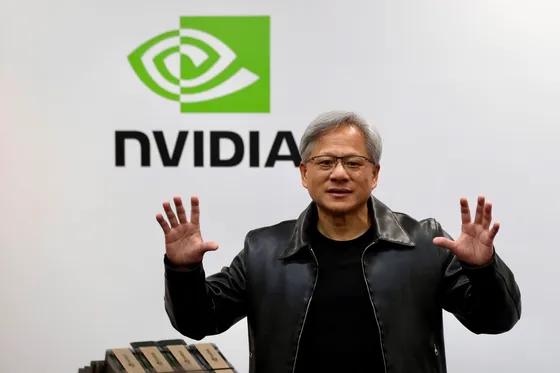
- Beijing blocked all US-approved Nvidia H200 chip purchases, freezing ~$30B in potential revenue
- China wants Huawei chips
- The stalemate is the key wild card for Nvidia's May 20 earnings
Jensen Huang boarded Air Force One. Destination: Beijing. Chinese companies with approved licenses to buy 75,000 H200 chips were waiting. The problem: Beijing never gave the green light. Not a single chip has shipped.
President Trump confirmed it aboard Air Force One on May 14, after the Beijing summit: "They chose not to buy because they want to develop their own." With that, weeks of quiet investor anxiety became official. US-approved H200 chip exports to China are completely frozen — blocked not by Washington, but by Beijing.
America Said Yes — China Said No
The Commerce Department approved roughly 10 Chinese companies — Alibaba, Tencent, ByteDance, JD.com, and others — to purchase H200 chips. Distributors Lenovo and Foxconn were also cleared. Each approved buyer can order up to 75,000 units. As of May 18, zero deliveries have been made. Beijing directed Chinese firms to hold off after a shift in government guidance, Reuters reported.
Jensen Huang's Last-Minute Beijing Trip
Huang was not originally on the US business delegation to Beijing. Trump picked him up during an Alaska layover — effectively recruiting the CEO of America's most valuable chipmaker for a diplomatic mission. Huang said in a CCTV interview that he hoped Trump and Xi would build on their relationship. The stalemate held anyway.
"They have a much higher level than H200. China needs it and yeah it came up. They chose not to buy because they want to develop their own. I think something could happen on that."
President Trump, Air Force One, May 14 2026
The 25% Revenue Cut That Spooked Beijing
The deal structure itself created a friction point. Trump negotiated an arrangement requiring chips to pass through US territory before delivery to China, so the US could take a 25% cut of chip sale revenues — a workaround since US law doesn't permit direct export fees. Beijing viewed this routing as a potential security vulnerability: a chance for backdoors or tampering before delivery. That concern stopped the orders cold.
China Wants Huawei — $30B Gone
The deeper issue is strategy. Beijing wants Huawei's Ascend chips to win, not Nvidia's. Huawei is targeting $12 billion in AI chip revenue this year. Since DeepSeek's emergence, Chinese AI development has accelerated toward domestic silicon independence. Nvidia, which commanded 95% of China's advanced chip market before export controls tightened, estimated the Chinese AI market at $50 billion this year. The H200 freeze potentially wipes out $30 billion of that.
- US approved: ~10 Chinese firms, up to 75,000 H200s each
- China blocked: zero deliveries made as of May 18
- 25% revenue cut structure → Beijing security concerns
- Huawei Ascend: $12B AI chip revenue target this year
- Nvidia estimated loss: ~$30B in potential revenue
May 20 Earnings: China as Wild Card
Nvidia reports fiscal Q1 2027 results after the close on Wednesday, May 20. Wall Street consensus is ~$78B in revenue, up 78% year over year. The company's official guidance already assumes zero China revenue — so China is a call option, not the base case. Investors will be watching whether management characterizes the H200 stalemate as temporary or structural, and whether Huang is willing to publicly address Huawei Ascend as a competitive threat.
Frequently Asked Questions
Why won't China buy Nvidia's H200 chips?
Beijing directed Chinese firms to hold off on purchases to protect domestic chip development — primarily Huawei's Ascend line. The deal structure also triggered security concerns: chips must pass through US territory (so the US can take 25% of revenue), which Beijing fears could allow backdoors or tampering.
What is the 25% revenue cut arrangement?
Since US law doesn't permit direct export fees, Trump negotiated a workaround: H200 chips must route through US territory before delivery to China, giving the US a 25% revenue cut. Beijing views this as a potential security vulnerability that could expose chips to tampering.
How much revenue is Nvidia losing?
Jensen Huang estimated China's AI market at $50 billion this year. With the H200 freeze, an estimated $30 billion in potential revenue is gone. Before export controls tightened, China accounted for 13% of Nvidia's total revenue.
Can Huawei replace Nvidia in China?
Huawei is targeting $12 billion in AI chip revenue in 2026. Since DeepSeek's emergence, China has accelerated domestic AI chip adoption. However, Huawei Ascend still lags Nvidia's H100/H200 ecosystem significantly in performance and software compatibility.
What should investors watch in Nvidia's May 20 earnings?
Consensus expects ~$78B revenue (+78% YoY). The current guidance assumes zero China revenue, so China is a call option. Watch management's characterization of the H200 stalemate, whether Huang acknowledges Huawei Ascend as a competitive threat, and hyperscaler demand trajectory.





Wall Street's Defining Moments
See more
Sunday's SEC 8-K Earnings Filings Quiet, but Royal Gold Doubles Net Income and Launches Buyback
 RGLD
RGLDVeritone Earnings Shock Sends Shares Down 23%...York Space Systems Among 25 US Companies Filing SEC 8-K Earnings Reports
 YSS
YSS CODX
CODX IPWR+26
Applied Materials Posts Record Q3 Revenue of $9.1 Billion, All-Time High EPS
 AMAT
AMATSmart Money Briefing
Weekly summaries of Wall Street guru moves and crypto whale activity.