
NVIDIA and OpenAI Place $20B AI Chip Bets Each – Common Keyword: 'Inference'
NVIDIA acquired Groq for $20 billion while OpenAI purchased $20 billion worth of Cerebras chips. The common keyword in both bets is AI inference, marking the beginning of cracks in the GPU monopoly era.
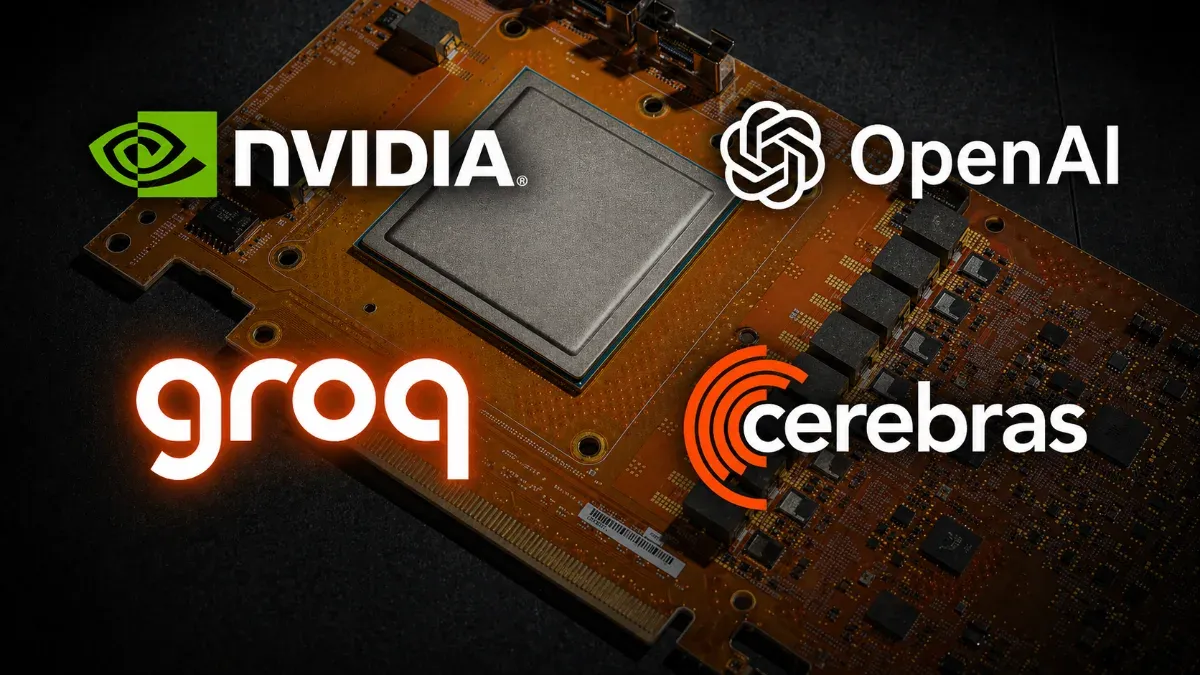
- Nvidia acquired Groq for $20B in Dec 2025; OpenAI signed a $20B supply deal with Cerebras in Apr 2026, both betting on AI inference
- Cerebras filed its S-1 on Apr 17, targeting a mid-May Nasdaq listing at a $35B valuation
Two $20 billion bets in the 2026 AI chip market that are too similar to be coincidental are drawing attention. NVIDIA secured Groq's IP and key talent, while OpenAI locked in Cerebras chips, each for $20 billion. The common keyword is one: Inference.
NVIDIA (NVDA) announced an acqui-hire and IP licensing deal worth approximately $20 billion (about 27.6 trillion won) with AI chip startup Groq on December 24, 2025. OpenAI signed a $20 billion Master Relationship Agreement with AI chip startup Cerebras on April 17, as reported by The Information and officially confirmed in Cerebras' S-1 filing with the SEC the same day. The amounts are virtually identical. NVIDIA through IP acquisition, OpenAI through purchase. Different methods, but both addressing the same problem.
The Problem is Inference
NVIDIA's GPU dominance in the AI training market reaches 90%. However, the AI cycle is now shifting its center of gravity from training to inference. The problem is that GPUs may not be the optimal solution for inference.
- Groq's LPU (Language Processing Unit): Faster performance than GPUs for low-latency language model inference
- Cerebras' Wafer Scale Engine (WSE): Competitive advantage in inference speed
- Both NVIDIA and OpenAI started from recognizing the reality that 'GPUs alone cannot handle inference demand'
NVIDIA's $20 Billion – Acqui-hire, Not Corporate Acquisition
NVIDIA's Groq deal is commonly called an acquisition, but it's technically different. Jensen Huang explicitly stated shortly after announcing the deal, 'We are not acquiring Groq as a company.' The actual structure is non-exclusive IP licensing + key talent acqui-hire. Groq founder and CEO Jonathan Ross joins NVIDIA, while GroqCloud service was excluded from the deal. Groq appointed new CEO Simon Edwards (former CFO) and continues operating as an independent entity.
The $20 billion NVIDIA paid represents approximately a 3x premium over Groq's last valuation of $6.9 billion. Market consensus interprets this as 'a strategic bet to fill the inference domain where their own solutions are lacking.'
'We are not acquiring Groq as a company'
Jensen Huang / NVIDIA CEO
This deal also raised antitrust concerns. In March this year, Senators Elizabeth Warren and Richard Blumenthal sent a letter to NVIDIA questioning whether this deal constitutes a reverse merger structure circumventing Hart-Scott-Rodino Act (HSR) notification requirements and urged the DOJ and FTC to review it. No official enforcement action has been taken to date.
OpenAI's $20 Billion – Escaping NVIDIA Dependency
OpenAI's Cerebras contract details were confirmed through the S-1 filing. OpenAI will receive a total of 750MW of inference computing capacity from Cerebras at 250MW annually from 2026-2028, with an option to purchase an additional 1.25GW. The contract reportedly includes OpenAI's equity stake acquisition in Cerebras.
Cerebras officially filed its S-1 with the SEC on April 17, targeting a NASDAQ listing (ticker: CBRS) by mid-May. Financial metrics disclosed for the first time through the S-1 exceeded market expectations.
- 2025 Revenue: $510 million (+76% YoY)
- GAAP Net Income: $87.9 million (turned profitable from prior year loss)
- Series H Round (February 2026) Valuation: $23 billion (about 33 trillion won)
- IPO Target Valuation: Approximately $35 billion (about 51 trillion won), offering size about $2 billion
To dilute the UAE revenue concentration issue (86%) that was the biggest risk in the previous S-1, they also secured additional partnership agreements with AWS. The OpenAI + AWS combination strengthened the supply diversification story. Lead underwriters are Morgan Stanley (lead), Citigroup, Barclays, and UBS.
Direction Both Bets Are Pointing
NVIDIA spending $20 billion to embrace Groq's IP and talent, and OpenAI purchasing $20 billion worth of Cerebras chips simultaneously demonstrate that the AI chip ecosystem is being restructured from GPU monopoly to a structure where inference-dedicated chips coexist.
- NVIDIA: Filling inference market weaknesses through acqui-hire and IP licensing – Groq maintains independent entity status
- OpenAI: Reducing single supplier (NVIDIA) dependency risk through supply chain diversification
- Cerebras: Securing position as core supplier to major AI companies as independent chip designer, initiating IPO with S-1 filing
These two $20 billion deals represent the entry fees each paid in the battle for AI inference era supremacy.
InteliView Editorial Team | 2026.04.26
Frequently Asked Questions
Why do inference and training require different chips?
Training is centered on large-scale parallel computation, making GPUs the optimal choice. Inference, on the other hand, prioritizes low-latency processing of individual requests one at a time, where LPUs or wafer-scale chips can prove more efficient.
Is NVIDIA's Groq deal a full acquisition?
No. Jensen Huang explicitly stated that NVIDIA is not acquiring Groq as a company. The deal is structured as a non-exclusive IP license along with an acqui-hire of key personnel, and GroqCloud is excluded from the transaction. Groq will appoint a new CEO and continue operating as an independent entity.
Why did OpenAI choose Cerebras over NVIDIA?
NVIDIA GPUs face challenges around supply shortages and high pricing. Cerebras chips offer faster procurement and greater pricing leverage. The move is part of a strategy to diversify the supply chain and reduce the risk of dependence on a single vendor.
When is the Cerebras IPO expected?
Cerebras filed its S-1 with the SEC on April 17th and is targeting a NASDAQ listing (ticker: CBRS) by mid-May. The IPO is targeting a valuation of approximately $35 billion, with the offering size estimated at around $2 billion.

Applied Materials Posts Record Q3 Revenue of $9.1 Billion, All-Time High EPS
 AMAT
AMATCoherent, Performance Food Among 25 US Firms File SEC 8-K Earnings Disclosures as AI Chip, Biotech Earnings Season Kicks Off
 COHR
COHR CBRS
CBRS AOSL+21
25 SEC 8-K Earnings Disclosures Flood In, Including Owens Corning, Extreme Networks, Utz Brands
 HBB
HBB NC
NC EPC+27
Wall Street's Defining Moments
See more
Sunday's SEC 8-K Earnings Filings Quiet, but Royal Gold Doubles Net Income and Launches Buyback
 RGLD
RGLDVeritone Earnings Shock Sends Shares Down 23%...York Space Systems Among 25 US Companies Filing SEC 8-K Earnings Reports
 YSS
YSS CODX
CODX IPWR+26
Applied Materials Posts Record Q3 Revenue of $9.1 Billion, All-Time High EPS
AMATSmart Money Briefing
Weekly summaries of Wall Street guru moves and crypto whale activity.