Bill Ackman Prices Pershing Square IPO Today — Dual NYSE Listing Tomorrow After 2024 Failure
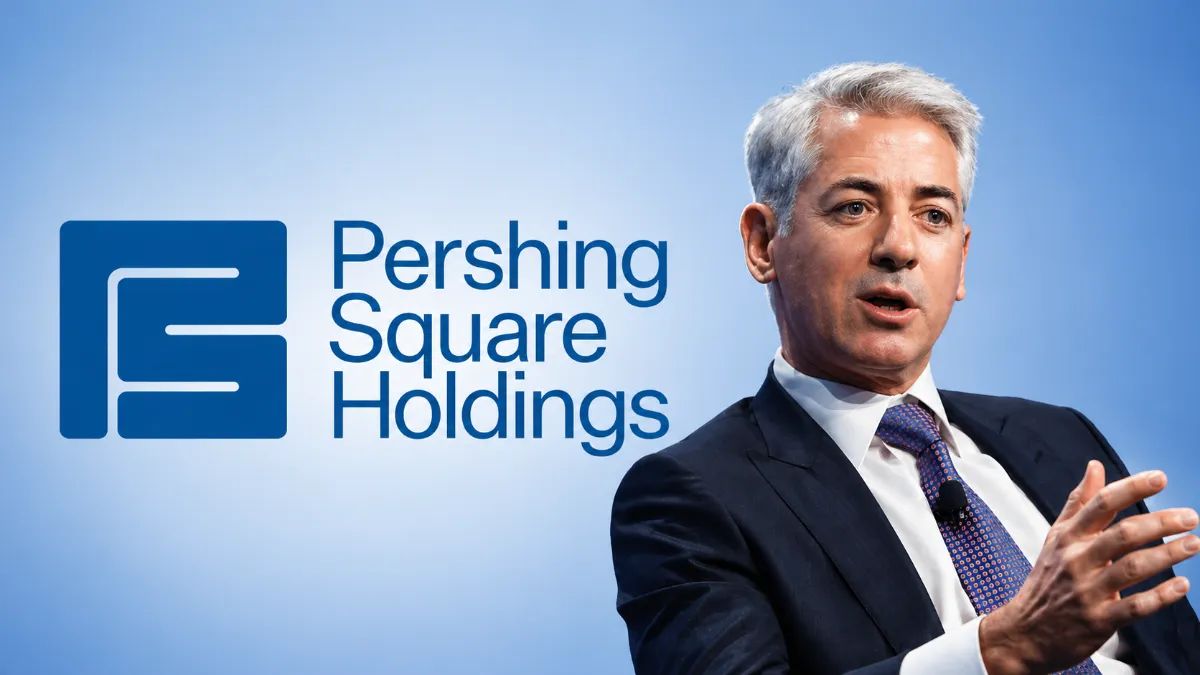
Bill Ackman prices the Pershing Square IPO on the 28th and dual-lists on the NYSE on the 29th. With a $50 offer price and up to $10B target including private capital, the low-cost '2-0' fee structure marks his comeback from the 2024 withdrawal.
- Bill Ackman prices the Pershing Square IPO today at $50/share, targeting up to $10B via dual NYSE listing April 29
- The '2-0' fee structure — no performance fee, first-year management fee waived — is the headline differentiator
Bill Ackman's hedge fund Pershing Square Capital Management (PSCM) is pricing its IPO today (April 28, local time) and listing on the New York Stock Exchange (NYSE) tomorrow, April 29. The offer price is set at $50 per share, with a total fundraising target — combining public and private capital — of at least $5B and up to $10B. Of that, $2.8B has already been secured from family offices, pension funds, and insurance companies.
This marks Ackman's comeback two years after he slashed his 2024 target from $25B to $2B before ultimately abandoning the listing altogether. This time, he has taken a more measured approach — setting a realistic target, locking in private capital first, and then proceeding to the public offering.
PSUS + PS: A Dual-Security Simultaneous Listing
This IPO features a unique dual-security structure, with two distinct securities listing on the NYSE simultaneously.
Pershing Square USA (PSUS) is a closed-end fund employing a concentrated strategy investing in 12 to 15 large-cap North American listed companies. All IPO net proceeds will flow directly into PSUS. Pershing Square Inc. (PSI), the hedge fund management company itself, will list under the ticker 'PS' and will not receive any IPO proceeds separately.
There is also an investor incentive: purchasers of 100 shares of PSUS will receive 20 shares of PSI at no additional cost. Partners are expected to allocate up to 10% of PSI shares.
The underwriting syndicate consists of five banks: Citigroup, UBS, Bank of America, Jefferies, and Wells Fargo.
A '2-0' Fee Structure With No Performance Fee
The fee structure is the key differentiator. Unlike the standard hedge fund '2-and-20' model (2% management fee plus 20% performance fee), PSUS waives management fees entirely for the first 12 months and charges just 2% of NAV annually thereafter. There is no performance fee. PSCM will co-invest $500M of its own capital directly alongside investors.
For context, the existing European-listed fund Pershing Square Holdings (PSH) delivered NAV growth of +20.9% and total shareholder return of +33.9% in 2025. Since inception, cumulative gains total $23B, with an 8-year NAV CAGR of 23%. Note, however, that PSH and PSUS are separate investment vehicles, and past performance does not guarantee future results for PSUS.
'The World's Greatest Businesses Are on Sale'
During the IPO roadshow, Ackman stated, "The world's greatest businesses are trading at historically cheap valuations right now," adding that "geopolitical uncertainty — including the Iran conflict — could actually work in our favor as we execute our acquisition program."
The existing portfolio (based on PSH as of March 2025) is led by Brookfield Corporation (BN) at 18.15%, followed by Uber (UBER) at 15.9%, Amazon (AMZN) at 14.28%, Alphabet (GOOGL) at 13.83%, and Meta (META) at 11.37%. PSUS is expected to be constructed along similar lines.
The Risks Are Real
Investors should be aware of meaningful risks. The existing European-listed fund PSH currently trades at approximately a 27% discount to NAV. There are concerns that the newly listed PSUS could fall into a similar discount over time.
Discounts to net asset value are a structural feature of closed-end funds, meaning investors who buy at the $50 IPO price could find themselves in negative territory shortly after listing. Additionally, a minority shareholder lawsuit related to Howard Hughes Holdings (HHH) remains ongoing.
The pivot toward a 'Berkshire model' is also worth watching. PSH invested $900M in Howard Hughes in May 2025 and committed up to $1B in preferred equity financing to support the acquisition of insurer Vantage. Ackman has returned as Chairman of the Howard Hughes board and is personally leading the company's transformation into a diversified holding company.
Related Tickers & ETFs
Directly Related: PSUS, PS (PSI), PSH (existing European-listed fund)
Key Portfolio Holdings: BN, UBER, AMZN, GOOGL, META
Frequently Asked Questions
퍼싱 스퀘어 IPO는 어떻게 투자할 수 있나요?
PSUS(폐쇄형 펀드)와 PS(운용사)가 29일 뉴욕증권거래소(NYSE)에 상장됩니다. 공모가는 주당 50달러이며, PSUS 100주를 매수하면 PSI 주식 20주를 무상으로 받을 수 있습니다. 한국 투자자는 해외주식 거래가 가능한 증권사를 통해 상장 후 매수할 수 있습니다.
PSUS와 PSI(PS)의 차이는 무엇인가요?
PSUS는 북미 대형주 12~15곳에 투자하는 폐쇄형 펀드로 IPO 자금을 직접 운용합니다. PSI(티커 PS)는 헤지펀드 운용사 본체로 IPO 수익을 받지 않으며, PSUS 투자 시 보너스로 제공됩니다. PSUS는 투자 상품, PSI는 운용사 지분에 투자하는 개념입니다.
수수료 구조가 일반 헤지펀드와 어떻게 다른가요?
일반 헤지펀드의 '2-20'(운용 2% + 성과 20%) 구조와 달리, PSUS는 첫 12개월 운용 보수를 면제하고 이후 순자산가치(NAV)의 연 2%만 부과합니다. 성과 보수는 전혀 없어 투자자에게 유리한 '2-0' 구조입니다.
2024년 상장 철회 후 이번에는 성공할 수 있을까요?
2024년에는 목표 250억 달러를 20억 달러로 낮췄다가 결국 철회했지만, 이번에는 현실적인 50~100억 달러 목표로 조정하고 패밀리오피스·연기금 등으로부터 28억 달러를 사전 확보했습니다. 또한 기존 유럽 펀드 PSH가 2025년 +33.9% 수익률을 기록하며 투자 실적을 입증한 점도 긍정적입니다.
주요 투자 리스크는 무엇인가요?
폐쇄형 펀드 특성상 주가가 순자산가치(NAV)보다 낮게 거래될 수 있습니다. 실제로 기존 유럽 펀드 PSH는 현재 NAV 대비 약 27% 할인 거래 중이며, PSUS도 유사한 디스카운트에 빠질 가능성이 있습니다. 또한 하워드 휴즈 홀딩스 관련 소주주 소송이 진행 중인 점도 유의해야 합니다.

25 SEC 8-K Earnings Disclosures Flood In, Including Owens Corning, Extreme Networks, Utz Brands
 HBB
HBB NC
NC EPC+27
Uber Q2 Net Income Jumps 77% to $2.4B, but Stock Falls 5.7% on Weak Q3 Outlook
 UBER
UBERZero SEC Earnings Filings Filed Aug 3 as AMD, SanDisk, Eli Lilly Earnings Loom; GE Vernova Misses Estimates
 MAR
MAR L
L TSN+12
Wall Street's Defining Moments
See more

Sunday's SEC 8-K Earnings Filings Quiet, but Royal Gold Doubles Net Income and Launches Buyback
 RGLD
RGLDVeritone Earnings Shock Sends Shares Down 23%...York Space Systems Among 25 US Companies Filing SEC 8-K Earnings Reports
 YSS
YSS CODX
CODX IPWR+26
Applied Materials Posts Record Q3 Revenue of $9.1 Billion, All-Time High EPS
 AMAT
AMATSmart Money Briefing
Weekly summaries of Wall Street guru moves and crypto whale activity.