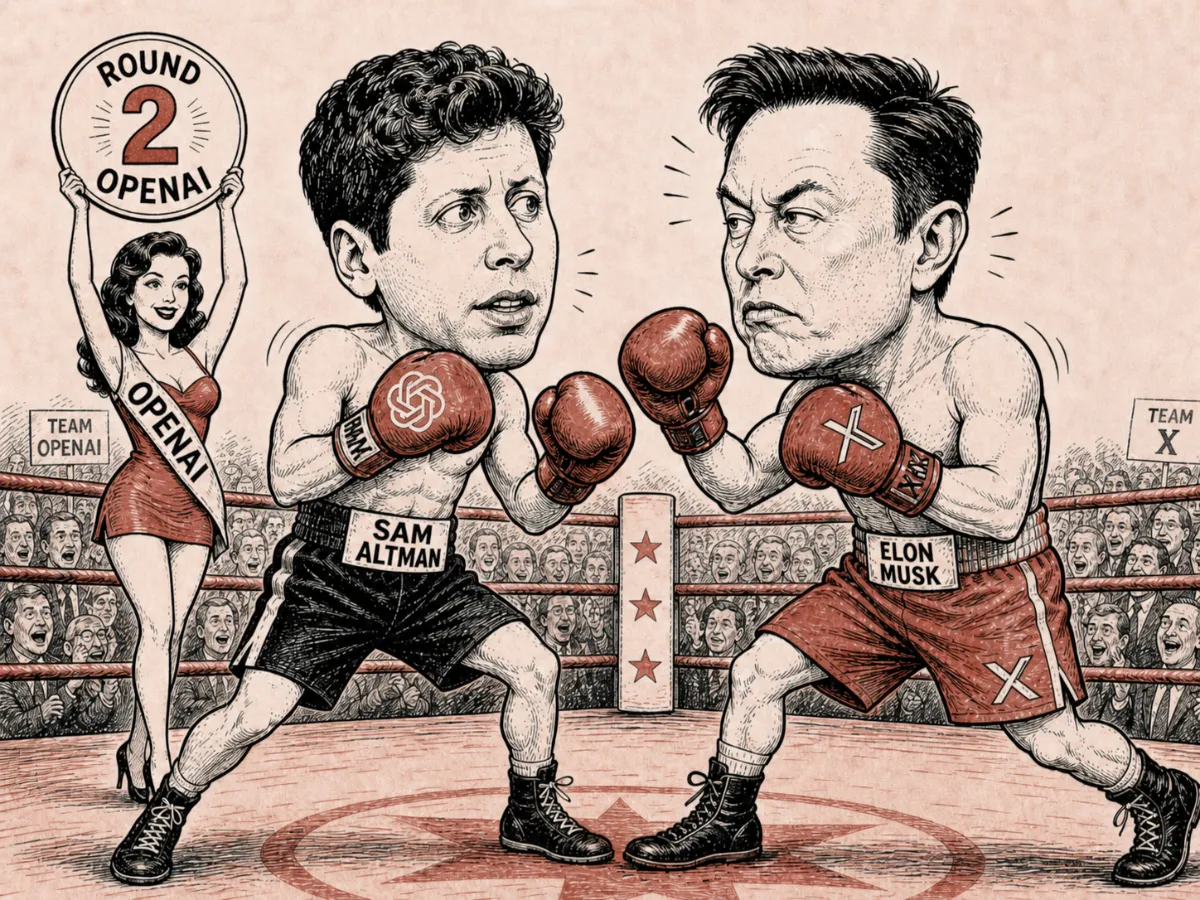

Sam Altman does not hold a single share of OpenAI. Yet he is one of the biggest beneficiaries of the money OpenAI generates. On May 13, 2026, court documents released during the Musk v. OpenAI trial disclosed a list of equity stakes Altman holds in nine companies. They all share one thing in common: every one of them has a direct business relationship with OpenAI.
Read the Portfolio, See the Strategy
The numbers, as of December 31, 2025:
| Company | Stake Value | Why It Matters |
|---|---|---|
| Helion Energy | $1.7B | OpenAI's data center power supplier under contract |
| Stripe | $633M | Core payment infrastructure for OpenAI API monetization |
| Retro Biosciences | $258M | $180M invested personally by Altman; uses OpenAI AI for drug development |
| Cerebras (CBRS) | $3.2M | Computing contract with OpenAI |
| Degree, Humane, Formation Bio, others | Undisclosed | All are OpenAI business partners |
The disclosed stakes alone add up to more than $2.5 billion. Including the four undisclosed companies, the total is larger.
This is not random. The portfolio has clear layers.
- Power: Helion — The biggest bottleneck for AI data centers is electricity. Every dollar OpenAI spends on Helion raises the value of Altman's stake.
- Payments: Stripe — More OpenAI paying users means more Stripe transactions.
- Computing: Cerebras — A chip supply contract with OpenAI. Altman sits on both sides of the deal.
"I Recused Myself" — Is That Enough?
Altman's official position: "I recused myself from decisions involving transactions with these companies."
For that claim to hold legally, three things need to be demonstrated.
- The CEO controls the agenda. Even if Altman stepped back from specific meetings, the CEO decides which deals make it to the table in the first place.
- Informal influence is not documented. Signals, preferences, and tone sent to executives and board members never appear in meeting minutes.
- OpenAI started as a nonprofit. Under nonprofit fiduciary duty standards, self-dealing is presumed to be a violation. Recusal alone does not provide immunity.
This Structure Has a Precedent
The closest historical parallel is Enron CFO Andrew Fastow.
Fastow held personal equity in special-purpose vehicles (SPVs) funded by Enron — while simultaneously sitting on Enron's side of those same transactions. The structure is nearly identical to Altman's. The difference is one thing: Fastow hid it. Altman's was revealed only when a lawsuit forced documents into the open.
Fastow received a six-year prison sentence. Enron gave birth to the Sarbanes-Oxley Act. Whether the Altman case becomes a similar legislative trigger remains to be seen. But the fact that the SEC, multiple state attorneys general, and Congress are all conducting simultaneous investigations signals that this is not a simple civil dispute.
The Real Question: Brilliant Architecture or Crime?
When Altman renounced equity at OpenAI's founding in 2015, it was a public declaration. The press called him someone who chose humanity over money. That moral capital kept him in the CEO seat — and from that seat, he was able to direct billions of dollars in investment to companies in his own portfolio.
The New Yorker recently described it as: "the ability to exploit ambiguity to his own advantage."
The declaration of 'no equity' was itself a tool for maintaining control. And the moment OpenAI converts to a for-profit corporation, Altman receives direct equity for the first time. The structure completes itself.
What Smart Money Investors Should Watch
This story matters to Inteliview readers not because it is a scandal, but because it reveals how the AI sector's investment architecture actually works.
- How AI infrastructure companies like Helion and Cerebras win massive contracts
- How OpenAI governance risk could indirectly affect MSFT and NVDA positions
- How OpenAI's valuation could be restructured once Altman receives direct equity after the for-profit conversion
Regardless of how the litigation resolves, the fact that this structure has been made public is already a new benchmark for AI governance risk.
Source: Reuters, New Yorker, Musk v. OpenAI court filings (2026.05.13)