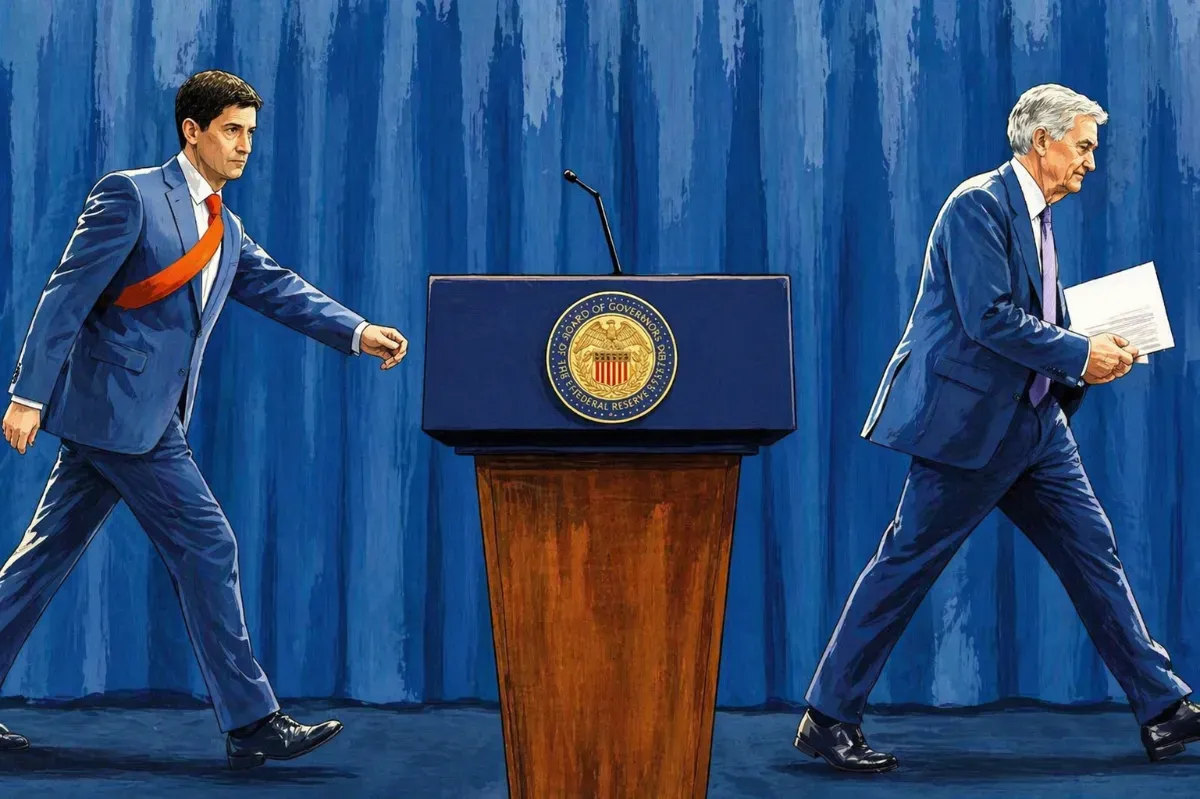

The moment the US crypto industry has waited over a decade for is drawing near. On May 14, the Senate Banking Committee passed the Digital Asset Market CLARITY Act 15-9. Every Republican voted yes, and Arizona Democrat Ruben Gallego crossed the aisle to join them. Only the Senate floor vote remains. Trump has publicly set July 4 — Independence Day — as his signing target.
How This Bill Changes Crypto
If the CLARITY Act passes, the most fundamental uncertainty in the US crypto market disappears. The law will clearly define what falls under SEC jurisdiction versus CFTC oversight.
- Bitcoin is confirmed as a "digital commodity" under federal law — a permanent legal status
- SEC securities lawsuit risk for Solana, XRP, and other Layer 1 projects largely eliminated
- Coinbase: clear exchange registration framework unlocks further business expansion
- DeFi validators, oracles, and software developers: legally protected from money transmitter classification
- Customer digital assets protected in bankruptcy / new tokenized securities framework created
All of this is in a single bill. This is not merely regulatory clarification — it is a declaration that the United States intends to become the center of global crypto finance.
Already Passed the House with 294 Votes
This bill has already cleared the House. In July 2025 it passed 294-134, with all 216 Republicans plus 78 Democrats voting yes. A bill that won that kind of bipartisan support in the House has now cleared the Senate Banking Committee. More than halfway there.
The Senate floor requires 60 votes — 53 Republicans plus 7 Democrats. Mark Warner (Virginia) has demonstrated bipartisan leadership on digital asset issues. Angela Alsobrooks (Maryland) personally crafted the stablecoin compromise language. Both are realistic yes votes. With 78 House Democrats already on record in favor, there are clearly persuadable senators in the chamber.
Trump's Political Pressure Is the Engine
The strongest force pushing this bill is Trump's political will. A president who has publicly committed to a July 4 signing creates real pressure on Republican members. For some Democratic senators, district-level dynamics and deal-making with other legislation are also in play.
Attaching the Build Now Act — a housing supply incentive bill — to the package was strategic. It secured Senator Kennedy's vote while weakening Senator Warren's grounds for full opposition: the housing bill she co-sponsored is now bundled inside. That kind of political packaging can manufacture additional votes.
Polymarket prices the odds of passage this year at 73%. That is the market's aggregated prediction.
The Democratic Ethics Clause — A Hurdle, Not a Wall
The ethics provision demanded by Democrats — restricting public officials from holding digital assets — remains a negotiating variable. But this is a bargaining chip, not a bill-killer. Senator Gallego argued it should be included at the committee stage, then voted yes anyway. That is a signal that negotiation is active.
The stablecoin interest restriction language is also not final. There is room for coordination between the banking sector and the crypto industry before the floor vote. The fact that negotiations are live is itself evidence of this bill's staying power.
What Changes If It Passes
If the Bitcoin ETF opened the first gate for institutional capital, the CLARITY Act opens the second. With legal status confirmed under federal law, institutions can deploy capital into digital assets far more aggressively. Solana and XRP — freed from lawsuit overhang — are direct beneficiaries. Coinbase gains a clear regulatory framework to expand. Institutional infrastructure like DTCC tokenization builds out faster.
Once the US completes its crypto legal framework, regulatory discussions in the EU, UK, and across Asia are likely to converge toward the American standard. The legal foundation of the entire global crypto market shifts.