
Tether Q1 Net Income $1.04B; Circle's Performance in Focus
Tether Q1 net income $1.04B; holds $141B in US Treasuries (17th globally). USDC on-chain volume surpasses USDT for first time (64% of stablecoin trading). Circle Q1 revenue projected $750M; official results due May 11.
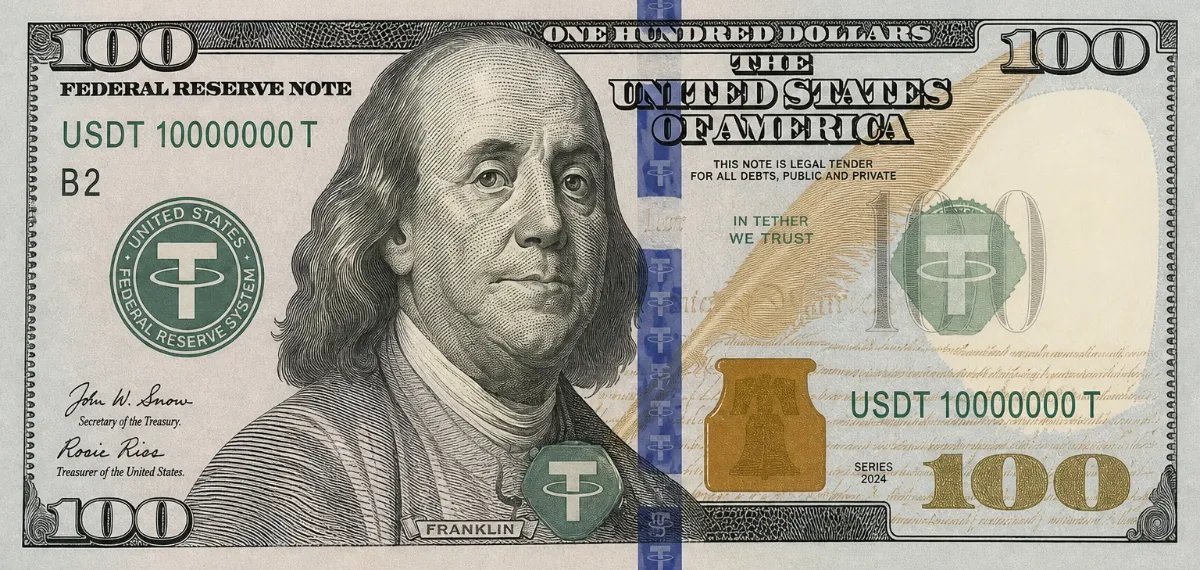
- Tether earned $1.04B Q1 net income and holds $141B US Treasuries as world's 17th largest holder
- USDC on-chain volume surpasses USDT for first time despite half the circulation, capturing 64% of stablecoin trading
Tether ranks 17th globally in US Treasury holdings; Circle Q1 revenue projected ~$750M... Official announcement May 11
Two pivotal metrics emerged simultaneously in the stablecoin market. Tether (USDT) generated $1.04B in net income in Q1 2026 alone, while Circle's (USDC) on-chain transaction volume exceeded USDT for the first time. One tells a profitability story; the other, a growth velocity narrative.
Tether—A Company Holding $141B in US Treasury Securities
Tether's Q1 2026 net income reached $1.04B. Divided by trading days in the quarter, that translates to roughly $12.7M daily earnings. The mechanism is straightforward: for every USDT dollar issued, Tether holds that dollar in safe-haven assets like US Treasuries and collects the interest.
Tether's total assets stand at approximately $191.7B, with US Treasury holdings—direct and indirect—totaling $141B. This positions Tether as the 17th largest institutional holder of US Treasuries globally, marginally ahead of South Korea ($140.9B). Excess reserves hit an all-time high of $8.23B—the cushion amount beyond circulating USDT, designed for additional safety.
Beyond Treasuries, Tether holds $20B in physical gold and approximately $7B in BTC. This diversification strategy deliberately reduces reliance on dollar-denominated assets alone.
USDC—Half the Circulation, Yet Higher Trading Volume
While Tether's profitability dominates headlines, Circle's USDC commands attention for an entirely different reason.
According to Artemis Analytics, USDC's on-chain transaction volume in Q1 2026 reached approximately $220B, surpassing USDT's $130B. USDC now accounts for 64% of total stablecoin trading volume. This marks the first time since 2019 that USDC has outpaced USDT in transaction velocity—a milestone JP Morgan analysts affirmed, noting that "USDC has overtaken USDT in on-chain activity and market cap expansion."
Circulation volumes tell a different story: USDT dominates at $178B versus USDC's $78B—a 2.3x difference. Yet actual blockchain trading activity favors USDC. The reason: USDT primarily serves exchange-internal trading and functions as a dollar substitute in emerging markets. USDC concentrates its usage in DeFi protocols, institutional payments, and cross-border remittance rails.
Europe's implementation of MiCA regulations triggered USDT delistings from exchanges, with USDC absorbing the displaced volume. In the US, ongoing GENIUS Act legislative discussions increasingly favor USDC, given its stringent transparency standards.
Tether vs. Circle—Same Business, Divergent Revenue Structures
Both companies issue stablecoins, yet their revenue architectures differ fundamentally.
Tether captures USDT issuance and retains reserve interest entirely—no partner distribution splits. Full-year 2024 net income totaled $13B.
Circle distributes 50-60% of USDC revenues to distribution partners like Coinbase. 2024 full-year net income reached only $156M. With circulation at less than half and revenue sharing consuming over 50%, Circle's net income differential widens by tens of multiples.
Circle Q1 2026 Revenue Forecast—Confirmed May 11
Circle's official Q1 earnings release arrives May 11. Predictable revenue metrics exist.
Over 95% of Circle's revenue derives from USDC reserve interest. With average Q1 circulation of ~$76B and an annual yield rate of 3.8%, quarterly interest income projects to ~$722M. Adding Circle Payment Network service fees yields total revenue guidance of $740M–$770M. Wall Street consensus sits at $752M. Given Q4 2025 revenue of $770M, Q1 results are expected flat to modestly higher.
Frequently Asked Questions
Why can Tether hold such massive US Treasury reserves of $141B?
Tether must hold actual dollar reserves backing each issued USDT dollar. With $178B in USDT circulation, substantial Treasury holdings are necessary for collateralization. This makes Tether a larger US Treasury holder than South Korea.
How does USDC trade more volume than USDT despite half the circulation?
USDC concentrates in high-velocity use cases: DeFi protocols, institutional settlements, and cross-border transfers. The same USDC units cycle through multiple transactions daily. USDT primarily serves as long-term dollar substitute storage in emerging markets, reducing daily trading frequency.
Is Circle stock (CRCL) less attractive than Tether as an investment?
Tether dominates on net income metrics. However, Tether is private while Circle is publicly traded, offering regulatory clarity and institutional adoption expansion as growth catalysts. USDC's volume leadership and GENIUS Act legislative tailwinds support Circle's investment thesis.
What is the GENIUS Act and why does it matter?
The GENIUS Act is proposed US stablecoin regulation emphasizing capital requirements, reserve transparency, and audit mandates. USDC's existing compliance with these standards—regular audits and institutional accounting—positions it favorably relative to competitors lacking equivalent oversight.

Circle Posts $701M Q2 Revenue, Net Income Jumps but Stock Falls 3% on Revenue Miss
 CRCL
CRCLExxonMobil Posts 4-Year-High Profit but Misses Estimates as AbbVie, Colgate Among 23 Companies Report Earnings
 XOM
XOM LIN
LIN LYB+25
Lam Research, L3Harris, Fair Isaac Among 25 US Firms Reporting Earnings Today — FICO Slides Despite Beat
 LHX
LHX CP
CP VRT+22
Wall Street's Defining Moments
See more



Sunday's SEC 8-K Earnings Filings Quiet, but Royal Gold Doubles Net Income and Launches Buyback
 RGLD
RGLDVeritone Earnings Shock Sends Shares Down 23%...York Space Systems Among 25 US Companies Filing SEC 8-K Earnings Reports
 YSS
YSS CODX
CODX IPWR+26
Applied Materials Posts Record Q3 Revenue of $9.1 Billion, All-Time High EPS
 AMAT
AMATSmart Money Briefing
Weekly summaries of Wall Street guru moves and crypto whale activity.