Kevin Warsh's Contrarian Move — Shrinking the Balance Sheet That Powered the 15-Year Bull Market
Fed Chair Kevin Warsh has declared he will aggressively shrink the $6.7 trillion balance sheet. If the "quiet engine" powering a 15-year bull market goes dark, the safety net investors have come to rely on may disappear with it.
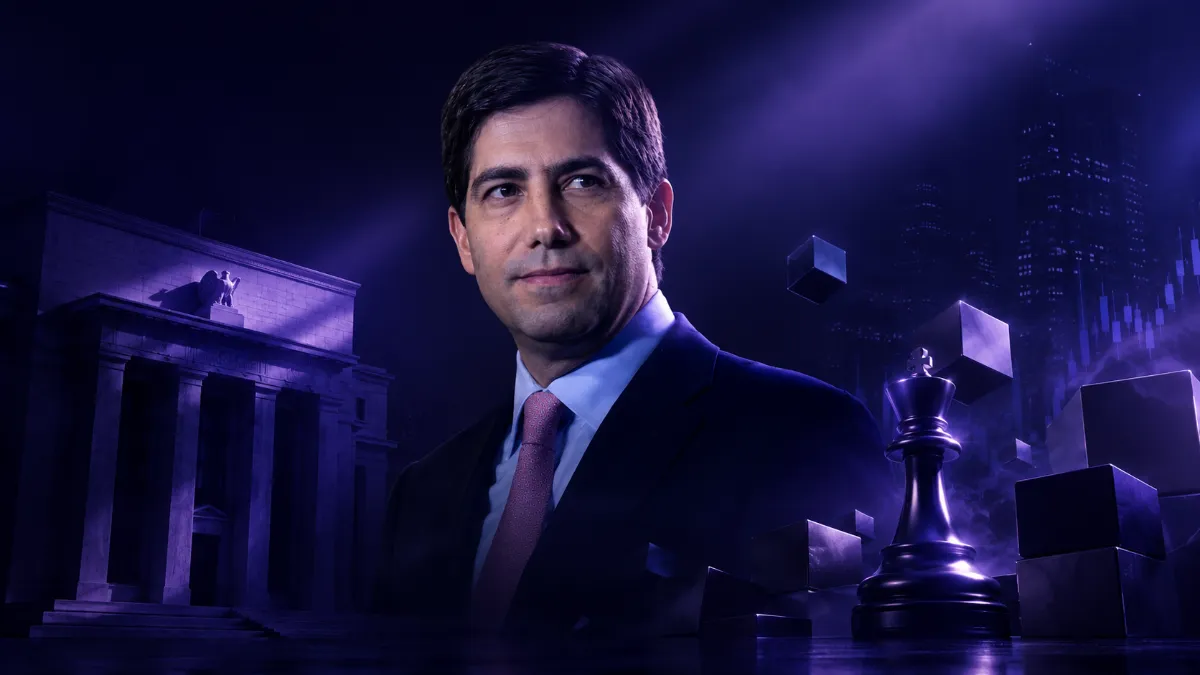
- New Fed Chair Kevin Warsh has declared he will aggressively shrink the $6.7 trillion balance sheet, raising concerns that the "Fed put" era underpinning a 15-year bull market may be ending
- Experts recommend reducing high-PE tech exposure, increasing financials, and building cash reserves
The Fed's most radical experiment in history is beginning. New Chair Kevin Warsh has declared he will dismantle the core engine behind the 15-year bull market — the Fed's balance sheet. The safety net investors have taken for granted may soon disappear.
Kevin Warsh has succeeded Jerome Powell as Chair of the Federal Reserve. His first priority: aggressively shrinking the Fed's $6.7 trillion balance sheet. To put that in context, the Fed's total assets were roughly $900 billion before the 2008 financial crisis — the current figure represents more than a 7-fold expansion.
"The balance sheet distorts financial markets too much"
Warsh argues the Fed's enormous balance sheet distorts financial markets excessively. He believes the Fed should not continue propping up markets as it has in the past, and instead should rely on interest rates as its primary tool.
The Fed's balance sheet disproportionately helps those with financial assets.
Kevin Warsh, U.S. Senate confirmation hearing
The quiet engine of a 15-year bull market
Starting with QE2 in 2010, the Fed continuously purchased U.S. Treasuries. This policy was the driving force behind the S&P 500's more than 6x rise. Even through the COVID-19 shock of 2020 and the inflation crisis of 2022, the market ultimately recovered — backed by the Fed's balance sheet expansion.
Investors have long relied on an implicit belief — the "Fed put" — that the Fed would intervene whenever markets wobbled. This psychological safety net encouraged excessive risk-taking, which Warsh now views as a structural problem.
Ripple effects across bond and stock markets
Reduced Treasury purchases would push bond prices lower and yields higher. Rising yields increase corporate borrowing costs, compress profits, and lower the present value of future earnings — a direct hit to high-PE growth stocks.
- Tech stocks: high-PE valuations face repricing as discount rates rise
- Financials: stand to benefit in a rising-rate environment
- Bonds: reduced central bank demand → lower prices, higher yields
- Cash: consider building reserves as a hedge against uncertainty
How investors should respond
If Warsh's vision is realized, experts recommend reducing exposure to high-growth tech names that benefited most from QE, rotating into financials with stable cash flows, and building cash until the outlook clarifies.
The pace and scale of balance sheet reduction will depend on market conditions and political pressures. But investment strategies built on the assumption that the "Fed put" is always available are overdue for a rethink.
Frequently Asked Questions
Why does Kevin Warsh want to shrink the Fed's balance sheet?
Chair Warsh believes the Fed's $6.7 trillion balance sheet distorts financial markets and "disproportionately helps those with financial assets." He wants to limit the Fed's role to interest rate policy rather than balance sheet management.
How would balance sheet reduction affect stock markets?
Less bond buying → higher yields → higher corporate borrowing costs → pressure on high-PE growth stocks. The psychological shift is equally significant: the so-called "Fed put" safety net may weaken, reducing investor risk appetite.
What is the "Fed put"?
An implicit investor belief that the Fed will intervene during market downturns through rate cuts or liquidity injections. This expectation has encouraged excessive risk-taking. Warsh's policies may remove this safety net.
Which sectors could benefit from Warsh's policy shift?
Financial stocks (banks, insurers) tend to benefit from rising rate environments. Companies with stable cash flows, low debt, and "fortress" balance sheets should outperform high-growth, high-valuation tech names.
How large was the Fed's balance sheet before the 2008 financial crisis?
The Fed's total assets were roughly $900 billion before 2008. Through multiple rounds of quantitative easing, the balance sheet has expanded more than 7-fold to its current $6.7 trillion.









Wall Street's Defining Moments
See more
Sunday's SEC 8-K Earnings Filings Quiet, but Royal Gold Doubles Net Income and Launches Buyback
 RGLD
RGLDVeritone Earnings Shock Sends Shares Down 23%...York Space Systems Among 25 US Companies Filing SEC 8-K Earnings Reports
 YSS
YSS CODX
CODX IPWR+26
Applied Materials Posts Record Q3 Revenue of $9.1 Billion, All-Time High EPS
 AMAT
AMATSmart Money Briefing
Weekly summaries of Wall Street guru moves and crypto whale activity.