Broadcom Launches VMware Cloud Foundation 9.1 — 40% Server Cost Cut, AI Agent Infrastructure Push
Broadcom launched VMware Cloud Foundation 9.1, a private AI cloud platform for inference and agentic workloads, claiming up to 40% server cost reduction. The $61B VMware acquisition is showing returns as enterprise AI infrastructure demand surges.
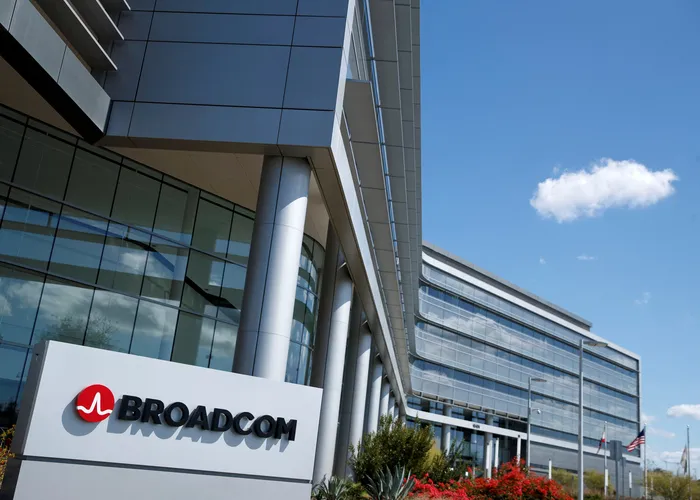
- Broadcom launched VMware Cloud Foundation 9.1 for production AI workloads, claiming 40% server cost reduction and 39% storage TCO savings — the payoff of its $61B VMware acquisition as enterprise AI infrastructure demand accelerates
Broadcom has released VMware Cloud Foundation 9.1, a production-grade AI infrastructure platform targeting inference and agentic workloads. With up to 40% server cost reductions, it represents the payoff of the $61B VMware acquisition meeting the AI infrastructure era.
Broadcom (AVGO) officially announced VMware Cloud Foundation (VCF) 9.1 on May 5. It is designed as a secure, cost-effective infrastructure platform for production AI workloads, built on an AI- and Kubernetes-native private cloud architecture that integrates AMD, Intel, and NVIDIA hardware in a single unified platform.
Hard Numbers: VCF 9.1's Cost Reduction Claims
Broadcom backed the launch with concrete efficiency metrics. VCF 9.1 uses intelligent memory tiering to cut server costs by up to 40%, reduce storage TCO by up to 39%, and lower Kubernetes operational costs by up to 46%. Cluster upgrade speeds improve 4x while fleet capacity doubles.
- Server costs: up to 40% reduction via intelligent memory tiering
- Storage TCO: up to 39% lower
- Kubernetes operational costs: up to 46% reduction
- Cluster upgrades: 4x faster with 2x fleet capacity
- Multi-tenant AI isolation support
Network Integration: Arista and NVIDIA
VCF 9.1 adds Arista Universal Cloud Network interoperability and includes NVIDIA ConnectX-7 and BlueField-3 networking for high-speed AI workloads. This positions VCF as more than virtualization software — it aims to integrate the full AI factory stack, from compute to networking to security.
AI infrastructure is moving beyond raw accelerator purchases into operational platforms that can manage cost, security, utilization, and scale.
Insider Monkey analysis
The $61B VMware Bet Meets the AI Era
Broadcom acquired VMware for $61 billion in November 2023. The deal drew skepticism at the time over its price tag. But Broadcom CEO Hock Tan quickly restructured VMware around the VCF subscription model, and as AI infrastructure demand exploded, that strategy has found its validation.
Enterprises are increasingly looking to shift some AI workloads from public clouds (AWS, Azure, GCP) to private AI clouds — driven by security, compliance, and cost considerations. VCF 9.1 directly targets this demand. Its support for AMD, Intel, and NVIDIA hardware simultaneously makes it attractive to enterprise customers who want AI infrastructure without locking into a single vendor.
Broadcom's Two-Sided AI Strategy: VCF + Custom ASICs
VCF is only half of Broadcom's AI bet. In custom AI accelerators, Broadcom designs and manufactures chips for Google (TPU), Meta, and ByteDance — making it the primary alternative for Big Tech companies that want to avoid NVIDIA GPU dependence. VCF handles software AI infrastructure; custom ASICs handle hardware AI infrastructure. Together they form a coherent two-sided strategy across the enterprise AI buildout.
Frequently Asked Questions
What is VMware Cloud Foundation 9.1?
VCF 9.1 is Broadcom's production AI infrastructure platform announced on May 5. It supports AI inference and agentic workloads with a Kubernetes-native private cloud architecture that works across AMD, Intel, and NVIDIA hardware. Key claims: 40% server cost reduction, 39% lower storage TCO, and 46% Kubernetes cost savings.
Why did Broadcom acquire VMware?
Broadcom acquired VMware for $61 billion in November 2023 to build a recurring subscription software business around enterprise cloud infrastructure. CEO Hock Tan restructured VMware around the VCF model, and the AI infrastructure boom is now vindicating that strategy.
What makes VCF 9.1 different from competing platforms?
Its multi-vendor hardware support — AMD, Intel, and NVIDIA simultaneously — is a key differentiator. It also integrates Arista networking with NVIDIA ConnectX-7 and BlueField-3, positioning it as a full AI factory stack rather than just a virtualization layer.
What other AI businesses does Broadcom have beyond VCF?
Broadcom designs and manufactures custom AI accelerators (ASICs) for Google (TPU), Meta, and ByteDance. It is effectively the only viable alternative for Big Tech companies seeking AI hardware independence from NVIDIA. VCF is the software half; custom ASICs are the hardware half of Broadcom's AI strategy.
Why are companies building private AI clouds instead of using public cloud?
Security, compliance, and cost are the main drivers. Regulated industries like finance, healthcare, and manufacturing cannot always put sensitive data on public cloud. VCF 9.1 is the platform they use to build their own on-premises or colocation AI infrastructure.

Aug. 4 SEC Earnings Filings: 25 Filings From Sysco, Kimberly-Clark, Duke Energy and 24 Companies
 SYY
SYY KMB
KMB WEYS+23
Arista Networks Posts $3.04B Q2 Revenue, First Time Topping $3B — Crushes Wall Street Estimates
 ANET
ANETZero SEC Earnings Filings Filed Aug 3 as AMD, SanDisk, Eli Lilly Earnings Loom; GE Vernova Misses Estimates
 MAR
MAR L
L TSN+12
Wall Street's Defining Moments
See more



Sunday's SEC 8-K Earnings Filings Quiet, but Royal Gold Doubles Net Income and Launches Buyback
 RGLD
RGLDVeritone Earnings Shock Sends Shares Down 23%...York Space Systems Among 25 US Companies Filing SEC 8-K Earnings Reports
 YSS
YSS CODX
CODX IPWR+26
Applied Materials Posts Record Q3 Revenue of $9.1 Billion, All-Time High EPS
 AMAT
AMATSmart Money Briefing
Weekly summaries of Wall Street guru moves and crypto whale activity.