The Valeant Catastrophe — How $4 Billion Disappeared
In 2015, Bill Ackman invested $4 billion in Valeant Pharmaceuticals — a business model built on acquiring drugs and raising prices. Congress intervened, and the stock collapsed 97%.
The Valeant Catastrophe — How $4 Billion Disappeared
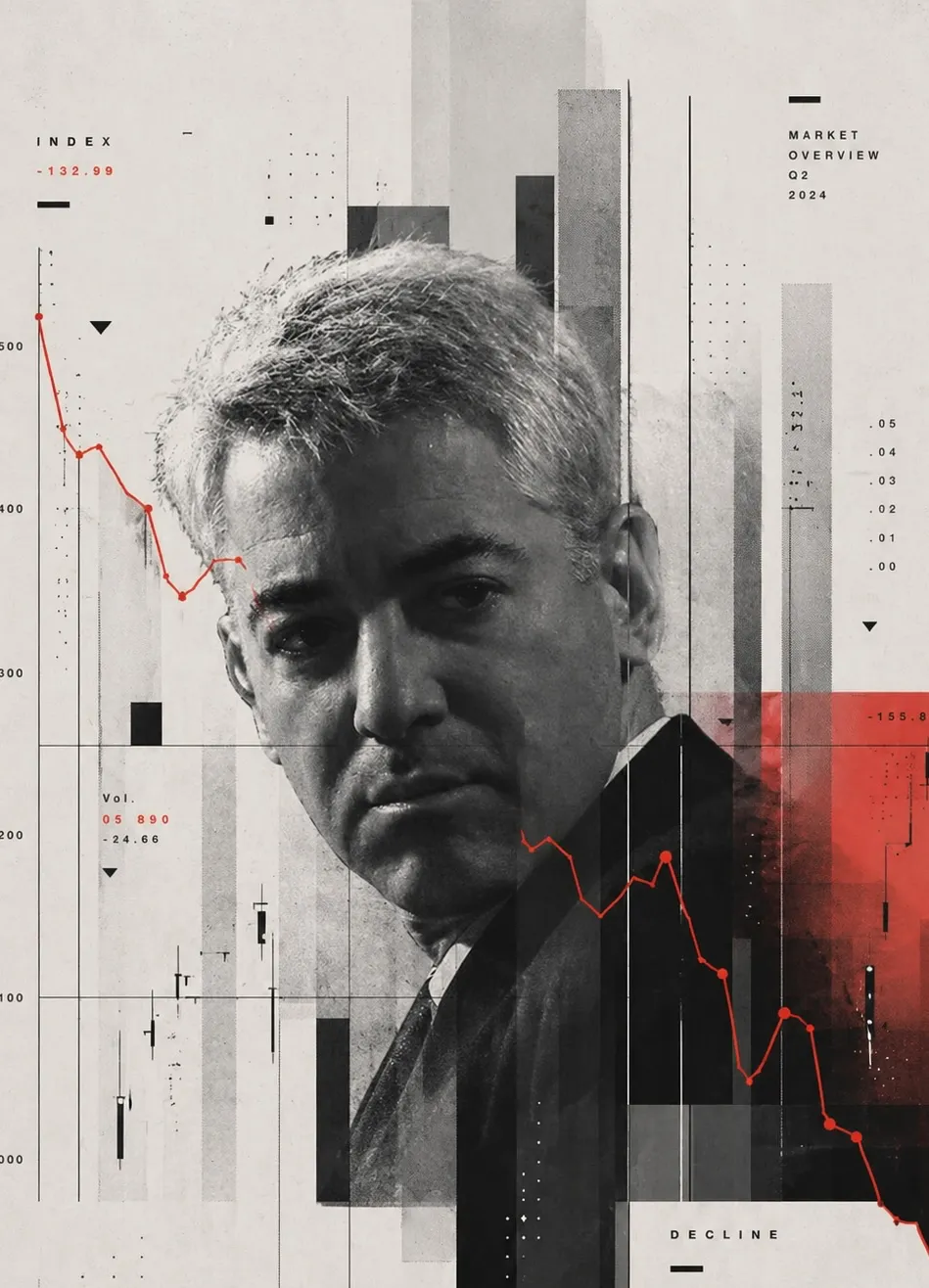
In the fall of 2015, a photograph circulated through the U.S. Congress. The AIDS drug Daraprim had gone from $13.50 to $750 per pill overnight — a 5,500% increase. Behind that price hike was a business model called a "drug price-hiking machine," and the biggest company running that model had $4 billion of Bill Ackman's money in it. This is the story of how Bill Ackman nearly lost everything in Valeant.
1. The Pharma Company That Doesn't Make Drugs
Valeant Pharmaceuticals. A pharmaceutical company headquartered in Quebec, Canada.
A normal pharmaceutical company makes money through research and development of new drugs. It invests years and billions of dollars in research, then protects its successes with patents and sells them at high prices. Valeant's model was different. Valeant didn't make drugs. It bought them.
The strategy created by Valeant CEO J. Michael Pearson went like this: acquire a small pharma company, raise the prices of its drugs sharply, slash R&D costs to the bone, use the profits for the next acquisition. Repeat.
From 2008 to 2015, Valeant made dozens of acquisitions. It raised prices on acquired drugs 200%, 500%, in some cases over 1,000%. R&D spending sat at about 3% of revenue — extremely low compared to major pharma companies that typically spend 15-20% on R&D.
This strategy worked because of one condition: the U.S. had loose drug price regulation. America was virtually the only developed country where the government did not directly regulate prescription drug prices. Valeant exploited this structural loophole to its absolute limits.
The stock rose roughly 20-fold from 2008 to mid-2015. Market cap reached $90 billion. Wall Street called Valeant "the Berkshire Hathaway of pharmaceuticals." Bill Ackman was captivated by this story.
2. Ackman's Entry
In March 2015, Ackman began buying Valeant stock in size. Pershing Square became one of Valeant's largest shareholders. The total investment eventually reached approximately $4 billion — about 30% of Pershing Square's entire assets under management concentrated in a single name.
Three things drew Ackman to Valeant. First, Pearson's management ability. Second, valuation — if acquisitions continued, earnings would keep growing and the stock would go higher. Third, the trust he'd built with Pearson during their joint attempt to acquire Allergan.
By mid-2015, Ackman's conviction in Valeant was absolute. He wrote in an investor letter: "Valeant has the most innovative business model in the pharmaceutical industry." Within six months of writing that sentence, everything began to collapse.
3. The Daraprim Trigger
In September 2015, Turing Pharmaceuticals — run by a 32-year-old CEO named Martin Shkreli — raised the price of the AIDS drug Daraprim overnight from $13.50 to $750 per pill. A 5,500% increase in one night.
The news exploded. Shkreli became the most hated man in America. At a congressional hearing, he invoked the Fifth Amendment and smirked.
Why did this matter for Valeant? Because Shkreli's model was essentially identical to Valeant's model — buy drugs, raise prices. Only the scale was different. Congress began paying attention to drug company price hikes. Hillary Clinton pledged drug price regulation on Twitter. The day she posted that tweet, Valeant's stock fell 16% in a single day. Political risk was becoming reality.
4. The Philidor Bombshell
In October 2015, Andrew Left of Citron Research published a short-selling report on Valeant. The core allegation: Valeant had an inappropriate relationship with a pharmacy chain called Philidor. Philidor was a company Valeant effectively owned and controlled without disclosing it — and there were signs Philidor had been making fraudulent insurance claims.
Valeant's stock fell 19% in a single day. Ackman initially defended the company. But as information accumulated, conditions only worsened. In late October, Valeant announced it would sever ties with Philidor — effectively an admission that Citron's allegations were correct. In November, the SEC and federal prosecutors opened investigations into Valeant.
The stock had fallen 70% from its peak. Ackman's $4 billion investment was evaporating rapidly.
November 2015. You are Ackman. You've put $4 billion into Valeant. The stock has collapsed 70% from its peak. An SEC investigation has just begun. What do you do?
5. Ackman's Choice
November 2015. Ackman faced a choice. The situation echoed his Herbalife battle — but running in the opposite direction.
In March 2016, Ackman joined Valeant's board of directors. He led the push to oust Pearson. A new CEO, Joseph Papa, was brought in. But it was already too late. Valeant's debt stood at $30 billion — debt accumulated for acquisitions. With the drug price-hiking model now politically untenable, the revenue stream needed to service that debt was disappearing.
6. The Cut
March 13, 2017. Ackman announced he had sold his entire Valeant position. The sale price was approximately $11 per share. His average purchase price had been around $190 per share. Loss: approximately $4 billion.
The largest loss in Pershing Square's history. Valeant subsequently renamed itself Bausch Health Companies.
On the day of the sale, Ackman sent an investor letter.
"The investment in Valeant was the biggest mistake of my career. I was not sufficiently critical of the company's business model. I trusted management too much. The position size was excessive."
Once you've made your choice, reveal what the legend actually did
7. The Lessons of Valeant
Dissecting the Valeant investment failure reveals three layers.
First, he failed to see the essence of the business model. Buying drugs instead of researching them, then raising prices — this was an inherently unsustainable model. Drug price hikes were never going to be politically tolerable forever. "Give me three scenarios where this company could fail" — "drug price regulation tightens" would have been on that list every time.
Second, the concentration was excessive. 30% of AUM in one name. Concentrated strategies produce massive gains when right, but when wrong, they shake the entire fund.
Third, the sunk cost trap. Admitting $4 billion and walking away meant publicly acknowledging the biggest failure of his career. So he chose instead to join the board and "fix it himself." This is what Munger called the Sunk Cost Fallacy.
8. Three Lessons This Story Left Behind
First, don't be fooled by the phrase "innovative business model."
Valeant's model wasn't innovation. It was exploiting a regulatory loophole. Not making drugs, buying them and raising prices — that isn't creating value, it's extracting value. Ask whether a model is genuinely creating value or merely redistributing existing value.
Second, don't put 30% of your portfolio in one stock.
Concentrated investing is only possible when two conditions are met: complete understanding and no leverage. Remove either condition and it becomes dangerous.
Third, be wary of the impulse to say "I'll fix it myself."
Some companies cannot be fixed. A company whose business model itself is broken. A company with too much debt. Entering such a company to "fix it" is like bailing water from a sinking ship. Sometimes the only right answer is to get off the boat.
9. Herbalife, Valeant, Corona
Placing Ackman's three great bets in chronological order reveals the evolution of one investor.
- Herbalife (2012–2018): Absolute conviction. Massive position. Seven-year duration. Zero flexibility. Result: defeat.
- Valeant (2015–2017): Absolute conviction. Massive position. Two-year duration. Low flexibility. Result: defeat.
- Corona hedge (2020): Conditional conviction. Small position. 30-day duration. Maximum flexibility. Result: victory.
The pattern is clear. Absolute conviction + massive position + low flexibility = defeat. Conditional conviction + small position + high flexibility = victory.
Ackman could succeed in 2020 because he failed twice in 2012–2018. This is the difference from Livermore. Livermore failed four times and couldn't change. Ackman failed twice and changed. Whether that change is permanent or temporary — the answer isn't in yet.
What's your take on this story?
What do you think about Bill Ackman's decision?
Sign in to participate
Sign InBill Ackman Today
Where is Bill Ackman investing right now? See their latest 13F portfolio and current convictions.