NAND sold out, $553B backlog... "AI infrastructure bottleneck is driving the entire market"
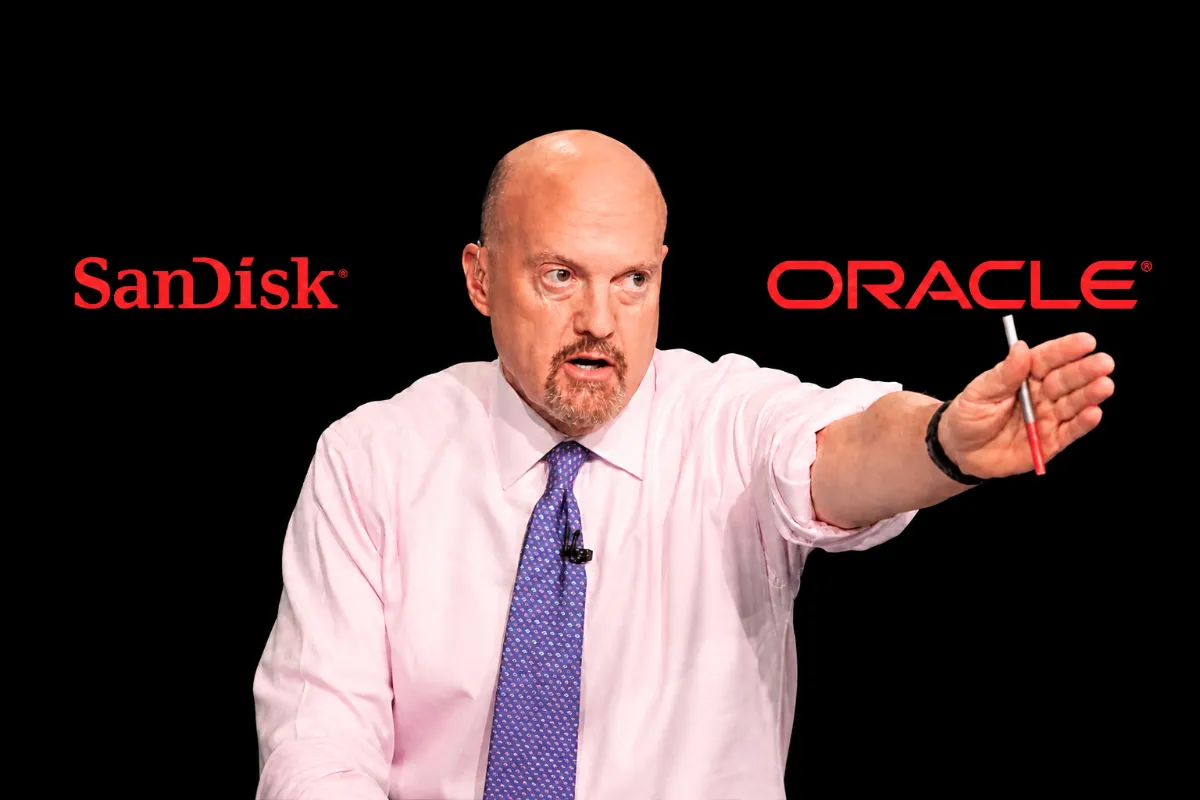
Jim Cramer posted a brief message on X (Twitter) on May 4: "Oracle and SanDisk have become the indicators that define this market's direction."
The 'Mad Money' host's rationale is straightforward. One sells cloud infrastructure that powers AI; the other sells memory essential for AI to function. Both face supply constraints. Companies positioned where demand vastly outpaces supply define the market's next direction.
SanDisk—NAND Is Sold Out
SanDisk (SNDK) is up 429% year-to-date and 3,550% over one year. The numbers look implausible, but they're real.
Q3 revenue of $5.95B surged 97% quarter-over-quarter. Data center revenue exploded 233%. Gross margins approach 80%. Q4 guidance: $7.75B–$8.25B revenue; non-GAAP EPS of $30–$33.
Behind these numbers lies structural supply scarcity. NAND flash manufacturing capacity is essentially sold out through 2026. Average selling prices are expected to jump 70–75% in Q2. SanDisk secured five long-term supply contracts; just three combined exceed $42B.
CEO David Goeckeler called this quarter "a fundamental inflection point for SanDisk." He highlighted how "intentional product mix shift toward data centers as the highest-value market is backed by technical leadership."
Yet SanDisk's story extends beyond its stock price. Rising NAND prices hurt companies that must buy memory—PC makers, smartphone vendors, cloud providers without long-term contracts face margin compression. SanDisk's profit is another company's cost.
Oracle—What a $553B Backlog Reveals
Oracle (ORCL) is down 6.93% year-to-date, appearing less flashy than SanDisk. Yet recent quarterly results tell a different story.
Q3 total revenue: $17.2B (+22% YoY); cloud infrastructure revenue: $4.9B (+84%); GAAP EPS: $1.27 (+24%). But Cramer highlighted one number above all: Remaining Performance Obligations (RPO)—the backlog—stands at $553B, up 325% year-over-year.
Put simply: customers who signed Oracle cloud contracts have pledged to pay $553B in future revenue. Oracle cannot build infrastructure fast enough to meet this demand. The problem isn't lack of demand—it's inability to keep pace with supply requirements.
Oracle stated in earnings: "Cloud compute demand for AI training and inference is growing faster than supply. This market dynamic enables Oracle to comfortably achieve—and likely exceed—our FY27 and beyond revenue growth guidance."
The company projects FY2027 total revenue guidance of $90B. Q4 cloud revenue growth guidance: 46–50%.
What Both Companies Signal Together
Cramer's insight lies in viewing both companies together, not in isolation.
SanDisk demonstrates that memory is no longer a commodity but a critical AI infrastructure asset. Oracle shows that AI cloud capacity is being pre-sold years in advance. Both operate in a supply-constrained environment where AI demand shows no signs of abating.
When the infrastructure layer of the AI boom is sold out and backlogs accumulate in the hundreds of billions of dollars, the companies sitting at these bottleneck points define market direction. That's precisely where Cramer is pointing.