At the top of the indicative price range, market cap stands at $26.6B — tripling in enterprise value within 8 months — with the OpenAI contract as the crown jewel.
More than $10B in buy orders flooded in against a $3.5B offering. That is the bookbuilding result for Cerebras, the AI chip startup making its IPO debut.
For context, a 2–3x oversubscription is generally considered a successful benchmark for large U.S. tech IPOs — making this result exceptional. The indicative price range is $115–$125 per share, implying a market cap of $26.6B at the top end.
Enterprise Value Triples in 8 Months — What's Driving the Surge
- September 2025 (first IPO attempt): Valuation ~$8.1B
- October 2025 (Series H round): $23B
- May 2026 (IPO target valuation): $26.6B
- → More than 3x increase in under 8 months
The key justification for this pace is a long-term supply agreement with OpenAI valued at over $10B. The market views it not as a simple vendor relationship but as a long-term infrastructure partnership — lending meaningful revenue visibility. A cloud infrastructure partnership with AWS has also reinforced the channel expansion narrative.
Core Technology — Why a 'Dinner-Plate-Sized' Chip Runs 20x Faster Than Nvidia
Cerebras' flagship product is the Wafer Scale Engine (WSE). It integrates the computational elements equivalent to hundreds of conventional GPUs onto a single, massive silicon wafer — earning the nickname 'dinner-plate-sized chip' for its physical dimensions.
By eliminating inter-chip data transfer latency, Cerebras claims up to 20x faster throughput on LLM inference workloads versus an Nvidia H100 cluster. The fact that OpenAI has actually deployed this inference infrastructure stands as the strongest market validation to date.
What Changed After the First IPO Attempt Failed
In 2024, Cerebras voluntarily withdrew its IPO filing. The stumbling block was a CFIUS (Committee on Foreign Investment in the United States) national security review triggered by an equity stake held by G42, the UAE state-backed AI firm — which at the time accounted for over 80% of total revenue.
Over the following 18 months, Cerebras overhauled its structure.
- G42 revenue concentration: reduced from 80% to below 30%
- New customers: diversified to OpenAI, AWS, and U.S.-based enterprises
- FY2025 annual revenue: surpassed $500M
- Achieved profitability
Three Key Risks Investors Must Watch
1) Profitability Questions
Some analysts flag that Cerebras' reported profitability may reflect accounting adjustments — particularly around stock-based compensation treatment and customer prepayment recognition — rather than genuine operating income.
2) Nvidia's Counterpunch
Nvidia is actively defending the inference-optimized market with its B100, B200, and GB200 chip lineup, and the CUDA ecosystem moat remains formidable.
3) Timing Risk
With significantly larger AI unicorns — SpaceX, OpenAI, Anthropic, and Databricks — queued for IPOs later this year, there is a view that Cerebras is racing to market early to capture investor capital before that wave arrives.
The Bigger Picture
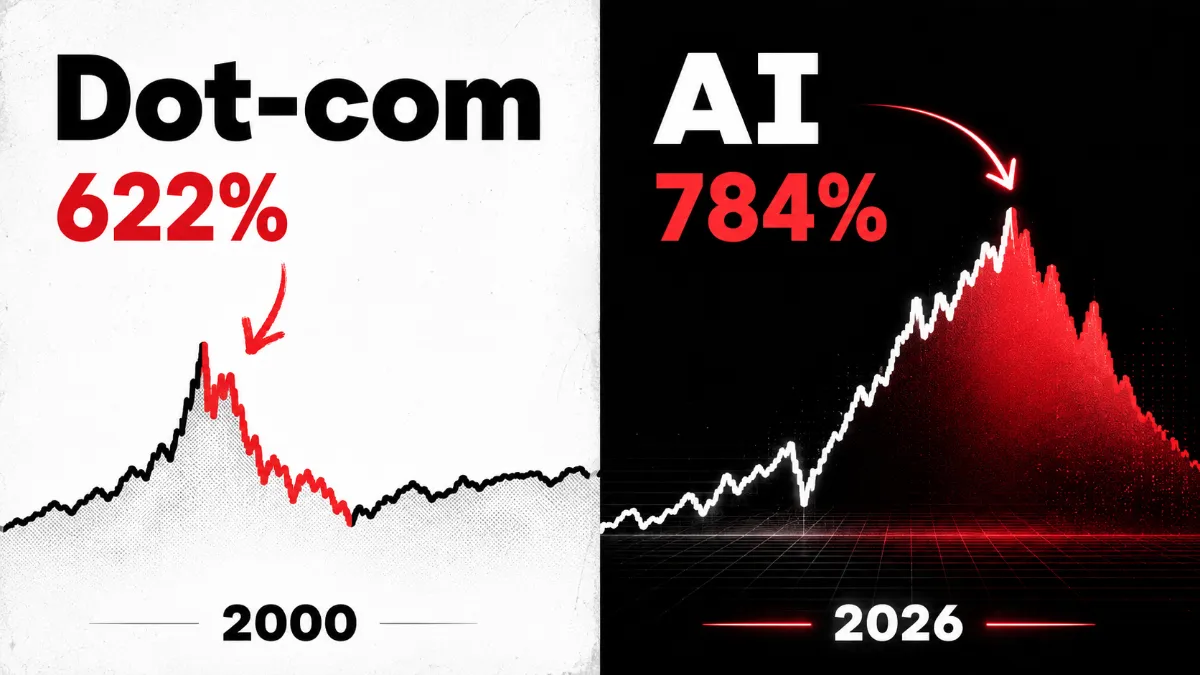
The Cerebras IPO is about more than one company going public. It is being viewed as a litmus test for how aggressively the market is willing to price AI infrastructure companies.
Pricing above the top of the range + sustained post-listing performance → green light for mega AI IPOs like SpaceX and OpenAI. A disappointing outcome reignites the AI bubble debate.