Is Google an Ad Company or a Venture Fund? Anthropic Has Reshaped Alphabet's Identity
Half of Alphabet's $62.6B Q1 net income came from Anthropic markups. A $12.2B SpaceX stake and a $50B Anthropic stake are stacking up as hidden assets off the books.
- $28.7B of Alphabet's $62.6B Q1 net income was an Anthropic stake markup
- SpaceX (6.11%, ~$12.2B) plus Anthropic (14%, ~$50B) form $60B+ of hidden assets
- The more Google invests in Anthropic, the higher the valuation — which loops back into Google's book profit
Half of Alphabet's $62.6B Q1 net income came from Anthropic stake markups — and a SpaceX stake of $12.2B plus an Anthropic stake of $50B sit as "hidden gold" off the books.
Alphabet posted $62.6 billion in net income for Q1 2026, up 81% year-on-year. But almost half of that — $28.7 billion — came from neither search ads, YouTube, nor Google Cloud. It came from a markup on Alphabet's Anthropic stake.
Fortune was first to dig into the structure, and it is generating a louder question on Wall Street: is Google an ad company, a cloud company, or the world's highest-returning venture capital fund?
The hidden gold — over $60B sits off the books
Two private stakes matter most.
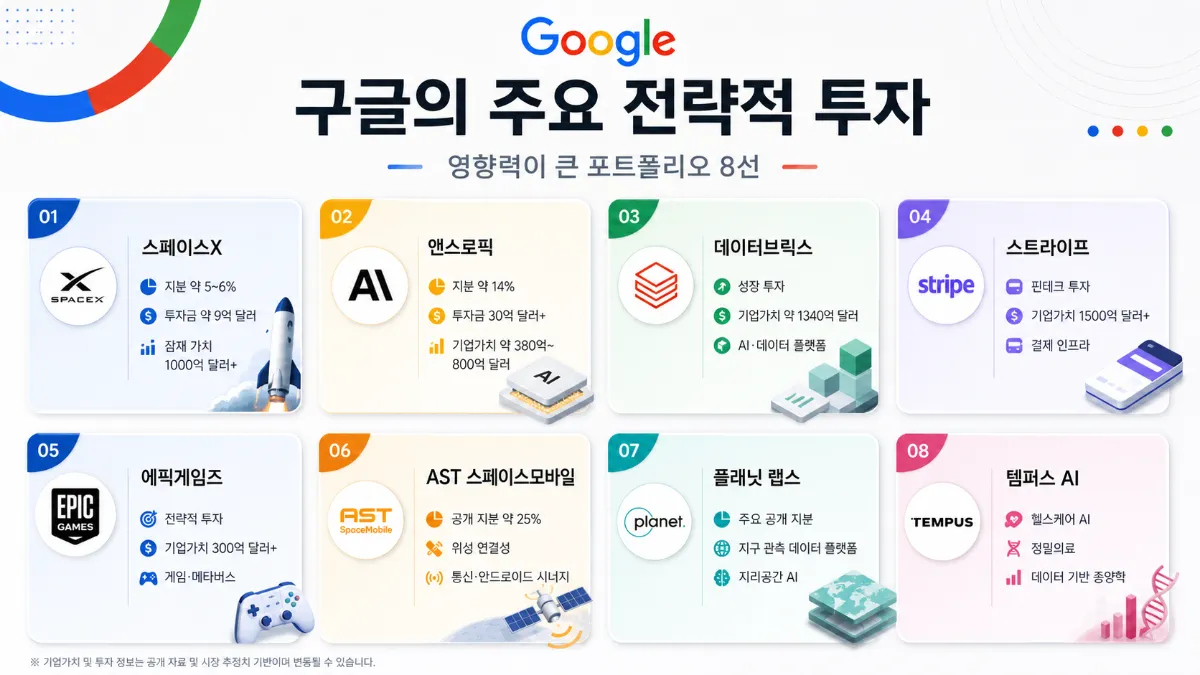
Google holds 6.11% of SpaceX, first surfaced through Alaska state filing requirements. At a target IPO valuation of $2 trillion, that stake is worth roughly $12.2 billion.
Google's Anthropic stake is 14%. Anthropic's annualized revenue jumped from $9 billion at the end of last year to $30 billion by early April 2026. A February 2026 round priced the company at $380 billion, and Google's April follow-on closed at a $350 billion valuation.
By Stocktwits' math, Google's SpaceX stake is worth roughly $76 billion at potential IPO and the Anthropic stake about $50 billion. The combined value is not fully reflected on Alphabet's balance sheet — it sits as a hidden asset.
Half the profit is a markup
Of Alphabet's $62.6 billion in Q1 net income, roughly $28.7 billion came from updates to Anthropic's implied value. None of it came from search ads or cloud.
Here is the accounting. When a company holds a stake in a private business, every new funding round that resets the price lets it update — and book — that value as income. Google's book profits go up even though Anthropic never paid Google a cent.
It's interesting that they can effectively control the value of an asset they hold through deals they're a party to.
Robert Willens, tax and accounting consultant (Fortune)
This is not the first time. In Q1 2025 Alphabet booked $8 billion of unrealized gains tied to SpaceX, and that grew to $10.7 billion in Q3. Amazon, since taking its Anthropic stake, has also disclosed mark-to-market gains every quarter.
A $40B follow-on bet — feeding its own stake
On April 24, Google committed up to $40 billion in additional Anthropic investment. The structure: $10 billion immediately at a $350 billion valuation, with another $30 billion to follow once Anthropic hits performance milestones. Google will also expand Anthropic's compute footprint.
The structural irony: the more Google invests in Anthropic, the higher Anthropic's valuation, and the higher that valuation, the bigger the markup that feeds back into Google's book profit. The cycle works without any new outside capital.
Anthropic offered a tender to long-tenured employees in April allowing them to sell at a $350 billion valuation, but employees agreed to sell far fewer shares than expected — a signal they're betting on a higher valuation.
This is what big tech looks like now
Alphabet and Amazon together spent $130.65 billion in capex in Q1 2026 alone — three times the inflation-adjusted cost of the Manhattan Project, in a single quarter. Their full-year capex plan of roughly $700 billion rivals U.S. federal Medicare spending.
A big tech that spends like this is also investing in private AI companies. Those investments generate accounting profits. Those profits, in turn, justify still more capex. That is the new big-tech financial model in the AI era.
Asking whether Alphabet is an ad company, a cloud company, or a venture fund may be the wrong question. It is doing all three at once — and the three reinforce one another.
Frequently Asked Questions
Why are Anthropic markup gains different from real cash earnings?
They are unrealized. Until Google sells the stake, the gain is a book number — no cash arrives. It is recognized automatically each time a new funding round resets the valuation higher.
How does a SpaceX IPO affect Alphabet?
At a $2 trillion IPO valuation, Google's 6.11% stake is worth roughly $12.2 billion. Further price moves above the IPO add more markup gains, and partial sales would convert paper value into cash.
Is this structure a risk for Alphabet investors?
If Anthropic or SpaceX valuations fall, the same accounting works in reverse — losses get recognized. If core businesses (search, advertising, cloud) slow, an earnings line that leans on stake markups becomes a vulnerability.
Why is Google putting another $40B into Anthropic?
Multiple goals at once: providing compute (boosts Google Cloud revenue), securing access to leading AI models, and indirectly lifting the value of an asset it already owns. The split — $10B immediate plus $30B milestone-based — also limits risk.
Why is this accounting allowed at all?
U.S. GAAP allows private stakes to be re-marked at observable price changes — the price set by a new funding round. The principle is straightforward when an outside party sets the new price. But when the holder is also a major investor and counterparty, conflict-of-interest questions emerge.

Lilly and Novo Nordisk Locked In as Beneficiaries — Medicare to Cover GLP-1 Obesity Drugs for the First Time in July
 LLY
LLY NVO
NVO PFE+6
PFE+6
SK hynix's Kioxia Stake 25x in 8 Years — AI NAND Super-Cycle Delivers a Face-Saving Exit
 MU
MU WDC
WDC STX+3
STX+3
Exxon Mobil & Chevron Q1 Net Income Sinks — "Iran War Hedge Headwind, Rebound Coming in Q2"
 XOM
XOM CVX
CVX BP+7
BP+7Lilly and Novo Nordisk Locked In as Beneficiaries — Medicare to Cover GLP-1 Obesity Drugs for the First Time in July
LLYNVOPFE+6SK hynix's Kioxia Stake 25x in 8 Years — AI NAND Super-Cycle Delivers a Face-Saving Exit
MUWDCSTX+3Is Google an Ad Company or a Venture Fund? Anthropic Has Reshaped Alphabet's Identity
 GOOGL
GOOGL AMZN
AMZN NVDA+3
Smart Money Briefing
Weekly summaries of Wall Street guru moves and crypto whale activity.