
Before the Next Nvidia-Style Run: 3 AI Infrastructure Connectivity Stocks to Watch
As AI infrastructure spending shifts from training to inference at scale, demand for high-speed connectivity is surging — making ALAB, MRVL, and CRDO the next AI infrastructure picks.
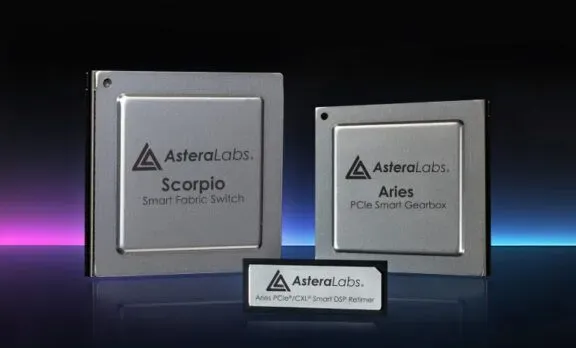
- After Nvidia's 1,300% AI run, high-speed connectivity companies ALAB, MRVL, and CRDO are emerging as the next AI infrastructure beneficiaries
Data Movement Is the New AI Battlefield
Nvidia's shares have soared more than 1,300% over the past five years, making it the undisputed winner of the AI chip boom. However, the next big AI stock gains may come from less obvious players — specifically, companies that specialize in moving massive amounts of data between servers and across data centers. As AI infrastructure spending shifts from training large models to running AI applications at inference scale, demand for high-speed connectivity solutions is surging.
1. ALAB — The Heart of AI Server Connectivity
Astera Labs (ALAB) designs high-speed connectivity chips and hardware that enable AI chips, servers, and memory to communicate efficiently within data centers. Q1 fiscal 2026 (ending March 31) revenue surged 93% year over year to $308.4 million, while adjusted EPS rose 84.8% to $0.61. Management guided Q2 revenue of $355–$365 million, representing 15–18% sequential growth.
Astera has already shipped millions of PCIe Gen 6 ports, accounting for more than one-third of Q1 revenue. Its Scorpio switch family is expected to become Astera's largest product line by end of 2026, up from 15% of fiscal 2025 revenue. The company estimates it can generate over $1,000 in revenue per AI server deployed and is developing connectivity products for Nvidia's NVLink Fusion ecosystem. The stock has gained 225% over the past year.
2. MRVL — Custom AI Silicon Meets Optical Networking
Marvell Technology (MRVL) designs custom AI chips, networking products, and optical interconnect technologies. Management expects fiscal 2027 revenue to grow 30%+ year over year to approximately $11 billion, then another 40% to $15 billion in fiscal 2028. Data center revenue alone is expected to grow nearly 50% year over year in fiscal 2028.
Nvidia recently invested $2 billion in Marvell, underscoring the strategic value of its semi-custom chips and optical networking capabilities. As hyperscalers increasingly develop their own AI processors, this creates a major opportunity for Marvell's connectivity and optical technologies. The company also acquired Celestial AI and Polariton Technologies to strengthen its optical networking portfolio. The stock trades at 61.7x trailing-12-month earnings.
3. CRDO — Five Hyperscaler Wins and Surging Growth
Credo Technology (CRDO) designs high-speed connectivity solutions for AI data centers, with active electrical cables (AEC) as its core product. Q3 fiscal 2026 revenue surged 201% year over year to $407 million. The company guided Q4 revenue of $425–$435 million and expects fiscal 2027 revenue growth of 50%+ year over year.
Credo recently announced its fifth hyperscaler win, signaling continued customer base expansion. Its ZeroFlap technology, which reduces connection failures in large AI clusters, is ramping earlier than expected. The company also announced a $750 million acquisition of DustPhotonics to strengthen optical networking capabilities. Key risks: top 3 customers account for 88% of Q3 revenue, and the stock trades at 107x trailing-12-month earnings.
Frequently Asked Questions
Why is AI interconnect getting attention now?
The center of gravity in AI infrastructure spending is shifting from model training to large-scale inference. Inference workloads demand ultra-fast data transfer between countless servers, chips, and memory — and GPU performance is wasted without high-speed interconnect. As Nvidia GPU supply grows, demand for ALAB, MRVL, and CRDO connectivity chips grows proportionally.
Which of ALAB, MRVL, and CRDO has the lowest risk?
MRVL has the best diversification, spanning custom AI chips and optical networking. ALAB has the highest growth rate but the most NVIDIA ecosystem dependency. CRDO is smaller and more volatile. From a portfolio standpoint, MRVL is relatively more stable.
Don't these stocks fall with NVDA when it corrects?
In the short term, they tend to move directionally with NVDA. However, as long as AI infrastructure investment itself doesn't slow, interconnect chip demand has its own independent growth driver. In past NVDA corrections, interconnect chip stocks have sometimes held up relatively better.

Sunday's SEC 8-K Earnings Filings Quiet, but Royal Gold Doubles Net Income and Launches Buyback
 RGLD
RGLDVeritone Earnings Shock Sends Shares Down 23%...York Space Systems Among 25 US Companies Filing SEC 8-K Earnings Reports
 YSS
YSS CODX
CODX IPWR+26
Applied Materials Posts Record Q3 Revenue of $9.1 Billion, All-Time High EPS
 AMAT
AMATWall Street's Defining Moments
See more
Sunday's SEC 8-K Earnings Filings Quiet, but Royal Gold Doubles Net Income and Launches Buyback
RGLDVeritone Earnings Shock Sends Shares Down 23%...York Space Systems Among 25 US Companies Filing SEC 8-K Earnings Reports
YSSCODXIPWR+26Applied Materials Posts Record Q3 Revenue of $9.1 Billion, All-Time High EPS
AMATSmart Money Briefing
Weekly summaries of Wall Street guru moves and crypto whale activity.