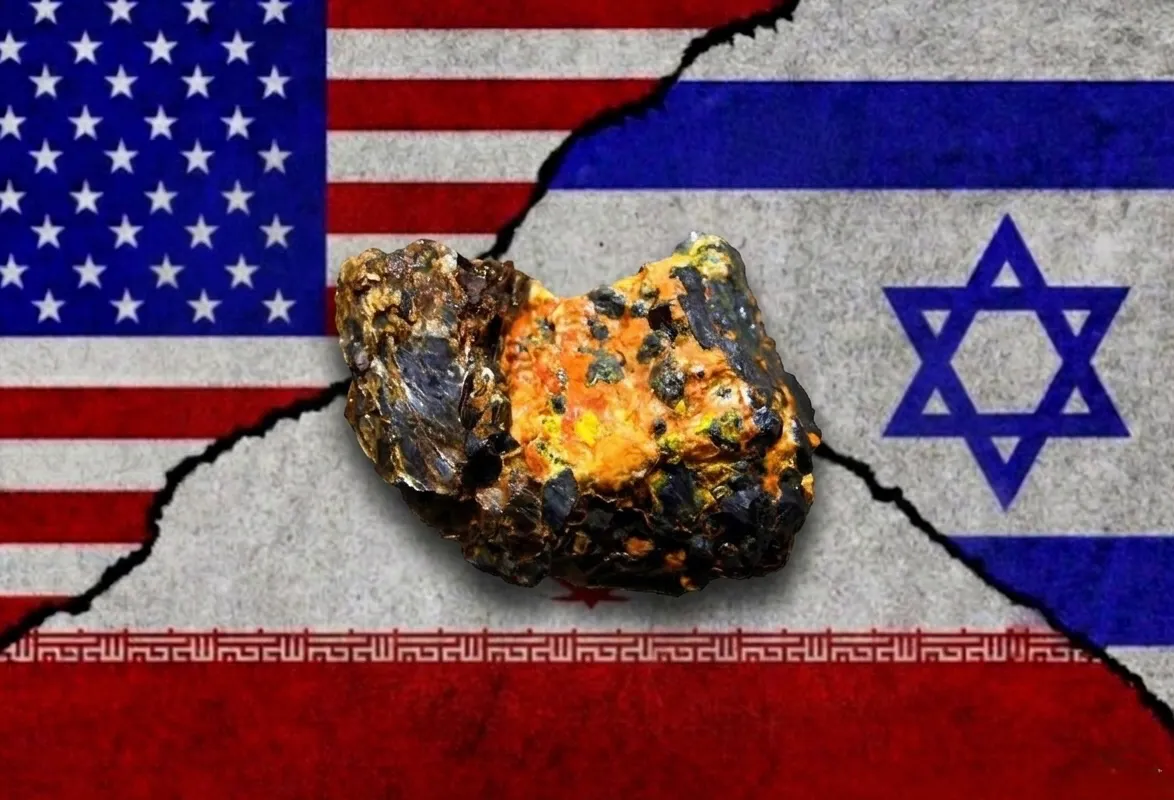
AI data center power demand, Iran conflict supply chain disruptions, and a decade of underinvestment are simultaneously pressuring the uranium market. While spot prices remain range-bound, long-term contract prices have risen to $86 — structural repricing has begun.
Uranium has returned to 'investor vocabulary' in 2026. This grey metal, once shunned for over a decade following the Fukushima disaster, is now being repositioned not as a "cyclical commodity" but as a "strategic commodity" — driven by three pillars: AI data center power demand, structural supply shortages, and the Iran conflict.
January spot uranium prices surged approximately 25%, breaking through $100 per pound for the first time in two years, while enriched uranium prices hit record highs of $190 per SWU (Separative Work Unit) — more than triple the $56 level from three years ago. BCA Research's special report diagnoses that "structural supply shortages and energy security concerns intensified by the Iran conflict are driving uranium into a sustained long-term upward phase."
Geopolitical Shock — Iran War Hits Hidden Supply Chain Bottlenecks
What BCA Research highlights goes beyond the simple narrative that "war drives up energy prices." Analysts note that the Iran war is acting as a 'force multiplier' for the uranium sector. This conflict is specifically disrupting key inputs needed for the nuclear fuel cycle — particularly sulfur supply. Sulfur is an essential chemical for processing uranium into yellowcake, and while unfamiliar to most investors, it represents a "hidden bottleneck in the supply chain."
As this bottleneck tightened, an already tight market became even more constrained. Consequently, the 'security-of-supply' logic — where utilities secure supply through long-term contracts — has become the market's dominant narrative.
The era of looking "only at crude oil" when assessing energy prices is over. In this cycle, bottlenecks in the uranium fuel cycle are being reflected in prices first.
InteliView Editorial
Structural Supply Shortage — The Bill for a Decade of Underinvestment
Global uranium production in 2024 covered only 90% of total demand. The remaining 10% was filled by inventory drawdowns. Nuclear reactors are expected to consume approximately 68,900 tons of uranium in 2025.
According to the World Nuclear Association's (WNA) reference scenario, global reactor installed capacity will nearly double from 398GWe as of June this year to 746GWe by 2040. On the supply side, the prevailing view is that mine supply will meet less than 75% of future reactor demand. This is attributed to years of underinvestment, lengthy permitting processes, and declining secondary supply sources.
The key point is that price signals cannot quickly bring supply online. Despite incentive pricing above $80 per pound, structural supply shortages are expected to continue through 2026 due to persistent delivery shortfalls from global producers and delays in project restarts. Reopening or building new mines takes an average of 7-10 years.
AI Demand — The Moment Nuclear Became the Only Answer for Baseload
The decisive variable distinguishing this cycle from past uranium cycles is AI. U.S. data center power demand is expected to increase from 176TWh to up to 580TWh by 2028, with AI-driven power consumption already exceeding available grid capacity in multiple regions.
- Amazon (AWS): Signed three nuclear power contracts in the U.S. last year alone, including with Washington state public utility consortium Energy Northwest
- Meta: Signed agreement with Oklo to co-develop a 1.2GW nuclear power plant in southern Ohio — targeting first phase operation by 2030
- Microsoft: Signed long-term power purchase agreement (PPA) for Three Mile Island nuclear plant restart
Even if the AI narrative collapses, the uranium bull case remains intact. AI is essentially an accelerator pedal riding on top of already existing structural supply-demand imbalances.
Rick Rule, Uranium Investment Expert
Policy — The Year Uranium Became a 'Critical Mineral'
Uranium was officially added to the U.S. List of Critical Minerals in 2025. The Section 232 framework explicitly designates uranium as an essential resource for energy security and national defense, elevating it to the ranks of strategic resources like rare earths and lithium. The U.S. Department of Energy (DOE) has committed to investing $2.7 billion over the next decade to expand domestic uranium enrichment.
The Trump administration is particularly aggressive on this theme, announcing up to $80 billion in funding support for new reactor construction in the U.S. for the first time in years. Nuclear capacity expansions are planned and proposed across North America, Europe, the Middle East, and Asia, with state-led expansion programs in South Korea and the UAE strengthening nuclear power's status.
Market's Two-Speed Dynamic — Spot Wavers While Long-Term Contracts Rise
2025 U3O8 spot prices were trapped in a $63-83 per pound trading range for most of the period. Meanwhile, long-term contract prices rose steadily and gradually throughout the year. While spot prices showed virtually no annual change, 3-year and 5-year forward prices all increased behind the scenes, and long-term contract prices rose from $80 to $86.
Sprott Asset Management calls this a "two-speed market" — where short-term volatility obscures fundamentally bullish long-term trends. While utilities can delay purchases indefinitely, replacement demand will eventually push them back into the market. The signal forecasting structural repricing in 2026 is that long-term contract prices are approaching $86 per pound.
Three Lenses for Korean Investors
- Energy security premiums aren't just about oil prices. In the Iran situation, uranium moved as quickly as crude oil and natural gas. For portfolios in countries with high energy import dependence like Korea, it's time to review the components of existing energy ETFs.
- AI investment themes are expanding from semiconductors to power infrastructure. Don't stop at NVDA and SMCI — extend the theme tree down to power, utilities, and uranium. When hyperscalers sign long-term PPAs with nuclear plants, uranium becomes "the bottom layer of the AI infrastructure stack."
- Don't be misled by spot prices, watch long-term contracts. In uranium cycles, pricing truth lies not in spot but in long-term contracts. Monitor long-term contract price trends breaking above $86 per pound and the pace of utility contract signings.
InteliView's Focus: The Uranium Investment Chain
Accessible uranium exposure in Korean markets roughly divides into four categories: spot holding funds (Yellow Cake PLC, Sprott Physical Uranium Trust), major producers (Cameco·CCJ, Kazatomprom·KAP), SMR themes (NuScale·SMR, Oklo·OKLO, NANO Nuclear·NNE), and ETFs (Global X Uranium·URA, Sprott Uranium Miners·URNM).
Korea's nuclear value chain — Doosan Enerbility, KEPCO E&C, Woori Technology, etc. — has dual exposure to SMR exports, Poland/Czech orders, and this global uranium cycle. The entire three-stage chain of "nuclear fuel cycle → SMR equipment → domestic nuclear exports" is in the beneficiary zone of this repricing.
Data Sources
BCA Research Special Report (via Yahoo Finance), Sprott Asset Management Uranium Outlook 2026, Uranium.io Global Investor Survey (600+ investors), World Nuclear Association Reference Scenario, Financial Times. Price data as of: January 2026.
InteliView Editorial | 2026.04.20