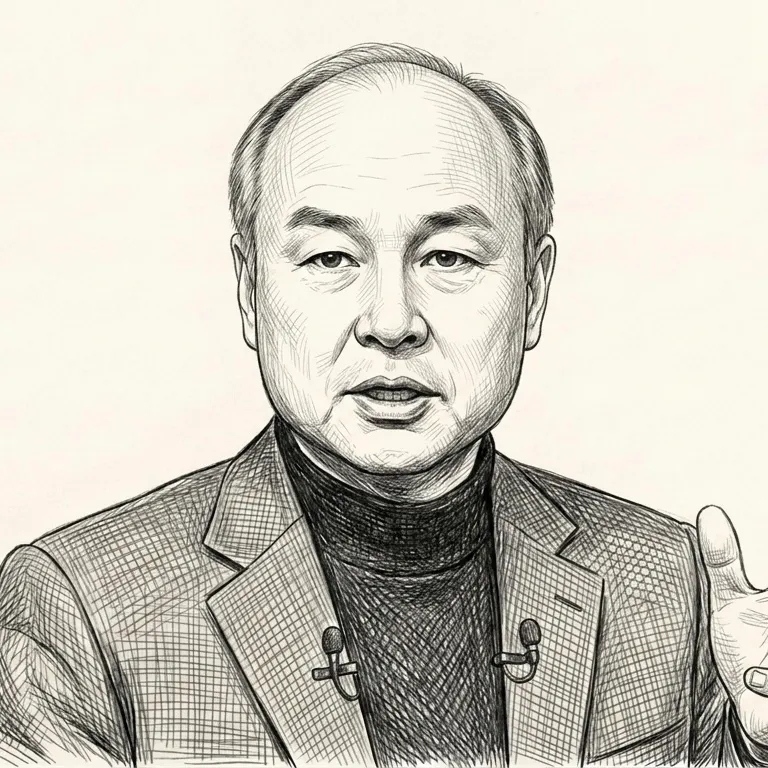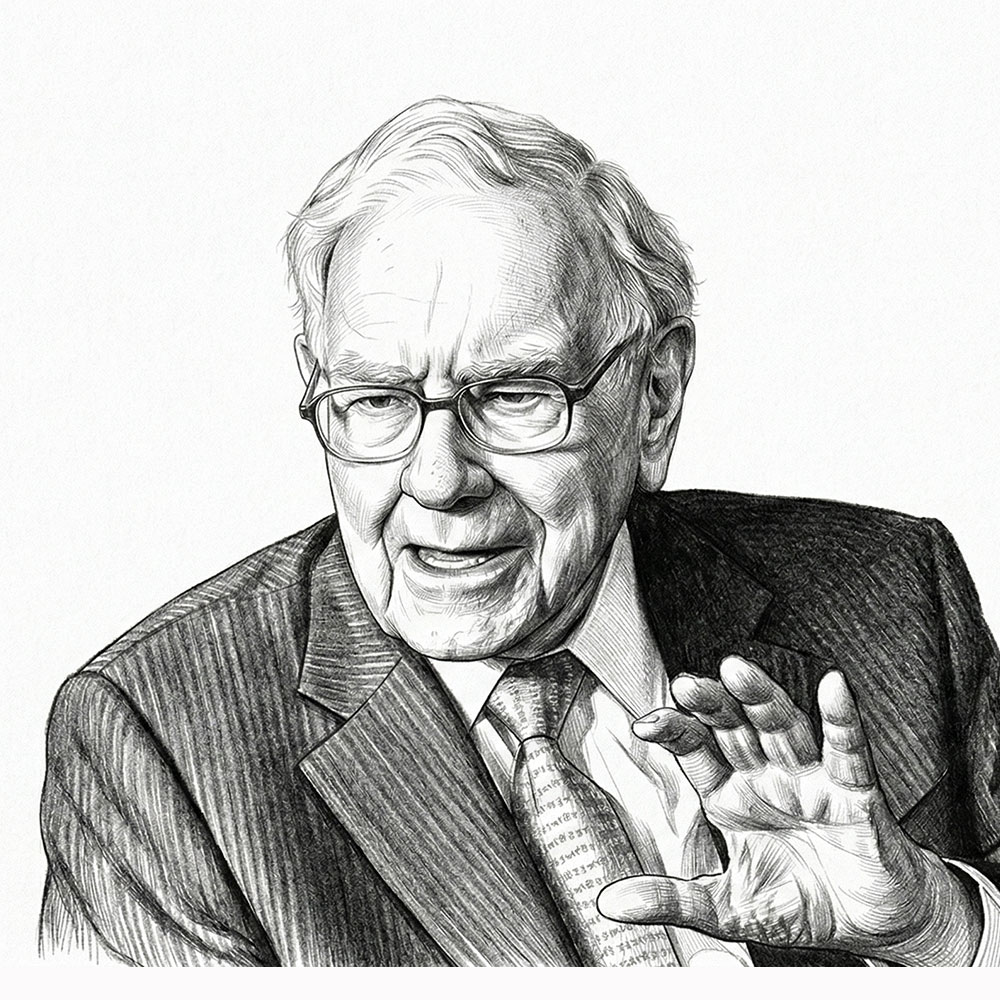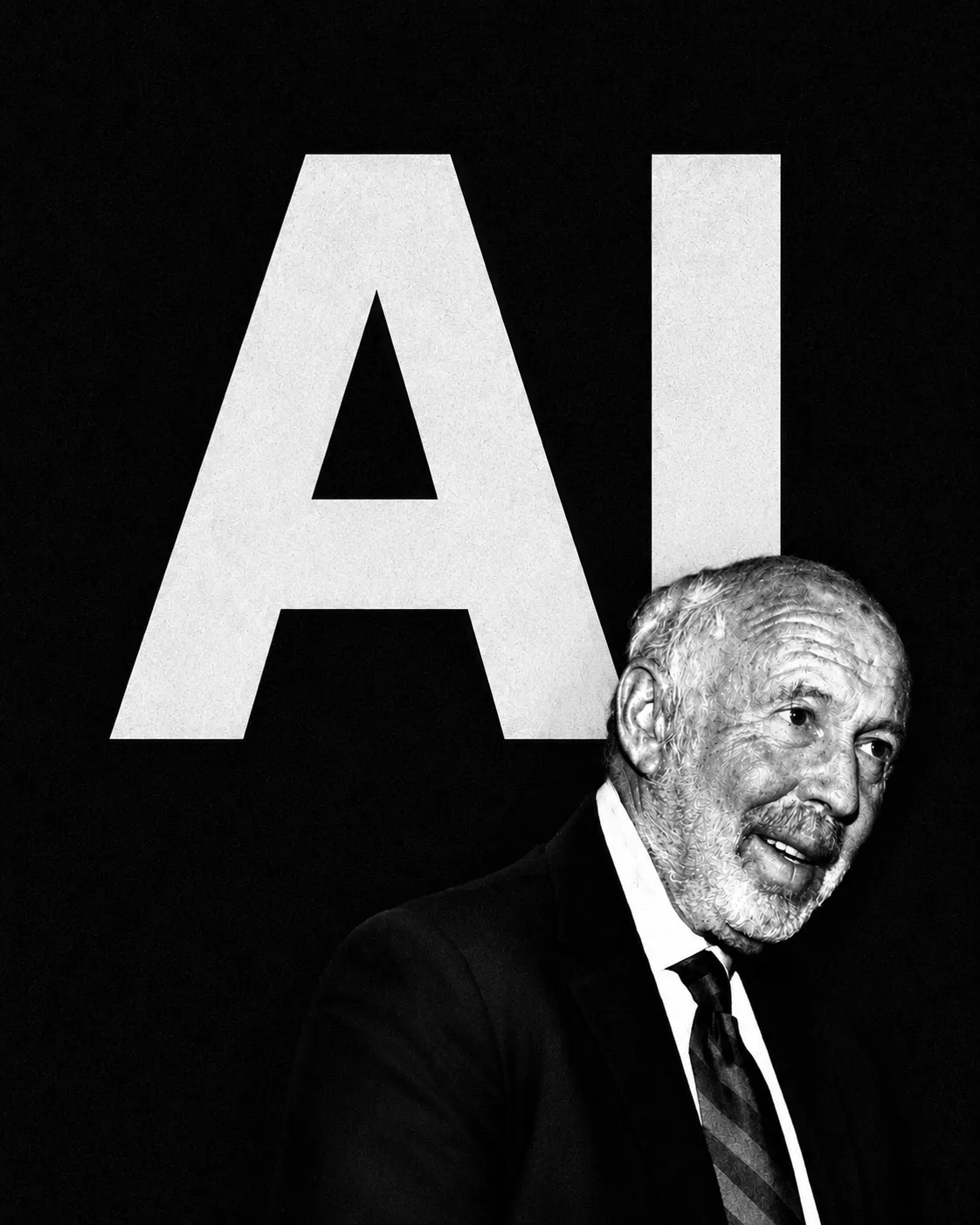
In February 2026, Q4 2025 13F filings flooded into the SEC. The InteliView Research Team conducted an exhaustive cross-analysis of portfolio changes across 35 super-funds with combined AUM of $21.4 trillion. When funds as different in strategy and scale as Warren Buffett's Berkshire Hathaway, Stanley Druckenmiller's Duquesne Family Office, Tiger Global, D.E. Shaw, Citadel, and Millennium Management all put money into the same stock in the same quarter — that is not coincidence. That is a signal.
Because 13Fs must be filed within 45 days of quarter-end, this data reflects trading activity between October and December 2025 — the period when markets were riding the second wave of the AI rally. Here is what the gurus were buying, and what they were walking away from.
Amazon — Why Wall Street Calls It the 'Cheapest AI Stock'
The strongest cross-fund consensus in Q4 2025 13F filings belonged to Amazon (AMZN). Tiger Global added $2.8 billion worth of shares in a single quarter. Quantitative powerhouse D.E. Shaw increased its Amazon position by 30%, bringing total holdings to $2.2 billion. Druckenmiller was even more aggressive — Duquesne Family Office's Amazon position surged 92% quarter-over-quarter.
Amazon scored 99 out of 100 on the Hazeltree Crowdedness Score, a metric that quantifies concentration of ownership among major hedge funds. A score of 99 effectively means virtually every institutional player already holds the stock. The fact that gurus continue to add aggressively signals that they still view the current price as attractively valued.
Wall Street's case for Amazon as the most undervalued AI stock rests on AWS's AI infrastructure stack: Amazon Bedrock (foundation model API), SageMaker (ML training platform), and its proprietary AI chip Trainium — all of which are reducing dependence on NVIDIA GPUs while expanding margins. On a forward P/E basis, Amazon trades at a roughly 15% discount to Microsoft and a 22% discount to NVIDIA. The prevailing institutional thesis: Amazon offers the broadest exposure to AI tailwinds at the most reasonable valuation.
Not every guru agrees. Warren Buffett trimmed his Amazon position by more than 75% this quarter — consistent with his historical reluctance to hold large technology weightings, though the magnitude of the reduction also suggests valuation discipline. Still, the reality remains: 33 of 35 tracked funds hold the stock, and 22 of those added to their positions this quarter.
Coupang — The Korean Company Druckenmiller Has Added for the 7th Time
Stanley Druckenmiller's relationship with Coupang (CPNG) goes back to 2021, when he initiated a position shortly after the company's NYSE listing. Over the past five years, Duquesne has recorded a total of 16 transactions in the stock. Q4 2025 continued that pattern: Duquesne increased its Coupang position by 46.2%, adding 2.14 million shares. This follows a 12.9% increase in Q3 — two consecutive quarters of substantial accumulation.
Druckenmiller's estimated average cost basis in Coupang is $34.69 per share (per stockcircle.com, based on total invested capital of $329M). Given that Coupang has traded below that average since Q4 2025, Druckenmiller has been continuously adding to an unrealized loss position. This is not the behavior of a trader. This is the behavior of an investor with deep structural conviction.
This is far from a one-man bet. As of Q4 2025, 62 hedge funds hold Coupang. The institutional thesis centers on three pillars: dominant market share in Korean e-commerce, the economies of scale embedded in its Rocket Delivery logistics infrastructure, and aggressive expansion into Taiwan and Southeast Asia. Coupang holds the number one position in Korean online retail while having brought its Taiwan logistics network to near-completion just two years after launch.
To Wall Street, Coupang is no longer simply the 'Amazon of Korea.' It is increasingly viewed as the only platform in Asian emerging markets that has built a fulfillment infrastructure comparable to U.S. standards. The fact that Druckenmiller has added for the seventh time is, in itself, among the strongest signals in this analysis.
ServiceNow — Not a Single Fund Sold
Of the 35 tracked funds, 16 held positions in ServiceNow (NOW) heading into Q4. The resulting trading pattern was the most striking of any stock in this analysis: 11 funds added to their positions, and not a single fund sold. The remaining 5 held steady. This represents the most unambiguously one-directional consensus of any stock we tracked this quarter.
ServiceNow is the dominant platform in enterprise IT workflow automation. When organizations move to automate IT service management, HR, customer service, or security operations, ServiceNow is typically the first platform deployed. The growth story has since evolved with the integration of AI. ServiceNow's Now Assist — its generative AI capability — layers natural language processing and predictive analytics onto existing workflows, structurally expanding average revenue per enterprise customer.
ServiceNow was the only enterprise software name to achieve unanimous buy-side consensus. Peers including Salesforce, Workday, and Palantir all showed mixed buy/sell activity. When funds operating under entirely different mandates align in a single direction, it reflects a level of fundamental conviction that is difficult to dismiss.
NVIDIA — Still on the Throne, but the Tone Has Shifted
NVIDIA (NVDA) remains the most widely held AI stock among institutional investors. 21 of 35 tracked funds hold it, and 16 added to their positions in Q4. Total institutional holding value stands at $224.5 billion. With the Blackwell architecture-based GPU production cycle ramping in earnest from the second half of 2025, another step-change in data center revenue appears to be priced in.
But beneath the headline numbers, the tone has changed. Tiger Global meaningfully reduced its overall AI sector weighting, and Druckenmiller trimmed his AI sector exposure to just 9.4%. Neither fund sold NVIDIA outright, but the signal is clear: aggregate expectations for the AI rally are being moderated.
There is a nuance here that individual investors often miss. Holding is not the same as buying more. Marginally adding to an already large existing position is categorically different from initiating a major new stake. For NVIDIA, most funds maintained or modestly added to existing positions. The aggressive fresh accumulation seen in Amazon was absent here. The throne holds — but the crown sits differently.
Occidental Petroleum — Where Buffett and Druckenmiller Both Placed Their Bets
Away from the market's AI fixation, two legendary investors quietly converged on the same name. Warren Buffett holds 26.9% of Occidental Petroleum's (OXY) outstanding shares, plus warrants granting the right to acquire additional shares — positioning Berkshire to expand its stake to over 50% if it chooses to.
Druckenmiller initiated a new position in OXY during Q4 2025. As a macro trader acutely attuned to geopolitical risk and commodity price volatility, his decision to enter the energy sector at a moment of escalating Middle East tensions surrounding Iran and growing global supply chain fragility is far from incidental.
Their approaches differ, but the conclusion is the same. For Buffett, OXY represents long-term energy demand paired with dividend income. For Druckenmiller, it is both an inflation hedge and a geopolitical hedge. The fact that two gurus with fundamentally different investment styles converged on the same stock in the same quarter suggests the energy sector may be entering a phase of structural re-rating — not merely a cyclical trade.
The Other Side: 3 Stocks the Gurus Were Selling
Cross-fund consensus is not exclusive to the buy side. When gurus exit positions simultaneously, those departures carry equally meaningful implications.
Meta Platforms (META) — Druckenmiller exited his entire Meta position in Q4. Buffett never held it. That two of the most respected investors in the world share zero conviction in Meta — despite the company's pivot from metaverse to AI — is a meaningful data point. With Meta's AI-related capital expenditures projected to exceed $35 billion in 2025 alone, skepticism about the return on that investment is quietly spreading through smart money circles.
Apple (AAPL) — The notable sale here is Buffett's. Berkshire Hathaway reduced its Apple holdings from approximately 238 million shares to approximately 228 million shares in Q4 2025 — a reduction of roughly 10.29 million shares, or 4.3%. Apple's weighting in the Berkshire portfolio, which once exceeded 50%, has now fallen to 22.6%. The bulk of the reduction had already been executed in 2024, when Buffett liquidated over 600 million shares. Q4 2025 was a continuation trim, not a new exit. Buffett has publicly maintained that Apple remains a great business — but his actions reflect a measured wariness toward the slowing iPhone innovation cycle in the AI era.
Citigroup (C) — Druckenmiller fully liquidated his Citigroup position. Buffett also appears to have sharply reduced his exposure. The exits appear to reflect disappointment with the pace of Citi's restructuring and the trajectory of its profitability improvement. Neither guru is bearish on financials broadly — Buffett maintains a substantial position in Bank of America — but both appear to have lost conviction in this specific bet.
Key Takeaways for Individual Investors
Blindly following any single guru is a flawed strategy. If you buy because Buffett bought, you may find yourself holding a stock that Druckenmiller is selling. The reverse holds equally true. But when multiple gurus operating under different strategies move in the same direction, the signal-to-noise ratio improves dramatically. That is the core value of cross-fund consensus.
13F data does have structural limitations worth acknowledging. Because filings are due up to 45 days after quarter-end, positions may have already changed by the time the data becomes public. Additionally, 13Fs disclose only long positions in U.S.-listed equities — short positions, options strategies, foreign equities, fixed income, and commodities are all excluded. The full picture of any hedge fund's book cannot be reconstructed from 13F data alone.
Even so, 13F filings remain the most reliable publicly available window into institutional investor behavior. The key is knowing how to use them — not as a buy list to replicate blindly, but as a framework for understanding why informed capital is moving. For Amazon, the thesis was an AI infrastructure valuation gap. For Coupang, it was Asian e-commerce expansion. For ServiceNow, it was structural enterprise AI automation upside.
Don't follow the gurus. Understand why they're moving. Only when their reasoning aligns with your own investment thesis does cross-fund consensus become a tool you can actually use.