From Savings to Investment — The Man Who Moved Korea's Money
Across 13 years Park drove Korea's asset-management industry to #1 — the late-90s fund frenzy, founding Mirae Asset Securities, enrolling at UC Berkeley as the oldest student in beginner English, becoming a Harvard MBA case, the 2008-crisis backlash, the 2016 Daewoo Securities acquisition, and a public refusal of family succession.
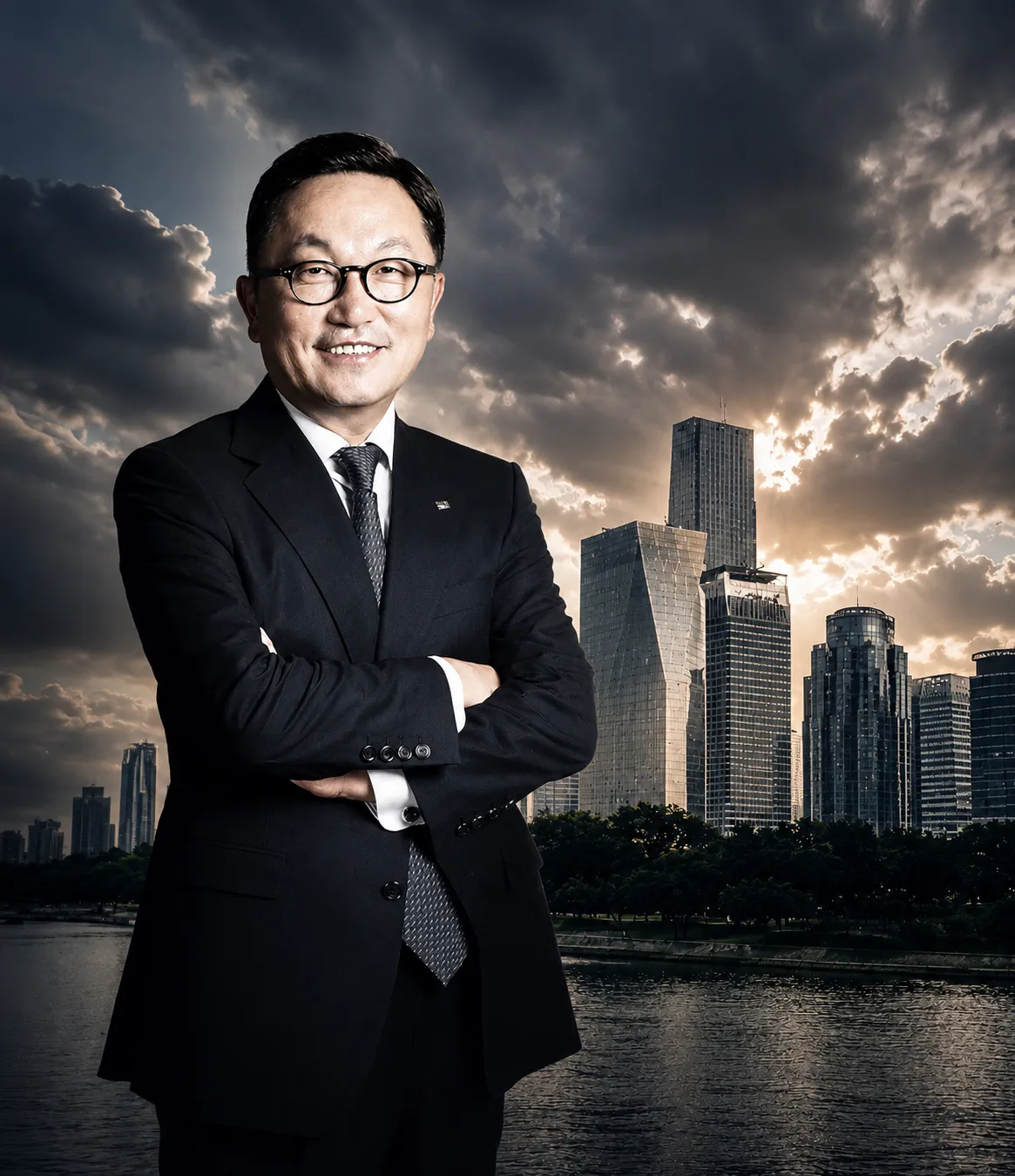
From Savings to Investment — The Man Who Moved Korea's Money
Inteliview Guru Story — Park Hyun-joo EP.2
In 2001, a 43-year-old Park Hyun-joo sat in a UC Berkeley classroom in California. Beginner English. Everyone around him was a teenager. He was the oldest student. He studied English ten hours a day. The most successful fund manager in Korea was relearning the alphabet alongside teenagers. This is the story of Park's evolution from a Korean fund manager into a global CEO.
1. The Era of "People's Stocks"
1999–2000. After the success of Park Hyun-joo No. 1, a "fund frenzy" swept Korea. Bank rates dropped into the single digits. Pre-IMF, deposit rates were 15–20%; now they were 5–6%, barely beating inflation.
At the same time, the KOSPI rebounded from the 300s to 1,000. People who had put money in equities made large gains. Equity funds — including Park Hyun-joo No. 1 — printed returns above 100%. For the first time, Koreans experienced what it meant to say "funds beat deposits."
Mirae Asset sat at the center of this transition. AUM at Mirae Asset Asset Management compounded month by month. Headcount grew. Offices expanded. Park's name made the front page of the business sections weekly.
One word came into vogue in this period: "people's stocks." Samsung Electronics, SK Telecom, KEPCO — large blue-chip names — were called "people's stocks," meaning every citizen ought to own them. Mirae Asset's marketing was instrumental in popularizing the term.
"If you put your money in a bank, the bank invests it on your behalf. The bank takes most of the return and leaves you only the interest. Why don't you invest directly? When you invest in a good company, you take its growth yourself."
This was not just marketing. It was a philosophy he genuinely believed. "From savings to investment." That slogan became the identity of Mirae Asset, and the leitmotif of Korean finance in the 2000s.
2. The Birth of Mirae Asset Securities
In 1999, Park went one step beyond asset management — he founded Mirae Asset Securities.
An asset manager creates and runs funds. A securities firm intermediates the buying and selling of stocks and bonds. Park concluded that running funds alone was not enough. Customers needed a counter where they could directly buy and sell investment products.
What set Mirae Asset Securities apart was simple. Existing Korean brokerages depended primarily on brokerage fees — collecting commissions when customers bought and sold. Whether prices rose or fell, the brokerage made money as long as customers traded. Customer returns and brokerage returns did not align.
Park wanted to break that structure. He centered the firm on wealth management, not brokerage. Goal: long-term growth of the customer's assets. Funds, pensions, insurance — provided in an integrated way. The structure: Mirae Asset only grows when customer assets grow.
"Steering customers toward long-term investing is the reason Mirae Asset exists. A brokerage that lives on day-trading commissions is the customer's adversary."
This philosophy was a minority view in the Korean securities industry of the time. Most brokerages built sales on "make customers trade more often." Park said the opposite.
3. The Oldest Student at UC Berkeley
In 2001, Park made an unexpected decision — he enrolled in UC Berkeley's Beginner English course.
Age 43. Korea's most successful fund manager. CEO managing trillions of won. That person started learning English with teenagers at a California university.
Why? After Park Hyun-joo No. 1 had cemented his standing in the Korean market, he realized something.
"You can't look only at the Korean market. You have to look at the world. To look at the world, you need English. I didn't have English."
Founded a firm at 39, became a student again at 43. He was the oldest in the room. He has recalled feeling awkward and out of place among teenage students.
"Learning a new language in your 40s is not easy. My ultimate goal at the time was to grow from a fund manager into a competent CEO, so I devoted more than 10 hours a day to studying."
Ten hours a day. Running a business in Korea while studying English in the US. The decision required both physical stamina and willpower at once.
This decision changed his life a second time. The first was founding the firm. The second was the global pivot. Once he had the language, he could meet foreign investors directly, persuade overseas partners, and design global strategy himself.
It is the inverse of Lynch retiring at 46 to return to family. Park returned to being a student at 43 to start over. Lynch learned to stop. Park chose to begin again. Neither is right or wrong — both choices were correct in their own lives.
4. The Harvard Case
In 2009, Harvard Business School adopted Mirae Asset's growth story as an MBA case. It was taught in the "International Entrepreneurship" course.
Three things drew Harvard's attention.
1. Founding in a crisis. Founding a firm right after the IMF crisis and turning that crisis into opportunity. Most business curricula teach "found in good times." Park's case showed that "the worst time can be the best opportunity."
2. Industry creation. Park did not compete in an existing industry — he created the mutual-fund industry that did not yet exist in Korea. In Peter Thiel's vocabulary, going from 0 to 1. Converting Korea's bank-deposit culture into a fund-investing culture.
3. Financial innovation in an emerging market. A successful transplant of advanced asset-management models into the Korean emerging market.
Park was among very few Korean entrepreneurs in Harvard cases. Not a chaebol like Samsung or Hyundai — a financial company built from scratch by one person made it into the casebook.
5. The Shadow of the Fund Frenzy
Behind Mirae Asset's 2000s success there was also a shadow — the 2007–2008 global financial crisis.
By the mid-2000s, the Korean fund market overheated. Mirae Asset and other managers launched a wave of foreign-equity funds, especially emerging-market funds for China, India, and Brazil. Korean investors poured trillions of won into them.
The 2008 GFC hit. Emerging-market equities collapsed 50–70%. Korean investors took heavy losses.
The criticism: "Mirae Asset sold emerging-market funds and Korean investors lost money." Losses in China, India, and Brazil funds were particularly large.
The shape was structurally similar to Cathie Wood's ARKK — investors crowd in during good times and absorb the largest losses in bad times. Same pattern as Lynch's Magellan. A fund's returns can be strong while investor timing is wrong, leaving the investor net-down.
Park did not respond to this criticism directly. But Mirae Asset's strategy shifted afterward. From simple selling to long-term wealth management, pensions, and diversification. From "selling good funds" to "helping customers invest at the right time, in the right way." It was a lesson learned through pain.
6. "What Do You Think the Essence Is?"
The most-cited element of Park's management style is a single question. The question Park asks most often in Mirae Asset Group executive meetings.
"So what do you think the essence is?"
An executive presents market analysis. Shows the data. Walks through the chart. Park listens, then asks: "So what's the essence?" A team brings up a new product proposal — competitor analysis, market size, expected return. Park asks: "What's the essence?"
This question lives in the same family as Munger's inversion thinking and Thiel's "the truth most people disagree with." It asks for the core, not the surface. The structure, not the numbers. Mirae Asset employees reportedly feared this question. Even a 30-page deck can collapse on a single "What's the essence?"
Another Park principle: intuition.
"Data shows you the past. The future has to be seen with intuition."
This is the opposite of Simons. Simons said "exclude intuition; follow the data." Park said "look at the data, but use intuition for the final call."
Which is right? Simons' method works for short-term trading. Park's method works for long-cycle business judgement. Medallion ran 66% per year on day-by-day trades. Mirae Asset became Korea's #1 financial-investment group through decade-by-decade business expansion. Different tools, different methods.
— What would you do? —
2001. You are Park Hyun-joo, 43. The most successful fund manager in Korea. Your firm is growing. You're slammed. At this moment, do you go to UC Berkeley to learn English with teenagers?
- A. Don't go. Use translators. A CEO doesn't need to learn English personally.
- B. Go — but enroll in a VIP or executive program. Not the same class as teens.
- C. Go. Beginner level. It's embarrassing, but start from the basics — properly.
Park chose C. The oldest student among teens. Ten hours a day. His words: "Embarrassment is temporary. Not having English is permanent." That decision made Mirae Asset's subsequent global expansion possible.
7. The Daewoo Securities Acquisition — The Big Bet
In 2016, Park made the biggest bet of his career. Acquiring KDB Daewoo Securities (now Mirae Asset Securities). The Korea Development Bank announced it was selling Daewoo Securities, one of the country's top-five brokerages. Acquisition price: roughly 2.4 trillion won.
Mirae Asset Securities was a mid-tier brokerage at the time. Acquiring Daewoo would make it Korea's #1 brokerage in one move. A leap of scale. The risk was also large — 2.4 trillion won was more than Mirae Asset Securities' own equity. Critics called it overreach.
Park pushed it through. The acquisition closed in 2016, and Mirae Asset Daewoo (later renamed Mirae Asset Securities) was born. The acquisition succeeded. Post-merger, Mirae Asset Securities became Korea's #1 brokerage by equity. It received Mega-IB licensing — issuing notes, integrated investment accounts (IMAs), and other businesses reserved for the largest IBs.
A firm started with 10 billion won had become Korea's largest brokerage in 19 years.
8. Refusing Second-Generation Succession
Another of Park's unconventional declarations.
"There will be no second-generation management at Mirae Asset. We will go with a professional-management system."
Inside Korea's chaebol structure, this is revolutionary. Most major Korean conglomerates pass management to the founder's children. Samsung's Lee Jae-yong, Hyundai's Chung Eui-sun, SK's Chey Tae-won. Family succession is the Korean corporate standard.
Park rejected that tradition. He publicly declared he would not pass the firm he built to his children. His eldest daughter Park Ha-min worked at Mirae Asset Asset Management's Hong Kong unit; his eldest son Park Jun-beom joined Mirae Asset Venture Capital as a regular employee. Neither is on a succession track, per Park's position.
"Mirae Asset is a company of talent. The most capable person should lead it. Whether that person is my child or not is irrelevant."
This mirrors Buffett's philosophy at Berkshire Hathaway. Buffett also declined to pass management to his children — Greg Abel, a professional manager, was named successor. Park took the same path.
And one more thing. Since 2010 Park has donated his entire personal dividend each year. As of 2026 that's 16 consecutive years and a cumulative donation of roughly 34.7 billion won.
"Mirae Asset's growth is a gift received from society and customers. Returning it is the right thing to do."
9. Three Lessons
1. "From savings to investment" applies to individuals too. The biggest legacy Park left to Korean finance is that single sentence. Money in the bank is safe but loses to inflation over time. Investing in good companies is volatile but beats deposits over time. What Buffett demonstrated for 60 years, Park communicated in the Korean context to the public. Where is your money right now? If it sits only in bank deposits, ask Park's question to yourself: "Why don't you invest directly?"
2. The courage to become a student again at 43. Park's UC Berkeley enrollment was not a casual language exchange. A successful 43-year-old CEO admitted his deficiency and re-learned from the basics among teenagers. It is an extreme execution of Munger's "you must go to bed each night a little wiser than when you woke up." The same applies to investing. Even if you've been investing for 10 years, what you don't know, you don't know. Put what belongs in Munger's "Too Hard" pile in there — but for what you can learn, have the humility to start from the basics.
3. Scale leaps require a big bet. Mirae Asset moving from mid-tier to #1 was not gradual growth but a single big bet — acquiring Daewoo Securities. A 10B-won firm acquired a 2.4 trillion-won target. It looked reckless, and it succeeded. The same applies to investing: diversify and run conservative most of the time, but concentrate in moments of conviction. Buffett putting USD 1B into Coca-Cola, Soros putting USD 10B against the Bank of England — same principle. The big bet is only possible on top of rigorous analysis.
10. At the End of 2010
2010. Park Hyun-joo, 52. Mirae Asset was Korea's #1 asset manager. The business had expanded into securities, insurance, and capital. Group conglomerate ranking: #19.
A firm started with 10B won had become the center of Korean finance in 13 years. But Park's eyes were already pointed beyond Korea.
"The Korean market is small. Korea is less than 2% of the global equity market. Ninety-eight percent of the opportunity is outside Korea."
The English he had learned at UC Berkeley was about to become useful. From Seoul to Hong Kong, to New York, to Sydney, to Mumbai, to São Paulo. That story is in the next episode.
▶ For more on Korean investing legends — Inteliview 〈Yeouido Stories〉
Next Episode
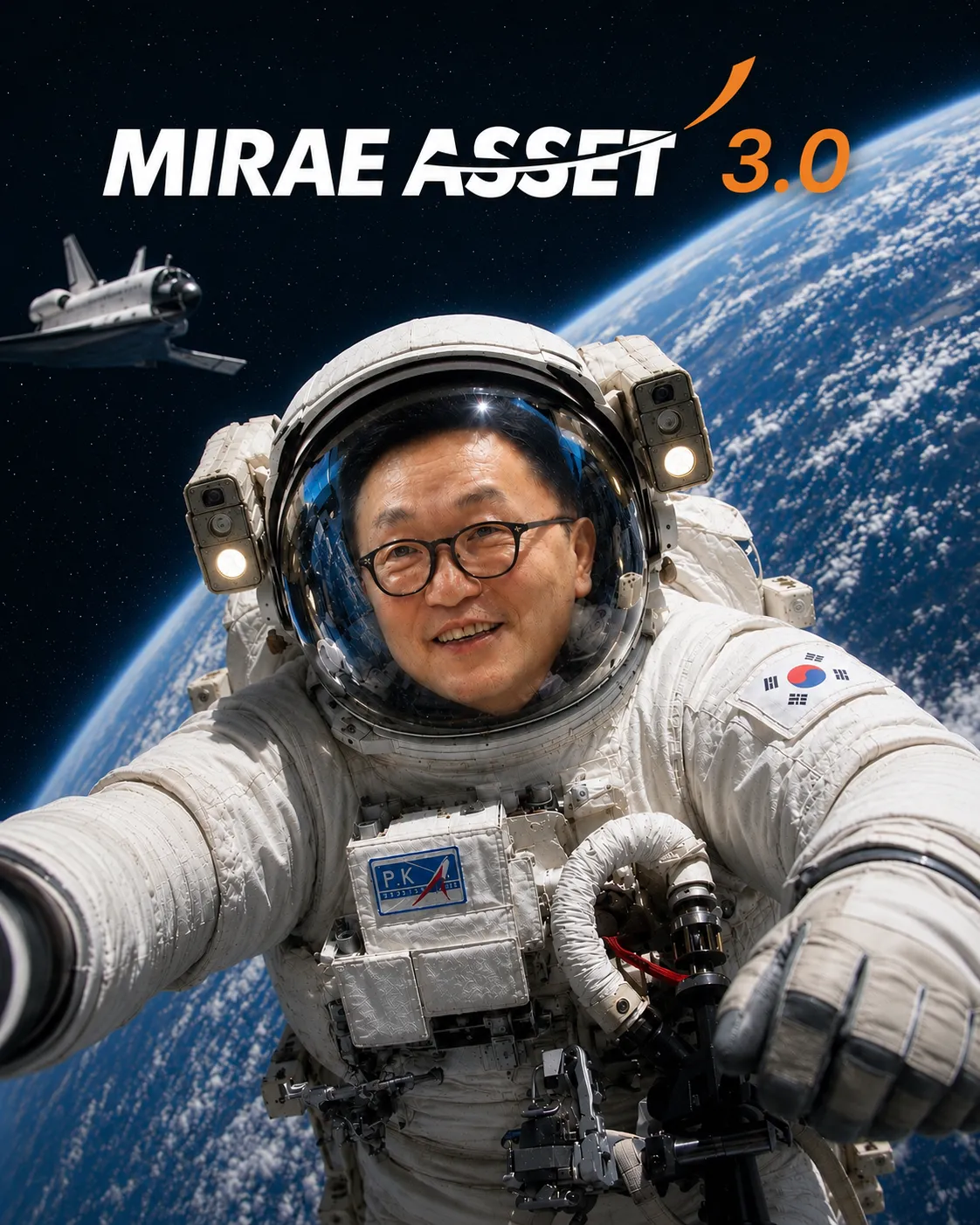
〈Seoul to the World — How a Korean Asset Manager Became a Global ETF Player〉 The Global X acquisition. The Horizons ETFs acquisition. The Sharekhan India acquisition. A firm that started in Korea became a global financial group with offices in 12 countries. Mirae Asset 3.0. And: "Without investment, there is no growth."