
Coinbase Secures Stablecoin Yield Compromise, Clearing Major Hurdle for Clarity Act Senate Vote
Coinbase has secured a compromise allowing limited stablecoin yield offerings, overcoming months of banking industry opposition to an outright ban. The agreement removes the primary bottleneck delaying Senate Banking Committee markup of the digital asset legislation.
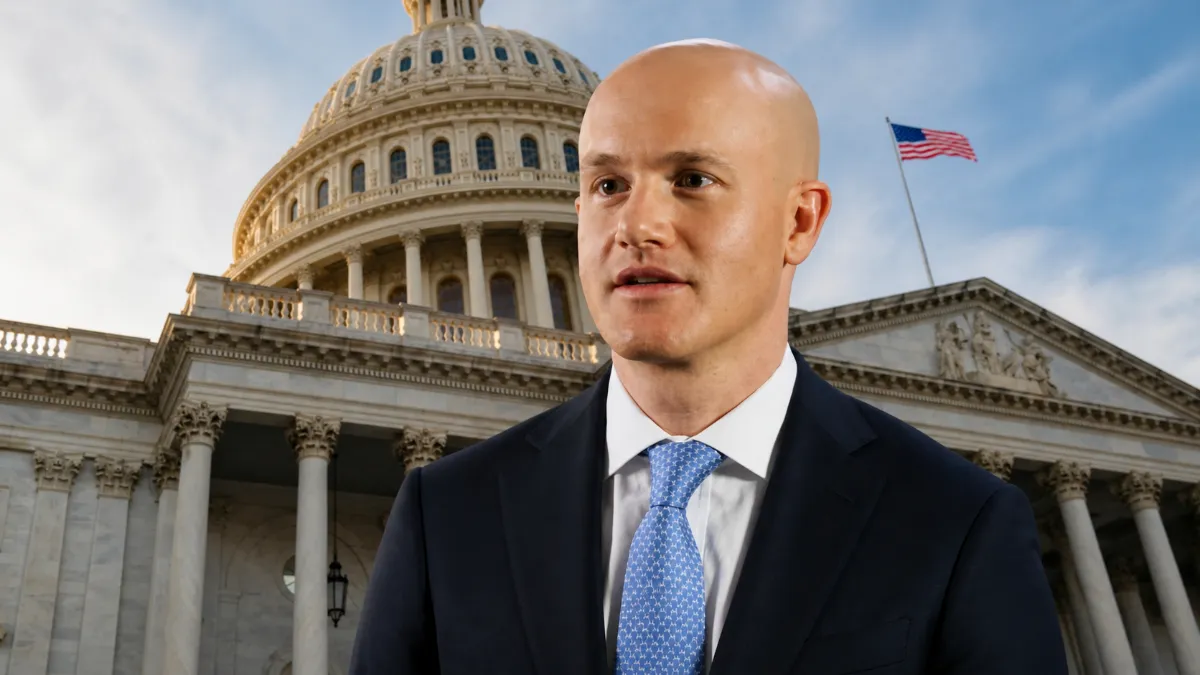
- Coinbase secured a compromise permitting limited stablecoin yields, clearing the biggest hurdle delaying Senate passage of the Clarity Act
- Senate Banking Committee markup is now expected to accelerate with improved passage prospects
Banking sector's blanket ban demand defeated; limited yields permitted… Clarity Act advances with SEC/CFTC jurisdiction clarification
Coinbase (COIN) announced on January 1st that it has secured a compromise on stablecoin yield provisions that have blocked U.S. Senate legislation for months. The agreement could prove a decisive breakthrough for the Senate Banking Committee vote on the Digital Asset Market Structure Act (Clarity Act).
This compromise protects the rights of Americans to receive yields based on actual platform and network usage.
Parihar Sirzad, Chief Policy Officer, Coinbase
The Core Issue: Should Stablecoin Yields Be Permitted?
The dispute centered on a fundamental question: whether customers holding stablecoins should receive yield-like rewards. The crypto industry, led by Coinbase, argued in favor; traditional banks—including JPMorgan Chase, Bank of America, and Wells Fargo—vehemently opposed it. Their concern: deposit flight, where consumers would withdraw bank deposits to pursue higher-yielding stablecoin alternatives. Banking lobbyists reportedly spent tens of millions of dollars pushing for an outright ban.
The compromise pivots from an all-or-nothing stance to a regulated framework. The banking sector did not achieve a complete prohibition, but stablecoin yields now face stricter guardrails. This represents a meaningful middle ground—particularly notable since Coinbase withdrew support for the bill in January when an outright ban was proposed. The new agreement appears acceptable to both sides.
Watershed Moment for Clarity Act Senate Passage
This compromise matters because it directly affects the entire bill's legislative timeline. The Clarity Act—which statutorily separates SEC and CFTC jurisdiction over digital assets and establishes registration requirements for digital commodity exchanges, brokers, and dealers—already passed the House with overwhelming bipartisan support (294–134).
The Senate, however, has seen the stablecoin yield provision emerge as the primary sticking point, repeatedly delaying Senate Banking Committee markup. Resolution of this impasse should accelerate the markup schedule and increase the likelihood of final passage before August, as targeted by Senator Lummis. PolyMarket currently prices the probability of Clarity Act passage by 2026 at 61%.
Frequently Asked Questions
Why has stablecoin yield become so controversial?
If stablecoins offer yield-like rewards, consumers may shift funds from traditional bank deposits to earn higher returns, causing deposit flight. Major banks—JPMorgan, Bank of America, Wells Fargo—lobbied heavily and spent tens of millions pushing for an outright ban to protect deposit bases.
Why did Coinbase previously withdraw support for the bill?
In January, the bill included language to completely ban stablecoin yields. Coinbase formally withdrew its support in response. With the new compromise preserving limited yield options, Coinbase is positioned to return as an active supporter.
How will Clarity Act passage impact Coinbase?
The bill provides statutory clarity for all Coinbase operations—trading, custody, staking, and USDC. It is expected to accelerate institutional capital inflows and reduce regulatory risk premiums, making Coinbase the most direct beneficiary.
When is Senate passage expected?
Senator Lummis targets final passage before August. PolyMarket currently prices the probability of 2026 passage at 61%; the compromise should raise this further as Senate Banking Committee markup accelerates.
What exactly does 'limited yield' mean in the compromise?
Yields based on actual platform or network usage are permitted, but indiscriminate interest payments face stricter restrictions. The framework balances banking sector concerns over deposit flight with users' rights to earn rewards.

Circle Posts $701M Q2 Revenue, Net Income Jumps but Stock Falls 3% on Revenue Miss
 CRCL
CRCLExxonMobil Posts 4-Year-High Profit but Misses Estimates as AbbVie, Colgate Among 23 Companies Report Earnings
 XOM
XOM LIN
LIN LYB+25
Bitwise's Jeff Park: Crypto Is 'NVIDIA Before the AI Boom' — Most Bullish Phase Ever
 BTC
BTC ETH
ETH IBIT+1
Wall Street's Defining Moments
See more



Sunday's SEC 8-K Earnings Filings Quiet, but Royal Gold Doubles Net Income and Launches Buyback
 RGLD
RGLDVeritone Earnings Shock Sends Shares Down 23%...York Space Systems Among 25 US Companies Filing SEC 8-K Earnings Reports
 YSS
YSS CODX
CODX IPWR+26
Applied Materials Posts Record Q3 Revenue of $9.1 Billion, All-Time High EPS
 AMAT
AMATSmart Money Briefing
Weekly summaries of Wall Street guru moves and crypto whale activity.