
'The Issuance Race Is Over — Now Comes the Distribution War': Who Wins the $30B RWA Era
With $30B in distributed RWA value and $15B in tokenized Treasuries, the market has crossed its first institutional threshold. As BlackRock, JPMorgan, and Circle crowd the issuance layer, the next battleground is shifting to distribution platforms.
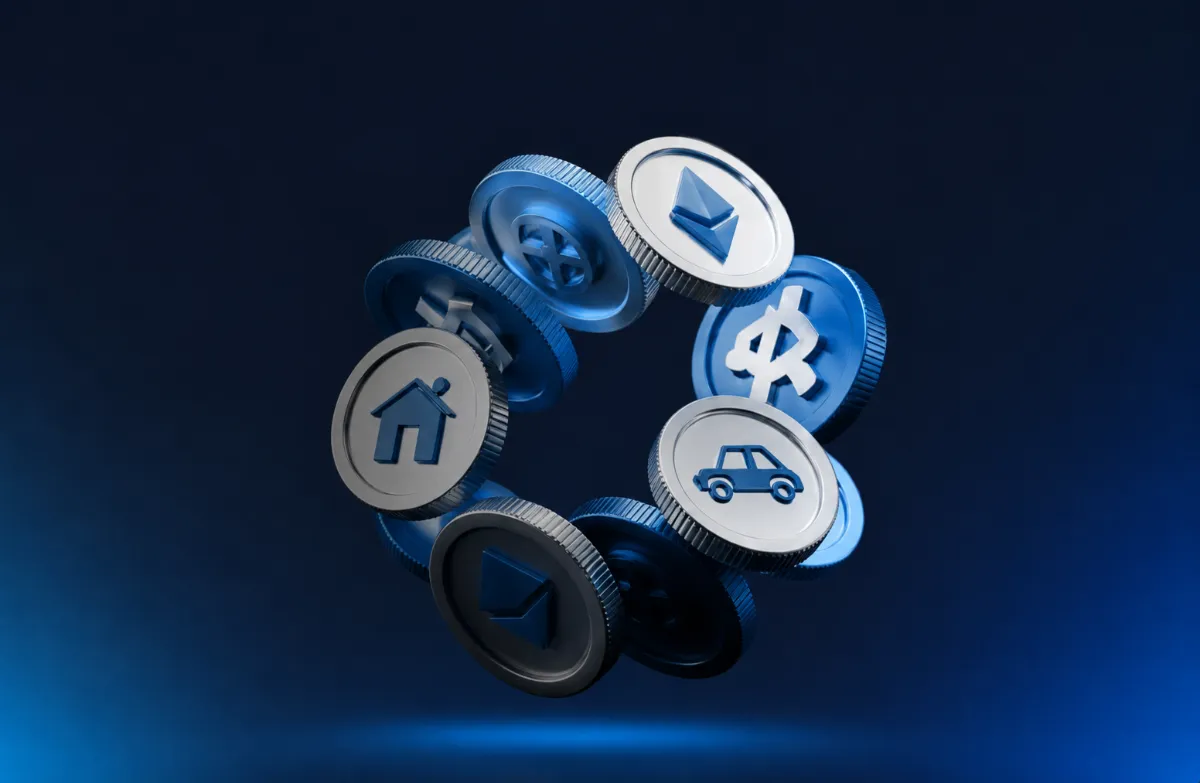
- The RWA market has crossed $30B in distributed value and $15B in tokenized Treasuries, hitting its first institutional threshold
- As the issuance layer saturates, the next competitive battleground shifts to distribution platforms
$30B in distributed RWA value. $300B in stablecoins. $15B in tokenized U.S. Treasuries. The next winners won't be issuers.
As of May 2026, the RWA (real-world asset tokenization) market has crossed meaningful institutional thresholds for the first time. Distributed RWA total value exceeds $30B, represented asset value tops $350B, total RWA holders surpass 730,000, stablecoin value stands at $300B, and tokenized U.S. Treasuries exceed $15B.
BlackRock, Circle, JPMorgan, Fidelity, and DTCC are already handling real assets on-chain. The market is no longer asking whether financial assets can move on-chain.
The question has changed. "Who makes tokenized assets usable?"
- Distributed RWA total value: $30B+
- Represented asset value: $350B+
- Total RWA holders: 730,000+
- Stablecoin value: $300B
- Tokenized U.S. Treasuries: $15B+
The Issuance Race Is Already Saturated
The first phase was an issuance race: who runs the largest tokenized Treasury fund, which chain gets the first launch, who wins collateral recognition first, who secures regulatory approval first.
BlackRock BUIDL, Circle USYC, Franklin Templeton BENJI, and JPMorgan Kinexys have already answered those questions. The issuance layer is no longer theoretical — it's live, competitive, and institutional-grade. And it's now getting crowded.
As markets mature, something inevitable happens: when multiple credible issuers offer similar products, differentiation gives way to accessibility, liquidity, reporting, compliance, and distribution.
Stocks didn't make the NYSE valuable. The exchange made stocks discoverable, tradable, and institutionally usable. Mutual funds didn't make Schwab valuable. Distribution, custody, reporting, and account infrastructure did.
Crypto tokens didn't make Coinbase valuable — it built the front door for people to walk through. The same pattern is now emerging in the RWA market.
What Tokenized Treasuries Have Proven
Tokenized Treasuries became the first mainstream RWA product for good reason: they are familiar, liquid, and short-duration. They offered an on-chain yield alternative to cash in a high-rate environment. Regulatory risk was low.
But Treasuries are not the destination. They are the proof layer.
If Treasuries proved that regulated financial assets can move on-chain, the next test involves far more complex assets: real estate, private credit, commodities, fund shares, cultural assets, intellectual property. Each carries its own risk profile, disclosure requirements, legal structure, and lifecycle.
That complexity is exactly why it's harder — and why the access layer becomes exponentially more valuable.
Private Credit Is the Real Stress Test
Tokenized Treasuries prove the rails. Private credit tests the discipline.
Private credit introduces duration, underwriting, repayment risk, disclosure quality, servicing, and borrower performance. It's a fundamentally different game from tokenized short-duration Treasuries. The credit layer will reveal whether tokenization can move beyond clean collateral into assets that require judgment.
This is where distribution becomes even more critical. Treasuries require access and settlement. Private credit requires context, disclosure, risk framing, reporting, lifecycle updates, and clear comparisons across structures. That is not issuance. That is market infrastructure.
Regulation Is a Filter, Not a Barrier
The regulatory environment is tightening. The OCC's GENIUS Act public comment period closed May 1. The SEC and CFTC issued joint interpretive guidance in March. Europe's MiCA transition deadline is approaching on July 1.
This is not bad for tokenization. It is only bad for careless tokenization. Platforms that planned to bolt on compliance later are running out of time. Platforms that built compliance into their core from the start become more valuable as the rules become clearer.
Regulation doesn't kill infrastructure markets. It simply separates infrastructure from experimentation.
What the Next Winners Look Like
The defining companies of the RWA market's next cycle may not look like issuers at all. They will look like regulated marketplaces, compliance engines, custody interfaces, data layers, and distribution platforms.
When evaluating the RWA market today, these are the questions that matter:
- Who owns discovery?
- Who owns onboarding?
- Who owns the compliance relationship?
- Who owns the interface?
- Who owns distribution across asset categories?
Issuance is the visible competition. Distribution is the compounding advantage. The visible competition captures headlines. The compounding advantage captures the market.
Frequently Asked Questions
What is the difference between an RWA issuer and a distribution platform?
An issuer converts real-world assets into on-chain tokens — BlackRock BUIDL tokenizing U.S. Treasuries is a prime example. A distribution platform is the infrastructure that lets users discover, access, settle, and manage tokenized assets from multiple issuers. It plays the same role Schwab plays in distributing mutual funds from various fund managers.
How are $300B in stablecoins connected to the RWA market?
Stablecoins serve as the settlement layer for RWA transactions — they function as cash when buying and selling tokenized assets. The larger the stablecoin market, the stronger the payment infrastructure underpinning RWA markets. If the GENIUS Act establishes stablecoins as part of regulated market structure, that connection will strengthen further.
How can investors access RWA distribution platforms?
Platforms such as Ondo Finance (ONDO) and Securitize are already functioning as distribution layer players. ONDO is a publicly traded token that allows direct investment exposure. Accessibility may vary depending on local regulatory conditions in your jurisdiction.
Why did tokenized Treasuries become the first mainstream RWA product?
They are familiar, liquid, and short-duration — making their risk profile straightforward to assess. In a high-rate environment, they gave on-chain capital a yield-bearing cash alternative with minimal regulatory risk. That said, Treasuries are not the end goal; they are the proof layer demonstrating that regulated assets can move on-chain.
Why is private credit considered the real stress test for RWA tokenization?
Private credit introduces duration risk, underwriting, repayment risk, disclosure quality, servicing, and borrower performance monitoring — a fundamentally more complex asset class than short-duration Treasuries. It requires judgment, not just settlement. Moving beyond clean collateral into judgment-based assets is where market infrastructure, not issuance, creates the real value.

Bitwise's Jeff Park: Crypto Is 'NVIDIA Before the AI Boom' — Most Bullish Phase Ever
 BTC
BTC ETH
ETH IBIT+1
JP Morgan and Chainlink Lead the Top 15 On-Chain Finance Infrastructure Firms — Where Institutional Money Flows
 LINK
LINK BTGO
BTGO PYTH
PYTH
What a Kevin Warsh-Led Fed Means for Big Bank Stocks: Deregulation vs. Quantitative Tightening
 JPM
JPM BAC
BAC WFC
WFCWall Street's Defining Moments
See more





Smart Money Briefing
Weekly summaries of Wall Street guru moves and crypto whale activity.