Herbalife: The Seven-Year War
In December 2012, Bill Ackman shorted Herbalife $1 billion with a 334-slide presentation. Three weeks later Carl Icahn took the other side, leading to a 30-minute clash on CNBC in January 2013. In 2016, the FTC declined to classify it a pyramid scheme; in 2018, Ackman closed the position at a loss of $500M–$1B. Seven years proving that being right and making money are different things.
Herbalife: The Seven-Year War
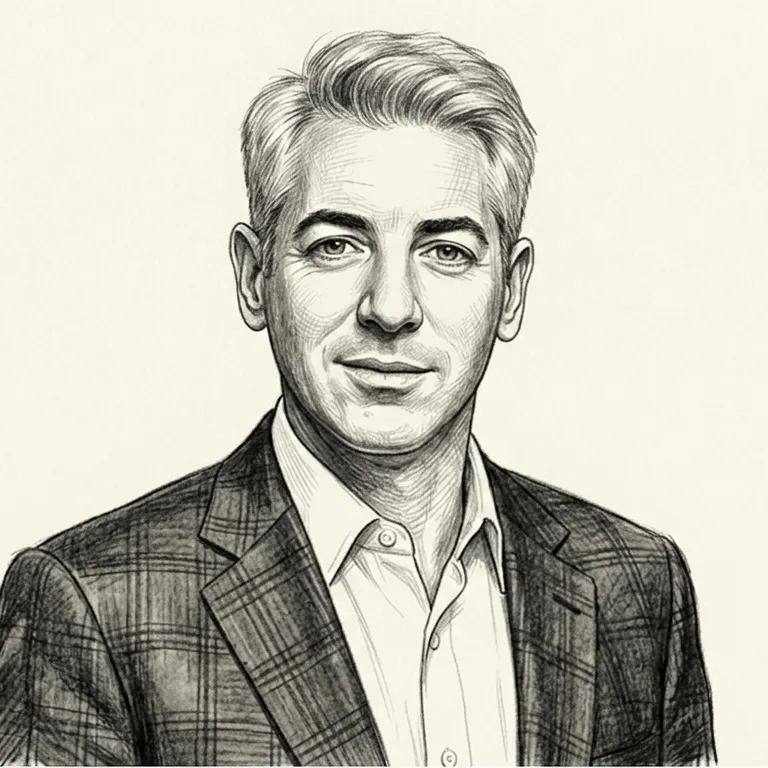
December 20, 2012, a conference hall in Manhattan, New York. Bill Ackman took the stage and presented for three hours and twenty-two minutes. 334 slides. One conclusion: "Herbalife is a pyramid scheme." He had bet $1 billion against this company. Short. This is the record of the war Bill Ackman fought for seven years — and ultimately lost.
1. The Harvard Investor
William Albert Ackman. Born in New York in 1966. His father Larry Ackman ran a New York real estate finance company. A comfortable upbringing.
He completed his undergraduate degree at Harvard College, then earned his MBA from Harvard Business School. Graduating from both Harvard College and Harvard Business School was rare even on Wall Street.
In 1992, at 26, he founded his first hedge fund: Gotham Partners. Initial capital: $3 million. Co-founded with classmate David Berkowitz.
Gotham Partners started well. Concentrating in real estate-related equities, it generated strong returns. But in 2002, investor redemption problems and an SEC investigation forced the fund to close. Ackman's first failure.
In 2004, he started over: Pershing Square Capital Management. This time, alone. Initial capital: approximately $54 million.
Pershing Square's strategy was clear: activist investing. Make large concentrated investments in a small number of names, then pressure management to unlock value — putting allies on boards, demanding restructuring, demanding share buybacks or dividends.
From the late 2000s, Ackman built his Wall Street reputation through this strategy. Wendy's, Target, Canadian Pacific Railway. The Canadian Pacific campaign in particular made him a star — after acquiring a stake in 2011 and driving a CEO change, the stock more than doubled.
By 2012, Pershing Square's AUM stood at approximately $12 billion. Ackman was one of Wall Street's most watched activist investors. And he was preparing the biggest bet of his life.
2. What Is Herbalife?
Herbalife. A nutritional supplements company founded by Mark Hughes in 1980. It sells protein shakes, vitamins, and weight management products.
What distinguished Herbalife was its sales model. It didn't sell through stores. It sold through a multi-level marketing (MLM) structure.
Here's how MLM works: an ordinary consumer who wants to buy Herbalife products must go through a "distributor" — someone who buys products from Herbalife at a discount and sells them to consumers at full price. And distributors can recruit other people to become new distributors. When a recruit sells products, a portion of those sales flows back up to the recruiter.
Is this structure legitimate MLM or an illegal pyramid scheme? That was the core debate.
The theoretical distinction between legitimate MLM and a pyramid scheme is simple: are real products being sold to real consumers? If yes, it's legal. If the primary revenue source is recruiting new distributors rather than selling products, it's a pyramid scheme.
Ackman's argument: most Herbalife distributors are not consumers — they are effectively victims. They join not to sell products but to recruit distributors beneath them. Real external consumers are a minority; most distributors end up stuck with inventory and losing money.
3. The 334-Slide Presentation
Thursday, December 20, 2012. New York. Ackman held a special presentation at the AXA Event Center. The title: "Who Wants to Be a Millionaire?" — a play on Herbalife's own distributor recruitment slogan.
For three hours and twenty-two minutes, flipping through 334 slides, Ackman laid out his case that Herbalife was a pyramid scheme. The presentation was broadcast live.
Three core points in his analysis:
First, 88% of distributors lose money. Ackman's team analyzed Herbalife's public filings and found that only a tiny fraction of distributors earned meaningful income. The rest were failing to recover what they had spent on sign-up fees and inventory purchases.
Second, the reality of "Nutrition Clubs." Herbalife's Nutrition Clubs were bases where distributors sold Herbalife shakes out of their homes or small storefronts. After Ackman's team investigated hundreds of them, they found most were operating at a loss, and most customers were other distributors. True external consumers were nearly absent.
Third, targeting of Hispanic communities. Herbalife's distributor recruitment was concentrated in America's Hispanic (Latino) communities — lower-income, immigrant, and less English-fluent populations. Ackman characterized this as "exploitation of vulnerable communities."
After the presentation, Ackman told reporters:
"Pershing Square holds a $1 billion short position in Herbalife. We are certain this company will ultimately be worth zero."
One billion dollars bet on a single company's destruction.
Herbalife's stock fell 12% the day of the presentation. It fell further over the following days, declining roughly 35% from pre-announcement levels. Initially, it looked like Ackman's victory.
4. Carl Icahn's Arrival
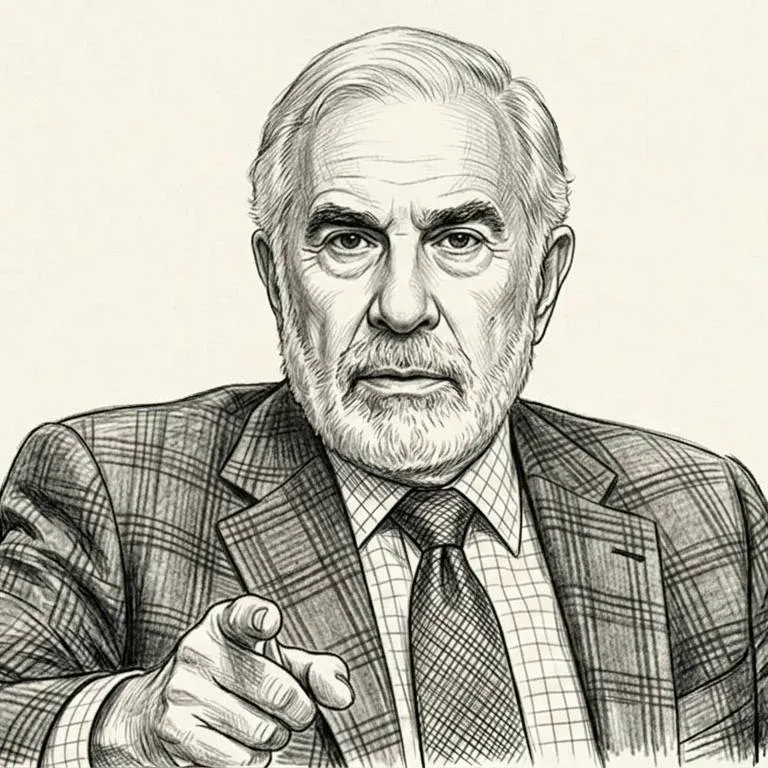
January 2013. Three weeks after Ackman's presentation. Another Wall Street titan appeared: Carl Icahn. Age 77. The original activist investor. A legend who made his name as a corporate raider in the 1980s.
Icahn filed a 13D disclosing that he had been buying large amounts of Herbalife stock — hundreds of millions of dollars' worth. The direction: the exact opposite of Ackman. Icahn believed Herbalife would survive.
Icahn's logic: Herbalife isn't a perfect company, but it's not a pyramid scheme. The company sells real products to real consumers. Even with regulatory risk, the company won't go to zero. And Ackman's massive short had driven the stock down excessively — it was undervalued.
Two titans had taken opposite sides of the same company. Then, on January 25, 2013, a scene was made for television history.
5. CNBC Live — Thirty Minutes of War
Friday afternoon, January 25, 2013. CNBC. The "Halftime Report", hosted by anchor Scott Wapner.
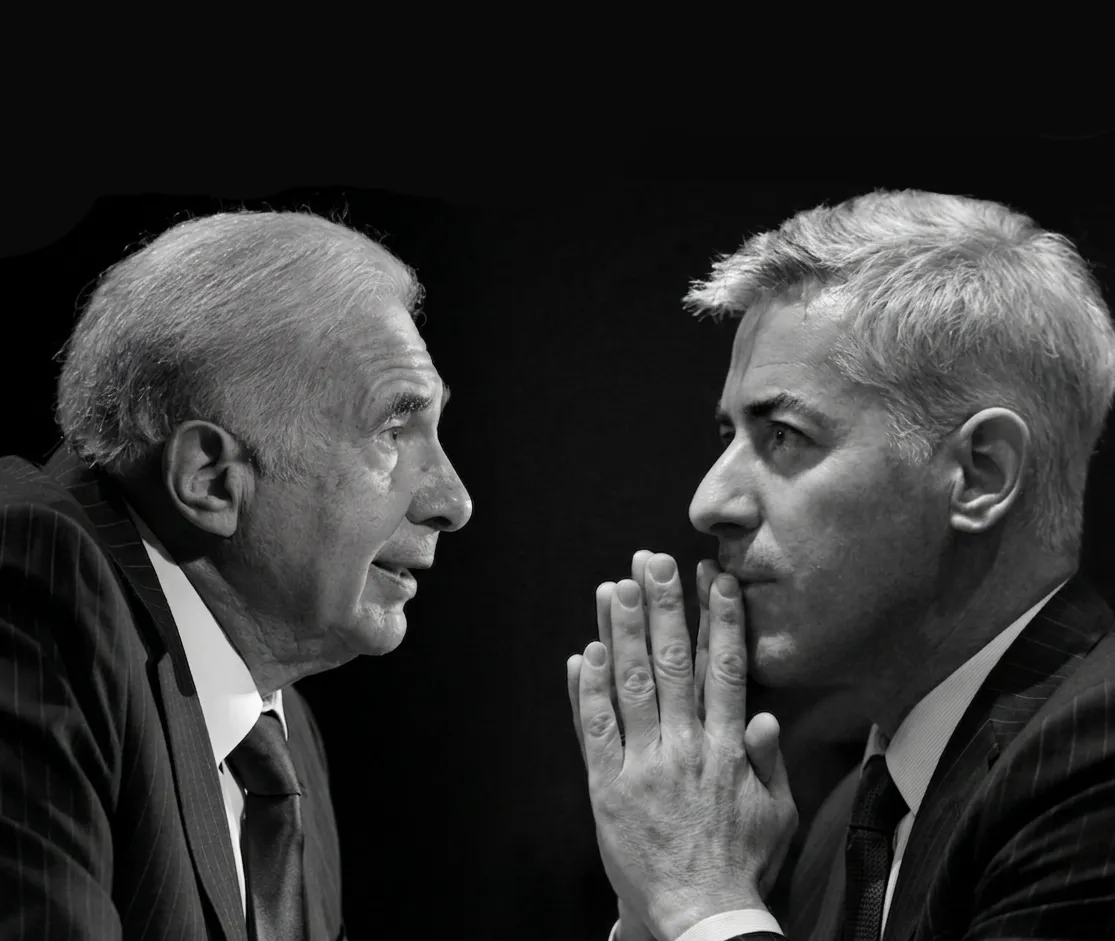
Ackman was on the phone explaining his Herbalife position when Carl Icahn unexpectedly called in during the broadcast. The producers had reached out to Icahn and offered him a chance to respond live.
What followed over the next thirty minutes became the most heated live confrontation in financial television history.
Icahn went first:
"Bill Ackman is a crybaby. He's a man who can't admit he was wrong." — Carl Icahn
Ackman pushed back:
"Carl, you don't know anything about Herbalife. All you know is that I'm short, and you've taken the other side." — Bill Ackman
Icahn fired back:
"I've known you for thirty years. You're the same now as then. Someone who thinks he's the smartest guy in the room. And when you're wrong, you blame everyone else." — Carl Icahn
Ackman's voice rose:
"Carl, this isn't personal. This is a pyramid scheme where hundreds of thousands of people are losing money." — Bill Ackman
There was personal history between them. In 2003, during the Gotham Partners era, Ackman and Icahn had a dispute over a real estate transaction. It ended in legal settlement, but the bad blood remained.
Anchor Wapner tried to mediate and failed. For thirty minutes, two billionaires attacked each other on national live television.
The broadcast went instantly viral. YouTube clips racked up millions of views. "Ackman vs. Icahn" became the most famous public clash in Wall Street history. And it moved the stock — as news spread that Icahn was buying, Herbalife shares began recovering from the lows Ackman's presentation had caused.
6. Seven Years of War
From 2013 to 2018. Seven years. Here is a summary of what happened:
Ackman's side: Sustained the case that Herbalife was a pyramid scheme. Hired lobbyists to push Washington politicians to pressure the FTC (Federal Trade Commission) for an investigation. Allied with Hispanic community organizations. Published additional research reports. Supported production of a documentary film. Maintained the short position.
Icahn's side: Continued increasing the Herbalife stake. Eventually held approximately 26%. Put allies on the board. Drove share buybacks. Defended the stock price.
Herbalife's side: Denied all of Ackman's allegations. Deployed external legal advisors and PR teams in rebuttal. Made some improvements to the distributor structure.
FTC: Opened a formal investigation into Herbalife in 2014. In July 2016, announced results.
July 2016. You are Bill Ackman. The FTC has declined to classify Herbalife as a pyramid scheme. The core of your thesis has collapsed. Your short position is sitting on hundreds of millions in losses. Carl Icahn is declaring victory. What do you do?
7. The FTC Verdict
July 15, 2016. The FTC announced a $200 million settlement with Herbalife. The FTC's conclusion was nuanced.
First, it did not designate Herbalife as a "pyramid scheme." This was fatal for Ackman. His entire thesis rested on the logic that "Herbalife is a pyramid scheme, and once the government acknowledges that, the company shuts down."
Second, it acknowledged that Herbalife's business practices had problems. The FTC found that Herbalife had cultivated unrealistic income expectations in distributors and that its structure relied on distributor recruitment more than real retail sales.
Third, it ordered Herbalife to reform its business structure — requiring distributor compensation to be tied to verifiable retail sales.
The market's interpretation was clear: Ackman lost. Herbalife hadn't been designated a pyramid scheme; the company would survive. The $200 million settlement wasn't a mortal blow. The stock actually rose after the FTC announcement. Icahn won.
8. The Cost of Defeat
Ackman did not immediately give up after the FTC verdict. He maintained the short position and argued that "the FTC didn't regulate strongly enough."
But the market wasn't on his side. Herbalife stock generally rose from 2013 through 2017, driven by Icahn's continuing purchases, company share buybacks, and the resolution of FTC risk.
In February 2018, Ackman finally closed his entire Herbalife short position. The Wall Street Journal reported it. Seven years of war had ended.
The total losses Pershing Square sustained on Herbalife were never officially disclosed, but estimates suggest approximately $500 million to $1 billion. Adding seven years of lobbying, research, and legal costs, the true cost was even higher.
Ackman would not concede defeat:
"Herbalife is still a pyramid scheme. The FTC simply didn't act strongly enough. History will be on my side." — Bill Ackman
But the market had already rendered its verdict.
Once you've made your choice, reveal what the legend actually did
9. Three Lessons This Story Left Behind
First, being right and making money are different things.
Was Ackman's Herbalife analysis completely wrong? Not necessarily. The FTC acknowledged that Herbalife's business structure had problems. But "there are problems" and "the company goes bankrupt" are different conclusions. In investing, even if the direction is right, wrong sizing and timing loses money. No matter how strong your conviction about a stock, "I am right" and "I will make money on this bet" are not the same sentence.
Second, public declarations are a double-edged sword.
By broadcasting 334 slides live, Ackman told the entire world about his position. This was effective in driving down the stock early. But it simultaneously cornered him. Having publicly declared "this company goes to zero," he couldn't quietly close the position. Closing would mean "admitting defeat." Pride prevented the loss-cut. The same applies to individual investors: posting your stock picks on social media makes it harder to sell when they fall. A public declaration signals conviction — but simultaneously kills flexibility.
Third, don't underestimate the opponent.
Ackman focused only on his own analysis. He believed that proving Herbalife was a pyramid scheme was sufficient to win. He underestimated Carl Icahn. Icahn had fought corporate wars for forty years. His financial resources, experience, and political network all outclassed Ackman. Knowing who is standing on the other side of your trade matters as much as your analysis.
10. Herbalife Today
As of 2024, Herbalife is still operating. It is listed on the New York Stock Exchange. Market cap around $1-1.5 billion.
Carl Icahn sold most of his Herbalife stake in 2023. He too eventually walked away. His exact profit was never disclosed, but including dividends and share buybacks, estimates suggest he made substantial returns.
Ackman no longer publicly comments on Herbalife.
Herbalife's distributor structure was partially reformed after the FTC settlement. But the debate over the MLM industry itself continues to this day.
Was Ackman right, or was Icahn right? The answer to that question is still unresolved. Perhaps it will never be fully resolved.
One thing is clear. Ackman lost the Herbalife war. But he didn't collapse from the defeat. Two years later, in 2020, he built the most efficient hedge in history and made 100 times his money in thirty days.
The defeat didn't finish him. That is the story for the next chapter.
What's your take on this story?
What do you think about Bill Ackman's decision?
Sign in to participate
Sign InBill Ackman Today
Where is Bill Ackman investing right now? See their latest 13F portfolio and current convictions.