-67% — The Innovation Winter
ARKK -67% in 2022, AUM collapsed $50B → $7B, top holdings down 80–90%. The Fed's 7-hike cycle dismantled Cathie Wood's 5-year future bet, a redemption doom-loop accelerated the decline, and she kept adding to the falls.
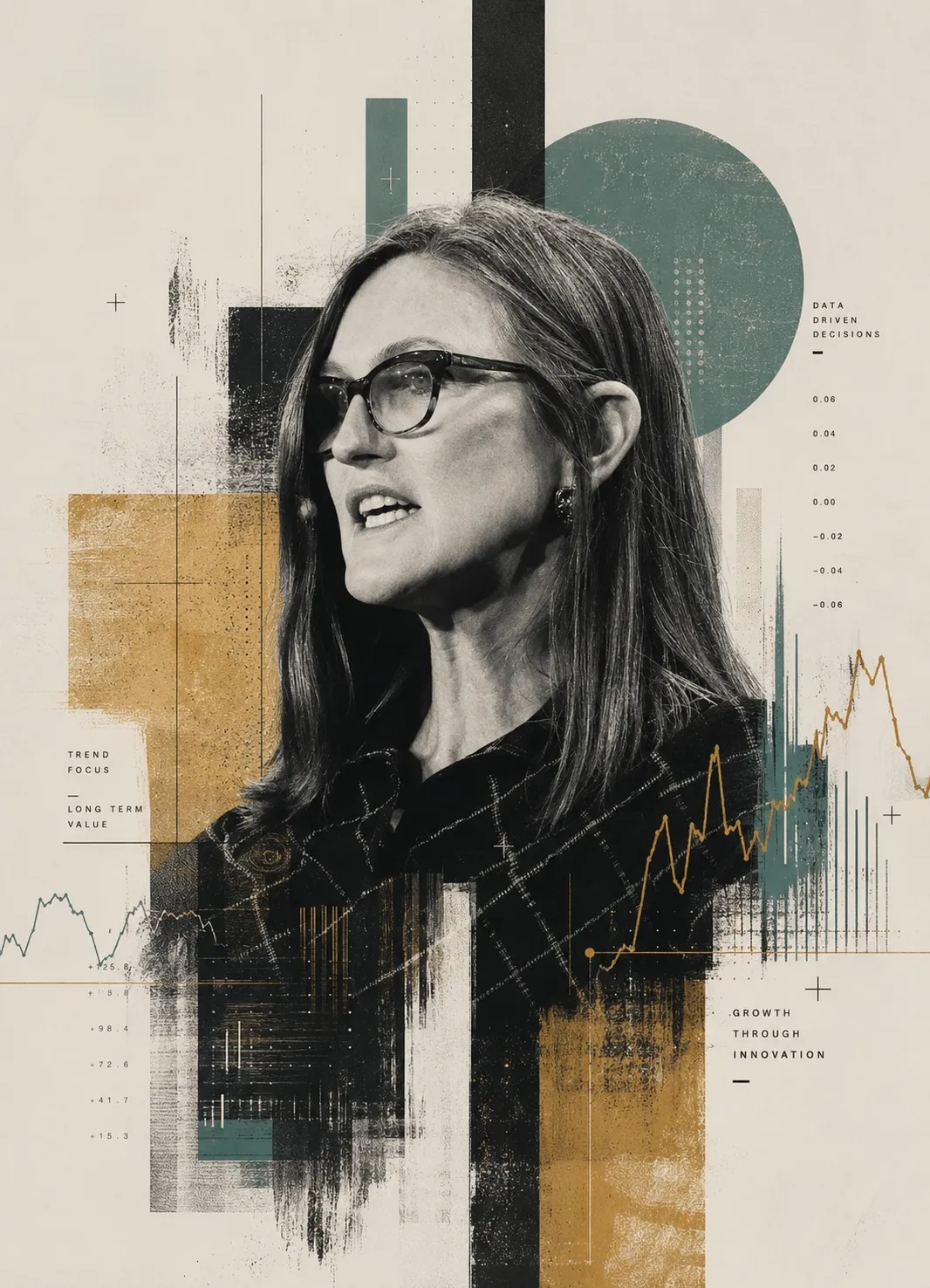
-67% — The Innovation Winter
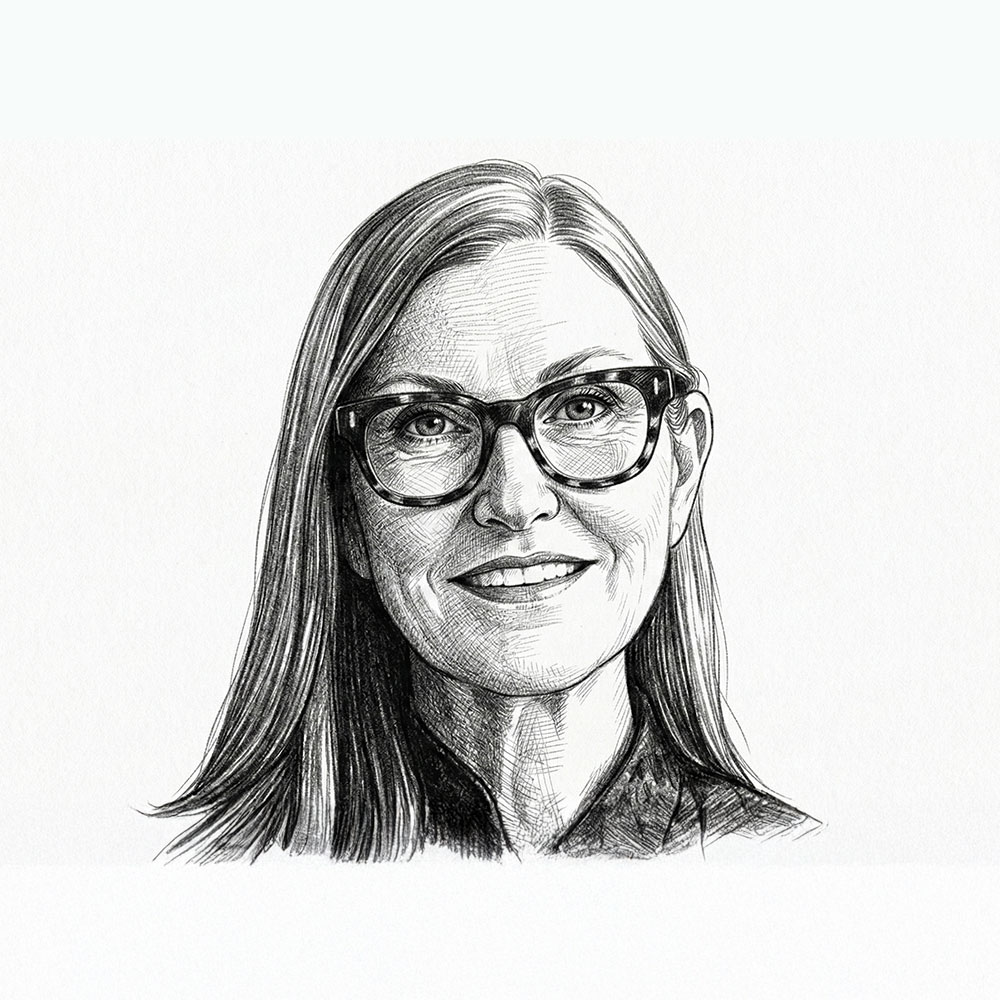
Inteliview Guru Story — Cathie Wood EP.2
December 28, 2022. ARKK closed at $29.41 — down 81% from its February 2021 peak of $159.70. AUM had collapsed from $50B to $7B. $43B vanished. A meaningful share of it was retail money that had arrived near the top. This is the record of Cathie Wood's longest winter.
1. Rates Changed Everything
March 16, 2022. Fed Chair Jerome Powell announced a rate hike. 0.25 percentage points. Small to start — but only the start. The Fed hiked seven times in 2022, taking the federal funds rate from 0% to 4.5%. The fastest hiking cycle in 40 years.
Why this was lethal for Cathie Wood. The value of growth stocks is the present value of future cash flows — converting tomorrow's dollars into today's dollars using a discount rate. That rate is interest rates. At 0%, $100 in the future is worth roughly $100 today. At 5%, the same $100 is worth around $60.
Wood's portfolio was all-in on future earnings. Tesla, Zoom, Teladoc, Roku, Coinbase. Their values rested on cash flows 5–10 years out, not today's. At 0% rates, those future cash flows had a high present value. At 4.5%, that present value collapsed.
Same companies, same businesses, same outlook. Only rates changed — and stock prices halved or worse. Wood's response:
"The fundamentals of our portfolio companies have not changed. What changed is Fed policy. This is temporary. Rates will come back down — and when they do, innovation will get its multiple back."
The argument was logically sound. Timing was the problem. Whether "rates come back down" meant six months or three years. Investors did not wait.
2. The Portfolio, Dissected
2022 ARKK holding drawdowns from peak.
- Zoom: peak $588 → late 2022 ~$67. -89%.
- Teladoc: peak $308 → late 2022 ~$25. -92%.
- Roku: peak $490 → late 2022 ~$41. -92%.
- Coinbase: peak $429 → late 2022 ~$35. -92%.
- Block (Square): peak $281 → late 2022 ~$61. -78%.
- Unity: peak $210 → late 2022 ~$25. -88%.
- Tesla: peak $414 → late 2022 ~$123. -70%.
Most ARKK top holdings were down 80–90%. The cause was not just rates — the COVID pull-forward had ended.
Zoom's hyper-growth came from everyone running video calls during lockdowns. When lockdowns ended, people went back to offices, and Zoom's growth collapsed. Teladoc — telehealth — exploded when patients couldn't go to clinics. When clinics reopened, growth flatlined.
What 2020 revealed was a temporary windfall, not a structural shift. Wood read it as structural — "people will keep using Zoom after COVID," "telehealth will permanently replace in-person visits." That call was wrong. At least the timing was wrong. Telehealth and video conferencing may grow long-term, but the 2020 velocity was unsustainable.
3. "Catching the Falling Knife"
One single behavior defines Wood in 2022. She kept buying.
When prices fall, most managers cut. To manage risk. To cap losses. Wood did the opposite. She added to falling names. Teladoc down 50% — added. Down 70% — added again. Down 80% — added again. Same in Zoom. Same in Roku. Same in Coinbase. ARK's nightly trade disclosures kept showing "buy." Even on panic days, ARK was buying.
"Our 5-year view has not changed. A lower price means we can buy the same business cheaper. That is opportunity, not risk."
Where had we heard this before? Buffett: "Be greedy when others are fearful." Lynch: "Did Coca-Cola taste worse because the stock fell?"
One critical difference. The companies Buffett and Lynch added during drawdowns were already profitable. Coca-Cola, Goldman Sachs, Ford. Verified cash flows. The price fell, but the businesses kept running.
The companies Wood added during drawdowns were often unprofitable. Loss-making. Dependent on a growth narrative for funding. When prices fall, capital becomes harder to raise; when capital dries up, the growth story itself is at risk. Catching a falling knife depends on what kind of knife it is. Buffett's knives had handles. Wood's knives were all blade.
4. Investor Anger
By 2022, ARK's investors were angry — in two directions.
First, the losses themselves. Investors who entered ARKK near the 2021 peak lost 70–80% of their capital in a year. $1,000 became $200–$300. Some had retirement money in. Some had margin in. In Korea, retail investors who bought ARKK directly — or domestic innovation-themed ETFs structured similarly — took heavy losses too.
Second, Wood's posture. She did not apologize. Her message stayed consistent: "Look five years out. Innovation does not stop." What investors wanted was not a five-year outlook but acknowledgment of the present loss.
Mockery exploded on social media. "Cathie Wood is a fraud." "ARK is a Ponzi." "The fund manager who burned the most retail money in history." The same people who called her "Money Queen" in 2020 were calling her a fraud in 2022. That is the nature of the crowd — the distance between hero and villain is short, and a single year of returns determines it.
5. Why She Didn't Quit
In 2022, Wood had options.
- A. Change strategy — rotate from innovation to value or dividends.
- B. Wind down the fund, lock in losses, retire.
- C. Hold strategy — believe in the five-year window, endure.
She chose C. Why?
1. Faith. Wood is a devout Christian. In multiple interviews she has connected her investing to "God's will." The name ARK itself is the ark — innovation is a tool God gave humanity, and investing in it is her mission.
"In 2014 I knelt and prayed. God spoke to me: 'Investing in disruptive innovation is your calling.' I will not abandon that calling."
It was controversial on the Street — mixing investing with religion. But for her this was real motivation, not rhetoric.
2. The structure of conviction. Wood's framework operates on a five-year horizon. A year of price action is "noise" inside that frame. That is both strength and weakness. The strength: she does not flinch at short-term volatility. The weakness: she can dismiss "you are wrong" signals as noise too. Structurally similar to Burry holding CDS for two years. Burry was vindicated. Whether Wood will be remains open.
3. The Livermore element. When investing becomes identity, you cannot stop. ARK to Wood is not a job, it is identity. Close ARK and who is she? Like Livermore, who was a speculator from age 14, Wood cannot define herself outside the "innovation investor" identity.
6. The Redemption Doom Loop
2022's most brutal dynamic was the redemption loop.
ARKK falls → investors redeem → ARK must sell holdings to fund redemptions → ARK's selling drives those stocks lower → ARKK falls more → more redemptions → repeat.
The same shape Lynch lived through during Black Monday. "The hardest part wasn't the market falling. It was being forced to sell good stocks at low prices because of investor redemptions."
Wood's situation was worse than Lynch's. Magellan held 1,400 names — selling one had limited market impact. ARKK was concentrated, and many of the holdings were small or mid-cap. ARK's selling represented a large share of those names' daily volume. ARK's selling directly drove prices down.
2022 net outflow from ARKK: roughly $6B. AUM fell from $50B to $7B. Most of the $43B drop was price, but the outflow piece was significant on its own.
7. The Cruelty of Comparison
Year-end 2022 returns.
- ARKK: -67%
- S&P 500: -18%
- Berkshire Hathaway: +4%
The 2020 inversion — when Wood beat Buffett by 75× — flipped. In 2022, Buffett beat Wood by 71 percentage points.
The three-year compounding is more brutal.
- ARKK: +153% (2020) → -24% (2021) → -67% (2022). Three-year cumulative roughly -40%.
- S&P 500: +18% → +29% → -18%. Cumulative about +26%.
- Berkshire: +2.4% → +30% → +4%. Cumulative about +39%.
One year of Wood was overwhelming. Three years of Wood, Buffett wins. The slow, steady tortoise beat the fast, flashy hare. Munger: "Be rational. You don't need to be smart."
Buffett's 20% per year does not look smart. Sustained over 50 years, it makes trillions. Wood's 153% is dazzling — but a -67% the year after takes you below zero. Compounding math is cruel. Up 100%, down 50% = flat. Up 200%, down 67% = flat. Wood's three years showed exactly this math.
— What would you do? —
June 2022. You are Cathie Wood. ARKK is down 70% from the peak. Investors are redeeming. Social media is mocking you. Most holdings are down 80%+. Your five-year view has not changed.
- A. Hold the strategy and add to falling names. Five years will prove it.
- B. Rotate half the portfolio into cash or value. Defensive.
- C. Cut the worst (Teladoc, Zoom). Hold only your highest-conviction names (Tesla).
Wood chose A. Teladoc down 92% — she did not sell. Zoom down 89% — she did not sell. Her logic: "the five-year value of these companies has not changed." Burry said the same for two years. He was right. Wood is saying the same. Will she be?
8. Three Lessons
1. Rates underwrite every valuation. The root cause of ARK's collapse was not stock-picking — it was rates. The same company is worth a different number at 0% versus 5%. The lesson for retail investors: more important than "is this a good company" is "is this valuation appropriate at the current rate regime?" P/E 100 may be reasonable at 0%; the same multiple at 5% is not.
2. Internalize the math of compounding. +153% followed by -67% lands below the start. That is the cruel arithmetic of compounding, and it is exactly why Buffett's 20%/year over 50 years is the holy grail. Steady decades beat blazing single years. Livermore's $100M won and lost lives in the same equation. The most important rule for retail: avoiding large losses matters more than chasing large gains. Munger's "avoid stupidity" proven mathematically.
3. The "look five years out" trap. Wood always says "look five years out." It is two things at once — real long-horizon wisdom, and a way of refusing to acknowledge present failure. Which one is true only becomes clear five years later. The deeper problem: most investors cannot wait five years. People with retirement money, leveraged money, living-expense money — to them, "look five years out" is not comfort, it is insult.
9. End of Winter?
In 2023, ARKK started to bounce. Full-year 2023 return: +68%. Almost erasing 2022's -67%.
Two reasons. 1. The AI boom. 2023 was ChatGPT's year. AI expectations exploded across tech. Some ARK holdings got reclassified into the AI bucket and rallied. 2. The Fed slowed. Hike pace slowed in H2 2023, easing pressure on growth stocks.
+68% looks impressive but the math is incomplete. -67% then +68% is not flat. $100 → $33 → $55. Still down 45%. To reclaim ARKK's February 2021 peak ($159.70), the ETF needs roughly 3× from the late-2023 print (~$50).
The final verdict on whether Wood was right or wrong is not yet in. Her answer has not changed:
"Look five years out."
▶ To track Cathie Wood's latest portfolio — Inteliview 〈Guru Portfolio — ARK Invest〉
Next Episode
〈Not Over Yet — Cathie Wood, Live〉 2024–2026. Bitcoin ETF approval. AI investments. Tesla robotaxis. Which of her predictions landed and which missed. And the question still without an answer.
Cathie Wood Today
Where is Cathie Wood investing right now? See their latest 13F portfolio and current convictions.