The Man Who Saw the Truth in Las Vegas
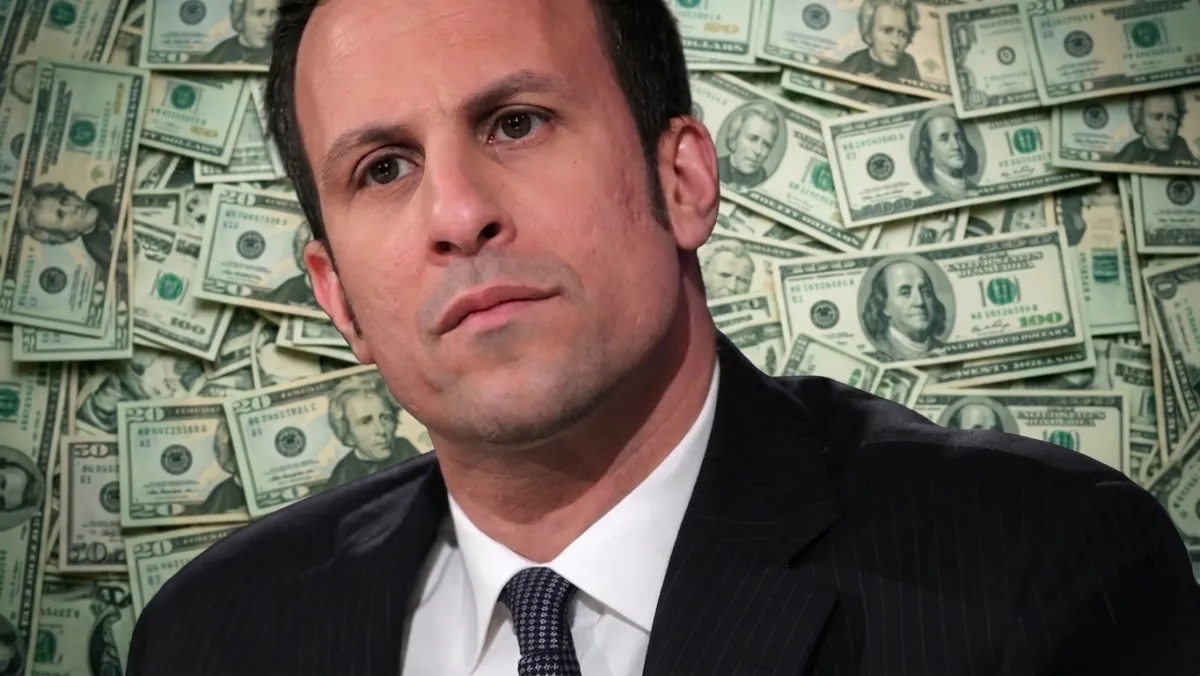
Las Vegas, 2007. A CDO manager who didn't understand his own product. A stripper who owned five houses. That day Steve Eisman became certain the subprime market would collapse. Where Michael Burry saw it in the data, Eisman saw it on the ground. Same conclusion, opposite paths.
The Man Who Saw the Truth in Las Vegas
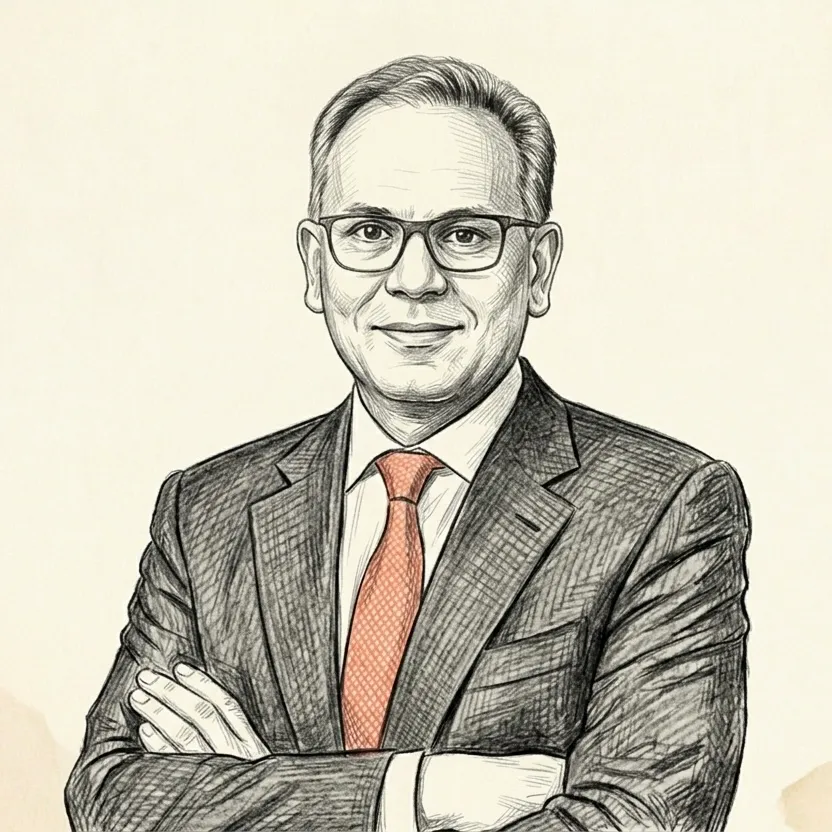
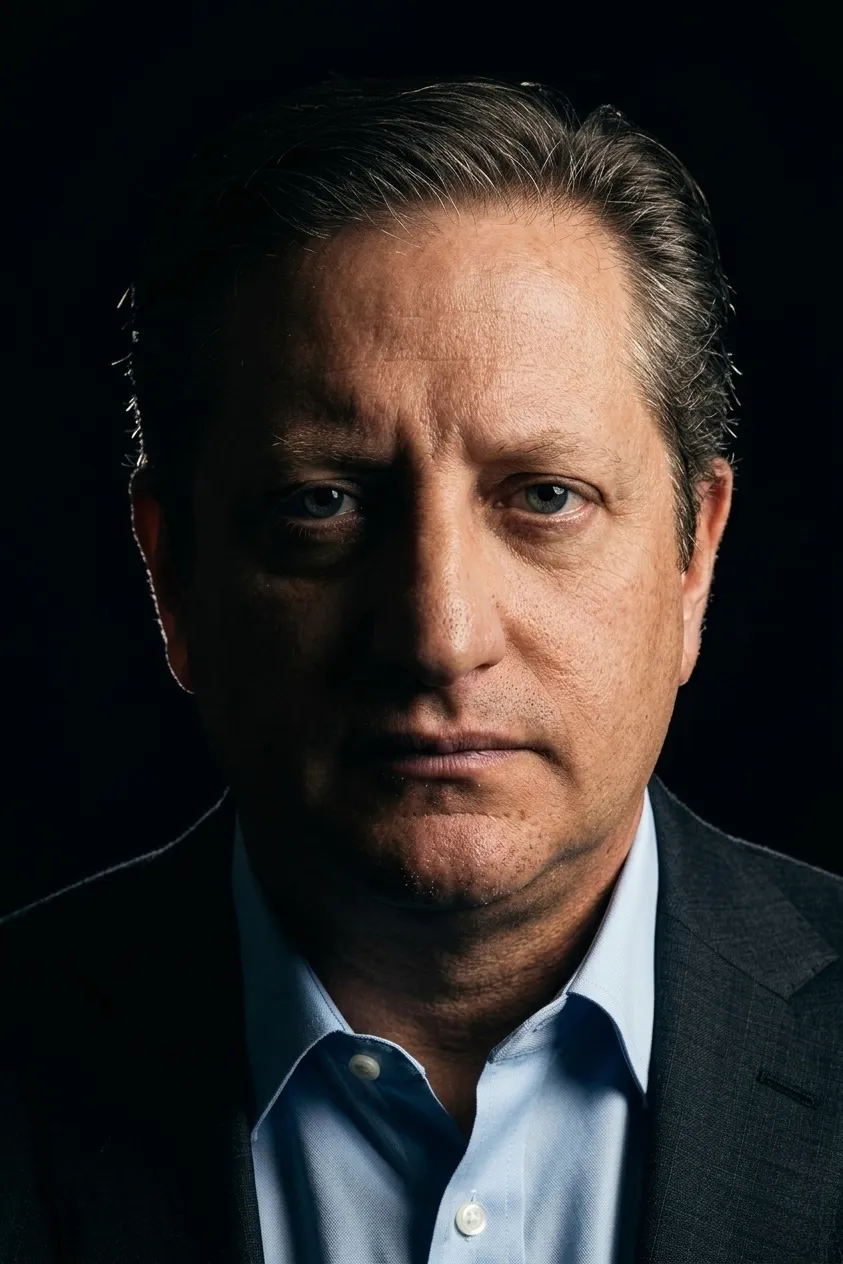
January 2007, Las Vegas. A man was sitting at the largest mortgage industry conference in America. As he listened to the panel presentations, his face grew increasingly red. What he said to the person beside him: "These people genuinely have no idea what they're doing." This is the record of the day Steve Eisman witnessed the corruption of the subprime market firsthand.
1. Wall Street's Maverick
Steve Eisman was born in New York in 1962. Both of his parents worked in finance. His mother, Lillian Eisman, was a broker at Oppenheimer & Co. Wall Street was not an unfamiliar world to him.
He graduated from the University of Pennsylvania and entered Harvard Law School. He became a lawyer. But the law didn't suit him. As he later said: "Being a lawyer means reviewing what other people do. I wanted to do it myself."
Through his mother's introduction, he joined Oppenheimer — making the switch to equity analyst. It was 1991.
From the start, Eisman was different from other analysts. Most Wall Street analysts write favorable reports about the companies they cover. You need to maintain good relationships with companies to get information, and it helps the investment banking division's deal flow. On Wall Street this is called "the structural optimism of the sell side."
Eisman rejected this structure. He wrote negative reports on the financial companies he covered. He questioned accounting practices, dug into the quality of earnings, and unearthed what management wasn't telling investors.
In the mid-1990s, he began analyzing subprime mortgage lenders for the first time. That was when his eyes opened.
2. The First Warning
The subprime mortgage industry in the 1990s was still small — less than 5% of the total U.S. mortgage market. But Eisman saw a fundamental problem in the structure of this market.
What is a subprime loan? A mortgage for people with low credit scores. Good credit gets you a prime loan. Bad credit gets you subprime — at higher rates, generating higher profits for the lender.
The problem lay in the structure of these loans.
Many subprime loans had a 2/28 structure: a low teaser rate for the first two years, then a rate that jumps sharply in year three. The monthly payment is manageable for the first two years, but starting in year three it rises 50–100%. The borrower can no longer keep up.
Lenders knew this. Their calculation: "If the borrower can't handle year three — refinance them again. Collect fees each time they refinance." And for this refinancing to work, one condition was required: home prices must keep rising. Rising home prices mean rising collateral values, which enable refinancing. Home prices fall? No refinancing possible, borrower defaults.
Eisman saw this structure and wrote a report in 1997 — a negative analysis of subprime lenders. One line he wrote in the report:
"These companies' profit model is to trap their customers in a permanent cycle of debt."
It caused an uproar inside Oppenheimer. The executives of the companies he covered called to complain. Colleagues criticized him: "Eisman is causing trouble again."
But in 1998, several subprime lenders actually went bankrupt. Eisman's warning had been correct.
The problem was what happened next. The subprime industry didn't die. It grew even larger. In the 2000s, Wall Street's major investment banks piled in. Goldman Sachs, Morgan Stanley, Lehman Brothers, Bear Stearns. They bundled subprime loans into bonds (MBS) and rebundled those bonds into CDOs (collateralized debt obligations). Rating agencies gave these CDOs AAA ratings.
Eisman watched this entire process from beginning to end. His anger grew every year.
3. A Son's Death
In 2003, tragedy came to Eisman's life.
His newborn son Max died shortly after birth — acute respiratory failure. He was admitted to the intensive care unit immediately and couldn't survive.
People around him said Eisman changed after this tragedy. He had always been sharp, but after losing his son, his anger deepened. He became less able to tolerate the injustice of the world.
Michael Lewis wrote in "The Big Short" that Eisman's anger wasn't just personality. It came from loss. After personal tragedy confirmed his sense that the world was unjust, he could no longer tolerate the injustice of the financial system.
In 2004, Eisman left Oppenheimer and started his own hedge fund. He took charge of the financials sector fund at FrontPoint Partners. Now he was no longer an analyst writing reports — he was an investor putting money behind his convictions.
4. The Las Vegas Conference
January 2007. Las Vegas.
The annual conference of the American Securitization Forum. Every participant in the U.S. mortgage industry gathered here — lenders, investment banks, rating agencies, law firms, servicers. Thousands of people assembled at a Las Vegas hotel.
Eisman attended with two team members: Vincent Daniel and Danny Moses. The three had already begun building subprime CDS positions. They wanted to verify their analysis in the field at this conference.
What they saw was worse than expected.
First, the panelists didn't understand their own products. Eisman asked a CDO manager: "What's the average FICO score of the loans inside your CDO?" The manager couldn't answer. Someone who didn't know what the underlying assets of his product were was selling that product.
Second, they were ignoring the risks. A presenter at one panel said: "The subprime market is healthy. Default rates are low and home prices are stable." Eisman raised his hand. "The rate resets on 2/28 loans from year three are beginning in earnest this year. The structure is built to cause rising default rates — why aren't you mentioning that?" The presenter was flustered.
Third, a stripper owned five houses. This is one of the most famous scenes in Michael Lewis's book. Eisman's team member Danny Moses struck up a conversation at a Las Vegas bar with a stripper. She said she owned five houses. And she described the loan structure on one of them — a loan taken without income verification.
Moses came back to Eisman and relayed the story. Eisman was silent for a moment, then said:
"Yeah. It's over."
That night, Eisman held a meeting with his team in his hotel room. His conclusion was clear: the subprime market will collapse. The question wasn't when — but how big.
And he made his decision: he would grow the CDS position further.
5. The Difference from Burry
Eisman arrived at the same conclusion as Michael Burry. But the path was completely different.
Burry saw it in the data. Alone in his office at two in the morning, reading 130-page mortgage prospectuses, proving it with numbers. His method was solitary and systematic.
Eisman saw it in the field. At the Las Vegas conference, watching people's faces and confirming the corruption of the system. His method was emotional and direct.
Burry calculated that the system was wrong. Eisman felt that the system was wrong. And that feeling expressed itself as anger.
Eisman's anger was a different kind of energy from Burry's solitude. Burry wanted to prove he was right. Eisman wanted to punish the people who had built this system.
His most famous line:
"I don't want to make money. I want to see these fraudsters fail."
Of course, he also made money. FrontPoint earned approximately $1 billion from its subprime bets in 2007–2008.
6. Eisman on September 2008
September 15, 2008. Lehman Brothers files for bankruptcy.
Eisman was watching TV from his office. The moment Lehman collapsed. Proof that his bet had been right. FrontPoint's CDS positions were generating explosive gains.
But Eisman didn't celebrate.
What he said to his team that day:
"We were right. But I don't feel good. This isn't something to celebrate."
His anger wasn't resolved by the profits — it deepened. What he saw was the collapse of a system. Millions losing their homes, their jobs, their savings. And the people who created that reality — lenders, investment banks, rating agencies — mostly faced no punishment.
After the 2008 financial crisis, only one executive at a major U.S. financial institution went to prison: Kareem Serageldin of Credit Suisse. Everyone else paid settlement fees and walked away.
Eisman was furious. He appeared as a witness at congressional hearings in 2010. And said:
"Wall Street turned the American dream into a product and sold it. And when that product exploded, Americans paid for it with their taxes. This was not a mistake. This was by design."
January 2007. You are Eisman. At a conference in Las Vegas, you've witnessed the rot at the heart of the subprime market firsthand. CDO managers don't understand their own products, and a stripper owns five houses. You already hold a CDS position. The data and the on-the-ground evidence are both on your side.
7. Why He Never Met Burry
Eisman and Burry arrived at the same conclusion in the same era and bet in the same direction. But the two men never met.
The reason is simple: their personalities are polar opposites.
Burry avoids people. With Asperger syndrome, he found social interaction extremely uncomfortable. He found peace in data and numbers.
Eisman collides with people. He was the loudest voice in every room. If he thought you were wrong, he said so to your face. He drew energy from conflict.
Michael Lewis put both men in the same book and intentionally juxtaposed them. The Burry chapters are quiet and interior. The Eisman chapters are loud and extroverted. Two people who saw the same truth reacted to it in completely different ways.
The contrast poses a question to the reader: which one are you? Someone who draws certainty from numbers or from the field? Someone who holds alone or pushes with anger?
There's no right answer. Both were correct.
Once you've made your choice, reveal what the legend actually did
8. Three Lessons This Story Left Behind
First, look beyond the numbers to the field.
Eisman didn't only read financial statements. He actually went to Las Vegas. He asked CDO managers questions directly. He talked to a stripper at a bar. All of this revealed truths that numbers couldn't show. The same principle applies to Korean individual investors. Have you actually used the product of the company you're investing in? Have you visited their stores? Have you met someone who works there? SEC filings and IR materials only show half the truth. The other half is in the field. The same principle as Buffett knocking on GEICO's door.
Second, anger can be fuel for investing.
Eisman's investment motivation was not profit but anger — anger at systemic corruption, anger at innocent people being hurt. That anger was the energy that kept him holding his positions through two years of loneliness (2006–2008). Emotion is usually the enemy in investing. But it depends on the type. Greed and fear are enemies. Anger and conviction can be fuel — as long as anger doesn't replace analysis. Eisman's anger was built on top of rigorous analysis.
Third, "these people don't know what they're doing" is the most powerful investment signal.
The greatest insight Eisman gained in Las Vegas wasn't a number — it was the discovery that "the people running this system don't understand their own system." This repeated in 2021 with GameStop. Melvin Capital didn't understand the risk structure of its own short position. Robinhood didn't understand the limits of its own margin structure. When you look at a market or product and see signals that the people running it don't understand their own system — that is the most powerful warning sign.
- 아이스만의 분석 도구
- 데이터 + 현장 검증 (CDO 매니저 직접 인터뷰)
- 결정적 순간
- 2007년 1월 라스베가스 ABS 컨퍼런스 저녁
- 확인한 사실
- CDO 매니저들이 자기 상품을 이해하지 못함
- 프론트포인트 수익
- 약 10억 달러 (2007-2008)
- 버리와의 차이
- 버리=숫자만 본다 / 아이스만=시스템 운영자를 직접 만난다
- 핵심 교훈
- "숫자보다 더 강력한 신호는 시스템 안에 있는 사람들이 자기 시스템을 이해하지 못한다는 것이다."
9. Eisman After
After 2008, Eisman became one of the most famous critics of the financial industry. Michael Lewis's "The Big Short" was published in 2010, and Eisman was one of its main characters. In the 2015 film, his character (renamed Mark Baum) was played by Steve Carell, who received an Academy Award nomination for the role.
After leaving FrontPoint, Eisman moved through Emrys Capital and is currently a portfolio manager at Neuberger Berman. He still analyzes the financial sector and still publicly voices sharp opinions.
And he's still angry.
In a 2023 interview, he said:
"Has the system changed since 2008? Regulation has been strengthened. But people haven't changed. Greed hasn't changed. The next crisis will come in a different form. Not called subprime — a different name. But the structure will be the same. Someone creates a product people don't understand, someone gives it a AAA rating, and someone puts money in believing that rating."
He paused and added:
"And when it blows up, ordinary citizens will pay for it again."
Seventeen years have passed since that conference in Las Vegas. The era of a stripper owning five houses has ended. But Eisman's anger hasn't.
Because what he was angry about was never subprime.
What he was angry about was the structure itself — the structure in which innocent people get hurt.
And that structure hasn't fully changed yet.
What's your take on this story?
What do you think about Steve Eisman's decision?
Sign in to participate
Sign In