
How U.S. Retail Investors Are Buying Korean Stocks Now — EWY, SK Hynix, HPSP, LS Electric
U.S. retail investors are buying Korean stocks directly via IBKR. EWY and FLKR are the easiest ETF entry; SK Hynix, HPSP, and LS Electric lead direct picks. July omnibus opening + SK Hynix ADR are the next catalysts.
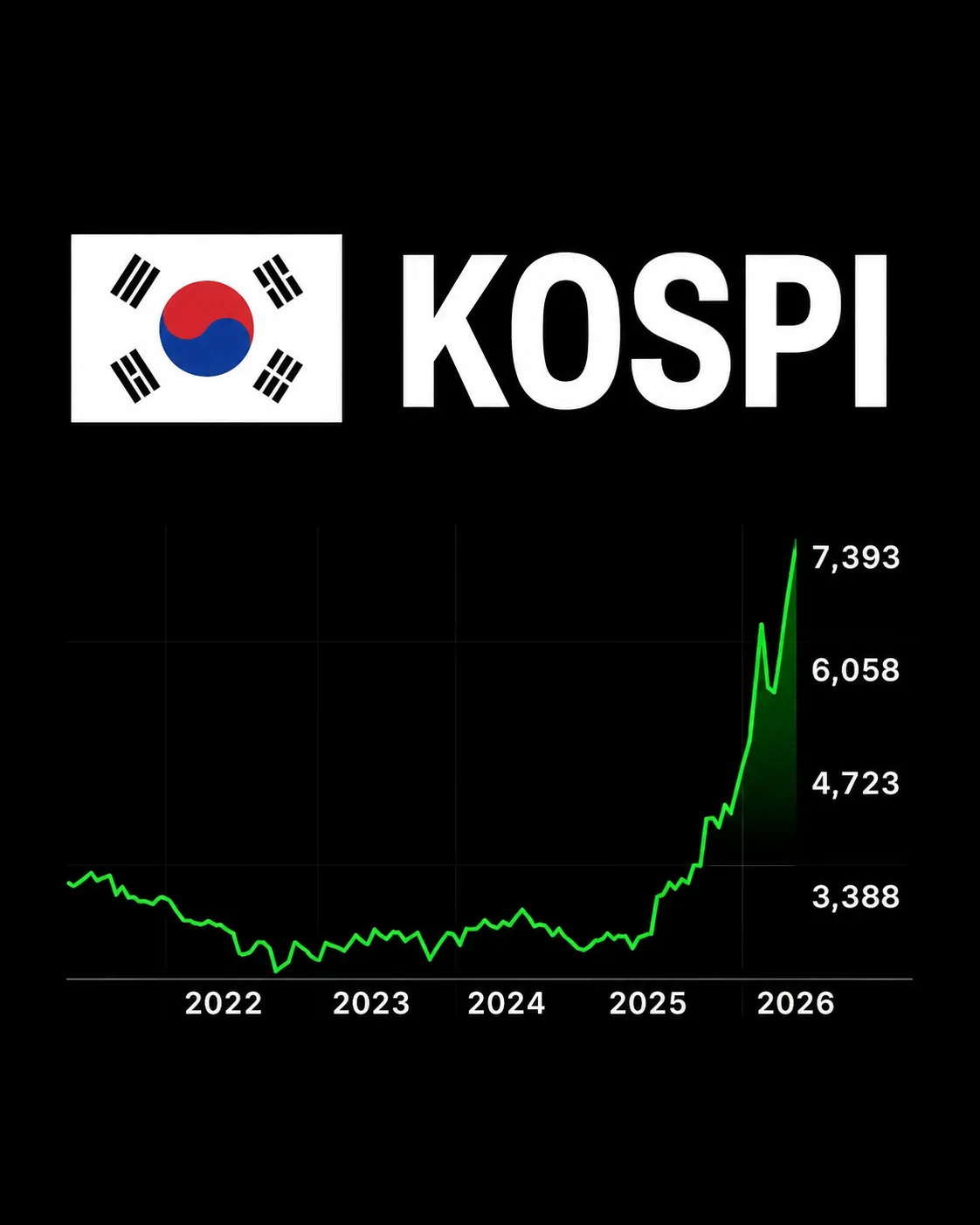
- retail investors are directly purchasing Korean stocks through IBKR ahead of July 2026's full omnibus account opening
- Key themes: HBM/AI semiconductors, supply chain equipment, and power infrastructure; EWY and FLKR are the simplest ETF entry points
HBM · semiconductor supply chain · power infrastructure — "Hynix has risen less than Micron" thesis gaining traction
On May 4, foreign investors executed a single-day net buy of ₩3.0183 trillion (≈$2.1B) in KOSPI stocks — the second-largest daily inflow on record — driving a 5% rally. A substantial portion came from U.S. retail investors gaining access to Korean markets for the first time following the Interactive Brokers (IBKR) launch.
Starting July 2026, the omnibus account system fully opens, allowing U.S. retail investors to trade Korean stocks 24/7 directly through their U.S. brokerage accounts. What stocks and ETFs are they buying now, and why?
Three Reasons U.S. Retail Investors Are Drawn to Korean Stocks
First, the AI theme. HBM demand stems from the same AI infrastructure buildout in both the U.S. and Korea. Micron, listed on NASDAQ, has already rallied significantly. SK Hynix has higher HBM market share but has been harder to access, resulting in relative underperformance. This is the most-cited thesis on Reddit and X.
Second, valuation discount. Many KOSPI-listed companies still trade below 1.0x price-to-book ratio. The government's Value-Up program is helping narrow this discount.
Third, Korean won upside bet. Buying Korean stocks in dollar terms offers currency appreciation upside when the won strengthens.
Individual Stocks — Three Thematic Buckets
Large-cap semiconductors: SK Hynix dominates Reddit and X discussions. Samsung Electronics is also on the initial buy list.
Semiconductor supply chain: HPSP (high-pressure annealing equipment monopoly), Wonik IPS (CVD equipment), Jusung Engineering (ALD equipment), and PSK (photoresist removal equipment) are positioned as secondary beneficiaries of expanding foreign demand.
Power infrastructure: LS Electric, Taihan Cable & Solution, Iljin Electric, and Gaon Cable represent the Korean equivalent of the AI power-bottleneck theme. The same structural logic driving gains in U.S. names like Eaton (ETN) and Vertiv (VRT) applies here.
ETFs — Easier Access for Risk-Averse Investors
Individual stocks carry high volatility and involve cumbersome account setup and currency conversion. ETFs provide a simpler entry route.
EWY (iShares MSCI South Korea ETF) is the de facto standard. Listed on the NYSE, it trades in dollars and can be bought directly from any U.S. brokerage account. Holdings include major KOSPI components: Samsung Electronics, SK Hynix, Samsung SDI, Hyundai Motor, and LG Energy Solution. With roughly $5.0B in AUM, it is by far the largest Korea-focused ETF. However, Samsung Electronics comprises ~22% of the fund, creating significant single-stock concentration risk.
FLKR (Franklin FTSE South Korea ETF) carries a lower expense ratio than EWY (0.09% vs. 0.57%). It also holds a broader set of underlying stocks, providing better diversification. The trade-off is lower trading volume — verify liquidity before large purchases.
Domestic Korean-listed ETFs are also options. KODEX 200 (069500) is South Korea's largest ETF, tracking the KOSPI 200 index. TIGER Semiconductor (091230) and KODEX Semiconductor (091160) concentrate on names like Samsung Electronics, SK Hynix, and Hanmi Semiconductor. For AI data-center power infrastructure focus, themed ETFs like KODEX Power Infrastructure are available.
Value-Up themed ETFs have recently launched. These funds track the government's Value-Up index and have outperformed KOSPI by over 33 percentage points. They hold companies with low price-to-book ratios that are committing to higher dividends and share buybacks — a way to invest in the "Korea discount" narrowing narrative.
U.S. vs. Korean Stocks — Comparative Matrix
| Theme | U.S. Comparable | Korean Comparable | Korean ETF |
|---|---|---|---|
| HBM & AI Memory | MU, NVDA | SK Hynix, Samsung Electronics | TIGER Semiconductor |
| Semi Equipment | ASML, LRCX | HPSP, Wonik IPS | KODEX Semiconductor |
| Power Infrastructure | ETN, VRT | LS Electric, Taihan Cable | (Themed ETF) |
| Broad KOSPI | EWY | KODEX 200 | TIGER KOSPI |
| Value-Up | — | Low-PBR large-caps | Value-Up Index ETF |
Frequently Asked Questions
Which is better between EWY and FLKR?
EWY offers far superior liquidity and trading convenience. For long-term holders prioritizing lower costs, FLKR's 0.09% expense ratio beats EWY's 0.57%. However, FLKR's lower trading volume may result in wider bid-ask spreads.
Does it make sense for domestic Korean investors to buy EWY?
EWY trades in USD, not KRW. It's relevant for overseas Korean diaspora or investors managing dollar accounts who want Korean equity exposure without currency conversion. For domestic won-based investors, KODEX 200 or TIGER KOSPI are more efficient.
Which stocks are included in valuation improvement ETFs?
Holdings are selected based on shareholder return ratios, ROE, and P/B metrics. They emphasize companies committed to value creation. Large-cap financials and automakers like Hyundai Motor, KB Financial, Hana Financial, and Kia—trading at low P/B but increasing dividends and share buybacks—represent significant weightings.
How can U.S. retail investors buy Korean stocks today?
Interactive Brokers (IBKR) currently allows U.S. retail investors to trade KRX-listed stocks during Korean market hours. Starting July 2026, the omnibus account framework fully opens, expanding access to mainstream U.S. brokers. Until then, EWY and FLKR remain the most frictionless routes to Korea exposure from a U.S. brokerage account.

Microsoft Eyes DeepSeek V4 for Copilot Cowork, Squeezing Out OpenAI and Anthropic on Cost
 MSFT
MSFT NVDA
NVDA GOOGL+2
Nvidia's 85% Revenue Surge Still Couldn't Lift the Stock — A Textbook 'Sell the News' Event
NVDA SOXX
SOXX SMH+1
SMH+1
Nokia Surges 140% YTD — Nvidia's $1B Bet Rebrands It as an AI Infrastructure Play
 NOK
NOK ERICNVDA+1
Wall Street's Defining Moments
See more







Smart Money Briefing
Weekly summaries of Wall Street guru moves and crypto whale activity.