
Michael Burry: SanDisk Has Surpassed the Dot-Com Bubble—Nasdaq Leaders Now More Extreme Than 1999
Michael Burry warns that SanDisk's 1-year return of 3,960% has eclipsed 1999 Qualcomm's 2,620%, signaling that the current Nasdaq rally is more extreme than the dot-com bubble. The key question: whether Big Tech's $650B in AI capex will convert to profits fast enough.

- Michael Burry warns SanDisk's 3,960% return surpasses 1999 Qualcomm's 2,620%, calling current Nasdaq rally more extreme than the dot-com bubble
- He's already betting against the market by holding puts on NVDA and Palantir
SNDK 1-year return 3,960%—exceeds 1999 Qualcomm 2,620%… 'More extreme environment' warning
Michael Burry has sounded the alarm again. This time, it's not GameStop. It's the entire Nasdaq.
On the 7th (local time), Burry shared data from BTIG and Bloomberg on X (Twitter).
The rally in top Nasdaq names right now is more extreme than the dot-com bubble peak
SanDisk has overtaken Qualcomm
During the 1999 dot-com bubble, Qualcomm posted the largest gain among all stocks. Its 52-week maximum return was 2,620%—an unprecedented figure at the time.
Burry pointed out that SNDK surged 3,960% over the 12-month period from May 2025 to May 2026, noting that 'SNDK is outpacing Qualcomm by 1,300 basis points.'
Interestingly, Burry also highlighted that SanDisk was the second-best performer in 1999, with a gain of 581%. That same stock has now broken the 1999 Qualcomm record by 1.5x some 26 years later.
The phenomenon extends beyond a single stock. In 1999, the top 10 Nasdaq-100 names averaged a 559% return, climbing to 622% in the 12 months leading up to the bubble peak in March 2000. Burry believes stocks exceeding these figures are now appearing.
Is this the dot-com bubble, or something different?
The counterargument to Burry's warning is compelling. The core difference: earnings.
NVDA is forecast to post net income exceeding $120B for fiscal 2026. While the forward P/E is elevated at roughly 41x, it pales against Cisco's 200x P/E during the dot-com bubble. The tech sector's forward P/E stands at approximately 30x, below the dot-com peak of 50x.
The SOX semiconductor index surged 38% in April alone, marking its largest monthly gain since February 2000. On a 12-month basis, it's up 211%—the 6th-strongest performance since 1996. The top 5 periods all occurred between February and June 2000—the dot-com bubble peak.
Supply constraints present another distinction. During the dot-com bubble, internet companies proliferated far faster than demand. AI is the opposite: supply is constrained across critical inputs—computing capacity, memory, power, and advanced packaging.
The real risk: capex returning to profit
Combined AI capex from the Big Four tech firms (Microsoft, Google, Amazon, Meta) is projected to reach $650B–$690B in 2026. This represents the largest corporate investment outside wartime mobilization in history.
If this capital converts to actual AI revenue, there's no problem. However, OpenAI generated $13B in 2025 revenue but faces difficulty reaching profitability by 2030, with expected cash burn of $17B in 2026 alone. The true risk emerges if capex-to-profit conversion lags market expectations.
Burry himself already holds put options on NVDA and Palantir. He's put his money where his mouth is.






Wall Street's Defining Moments
See more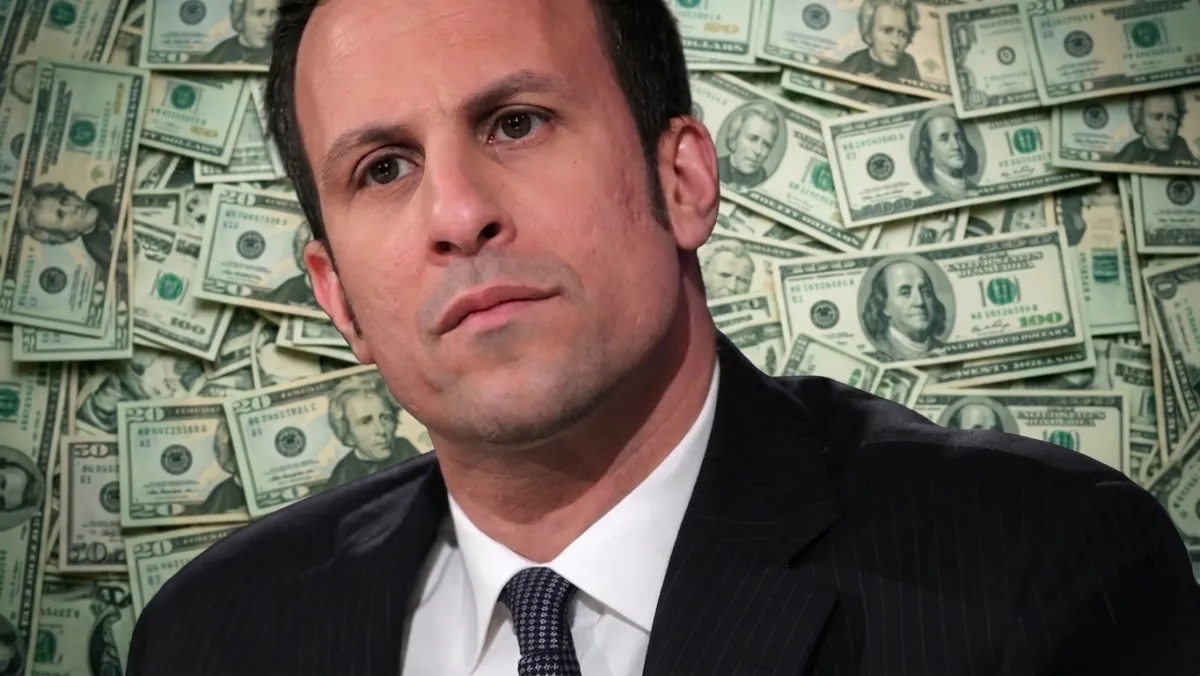


Best RWA Crypto Coins for the NYSE 24/7 Era — Chainlink, Ondo, USDC, Pendle
 LINK
LINK ONDO
ONDO USDC+10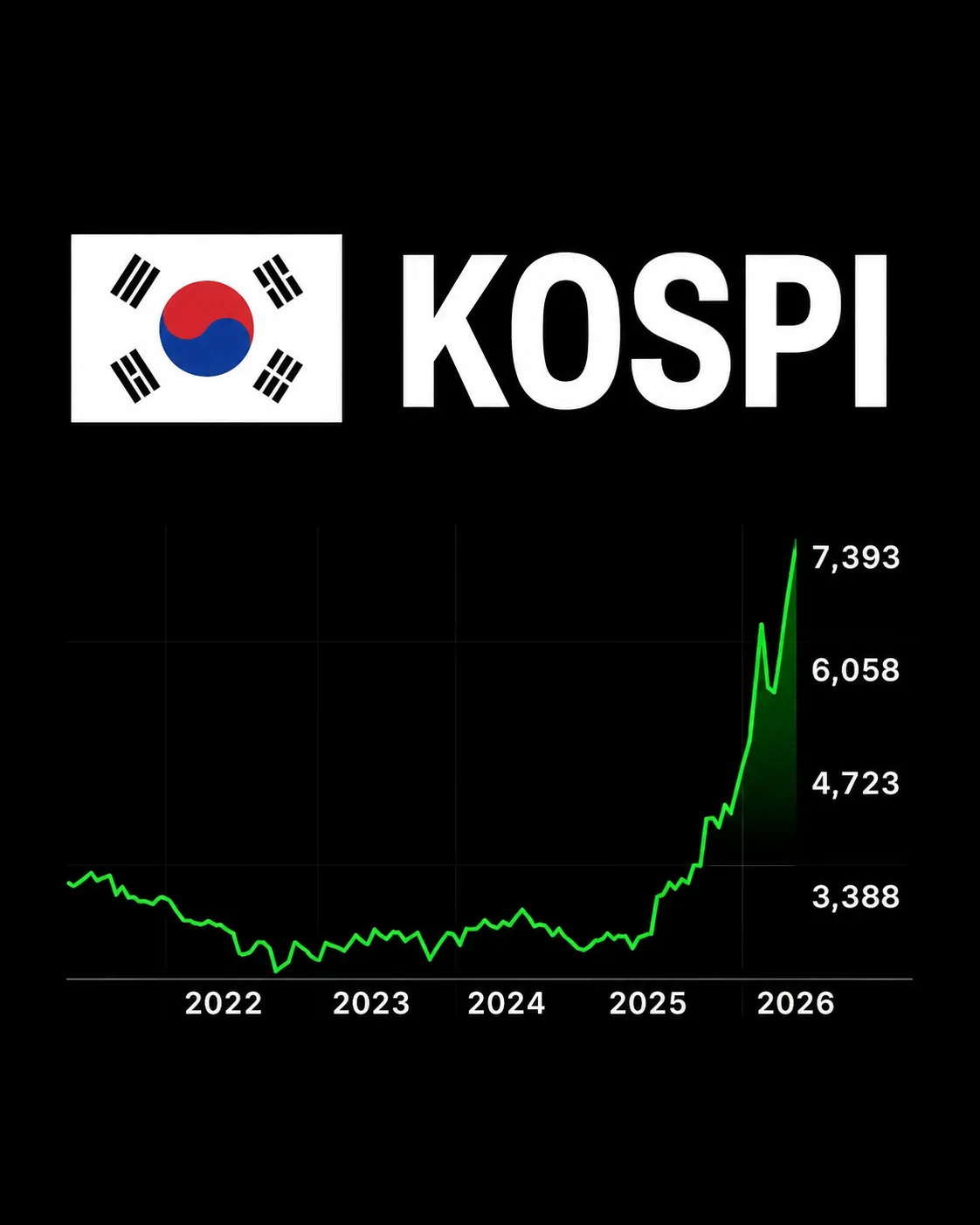
How U.S. Retail Investors Are Buying Korean Stocks Now — EWY, SK Hynix, HPSP, LS Electric
 000660
 005930
 042670+17
Michael Burry: SanDisk Has Surpassed the Dot-Com Bubble—Nasdaq Leaders Now More Extreme Than 1999
 NVDA
NVDA PLTR
PLTR SNDK+4
Smart Money Briefing
Weekly summaries of Wall Street guru moves and crypto whale activity.