
Michael Burry Goes After Nvidia Again: Bullwhip, Bezzle, and the Cisco Moment
Michael Burry called Nvidia 'clearly Cisco' in a new Substack post — identifying buyer concentration, the bullwhip effect, and a Galbraith-style 'bezzle' as the three mechanisms that make Nvidia's demand uniquely dangerous. Nvidia pushed back with a memo to analysts.
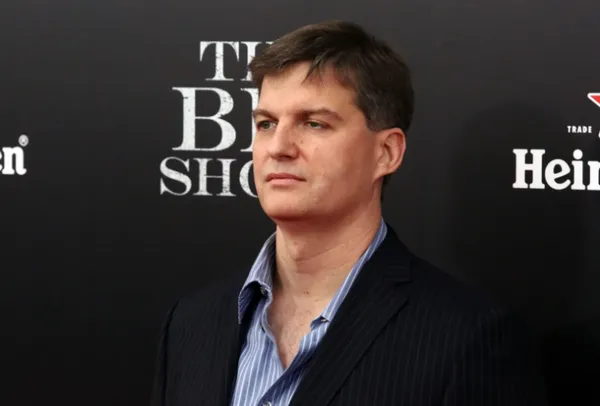
- Michael Burry compared Nvidia to dot-com era Cisco, warning of three structural risks — hyperscaler buyer concentration, the bullwhip effect via $119B non-cancellable TSMC commitments, and a Galbraith-style 'bezzle.' Nvidia responded with a rare memo to sell-side analysts
Burry's Verdict: 'Not Enron. Clearly Cisco.'
Michael Burry of Scion Asset Management published a new Substack post — 'The Heretic's Guide to AI's Stars Part III: Tracepalooza and the Bezzle' — that his most specific attack yet on the AI infrastructure trade. More than 200,000 subscribers read it, and Nvidia took the unusual step of sending a memo to sell-side analysts to push back on his arguments around stock-based compensation and depreciation. Burry responded directly: 'I stand by my analysis. I am not claiming Nvidia is Enron. It is clearly Cisco.'
Three Mechanisms: Buyer Concentration, Bullwhip, and the Bezzle
Burry's warning centers on three structural mechanisms. First, buyer concentration: hyperscalers — Microsoft, Google, Amazon, and Meta — account for approximately 50% of Nvidia's data center revenue. Burry calculated that if Microsoft alone cuts its Nvidia chip spending by 20%, Nvidia takes an approximately 4.2% revenue hit. A small change in one customer's capex plans produces outsized effects.
Second, the bullwhip effect: when supply chain buyers over-order due to fear of missing out, that distortion amplifies backward through the chain. Nvidia has locked in $119 billion in non-cancellable supply commitments with TSMC. Data center financing has expanded to accommodate the buildout. The entire chain is betting demand is permanent. Burry argues it is not.
Third, the bezzle — John Kenneth Galbraith's term for the gap between what people believe they own and what actually exists. Burry argues that current AI revenue flowing through Nvidia reflects a training and benchmarking phase that will eventually give way to an inference and deployment phase with a fundamentally different — and lower — demand profile. 'That distorted demand is working like a bullwhip into NVIDIA's own supply chain,' Burry wrote.
The Cisco Parallel — And Why It Matters Now
Cisco supplied the networking infrastructure for the dot-com internet buildout. Its revenue was real, its customers were real, and the technology was genuinely transformative. What wasn't real was the assumption that the buildout phase would continue indefinitely. When telecom companies stopped buying, Cisco fell more than 80% from its peak. Current top 10 AI stocks have surged 784% in 12 months — versus 622% at the peak of the pre-dot-com period. That 162 percentage-point gap forms the quantitative basis for Burry's comparison. ⚠️ Note: Burry has been early — and wrong — on Nvidia for three years. His framework may prove correct while his timing remains off by years.
Frequently Asked Questions
What is Burry's Bezzle thesis regarding NVDA?
The Bezzle (from economist Galbraith) is the gap between what people believe they own and what actually exists. Burry argues current NVDA AI revenue is concentrated in training-phase demand, and when the market shifts to inference/deployment, the demand structure will change, revealing that gap.
Why is NVDA's hyperscaler concentration a structural risk?
Microsoft, Google, Amazon, Meta account for ~50% of NVDA's datacenter revenue. Burry calculates that if Microsoft alone cuts GPU spending by 20%, NVDA takes a 4.2% revenue hit. High revenue concentration in a few buyers creates asymmetric exposure.
Why did NVDA unusually respond to Burry's analysis?
Burry challenged NVDA's treatment of non-cancellable TSMC supply commitments and SBC accounting. NVDA distributed a rebuttal memo to sell-side analysts — an atypical move — and Burry immediately counter-rebutted, standing by his analysis.
What is Burry's track record on NVDA calls?
Famous for calling the 2008 subprime crisis (the Big Short), but his NVDA short has been costly since 2023. Being right on direction but wrong on timing is a well-known risk of short-selling — Burry acknowledges this himself.
What does this debate mean for Korean investors?
The core question is whether NVDA datacenter growth is durable. SK Hynix (HBM supply) and TSMC exposure face the same demand-cycle risk. Investors should watch for any inflection in hyperscaler AI capex guidance as the clearest leading indicator.

Sunday's SEC 8-K Earnings Filings Quiet, but Royal Gold Doubles Net Income and Launches Buyback
 RGLD
RGLDVeritone Earnings Shock Sends Shares Down 23%...York Space Systems Among 25 US Companies Filing SEC 8-K Earnings Reports
 YSS
YSS CODX
CODX IPWR+26
Applied Materials Posts Record Q3 Revenue of $9.1 Billion, All-Time High EPS
 AMAT
AMATWall Street's Defining Moments
See more
Sunday's SEC 8-K Earnings Filings Quiet, but Royal Gold Doubles Net Income and Launches Buyback
RGLDVeritone Earnings Shock Sends Shares Down 23%...York Space Systems Among 25 US Companies Filing SEC 8-K Earnings Reports
YSSCODXIPWR+26Applied Materials Posts Record Q3 Revenue of $9.1 Billion, All-Time High EPS
AMATSmart Money Briefing
Weekly summaries of Wall Street guru moves and crypto whale activity.