
Bubbles don't burst because the technology fails. They burst when the underlying economics collapse. That's exactly what happened with the dot-com bubble in 2000. The internet didn't fail. What failed was the capital that had been over-invested in fiber-optic infrastructure to support it — capital that never generated a return. Warnings are now emerging that today's AI market shares that same structural DNA.
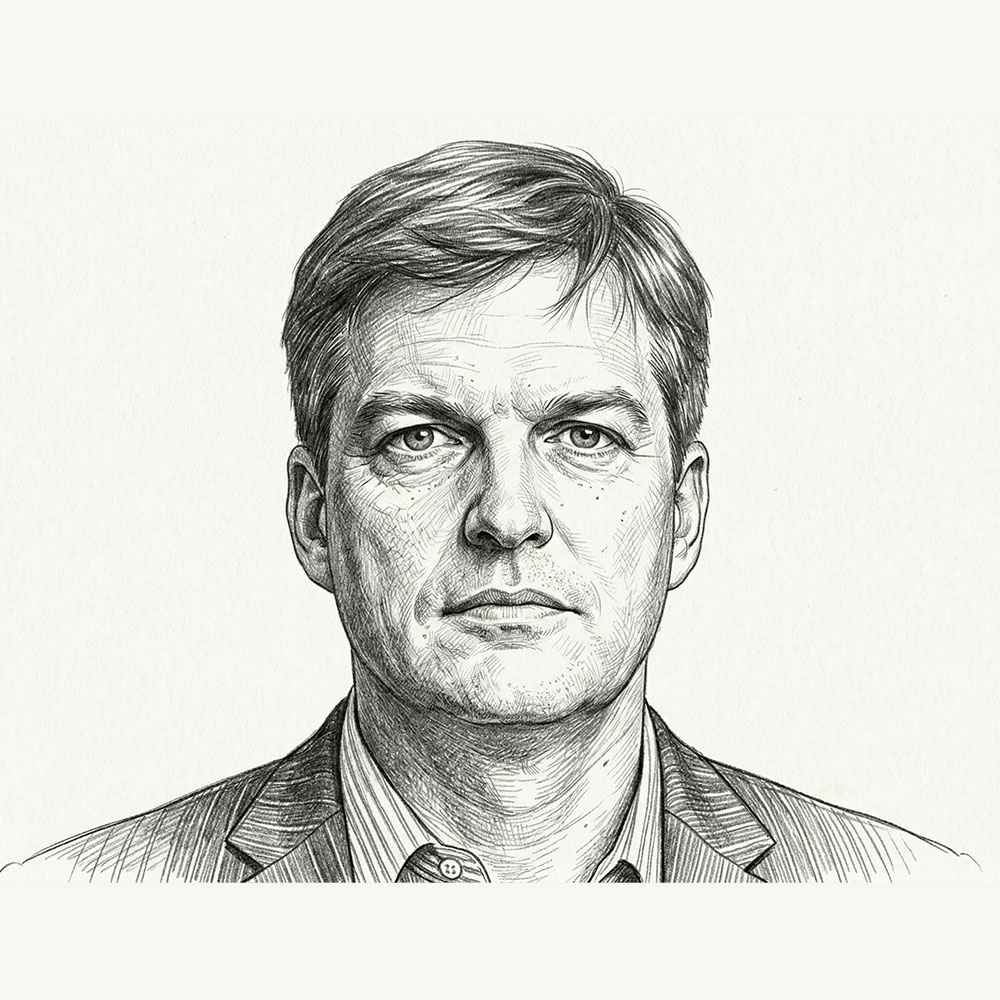
Michael Burry recently laid out his analysis in stark terms: "Announce $1 of AI infrastructure capex, and market cap rises by $3." He argues that an abnormal feedback loop has formed between value creation and investment announcements — and he points out that historically, stock prices have peaked and turned lower before capital expenditures even reach their high-water mark.
Warning Signals Flashing Simultaneously
Multiple anomalous signals have surfaced in recent months in unison. Microsoft (MSFT) has cancelled several gigawatts' worth of non-binding letters of intent (LOIs) and imposed a blanket freeze on new data center leases. According to Wells Fargo analysis, Amazon's (AMZN) AWS has also paused lease negotiations, particularly for overseas colocation facilities. Bloomberg reported that roughly half of U.S. data centers scheduled for 2026 are expected to face delays or outright cancellation.
JPMorgan estimates that AI hyperscalers will need to raise $1.5 trillion through investment-grade bonds alone over the next five years. The logic follows that if this bond market comes under stress, the entire AI financing architecture trembles with it. Projected annual capex for hyperscalers in 2026 stands between $650 billion and $700 billion. AI capital expenditure as a share of GDP sits at approximately 0.8% — roughly half the peak level seen during the dot-com bubble.
The Circular Investment Trap
The structural vulnerability drawing the most scrutiny is circular investment. The argument is that Big Tech companies are purchasing each other's AI services and recycling those revenues back into infrastructure builds — a closed loop that artificially inflates the appearance of real demand. Growth sustained purely by internal circulation, without genuine external demand, becomes fragile the moment any gap in that demand is exposed.
Some interpret Microsoft's data center lease pullback as a demand rebalancing triggered by OpenAI shifting cloud partners. If that reading is correct, the freeze is a temporary adjustment. However, the fact that AWS is moving in the same direction at the same time is difficult to explain away as routine demand reshuffling.
The Bull Case Against Bubble Narratives Remains Forceful
Gartner projects data center spending will grow 55.8% year-over-year in 2026, surpassing $788 billion. Nvidia (NVDA) CEO Jensen Huang has dismissed bubble talk outright, calling the current AI infrastructure buildout "the largest infrastructure build in history." The fact that AI capex as a share of GDP is still only half the dot-com bubble's peak also undercuts the overheating narrative.
Ultimately, the core message of the bubble-warning thesis can be distilled as follows: the risk is not that AI technology fails, but that the financial architecture underwriting AI investment quietly becomes unsustainable — and that's when the deflation begins. After the dot-com bust, the internet survived. But investors in fiber-optic infrastructure at the time did not.