Inteliview
Log inSign up
Deep Dive

World's First 'Election Betting ETFs' Launch Next Week — Bet on U.S. Elections Through Your Brokerage Account

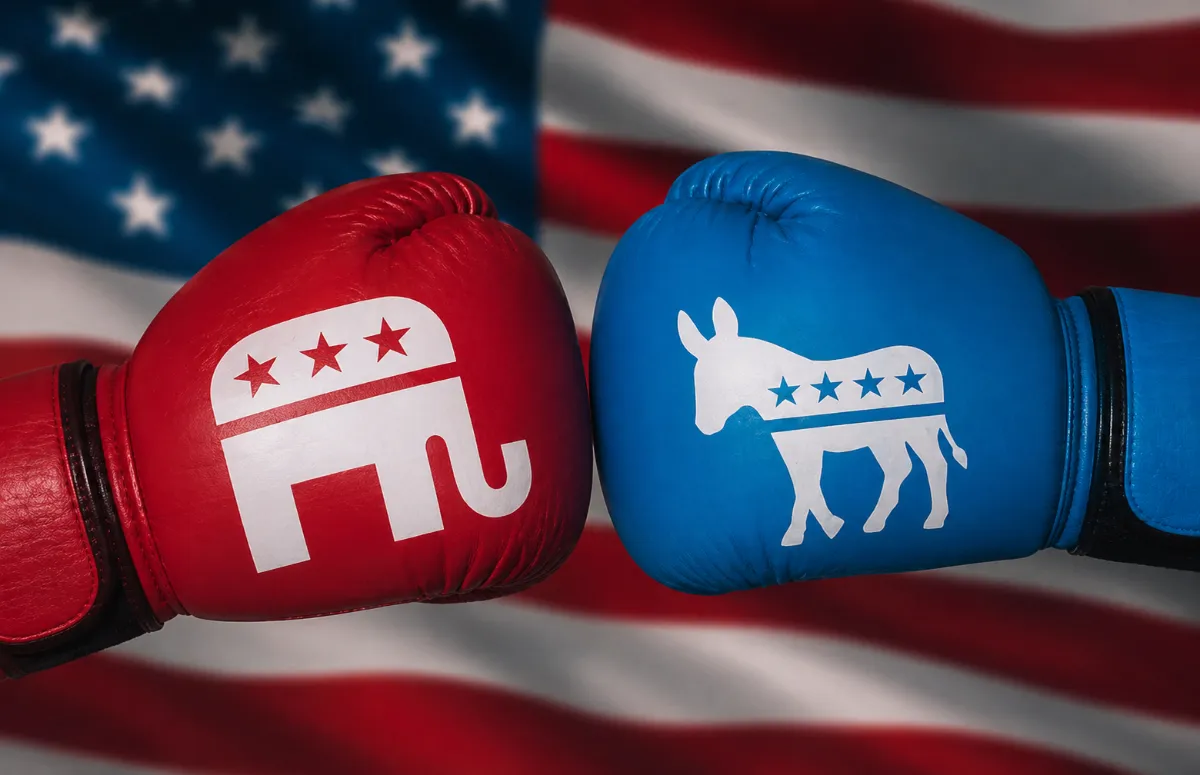
Six first-of-their-kind prediction market ETFs are set to launch on May 5. Roundhill, Bitwise, and GraniteShares are racing to market simultaneously, enabling retail investors to take positions on presidential and midterm election outcomes through standard brokerage and IRA accounts — just like trading stocks.

전영빈·April 29, 2026 at 22:13·4 min
World's First 'Election Betting ETFs' Launch Next Week — Bet on U.S. Elections Through Your Brokerage Account
AIKey Summary
  • The world's first election prediction market ETFs — six products in total — are set to launch on May 5, allowing investors to trade on U.S
  • presidential and midterm election outcomes through standard brokerage and IRA accounts
  • These all-or-nothing binary instruments carry the risk of total principal loss and are unsuitable for long-term investment outside of speculative or hedging strategies

The world's first prediction market ETFs are set to debut on May 5 (local time). Bloomberg ETF analyst James Seyffart confirmed the launch date on April 28. Roundhill Investments is leading with six products, while Bitwise (under the brand name PredictionShares) and GraniteShares have each filed six identically structured products with the SEC — setting up a three-way race for the 'world's first' title.


Bet on Presidential and Midterm Elections via ETF

The structure is straightforward. Each ETF allocates more than 80% of its net assets to binary event contracts traded on CFTC-regulated exchanges such as Kalshi and Polymarket. Contracts settle at $1 if the specified party wins and $0 if it loses.

The six tickers are as follows: BLUP (Democratic presidential win) and REDP (Republican presidential win) target the 2028 presidential election, while BLUS (Democratic Senate), REDS (Republican Senate), BLUH (Democratic House), and REDH (Republican House) are tied to the November 2026 midterm elections.

The key advantage is accessibility. Investors can take positions on election outcomes like any ordinary stock — no Kalshi or Polymarket account required. Eligibility for IRA accounts further dramatically broadens access for retail investors.


Prediction Market Monthly Volume Surges to $18.4 Billion

These products are emerging against a backdrop of explosive growth in prediction markets. Combined monthly trading volume on Kalshi and Polymarket reached approximately $18.4 billion in February 2026, hitting a record high for the sixth consecutive month. Nasdaq has also filed with the SEC to list binary products called 'Outcome Related Options,' signaling that Wall Street as a whole is rushing to enter the prediction market space.


'Total Loss of Principal Possible If the Wrong Side Wins'

SEC filings explicitly state that 'if the election outcome is contrary to the fund's position, investors may lose substantially all of the fund's value.' This is a pure all-or-nothing loss structure — fundamentally unlike a conventional ETF.

The congressional ETFs (BLUS, REDS, BLUH, REDH) settle on the November 3, 2026 election results, while the presidential ETFs (BLUP, REDP) run through the 2028 election. After settlement, the funds automatically roll over into contracts for the next election cycle. Investors should note that these products are unsuitable for long-term asset allocation — they are designed for speculative capital or political hedging purposes only.


Related Assets

Gurus Holding This Stock

FREE MEMBERSHIP

Did you find this useful?

Sign up to bookmark articles, follow gurus, and manage your portfolio — all for free.

Guru trade alerts
Portfolio tracker
Article bookmarks

This report is prepared for Inteliview Premium members. Unauthorized reproduction and redistribution are prohibited.

Back to Deep Dive
MORE — DEEP DIVE
AI Bubble Deflates From Financial Structure, Not Technology… Michael Burry's '$1 Paradox'

AI Bubble Deflates From Financial Structure, Not Technology… Michael Burry's '$1 Paradox'

Michael Burry warned of an abnormal feedback loop where every $1 in announced AI infrastructure capex drives $3 in market cap gains. Microsoft's data center lease freeze, AWS rental halt, and projected delays on half of U.S. data centers slated for 2026 are all emerging simultaneously.

MSFTAMZNGOOGL+4
Apr 29, 22:39
CLARITY Act Winners: Top Stocks & Coins if the Bill Passes — Senate Markup Is the Pivotal Moment

CLARITY Act Winners: Top Stocks & Coins if the Bill Passes — Senate Markup Is the Pivotal Moment

The CLARITY Act is heading toward a Senate markup. If passed, the top beneficiary stocks rank as Coinbase, Robinhood, Circle, Galaxy Digital, and CME Group, while top beneficiary coins rank as Ethereum, Solana, Ripple, and Bitcoin. Polymarket prices passage probability at 61%, with the stablecoin yield provision as the central flashpoint.

COINHOODCRCL+6
Apr 28, 20:19
Robinhood Q1 Earnings on April 28th: Pivoting to Comprehensive Finance with Prediction Markets, AI, and Banking

Robinhood Q1 Earnings on April 28th: Pivoting to Comprehensive Finance with Prediction Markets, AI, and Banking

Robinhood will report Q1 earnings on April 28th. Following record 2025 revenue of $4.5 billion, investors will focus on growth momentum in four key new business segments: prediction markets, Bitstamp, AI Cortex, and banking services.

HOODCOINSCHW+9
Apr 26, 15:57
Guyana: From 800K Population to South America's Richest Nation in 5 Years - Oil Miracle's Dark Side

Guyana: From 800K Population to South America's Richest Nation in 5 Years - Oil Miracle's Dark Side

With just the Stabroek oil field, Guyana achieved the highest per capita GDP in South America in 5 years. However, ExxonMobil's PSA allows the consortium to take 85% of revenues.

XOMCVXHES+3
Apr 26, 12:25
INTELIVIEW NEWSLETTER

Smart Money Briefing

Weekly summaries of Wall Street guru moves and crypto whale activity.