PCE at 3.5% · Consumer sentiment at an all-time low of 48.2 — four hawkish dissents push Kalshi's rate hike odds to 44%.
April nonfarm payrolls rose 115,000, beating consensus expectations. Following March's 185,000, this marks two consecutive months of upside surprises, with the unemployment rate holding steady at 4.3%.
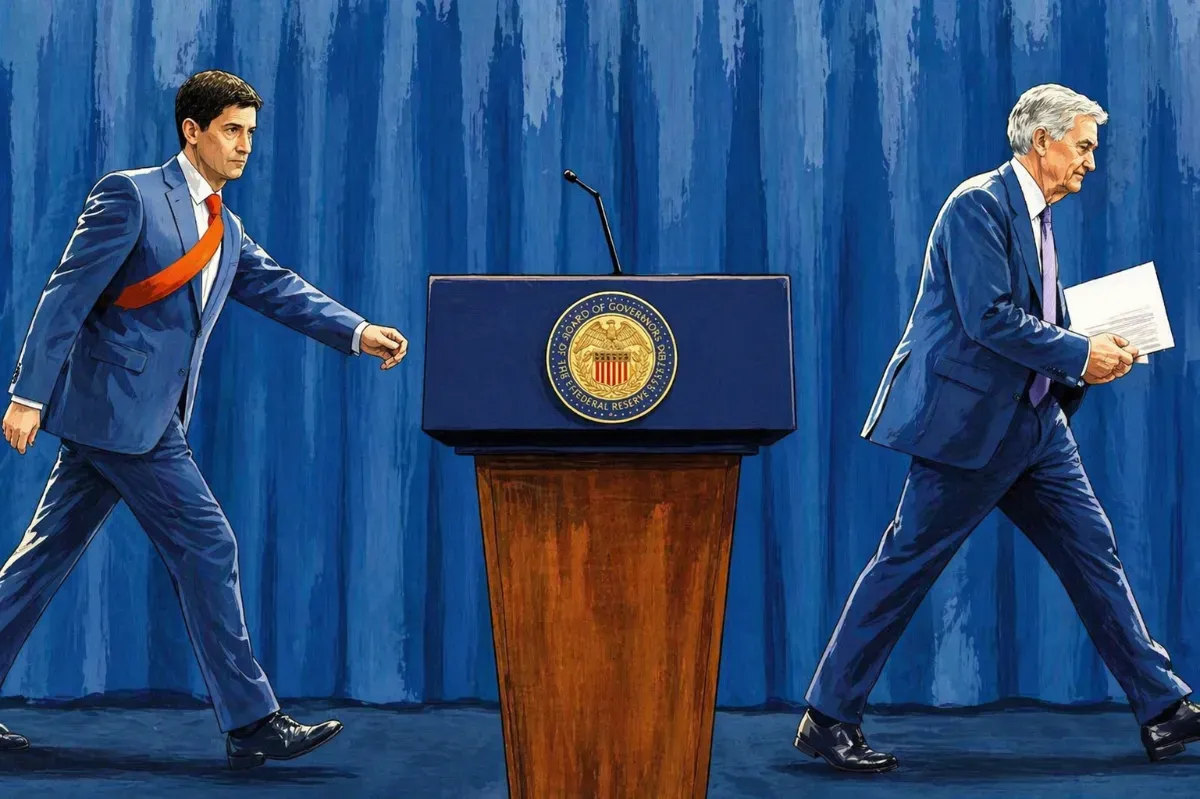
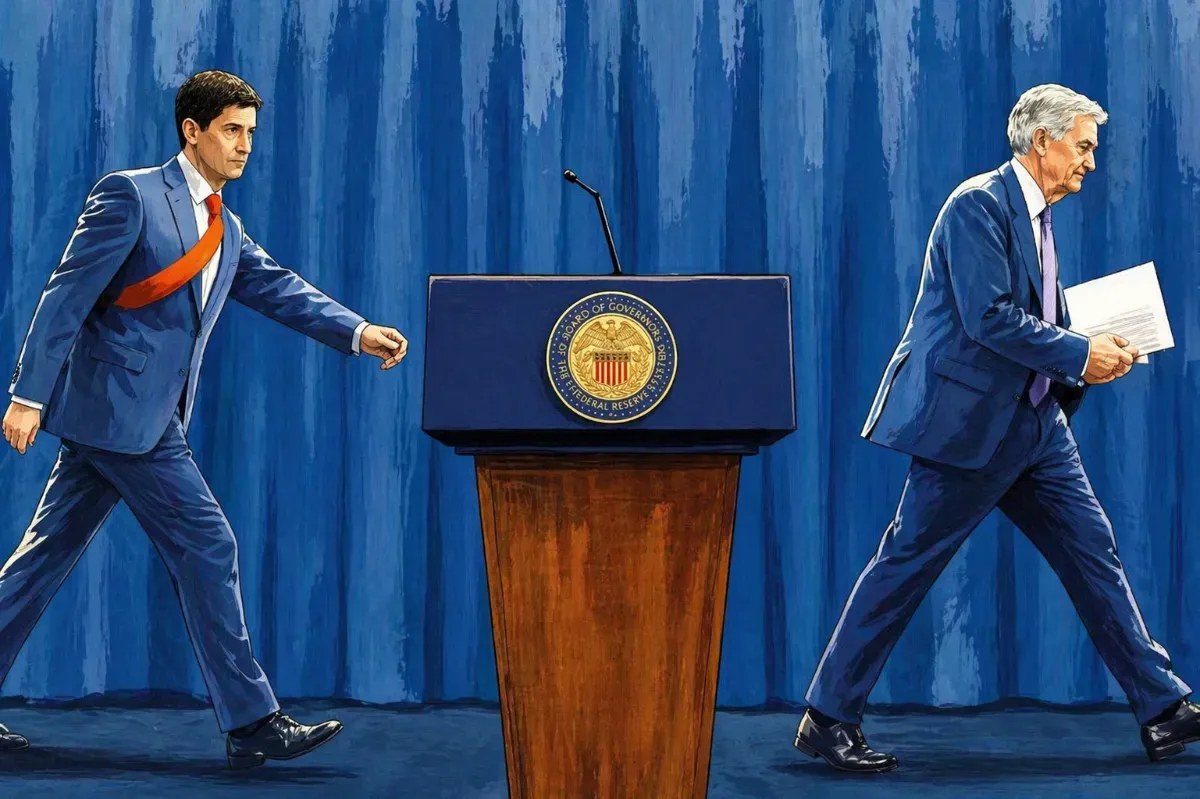
The problem is that this "good number" has become a wall blocking the Fed's rate-cut path. For incoming Chair Kevin Warsh — who faces his first FOMC meeting next month with President Trump's demands at his back — this jobs report is an unwelcome gift.
Jobs Are Holding — But the "High-Anxiety Labor Market" Paradox
- Job gains concentrated in healthcare, retail, and transportation & warehousing
- March figure revised upward from 178,000 to 185,000
- Strongest two consecutive months of job growth since 2024
- Labor force participation rate declined nonetheless
Bill Adams, Chief Economist at Fifth Third Commercial Bank, said, "Rising employment alongside falling labor participation is a signal of labor shortages," adding that "it's one more argument against cutting rates."
A high-anxiety labor market where workers hold on to their jobs and job seekers are frozen in place.
Diane Swonk, Chief Economist, KPMG
Four Hawkish Dissents — The Biggest Fed Rift in 30 Years
The April 29 FOMC voted 8-to-4 to hold the policy rate at 3.5–3.75%. Four dissents is the highest count in 30 years.
- Cleveland Fed's Beth Hammack
- Minneapolis Fed's Neel Kashkari
- Dallas Fed's Lorie Logan
- → The above three issued individual statements suggesting "the next move could be a hike, not a cut"
- Boston Fed's Susan Collins (non-voting this year) echoed the view on May 7: "Rates will remain on hold for a longer period"
Prediction market Kalshi puts the probability of a Fed rate hike before July 2027 at 44%.
PCE at 3.5% · All-Time Low Consumer Sentiment — Inflation Reignition Signals
- March PCE: +3.5% year-over-year (surging from 2.8% in February) — 1.75x the Fed's 2% target
- Core PCE: +3.2%
- Energy shock leading the surge, with supply chain disruptions threatening to spill into food and other categories
- Nationwide forecast: inflation peaking at 4.5% this summer
- May 8 University of Michigan Consumer Sentiment (preliminary): 48.2 — all-time low
New York Fed research found that surging energy prices are hitting the purchasing power of lower-income households particularly hard.
Warsh's First FOMC — "Wait and See" More Likely Than a June Cut
Warsh is set to be confirmed by the Senate in the third week of May before assuming the chairmanship. The June 16–17 FOMC will be his first meeting. Trump has been pressing for rates to fall below 1%, and Warsh has pledged a "regime change" in policy.
But the reality is far from accommodating.
Wage growth has slowed modestly, but the overall report shows labor market resilience. There is no case for cutting rates in the near term.
Greg Gizy, Nomura Asset Management
- Bloomberg Economics: Hold through Q4, then cut 50bp (maintaining prior forecast)
- CME FedWatch: Next cut timing pushed to mid-to-late 2027
What This All Means
Markets must now navigate a situation where three forces are acting simultaneously.
- Strong payrolls → diminished case for cuts
- Energy-driven PCE surge → growing case for hikes
- All-time low consumer sentiment → recession risk
The Fed is sliding into a 'freeze trap' — unable to cut or hike. If Warsh's first FOMC fails to deliver policy clarity, uncertainty will linger far longer.