The Phone Call Worth $1 Billion
September 16, 1992 — a hedge fund manager bet $10 billion against the Bank of England. The Bank raised rates twice that day. It didn't work. This is the record of the day George Soros broke a nation's central bank.
The Phone Call Worth $1 Billion
1. Two Men in New York
August 1992, a Manhattan office.
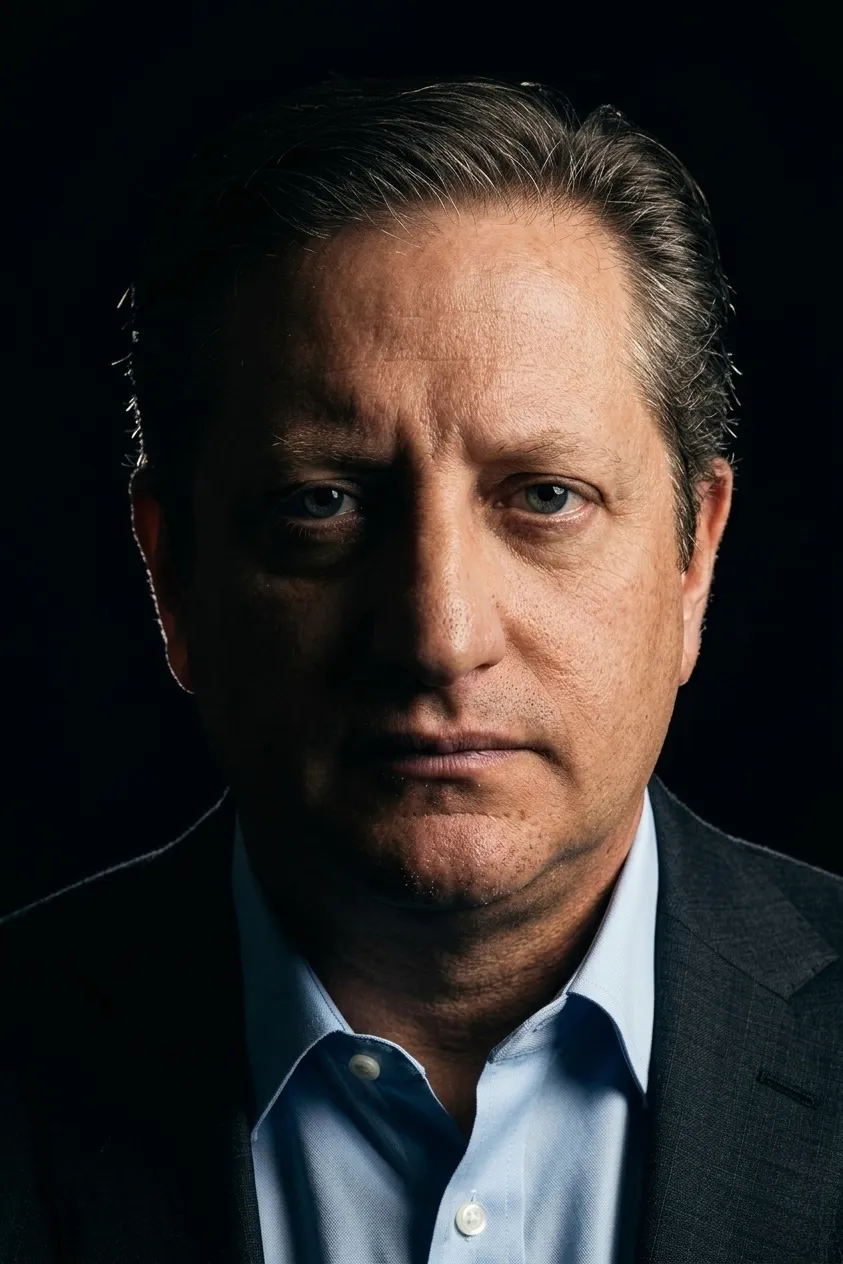
Two men sat across from each other in the Quantum Fund conference room. One was 62-year-old George Soros. The other was 39-year-old Stanley Druckenmiller — the fund's chief portfolio manager.
Druckenmiller was already holding a short position on the pound. About $1.5 billion. He was convinced Britain couldn't hold its position in the European Exchange Rate Mechanism (ERM).
His logic was simple. The British economy was in deep recession. Unemployment was above 10%. To stimulate growth, rates needed to fall. But under ERM rules, Britain had to keep the pound pegged to the German mark — and Germany, fresh off reunification, was raising rates to fight inflation. Britain was trapped: running a recession while being forced to keep rates high.
"This structure is unsustainable," Druckenmiller told Soros. "The market will test the Bank of England soon."
Soros was silent for a long moment, listening to Druckenmiller's analysis. Then slowly he spoke.
"Why only $1.5 billion?"
Druckenmiller was caught off guard.
Soros continued:
"If you're this certain, this is a once-in-a-generation trade. Going in small is the wrong approach. Put everything in."
Druckenmiller decided that day: he would scale up massively.
2. The Theory of Reflexivity
To understand why Soros made this call, you have to start with his worldview.
Soros was not a simple investor. He was a philosopher — or more precisely, a man who had wanted to be a philosopher but couldn't make money at it, so became an investor instead.
He was born in Budapest, Hungary in 1930 to a Jewish family. His birth name was György Schwartz. In 1944, when he was fourteen, the Nazis occupied Hungary. His father changed the family name to Soros, forged false identity papers, and hid the family. Young Soros survived that winter under a fabricated Christian identity.
That experience shaped his worldview. The world is not rational. Authority can be wrong. And there is always a gap between perception and reality.
After the war he went to the London School of Economics, where he encountered the philosopher Karl Popper, famous for The Open Society and Its Enemies. Studying under Popper, Soros began developing his own theory.
He called it reflexivity.
The core proposition: "Market participants' perceptions change the market itself." Economics textbooks say markets reflect objective reality. Soros said the opposite: what market participants believe — whether right or wrong — creates actual market movements. Those movements then reinforce participants' beliefs. This is what creates bubbles. This is what creates crises.
In the summer of 1992, what Soros saw was the moment Britain's credibility was about to collapse reflexively. Once markets started believing "Britain can't hold ERM," that belief would actually push Britain out. He was positioned to accelerate that reflexive feedback loop.
Druckenmiller did economic analysis. Soros saw a historical moment.
3. The Bundesbank President's Mistake
Through early September 1992, the pound wobbled but hadn't broken. The Bank of England was burning through foreign reserves defending it. Other European currencies were under pressure too, but all were holding.
Then on Tuesday evening, September 15, something happened.
Bundesbank president Helmut Schlesinger gave an interview to the Handelsblatt and The Wall Street Journal. In the interview, he said something to this effect:
"Some European currencies will need realignment to ease tensions."
Diplomatic language. But the market's reading was clear:
"The Bundesbank president just mentioned a pound devaluation."
That single sentence lit the match.
That night in the New York market, the pound began to shake. When Asian markets opened the following morning, sell orders poured in on sterling. By the time London opened on Wednesday, September 16, the pound had already fallen close to its ERM floor.
Quantum Fund had built its position to $10 billion by the previous day. Including leverage, the actual exposure was even larger.
Soros and Druckenmiller were waiting.
4. Wednesday Morning
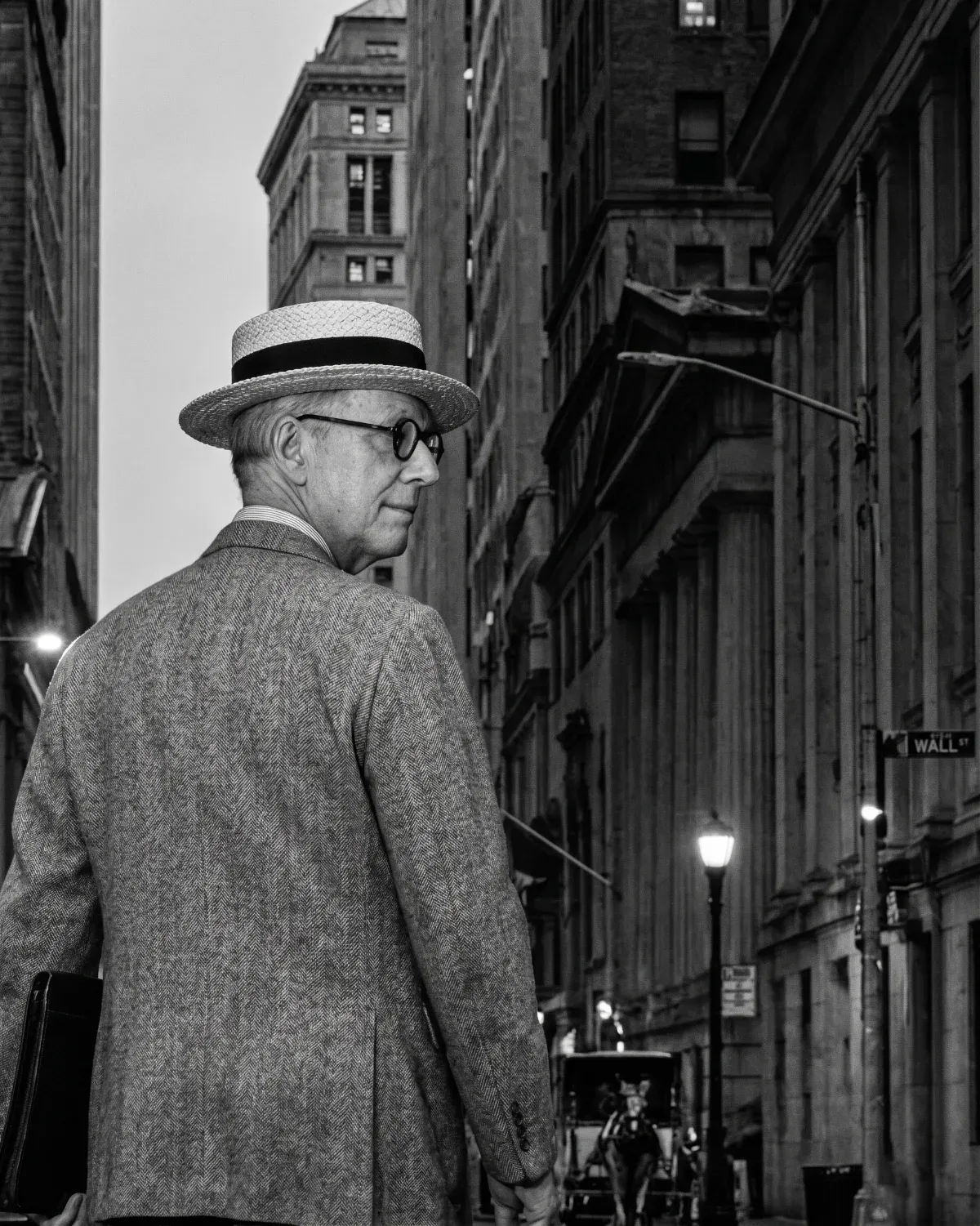
8:30 AM, September 16 — the Bank of England's headquarters on Threadneedle Street in the City of London.
Governor Robin Leigh-Pemberton and Chancellor of the Exchequer Norman Lamont were in emergency session. The pound was threatening to break through the ERM floor. They had to act.
11 AM: the Bank of England played its first card. Base rate raised from 10% to 12% — a 2-point emergency hike. Under normal circumstances, this scale of increase would powerfully support the currency.
Market reaction: nothing. Selling didn't stop.
The Bank simultaneously poured foreign reserves into buying pounds. Billions of dollars burned through in a single day. They called central banks around the world for support. France, the U.S., Japan, Germany. Most offered only token political backing — no real intervention.
2:15 PM: the Bank played its second card. Rates raised again from 12% to 15% — a second hike the same day. Unprecedented in Bank of England history.
Market reaction: still nothing. The selling only intensified.
The market's interpretation had already calcified: "If the Bank of England is this desperate, they're losing." Reflexivity was in operation. The Bank's defensive action was, paradoxically, destroying confidence in the Bank itself.
In Quantum Fund's New York office, Druckenmiller and Soros watched the screens. The pound kept falling.
"It's over," Druckenmiller said.
7 PM: Chancellor Lamont held a press conference on the steps of the Bank of England. It was raining.
"The United Kingdom is suspending its membership of the European Exchange Rate Mechanism. The interest rate increases will be reversed."
At that moment, the pound began to free-fall. Within days: 15% against the mark. Nearly 25% against the dollar.
Quantum Fund made $1 billion. Soros personally made hundreds of millions. Including other currency trades, Quantum's gains for the week reached $2 billion.
And the Bank of England?
It had burned through approximately $27 billion in foreign reserves in a single day. The British government suffered a loss equal to roughly 1.5% of GDP.
After that Wednesday, global financial history named the day "Black Wednesday." And George Soros became known as "The Man Who Broke the Bank of England."
5. Did the Bank of England Really Lose?
There's a misconception in this story.
Many believe Soros broke the Bank of England alone. That's not quite right. Hundreds of hedge funds and institutions participated in selling the pound on September 16. Citibank, Chase Manhattan, Japanese exporters, even British companies — all were selling sterling. Soros simply held the largest position among them.
What made him special was scale and timing.
Other hedge funds were moving $2–3 billion. Soros had $10 billion. That size became a signal. Other market participants heard that "Soros has this much on" and joined in.
Soros's own position became a self-fulfilling prophecy.
There's another reason he became legend: he acknowledged the trade publicly. Most hedge fund managers keep such trades private, to avoid political blowback. Soros did the opposite. In October 1992 he gave an interview to The Times. He explained how he had shorted the pound, why he had been so certain.
The British press painted him as a villain. He became "the foreign speculator who attacked Britain." Some newspapers used his face as a symbol of greed.
Soros was cold in response:
"I saw a flaw in a flawed policy made by the British government. Without that flaw, I could have done nothing. Before blaming me, ask why that policy existed in the first place."
And added:
"Even without me, someone else would have done it. Markets eventually reveal the truth. I happened to be there when the truth was revealed."
6. The Irony
The aftermath of Black Wednesday has a historical irony.
After the Bank of England withdrew from ERM, what happened to the British economy? It recovered quickly. A weaker pound revived exports. The Bank was free to cut rates. From 1993, Britain entered a powerful growth phase. In the late 1990s, Britain's growth rate outpaced Germany and France.
Through documents made public in 2005, the Treasury's internal assessment became known. The total cost of Black Wednesday was approximately £3.3 billion. But the Treasury's own analysis showed that the economic benefits from the rapid recovery after ERM exit far outweighed that cost.
In other words, the trade Soros won ultimately helped save the British economy.
Former Chancellor Lamont later said:
"Black Wednesday was a catastrophe. But what came after that catastrophe mattered more. We were liberated."
7. 1997: Asia
Five years later, in the summer of 1997, Soros's name became familiar to Koreans as well.
That summer, the Southeast Asian currency crisis began. The Thai baht was attacked; the Malaysian ringgit and Indonesian rupiah fell in sequence. And in November of that year, the Korean won required an IMF bailout.
Malaysian Prime Minister Mahathir Mohamad publicly named Soros: "Speculators like Soros destroyed our economies." Korean media adopted a similar narrative.
Soros responded publicly again. He admitted holding positions on the Thai baht and Malaysian ringgit. But he stated he had not directly speculated against the won. And his interpretation:
"The cause of the Asian crisis was structural policy failure by each government. The growth model dependent on fixed exchange rates and short-term foreign debt was not sustainable. Hedge funds were the trigger — but the gun was loaded by each government."
How accurate that interpretation is remains debated. But one thing is clear: markets eventually test policies built on lies. Only the timing is unknown.
August 1992. You are Soros. Druckenmiller has just reported a $1.5 billion short position on the pound. The structure of the British economy cannot sustain the ERM. But no one knows exactly when it will break.
8. Three Lessons This Story Left Behind
First, size your position to match the conviction.
Most retail investors, even when certain about a stock, allocate only 5–10% of their portfolio. In the name of safety. Soros's philosophy was the opposite: "If you truly have conviction, bet at a scale that matches it. Otherwise, don't bet at all." The middle is the worst place. A 10% position that's right doesn't change your life; a 10% position that's wrong doesn't teach you anything. Ask yourself honestly: what are you truly certain of? If the answer is nothing, hold cash. If you have an answer, bet accordingly.
Second, markets eventually test policy lies.
Britain's ERM policy was unsustainable. Soros saw the tipping point of that unsustainability. For retail investors, the principle works like this: if a company's numbers look too good but the structure doesn't make sense, those numbers will be reset. Chinese P2P lending, the Turkish lira, Japan's negative rates, algorithmic stablecoins in crypto. When a system that appears to work smoothly harbors an internal contradiction, markets eventually test that contradiction. Only the timing is uncertain.
Third, getting out when wrong matters more than making more when right.
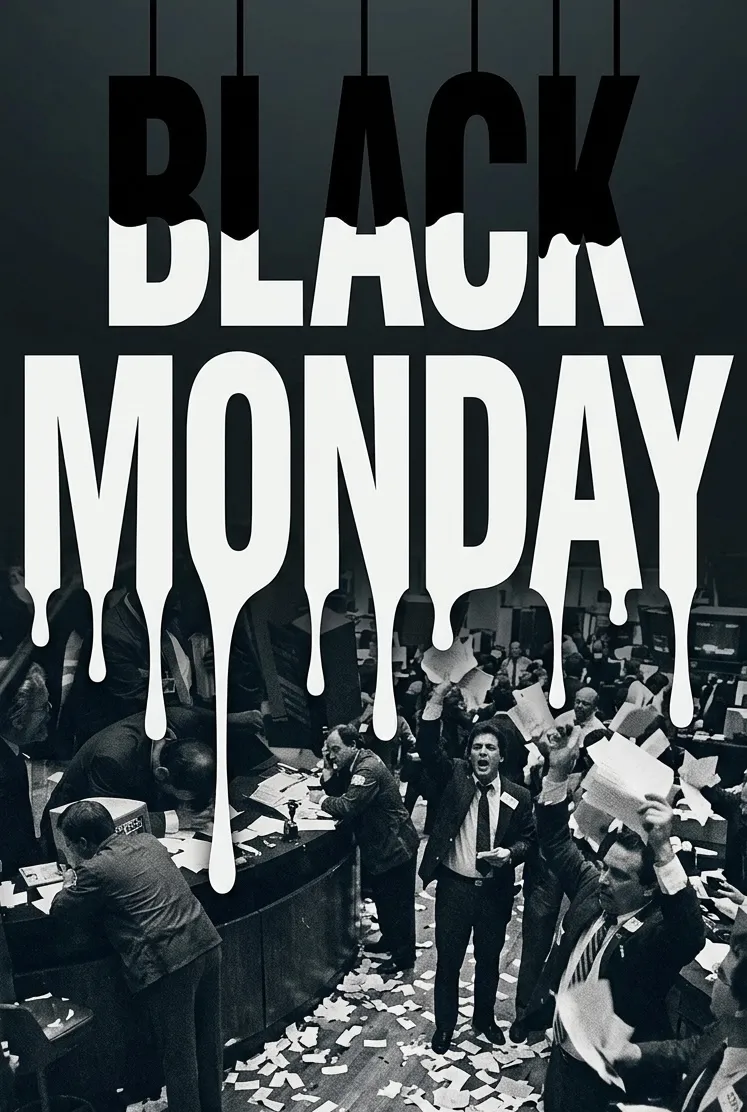
There's another principle Soros has emphasized his whole life: "It doesn't matter whether I'm right or wrong. What matters is how much I make when I'm right and how much I lose when I'm wrong." He made many wrong trades. He took major losses on Black Monday in 1987, and lost hundreds of millions in the 1998 Russia crisis. But the moment he realized he was wrong, he closed the position. He was consistently one of the fastest managers at cutting losses. The opposite of the Korean retail investor: many sell at 10% gains, and when down 30% still hold thinking "it'll come back." That asymmetry destroys capital.
Once you've made your choice, reveal what the legend actually did
9. What He Saw
Thirty years have passed since Black Wednesday.
Soros closed Quantum Fund to outside capital in 2011, converting to a family office managing only his own money. At that point his net worth was approximately $20 billion. He has donated most of it to the Open Society Foundations he established — cumulative donations through 2024 of approximately $32 billion, ranking among the top three individual donors in history.
Now 95, he has almost entirely withdrawn from public activity. His son Alexander Soros has managed the foundation since 2023.
But that Wednesday, September 16, 1992, remains on the record.
An afternoon when one man faced a nation's central bank head-on. Two interest rate hikes. Two futile defenses. A press conference in the London rain.
Soros wasn't there. He was watching screens in a New York office.
What he saw that afternoon wasn't only a pound chart. He was seeing again a truth he had first learned in Budapest at fourteen years old:
Authority can be wrong. And sometimes, that wrongness becomes history.
- 소로스의 철학
- 반사성 — 시장의 믿음이 현실을 바꾼다
- 버핏의 철학
- 내재가치 — 현실이 시장 가격을 결정한다
- 소로스의 방법
- 단기 집중 베팅, 레버리지, 빠른 손절
- 버핏의 방법
- 장기 보유, 무레버리지, 인내
- 공통점
- 확신 있을 때 크게 건다 — 둘 다 포트폴리오 집중 투자자
What's your take on this story?
What do you think about George Soros's decision?
Sign in to participate
Sign InGeorge Soros Today
Where is George Soros investing right now? See their latest 13F portfolio and current convictions.