
While I Was Asleep, an AI Found Cheaper Insurance and Switched. What x402 Changes.
AI agent autonomy is bottlenecked by payments. Coinbase's x402 lets agents transact with any service the moment they need to — no prior account, no prior contract. AWS, Visa, and Stripe just joined the governance.

- AI agent autonomy is blocked by payment infrastructure, not capability
- x402 lets agents settle USDC micropayments instantly via HTTP 402, with no prior contract
- After the April Linux Foundation transfer, AWS, Visa, Mastercard, and Stripe joined governance
AI agent autonomy is bottlenecked by payment infrastructure. Coinbase's x402 removes the door.
Auto insurance renewal is coming up. The drill is fixed: open multiple insurer sites, fill in the same forms, compare quotes, take the calls, pay. It's an hour's work, every year. And every year, more people just give up and renew last year's plan.
Now imagine telling an AI agent: "Find me the cheapest car insurance that fits my profile and renew it." Then forget about it.
The agent goes to work alone. It pings the APIs of dozens of insurers. Some charge access fees for quote data. The agent pays USDC instantly and pulls the data — accident-history databases, regional risk stats, real-time premium feeds. Different fees per service, no prior relationship anywhere. The agent pays at every door, accumulates information, finds the lowest price that fits the profile, and closes the contract.
A notification arrives. "Renewed. 23% cheaper than last year."
Why this is impossible today — payments are the bottleneck
The blocker is not the AI itself. GPT-4o, Claude, and Gemini can already do the comparison logic. The problem is what comes next.
For an agent to access an insurer's API for the first time, someone has to set up the contract in advance — provision auth keys, register a payment method. That process does not automate. A human has to step in. No matter how smart the agent is, as long as the payments stack is human-centric, the agent can only walk through doors humans pre-opened.
That is the structural limit on AI agents today. Not capability. Infrastructure.
What x402 changes — it removes the door
x402 changes this at the protocol layer. The mechanic is simple: an agent calls a service, the server replies with HTTP 402 — "this data costs $0.003." The agent sends USDC instantly, gets the data, moves to the next service.
No account required. No prior contract required. First-time service or 3 a.m., it doesn't matter. The agent gets the access it needs the moment it needs it, and pays right there.
Back to the insurance example: the agent now talks to every insurer API that exists, not the twelve a human pre-configured. More comparisons, sharper results, lower premiums — all done while you sleep.
It's not just "faster payments." The agent's reach itself changes. From a model where humans must watch and approve, to one where agents source resources and complete missions on their own. This is the autonomy question.
Standards war — why Coinbase did not keep it
Coinbase moving x402 to the Linux Foundation in April 2026 is the key move. AWS, Google, Microsoft, Visa, Mastercard, Stripe, and Shopify all joined governance.
The meaning is best read against HTTP. When Tim Berners-Lee built HTTP in 1991, if CERN had kept it, the internet we have wouldn't exist. It became a public good, so every server and every browser ended up speaking the same language. x402 is the same logic. As Coinbase-only protocol, it can't become the standard for an agent economy. For any agent and any service to connect the same way, it must be a neutral commons.
Visa and Mastercard joining should be read in this context. The traditional payment rails see x402 as a complement, not a competitor — agent-driven micropayments in USDC don't collide with their card-rail business. AWS shipping Bedrock AgentCore Payments on top of x402 is the experiment-is-over signal: the protocol is now riding on real cloud infrastructure.
What the numbers say — narrative vs reality gap
- Cumulative transactions ~100M, cumulative volume ~$26M
- November 2025 weekly peak 13.7M → March 2026 ~110K (sharp drop)
- Over 95% concentrated on Base chain
The headline numbers look impressive. The trajectory looks different. This is still mostly an experiment inside one ecosystem.
That gap is the investment question. Infrastructure always lays before demand. Power lines came before appliances; the internet came before content. x402 sits somewhere along that arc. How fast and how big the agent economy actually grows is what determines the value of this rail.
Investing map — bet on the rail-layers
In equities, Coinbase (COIN) and Cloudflare (NET) are the most structural positions. Coinbase is the original developer; ~64% of x402 traffic still routes through its infrastructure. The more agent payments grow, the more traffic accumulates on Coinbase rails. Cloudflare is a Foundation co-founder and has integrated x402 into its Agents SDK; if agent payments get processed at the edge, Cloudflare's network is the path.
In crypto, Kite (Kite AI) is the most structural infrastructure layer — an AI-purpose L1 with x402 native payments fully implemented, backed by $33M from Coinbase Ventures and PayPal Ventures. With the token down 40%+ from ATH, it's a high-risk position today, but if the agent economy compounds, it's positioned to benefit first. Bankr (BNKR) offers direct exposure as an x402-native payment agent, but at a $31M market cap it's a micro-cap risk.
What this says
We don't shop our insurance every year because it's annoying. The economic cost of that friction is larger than people think — research shows over 60% of US auto-insurance customers stay with their plan even when cheaper options exist. The moment an agent erases that friction, every insurer API needs an agent-readable payment rail.
And it's not just insurance. Power plans, internet service, cloud storage. Every recurring contract humans neglect out of inertia becomes the agent economy's market. The payment rail of that market is x402.
Frequently Asked Questions
How is x402 different from existing payments?
An agent can transact with a brand-new service the moment it needs to — no prior contract, no account, USDC micropayments settled at the same call. Legacy payments require human-centric setup (auth keys, payment methods), so agents could only enter doors humans pre-opened.
Why did Visa and Mastercard join x402?
They concluded that agent-driven USDC micropayments and the traditional card-rail business don't directly compete — they're complements. AWS launching Bedrock AgentCore Payments on top of x402 is the signal that the protocol is now riding on real cloud infrastructure.
What is the biggest risk for x402?
The gap between narrative and reality. 100M cumulative transactions sound large, but weekly volume fell from 13.7M in November 2025 to ~110K by March 2026, and 95%+ of activity sits inside the Base chain. It is still an experiment confined to one ecosystem.
How can investors get x402 exposure?
In equities, Coinbase (COIN) and Cloudflare (NET) are the structural plays — Coinbase as the originator (about 64% of x402 traffic), Cloudflare as a Foundation co-founder routing agent payments at the edge. In crypto, Kite (Kite AI) and Bankr (BNKR) are direct-exposure assets, but small market caps make them volatile.

Qualcomm CEO: "We're Building Secret Devices With Almost Every AI Company." OpenAI's First Hardware May Run on Qualcomm Silicon.
 QCOM
QCOM META
META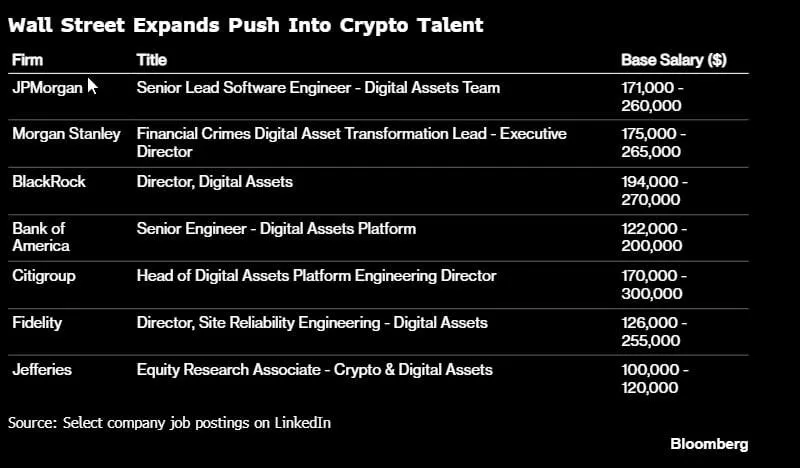
Wall Street Is Scooping Up Crypto Talent — JPMorgan, BlackRock & Citi Offer Up to $300K
 JPM
JPM BLK
BLK GS+8
GS+8
'The Issuance Race Is Over — Now Comes the Distribution War': Who Wins the $30B RWA Era
 ONDO
ONDO CRCLBLK+4
Wall Street's Defining Moments
See more







Smart Money Briefing
Weekly summaries of Wall Street guru moves and crypto whale activity.