
J.P. Morgan Sets KOSPI Target at 6,000–7,500, Names Korea Its Top Global Market Pick
'Early innings of a structural bull market' — Memory supercycle, Korea Value-up program, and untapped foreign inflows cited as three key tailwinds
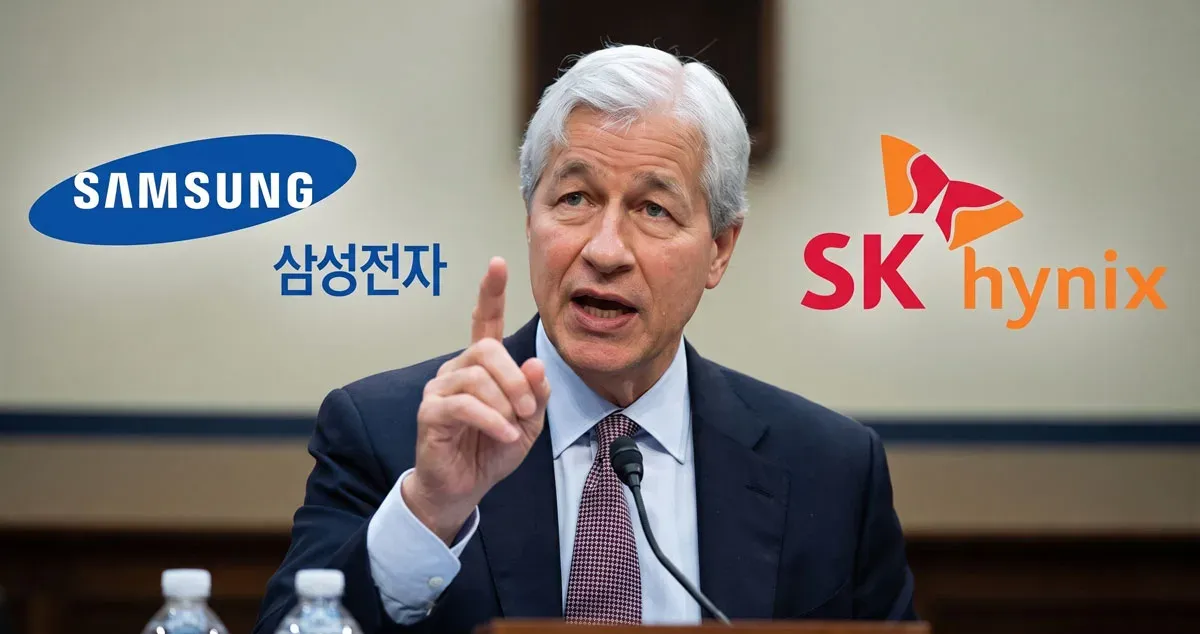
J.P. Morgan has designated the Korean equity market as its top global pick, setting a base-case KOSPI target of 6,000 and a bull-case scenario of 7,500. Published shortly after the KOSPI broke through the 5,000 level, the report implies additional upside of approximately 20% and 37%, respectively, from current levels.
Mixo Das, J.P. Morgan's Head of Asia Equity Strategy, characterized the current environment as "the early stages of a structural bull market." While acknowledging the possibility of near-term pullbacks, Das maintained his outlook, arguing that the rally is fundamentals-driven — underpinned by ROE (return on equity) improvement running in tandem with PBR (price-to-book ratio) re-rating. The key distinction, he noted, is that corporate earnings are expanding faster than share prices, keeping valuation risks relatively contained.
Memory Supercycle as the Primary Catalyst
J.P. Morgan identifies the memory semiconductor supercycle as the foremost upside driver. The report argues that sustained memory price appreciation, surging demand for HBM (High Bandwidth Memory), and accelerating data center capital expenditure translate directly into structural earnings growth for Korea's leading memory chipmakers. Tickers 005930 and 000660 are explicitly named as top sector picks.
Expanding AI infrastructure investment further reinforces this thesis. As global Big Tech players ramp up data center capex, HBM demand scales proportionally — a dynamic that disproportionately benefits Korean memory manufacturers.
Foreign Investors Have Yet to Enter
The second key driver is the absence of meaningful foreign capital inflows. The market's faster-than-expected advance has left many foreign institutional investors on the sidelines, still searching for an entry point. J.P. Morgan views this supply-demand gap as a contrarian upside catalyst — once foreign buying begins in earnest, it could provide a significant additional leg higher.
The third driver is the unwinding of the Korea Discount. The government's corporate Value-up initiative and rising expectations for governance reform are seen as just beginning to translate into a PBR re-rating across Korean equities.
Oil Price Spike Identified as the Biggest Risk
Das flagged a sharp surge in oil prices as "a more dangerous risk factor than war itself." With energy price volatility already elevated amid the Iran conflict, a further spike in crude would deal a broad blow to Korea's import-dependent economy.
Shifts in the competitive dynamics of the memory market also warrant close monitoring. QCOM's recently announced joint development of smartphone DRAM with Chinese memory maker CXMT represents a potential long-term threat to Korean firms' market share in the commodity DRAM segment.
A near-term technical correction driven by the market's rapid run-up is another risk to watch. The report recommends a staged buying approach, suggesting investors keep 20–30% of their total portfolio in cash to deploy opportunistically on any pullbacks.
Related Stocks & ETFs
🇰🇷 Memory Semiconductors (J.P. Morgan Top Picks)
Samsung Electronics (KRX: 005930) — Primary beneficiary of HBM & DRAM supercycle
SK Hynix (KRX: 000660) — #1 market share in HBM
🚢 Shipbuilding & Defense (Value-up Beneficiaries)
HD Hyundai Heavy Industries (KRX: 329180) — Riding the shipbuilding order boom
Hanwha Aerospace (KRX: 012450) — Defense export momentum
LIG Nex1 (KRX: 079550) — Guided weapons & defense exports
📈 ETFs
KODEX KOSPI200 (KRX: 069500) — Korea's flagship KOSPI200 ETF
TIGER KOSPI200 (KRX: 102110) — KOSPI200 tracking ETF
iShares MSCI South Korea ETF (NYSE: EWY) — U.S.-listed benchmark Korea ETF
Frequently Asked Questions
JP모건이 코스피 6,000~7,500을 자신하는 근거는?
이번 상승이 ROE 개선과 PBR 상승이 동반된 이익 기반 상승이라는 점이 핵심입니다. 기업 이익이 주가보다 빠르게 늘고 있어 밸류에이션 부담이 상대적으로 낮다는 분석입니다.
외국인 자금 미유입이 왜 호재인가요?
시장이 예상보다 빠르게 오르면서 외국인이 진입 시점을 놓쳤기 때문입니다. 본격 유입이 시작되면 추가 상승 여력이 생긴다는 역발상 논리로, 수급 공백 자체가 상승 여력으로 남아 있다는 시각입니다.
JP모건이 꼽은 최선호 종목은?
메모리 반도체에서 삼성전자(005930)와 SK하이닉스(000660)를 최선호 업종으로 명시했습니다. HBM 수요 폭증과 AI 데이터센터 자본 지출 증가가 한국 메모리 기업의 구조적 이익 증가로 직결된다는 판단입니다.
가장 큰 리스크는 무엇인가요?
다스 전략가는 유가 급등을 "전쟁보다 더 위험한 변수"로 꼽았습니다. 수입 의존도가 높은 한국 경제 전반에 타격이 됩니다. 단기 과속에 따른 조정 가능성도 경계 요인이며, JP모건은 분할 매수와 현금 비중 20~30% 유지를 권고했습니다.

25 Companies Including PayPal, NXP Semiconductors File Earnings With SEC Today...SK Hynix Operating Profit Tops $41.6B
 PYPL
PYPL NXPI
NXPI HUBB+19
David Tepper's Q1 2026 Portfolio: AMZN Stake Up 98%, UBER Surges 242%
 AMZN
AMZN MU
MU GOOG+7
4 Mega-Cap Stocks With $400–$5,400 Share Prices Positioned for a Potential Split in 2026
 META
META MSFT
MSFT BKNG+4
Wall Street's Defining Moments
See more

Sunday's SEC 8-K Earnings Filings Quiet, but Royal Gold Doubles Net Income and Launches Buyback
 RGLD
RGLDVeritone Earnings Shock Sends Shares Down 23%...York Space Systems Among 25 US Companies Filing SEC 8-K Earnings Reports
 YSS
YSS CODX
CODX IPWR+26
Applied Materials Posts Record Q3 Revenue of $9.1 Billion, All-Time High EPS
 AMAT
AMATSmart Money Briefing
Weekly summaries of Wall Street guru moves and crypto whale activity.