
Uber and Naver Form 80-20 Consortium to Acquire Baemin for Up to $5.5 Billion
Uber has formed an 80-20 consortium with Naver to bid up to 8 trillion won ($5.5 billion) for Baemin. Naver's 19.9% stake is designed to stay just below the 20% threshold that triggers Korea Fair Trade Commission review. Uber has also filed a separate letter of intent for Kakao Mobility.
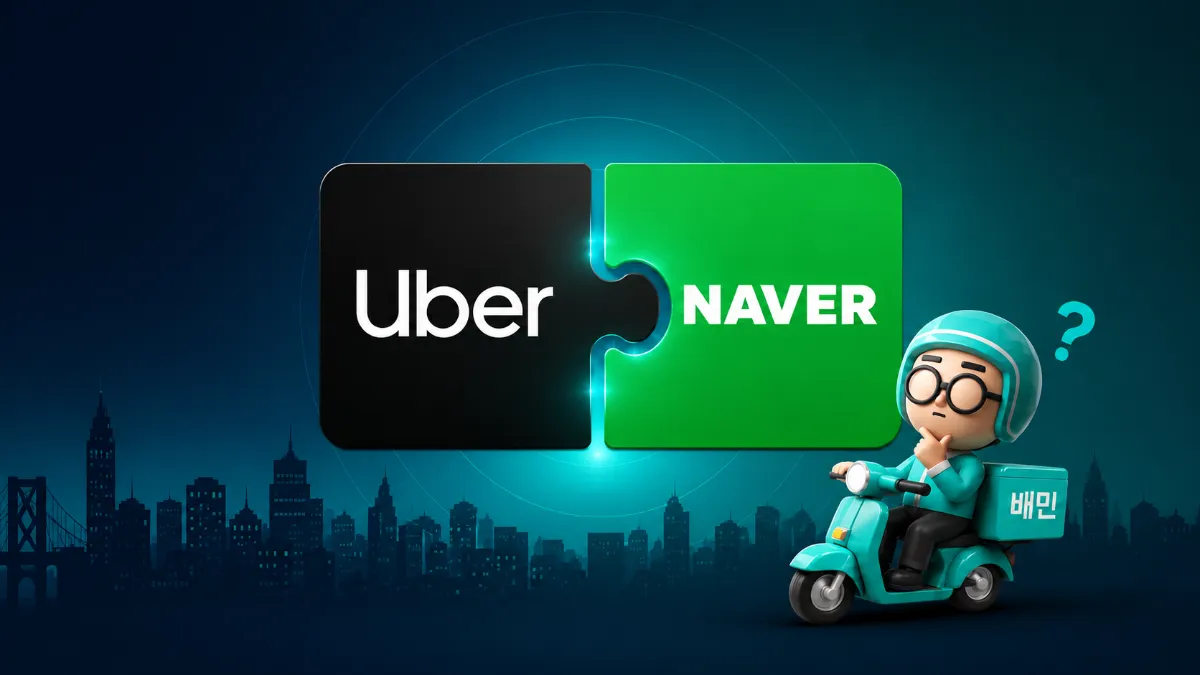
- Uber formed an 80-20 consortium with Naver and bid up to 8 trillion won ($5.5 billion) for Baemin
- Naver's 19.9% ownership structure is designed to stay just below the 20% threshold that triggers mandatory KFTC merger review
Uber has teamed up with Naver to form an 80-20 consortium for a bid to acquire Baemin (Baedal Minjok), South Korea's dominant food delivery platform, for up to 8 trillion won (approximately $5.5 billion). Seoul Economic Daily broke the story on May 18. Naver's 19.9% stake is a precisely engineered move to stay just below the 20% threshold that triggers mandatory Korea Fair Trade Commission (KFTC) review. Separately, Uber has also filed a letter of intent to acquire a stake in Kakao Mobility, the country's top ride-hailing platform.
Uber has joined forces with Naver to pursue South Korea's largest food delivery platform. The consortium submitted a letter of intent to Baemin's majority shareholder, German company Delivery Hero (DH), in the preliminary bidding round that closed May 15. The bid values Baemin at up to 8 trillion won, and the consortium is targeting a 100% stake acquisition.
Why 19.9%? A Precise Regulatory Workaround
The ownership structure is the intellectual core of this deal. Naver is set to take 19.9% — not 20%. The reason is precise: under Korean competition law, when a conglomerate acquires 20% or more of an unlisted company, the transaction must clear a KFTC merger review. 19.9% stops exactly one step short of that trigger.
The timing compounds Naver's caution. The company is currently undergoing a KFTC review for its proposed Dunamu merger. Adding another filing would invite monopoly scrutiny it doesn't want. A sub-20% stake lets Naver join the Baemin deal strategically while keeping its regulatory exposure minimal.
Uber benefits from the Naver shield too. A global mobility company entering Korea alone would face significant regulatory and public opinion headwinds. Partnering with the country's largest internet portal distributes that burden.
Why Baemin — From Delivery to Mobility
Uber's ambition doesn't stop with Baemin. The company has also submitted a letter of intent to acquire a stake in Kakao Mobility, South Korea's top ride-hailing operator. Owning Baemin's food delivery data and Kakao Mobility's ride-hailing network simultaneously would let Uber build the same unified delivery-and-mobility platform it operates in the U.S. under Uber and Uber Eats.
Kakao Mobility comes with complications. Major shareholder Kakao and second-largest shareholder Texas Pacific Group (TPG) are in disagreement. TPG has been seeking an exit since Kakao Mobility's IPO fell through, and reportedly holds contractual rights that give it effective management control. Uber is reportedly exploring a path through TPG and other minority shareholders first.
Why Is Delivery Hero Selling?
DH acquired Baemin in 2019 for approximately 4.75 trillion won, betting on South Korea's status as the world's highest delivery app penetration market. But DH's global business has since struggled under profitability pressure. Baemin remains dominant domestically, but DH's parent is reviewing the sale of core assets to improve its balance sheet.
What Naver Gets
A 19.9% minority stake gives Naver a strategic foothold inside Baemin's ecosystem without operational responsibility. Naver Pay and Naver Shopping integration opportunities, access to Baemin's restaurant dataset — the largest in South Korea — and the delivery infrastructure all align with Naver's commerce and fintech strategy.
- Naver Pay integration → fintech penetration into Baemin's order flow
- Largest restaurant dataset in Korea → strengthens Naver Maps and search ecosystem
- Ongoing Dunamu KFTC review → sub-20% stake avoids a second filing
- Global partnership with Uber → potential cross-linkage for overseas commerce strategy
Frequently Asked Questions
How would an Uber acquisition of Baemin change South Korea's delivery market?
Baemin holds the top market share in South Korean food delivery. If Uber Eats integrates or links with Baemin, global logistics and payment infrastructure could be layered onto the domestic market. Near-term, the focus will be on platform integration direction rather than immediate service changes.
How likely is the Kakao Mobility acquisition?
The key variable is the disagreement between Kakao and TPG. TPG is seeking a return on investment after the failed IPO, making minority stake sales plausible. However, if Kakao resists losing management control, it could block Uber from expanding its ownership position.
What does Naver actually gain from a 19.9% stake?
Naver gains strategic access to Baemin's ecosystem without direct operational responsibility. This includes potential Naver Pay and Naver Shopping data integration and access to Baemin's restaurant infrastructure — all without triggering a KFTC merger review.
Why is Delivery Hero selling Baemin now?
DH is under profitability pressure across its global business and is reviewing the sale of core assets to repair its balance sheet. Baemin remains dominant in Korea, but for DH's parent, it appears to be a priority asset for capital recovery.



Wall Street's Defining Moments
See more


Sunday's SEC 8-K Earnings Filings Quiet, but Royal Gold Doubles Net Income and Launches Buyback
 RGLD
RGLDVeritone Earnings Shock Sends Shares Down 23%...York Space Systems Among 25 US Companies Filing SEC 8-K Earnings Reports
 YSS
YSS CODX
CODX IPWR+26
Applied Materials Posts Record Q3 Revenue of $9.1 Billion, All-Time High EPS
 AMAT
AMATSmart Money Briefing
Weekly summaries of Wall Street guru moves and crypto whale activity.